 Chuckanut Exterior
 New-Construction Windows for York-Area Homes in Chuckanut
When a home in the York area of Chuckanut is being framed, expanded, or fully rebuilt, the windows that go in during that framing stage are a different animal from the replacement windows most homeowners are familiar with. New-construction windows have a nailing flange built into the frame, and they get installed before the weather-resistive barrier and siding go on — not after. That gives a builder or contractor the chance to integrate the window into the wall's water management system from scratch, which is exactly the opportunity you want to get right the first time, because once siding covers the flashing, mistakes are hidden for years before they show up as rot, mold, or a stained drywall corner.
We work on new-construction and major-addition projects in and around Chuckanut, including the York area, and the approach we take is built around this stretch of Whatcom County's specific weather, not a generic install checklist pulled from a manual written for a drier climate.
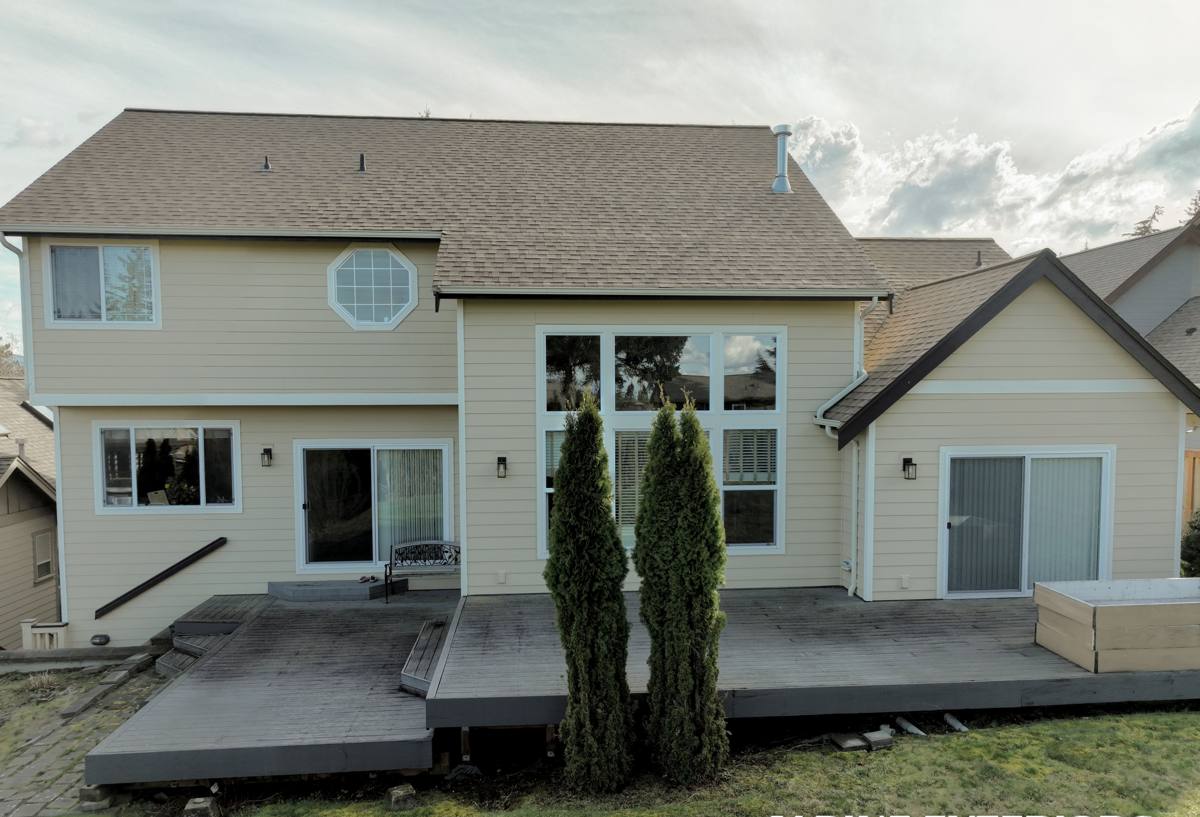
Why the Local Climate Changes How the Job Should Be Done
Chuckanut sits close enough to the water that homes here deal with salt-laden air, long stretches of wind-driven rain, and a moss season that can run most of the year in shaded, north-facing areas. None of that is unusual for this part of Whatcom County, but it does change what "correct" looks like on a window install:
- Salt air accelerates corrosion on fasteners, hinges, and cheaper hardware — it also degrades some sealants and finishes faster than manufacturers' standard warranties assume.
- Driving rain means wind can push water sideways and upward against a wall, not just straight down. A flashing detail that would hold up in a calmer climate can fail here if water is driven up under a head flange.
- Moss and persistent damp keep sills, trim, and lower courses of siding wet longer after every rain event, which is exactly where a bad seal or missing sill pan turns into hidden rot instead of a visible drip.
None of this means new construction here is harder than anywhere else — it means the sequence and materials matter more, and skipping a step that "probably would have been fine" in a drier climate is a real gamble in this one.
What a Correct New-Construction Window Install Actually Involves
The Flashing Sequence
This is where most long-term window failures actually start, and it has nothing to do with the window itself. A correct install follows a shingle-lap sequence so that every layer overlaps the one below it, the way shingles on a roof do, so water is always directed outward and down rather than trapped behind the cladding.
- A sloped sill pan flashing goes in first, so any water that does get past the window has a way out instead of sitting on bare framing.
- Side flashing (jamb flashing) laps over the sill pan.
- The window is set into the opening, shimmed level and plumb, and fastened per the manufacturer's schedule.
- Head flashing goes on last, lapping over the top of the window flange and tucking behind the weather-resistive barrier above it.
- The weather-resistive barrier itself is integrated at every layer — never just taped over the top, but woven into the sequence.
Rough Opening Verification
Before a window ever gets set, the rough opening needs to be checked for square, level, and correct dimension. Framing crews are usually working fast on a new build, and an opening that's slightly out of square is common — it's just not something that should get discovered after the window is already caulked in.
Fasteners and Sealants Rated for Coastal Exposure
Given the salt air in this area, we use corrosion-resistant fasteners and sealants rated for coastal or marine exposure rather than whatever is cheapest at the standard building-supply counter. It costs a little more up front and saves a callback five years down the road.
Choosing a Frame Material That Holds Up Here
There's no single "best" window frame material — each has real trade-offs, and the right choice depends on budget, the home's design, and how exposed that particular wall is to wind and salt spray. Here's how the common options generally compare for this climate:
| Frame Material | Salt Air / Coastal Performance | Maintenance | Typical Cost Tier |
|---|---|---|---|
| Vinyl | Good — won't corrode or rot, though color and hardware quality vary widely by manufacturer | Low — occasional cleaning | Lower to mid |
| Fiberglass | Very good — dimensionally stable, resists warping in wet-dry cycles, holds paint well | Low | Mid to higher |
| Wood (unclad) | Weakest — vulnerable to rot and moss growth in shaded, damp areas without diligent upkeep | High — regular refinishing needed | Mid to high |
| Wood-clad (aluminum or vinyl exterior) | Good — cladding protects the wood core from the elements as long as seals stay intact | Moderate — interior wood still needs occasional attention | Higher |
| Aluminum | Fair — strong and slim-profile, but needs a quality thermal break and coastal-rated finish to resist pitting | Low | Mid to high |
Our standard is to steer clients away from unclad wood on exposed or shaded elevations in this area — not because wood windows are a bad product, but because the maintenance burden in a persistently damp, moss-prone environment is a lot to keep up with, and a missed year of refinishing can shorten the window's life significantly. That's a maintenance and moisture-behavior trade-off, not a knock on any manufacturer.
Energy Code and Performance Requirements for New Builds
New construction in Washington falls under the Washington State Energy Code, and Whatcom County enforces those requirements through the local permitting process. That means the windows going into a York-area new build or addition need to meet specific U-factor and Solar Heat Gain Coefficient (SHGC) targets for our marine climate zone — this isn't optional trim-level stuff, it's a permit and inspection requirement.
A few practical points that matter for this region specifically:
- Our marine climate zone favors a lower U-factor (better insulating performance) over aggressive solar heat gain control, since Chuckanut doesn't deal with the intense summer sun load that drives window selection in drier, sunnier climates.
- Bedrooms require egress-compliant windows — correct minimum opening size and sill height — which needs to be confirmed at the framing stage, not discovered after drywall.
- Tempered (safety) glass is required near doors, low sills, and other code-defined hazardous locations.
We coordinate window selection with these requirements up front so the units ordered are the ones that will actually pass inspection, rather than swapping products mid-project.
How Our Process Works on a York-Area Project
- Site visit and plan review — we look at the framing plans (or the framing itself, if it's already up) and talk through window sizes, egress needs, and exposure on each elevation.
- Material and product selection — matched to budget, the home's design, and which walls take the most weather.
- Rough opening check — verified before install day, with corrections flagged to the framing crew or builder if anything's out of tolerance.
- Install with full flashing integration — sill pan, jamb, and head flashing sequenced with the weather-resistive barrier, not just caulked and hoped for.
- Walkthrough — every window operates correctly, seals are checked, and the flashing sequence is confirmed before siding closes it all in.
Because we're already working this stretch of Chuckanut regularly, we know the general permitting expectations Whatcom County inspectors are looking for on window rough-ins, and we're not learning the local rain patterns and moss exposure for the first time on your project.
Why Hiring a Crew That Already Works This Area Matters
New-construction window installation is largely invisible once the siding goes up. A homeowner — or even a general contractor juggling a dozen trades — can't easily verify that the flashing sequence was done correctly after the fact. That's exactly why the crew doing this work needs to already understand what this specific coastal, moss-prone stretch of Whatcom County does to a wall assembly over time, rather than applying a one-size-fits-all method. A flashing detail or fastener choice that's adequate in a sheltered inland climate can be the weak point that fails first here, and it usually doesn't show up as a problem until several rainy seasons in.
Maintenance After Install: What to Keep an Eye On
New-construction windows installed correctly need very little attention, but a little seasonal awareness goes a long way in this climate:
- Check exterior caulk lines and sealant joints once a year for cracking or separation, especially after a hard winter.
- Keep gutters and downspouts clear so water isn't sheeting down across window heads.
- Clear moss and organic buildup off sills and lower trim before it holds moisture against the frame.
- Operate and lubricate hardware periodically — salt air can stiffen hinges and locks faster than an inland home would see.
- Watch for any interior staining below a sill, which is often the first visible sign of a flashing issue and is much easier to address early.
If you're building, adding on, or coordinating windows for a new-construction project in the York area of Chuckanut, we're glad to walk the plans or the framing with you and put together a straightforward, no-pressure estimate — just fill out the form below to get started.