 Chuckanut Exterior
 Why Siding in York Has to Work Harder Than Siding Inland
York sits close enough to Chuckanut and the water that its homes take a different kind of weather beating than houses even a few miles inland in Whatcom County. The siding on a York home isn't just dealing with rain — it's dealing with salt-laced marine air, wind-driven rain that hits walls sideways instead of falling straight down, and a wet season that stretches long enough to grow moss on anything that stays damp and shaded for too long. Siding that would hold up fine in a dry inland subdivision can start showing problems years earlier out here if it wasn't chosen and installed with this specific exposure in mind.
That's the lens we use on every York siding project: not "what siding looks good," but "what siding and what installation detail will actually hold up against this coastline's specific combination of salt, wind, rain, and moisture."
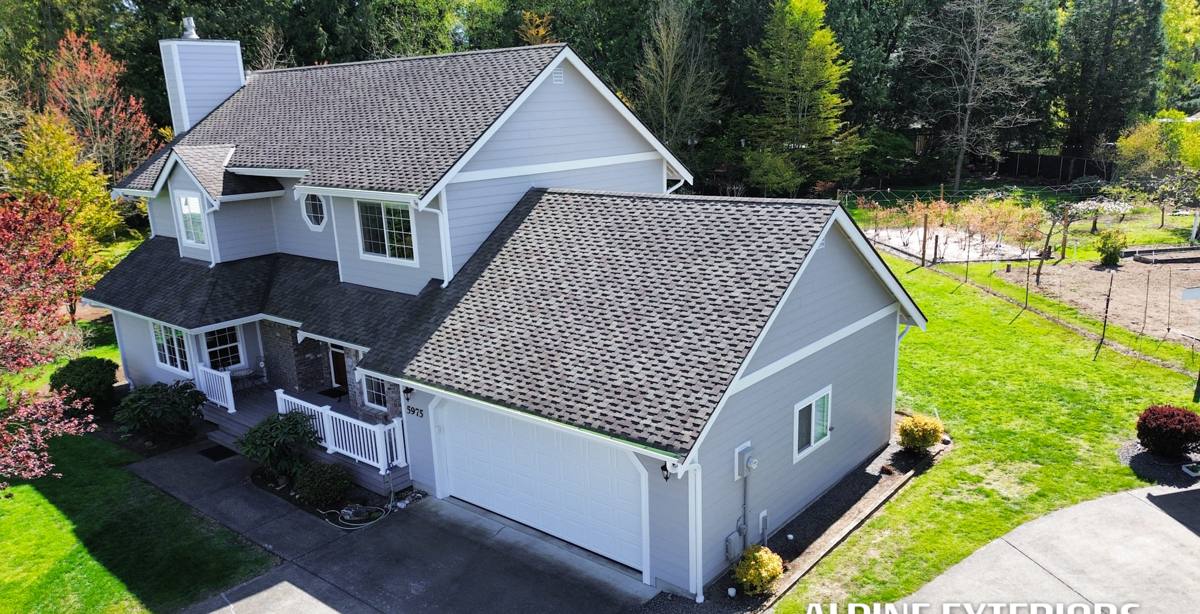
What Salt Air, Driving Rain, and Moss Actually Do to a Home's Exterior
Salt Air and Slow Corrosion
Airborne salt doesn't just affect homes right on the waterfront — it travels on wind and settles on siding, trim, and especially metal fasteners and flashing for a good distance inland. Over years, that salt film accelerates corrosion on anything that isn't rated for it: the wrong fastener, an unprotected cut edge, or bare metal flashing can start rusting and staining long before the siding itself is due for replacement. It also degrades paint and factory finishes faster, which is why finish quality matters as much as the base material.
Wind-Driven, Horizontal Rain
Rain that comes in at an angle behaves completely differently than a straight downpour. It gets pushed up under laps, into gaps around windows and trim, and into any seam that wasn't properly flashed or caulked. A siding system can look watertight in calm weather and still fail during a wind-driven storm if the underlying flashing, house wrap, and lap details weren't built for that kind of intrusion. This is one of the most common causes of hidden rot behind siding that looks fine from the curb.
Moss, Shade, and Prolonged Moisture
Western Washington's long wet season means siding on shaded walls, under eaves, or near tree cover can stay damp for weeks at a stretch. That constant moisture is exactly what moss and algae need to establish themselves. Beyond the cosmetic staining, a persistent layer of moss holds water directly against the siding surface, which is a problem for wood-based products in particular and can shorten the service life of any siding that isn't dimensionally stable and moisture-resistant by design.
What a Correct Siding Installation Actually Involves
Siding is a system, not just a panel nailed to the wall. The material matters, but most siding failures we see trace back to installation details that were rushed or skipped — not the product itself. A correct installation in a climate like York's includes:
- Full inspection and repair of the sheathing and framing underneath before any new siding goes on — covering up existing rot guarantees a repeat failure
- A continuous, properly lapped weather-resistant barrier (house wrap) with all seams taped and integrated correctly with window and door flashing
- Corrosion-resistant fasteners driven to manufacturer spec — not overdriven, not underdriven, and in the correct pattern
- Proper flashing at every horizontal joint, window head, and roof-to-wall transition, shingled correctly so water is directed out and down, never trapped
- Correct minimum clearances between the bottom of the siding and grade, decks, roofs, and other hard surfaces so moisture can't wick up into the material
- Manufacturer-specified caulking only where the manufacturer calls for it — over-caulking traps moisture just as badly as gaps do
- A final detail pass on trim, corners, and penetrations (vents, hose bibs, light fixtures) where most leaks actually originate
Skip any one of these and the siding material grade almost doesn't matter — water will find the weak point eventually, especially with the wind-driven rain this area gets.
Why We Install Only James Hardie Fiber Cement — Not Vinyl, LP, or Wood
We get asked regularly why we don't offer vinyl siding, LP SmartSide, or cedar as options. Each of those products has a legitimate place in the market and each does some things well. Vinyl is inexpensive and low-maintenance in mild climates. LP SmartSide is a genuine engineered-wood product with real strengths in cost and workability. Cedar has a natural look that some homeowners specifically want. Our decision isn't that those products are bad — it's that, given what we've seen holding up (and not holding up) in Whatcom County's salt air, wind-driven rain, and long wet season, we standardized on one product system we can stand behind for every home we build.
Vinyl can warp, fade, and crack under UV and temperature swings, and its seams and panel-to-panel joints rely on overlap and expansion gaps rather than a rigid, caulked system — which becomes a liability in wind-driven rain. Engineered wood products like LP SmartSide are wood-based, meaning long-term performance depends heavily on keeping the factory-treated strand surface fully sealed and maintained at every cut edge and joint — a maintenance burden that's harder to keep up with in a persistently damp, moss-prone environment. Cedar is a beautiful, genuinely traditional material, but as solid wood it moves with moisture, needs refinishing on a real schedule, and is the most vulnerable of the common options to the rot and moss issues this climate produces when maintenance lapses.
| Factor | Fiber Cement (James Hardie) | Vinyl | Wood / Engineered Wood |
|---|---|---|---|
| Combustibility | Non-combustible | Combustible, can melt/deform | Combustible |
| Behavior in wind-driven rain | Rigid, sealed system when installed to spec | Relies on overlap/expansion joints | Depends entirely on sealed finish and joints |
| Moisture/moss resistance | Dimensionally stable, engineered finish | Doesn't rot but traps moisture behind panels if unsealed | Vulnerable if finish/caulking isn't maintained |
| Factory finish life | ColorPlus baked-on finish, long warranty | Color molded in, can fade/chalk over time | Factory or field-applied, needs recoating on a schedule |
| Typical maintenance | Low — periodic wash and caulk check | Low, but limited repair options if damaged | Higher — finish and joint maintenance is ongoing |
The James Hardie System We Install
James Hardie engineers its siding by climate zone through what it calls the HardieZone system — formulations built for the specific moisture and freeze-thaw conditions a region actually experiences, rather than a single one-size-fits-all product sold everywhere. That matters in Whatcom County, where the combination of marine humidity, rain volume, and winter freeze-thaw cycling is genuinely different from a hot, dry inland climate or a humid Gulf Coast one.
On top of the base material, the ColorPlus factory finish is baked on under controlled conditions rather than field-painted, which gives far more consistent, long-lasting color and UV resistance than a job-site paint job — a real advantage against this area's sun, salt, and rain cycling. Hardie's lap siding, panel, and shingle profiles also give homeowners real design flexibility without stepping outside a material system we trust for this climate, and the manufacturer's transferable limited warranty backs the product when it's installed by a certified, manufacturer-trained crew.
Our Siding Installation Process for York Homes
- On-site assessment — we walk the exterior, check for existing rot, moss buildup, and problem areas around windows, trim, and roof lines before quoting anything
- Tear-off and sheathing inspection — old siding comes off and the sheathing underneath gets inspected and repaired as needed; we don't cover up existing damage
- Weather barrier and flashing — a continuous house wrap goes on with correctly integrated flashing at every window, door, and horizontal transition
- Hardie installation to manufacturer spec — correct fastener type and pattern, correct clearances, correct lap and joint detailing for this region's wind-driven rain
- Trim, caulking, and finish detail — manufacturer-specified sealant only where called for, with attention to penetrations and corners
- Final walk-through — we review the completed work with the homeowner before considering the job done
Signs Your York Home May Need New Siding Now
- Persistent moss or algae staining that returns quickly after cleaning
- Soft spots, bubbling, or visible warping anywhere on the siding surface
- Paint that's peeling, chalking heavily, or failing well ahead of schedule
- Visible gaps, cracked caulking, or separated joints, especially around windows and trim
- Rust staining running down from fasteners or metal flashing
- Rising energy bills with no other clear cause, suggesting the wall assembly is no longer performing
Cost Factors for Siding Installation in York
Every home is different, and we don't quote a job until we've seen it, but the main variables that drive cost on a York project are consistent:
| Factor | Why It Matters |
|---|---|
| Home size and wall complexity | More square footage and more corners, gables, and dormers mean more material and labor |
| Condition of existing sheathing | Rot repair discovered during tear-off adds time and material beyond the siding itself |
| Siding profile and accessories | Lap width, trim style, and corner details all affect material cost |
| Site access | Tight lots, slopes, or limited equipment access affect labor time |
| Existing moisture or moss damage | Extensive prep work for long-neglected exteriors adds scope |
Why Hiring a Crew That Already Works in York Matters
A crew that already works this stretch of Whatcom County knows which walls on a York property typically take the worst of the wind-driven rain, how much salt exposure to plan for this close to Chuckanut, and how long the wet season realistically runs when scheduling a tear-off. That's not something you can fully substitute with general siding experience from a drier or more sheltered region. Local familiarity also means fewer surprises with permitting and inspection expectations, and a crew that isn't guessing at how this specific coastline treats a home's exterior over time.
If you're weighing a siding project for a York home, we're glad to come take a look and give you a straightforward, no-pressure estimate — no invented urgency, just an honest read on what your home actually needs.