 Chuckanut Exterior
 Deck Repair for York Homes in Whatcom County
Decks in York take a different kind of beating than decks twenty miles inland. Between the salt air drifting off the water, driving winter rain, and a moss season that seems to stretch longer every year, the wood, fasteners, and finishes on a York deck are under constant low-grade attack. Most of the repair calls we get in this part of Chuckanut aren't dramatic structural failures out of nowhere — they're the slow result of moisture and organic growth doing their work quietly for a few seasons until something finally gives: a soft board, a wobbly rail, a stair stringer that's started to spring.
This page is about deck repair specifically — not full deck replacement, not new construction. If your deck is basically sound but showing its age or its damage, repair is very often the right call, and doing it correctly the first time matters more here than in drier climates because a poor repair gets tested by the weather again almost immediately.
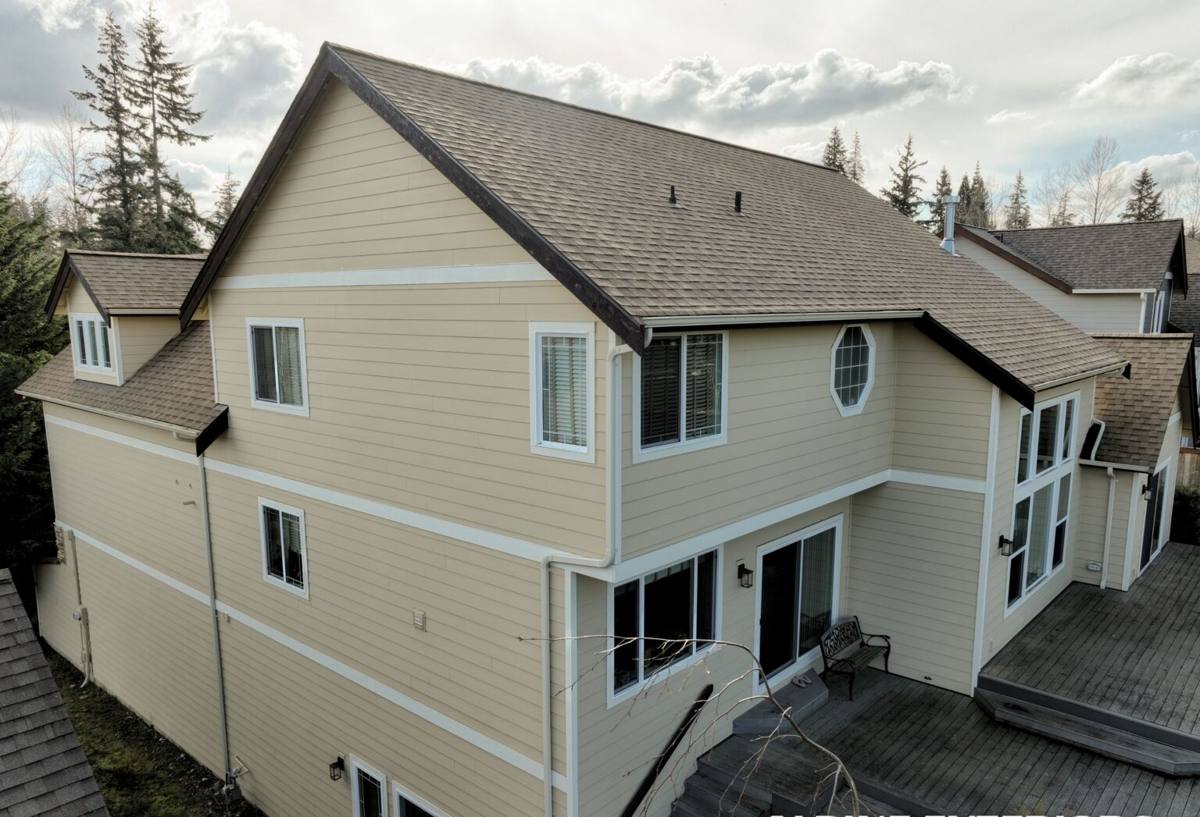
What the Local Climate Does to a Deck
Whatcom County's marine climate is generous with moisture almost year-round, and York's proximity to the water adds a salt component that inland Chuckanut properties don't deal with as much. Understanding the specific failure patterns helps explain why a repair here needs to address causes, not just symptoms.
Moss and Constant Damp
Moss doesn't just look bad on decking — it holds water against the wood surface far longer than open air ever would. On boards that don't get much direct sun (under trees, on the shaded side of a house, beneath a covered porch), moss can establish itself within a season and start trapping moisture against the wood grain around fasteners and board edges, which is exactly where rot starts.
Driving Rain and Wind-Driven Moisture
Rain that comes in sideways during a windstorm reaches places vertical-only rain never would: the undersides of rail caps, the back faces of fascia boards, ledger connections tucked against the house. These are the spots where a deck built or flashed without that reality in mind starts failing years before the open, sun-exposed decking does.
Salt Air and Metal Fasteners
Salt-laden air accelerates corrosion on any exposed metal — nails, screws, joist hangers, structural connectors. Corroding fasteners lose holding strength gradually and invisibly under the decking, which is one reason a deck can look fine on top while individual boards or rail sections have actually loosened underneath.
How These Factors Combine
| Climate Factor | What It Attacks | Typical Repair Need |
|---|---|---|
| Moss / prolonged damp | Board surfaces, fastener pockets | Board replacement, cleaning, drainage fixes |
| Driving rain | Ledger, rail caps, fascia backs | Flashing repair, sealant renewal, framing repair |
| Salt air | Nails, screws, hangers, hardware | Fastener and hardware replacement |
| UV + moisture cycling | Finish coatings, surface checking | Stripping, sanding, refinishing |
What an Honest Deck Repair Actually Involves
A repair that's done right starts with figuring out how far the damage actually goes — not just fixing what's visible from the top. We probe suspect boards and framing with a screwdriver or awl rather than guessing from appearance, because wood can look weathered but sound, or look fine on the surface and be soft an inch below.
Structural Inspection First
- Check ledger board attachment to the house and the flashing behind it — this is the single most common source of hidden rot on an older deck
- Test joists and beams for soft spots, especially where they meet posts or the house
- Check post bases for rot at ground contact or where they meet concrete footings
- Inspect railing posts for looseness — a wobbly rail is a safety issue, not a cosmetic one
- Look at stair stringers, which take repeated flex and often show wear before the deck surface does
- Check all visible hardware — joist hangers, bolts, screws — for corrosion or missing fasteners
Then the Actual Repair Work
Once we know what's really going on, the repair itself usually falls into one or more of these categories: replacing individual rotted or split boards, sistering or replacing damaged joists, re-securing or replacing a failing ledger connection, rebuilding a wobbly rail or stair section, swapping out corroded fasteners for stainless or coated hardware rated for coastal exposure, and correcting drainage or airflow issues that caused the damage in the first place. That last part matters — replacing a rotted board without fixing why it rotted just means repeating the repair in a few years.
Repair vs. Replacement: Making the Right Call
Not every deck problem calls for a rebuild, and not every deck is worth patching indefinitely. We look at a few honest factors before recommending either path.
| Factor | Favors Repair | Favors Replacement |
|---|---|---|
| Extent of rot | Isolated to a few boards or one framing member | Widespread through multiple structural members |
| Age of structure | Framing is sound, decking is the main issue | Framing itself is original and failing broadly |
| Ledger condition | Ledger and flashing are intact | Ledger rot or improper flashing found |
| Overall footprint | Deck size/layout still works for the home | Owner wants a different size or layout anyway |
| Budget goal | Extend usable life at lower cost | Reset the clock with new materials |
We'll tell you plainly if a deck has crossed the line from "repairable" to "replace it" — there's no advantage to us patching something that will need to be torn out again in a year or two, and we'd rather give you that assessment upfront than string out a repair that won't hold.
Materials and Fasteners for Coastal Whatcom County Conditions
What we use to repair a York deck depends on what's already there and what will actually hold up. For framing repairs, pressure-treated lumber rated for ground contact is standard where rot risk is high. For fasteners and hardware, we lean toward stainless steel or heavy-coated corrosion-resistant products near the water — cheaper galvanized hardware can start showing rust within a few seasons in a salt-air environment, which just sets up the next repair call. For decking board replacement, we'll talk through wood versus composite honestly: composite costs more upfront but resists moss and moisture damage better over time and needs less maintenance; wood is less expensive and matches an existing deck more easily but needs more regular upkeep, especially in a damp climate. Neither is wrong — it depends on what you want to maintain and for how long.
Our Repair Process
- Inspection and assessment — we walk the whole deck, probe suspect areas, and check the ledger, framing, and hardware, not just the decking surface
- Honest scope and estimate — you get a clear picture of what needs fixing, what can wait, and what we'd flag as a replacement-level issue if we find one
- Repair work — board and framing replacement, fastener upgrades, rail and stair fixes, done to hold up against the same conditions that caused the damage
- Drainage and moisture correction — addressing the underlying cause where we find one, not just swapping bad wood for new wood in the same conditions
- Final check — we walk the deck again before calling it done to make sure everything is solid, not just patched
A Practical Checklist Before You Call
If you're not sure whether your deck needs a repair call yet, these are worth checking yourself first:
- Press on boards near the house, under moss, and in shaded corners — do any feel soft or spongy?
- Grab the top rail and push side to side — does it move more than a little?
- Look at the ledger where the deck meets the house — any staining, gaps, or soft wood?
- Check stair stringers for visible cracking or excessive flex when you walk down
- Look at exposed fasteners for rust streaking on the wood around them
- Note any spots where water pools instead of draining after rain
Any "yes" on that list is worth a professional look before it gets worse — deck damage in this climate rarely stays the same size for long.
Why a Crew That Already Works in Chuckanut and York Matters
Deck repair isn't a one-size-fits-all trade. A crew that mostly works drier inland areas can miss the specific failure patterns that show up near the water — the salt corrosion on hardware, the moss buildup in shaded coastal lots, the wind-driven rain intrusion points that a standard inland deck rarely deals with. We work throughout Chuckanut and know what York's particular mix of coastal exposure, rain, and moss season does to a deck over time, so we're not learning that on your project. That means a faster, more accurate inspection and a repair that's built for the conditions it actually has to survive, not generic conditions.
Get an Honest Look at Your Deck
If your York deck has a soft board, a loose rail, moss buildup, or you just want a second opinion on whether it's a repair or a replacement situation, we're happy to come take a look. We'll give you a straightforward assessment and a free, no-pressure estimate using the form below.