 Chuckanut Exterior
 Siding Repair Built for York's Coastal Exposure
Homes in the York area of Chuckanut sit close enough to the water and the tree line that their siding takes a different kind of beating than a house twenty miles inland. Salt-laden air corrodes fasteners and trim faster than dry-climate weather ever would. Driving rain off the Sound finds every gap in a lap joint or a butt seam. And the long, damp moss season that Whatcom County is known for keeps north-facing and shaded walls wet for weeks at a stretch. Siding repair here isn't just patching a hole — it's understanding why that hole formed in the first place and making sure the fix doesn't just fail again next winter.
We work on siding repair calls throughout Chuckanut and the York area regularly enough to recognize the failure patterns specific to this stretch of Whatcom County. That local pattern recognition is most of what separates a repair that lasts from one that's back on our schedule in two years.
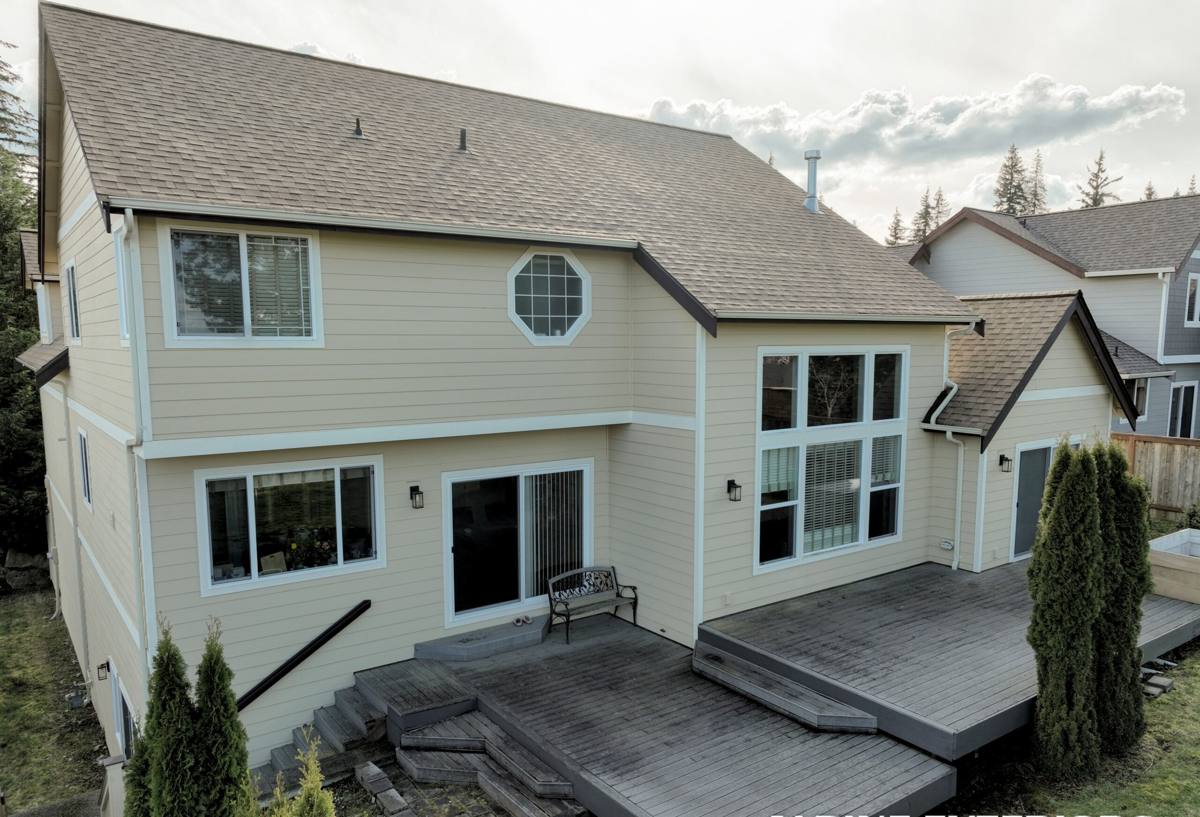
What Chuckanut's Climate Actually Does to Siding
Salt Air and Fastener Corrosion
Homes closer to the water deal with airborne salt that accelerates corrosion on nails, screws, and any exposed metal trim or flashing. Once a fastener starts rusting, it loses grip on the substrate underneath, siding boards start to loosen at the edges, and water gets a path behind the cladding that wasn't there when the house was built.
Driving Rain and Wind-Driven Moisture
Rain that falls straight down is easy for siding to shed. Rain pushed sideways by wind off the water is a different problem — it gets forced up under laps, into unsealed joints, and behind trim boards that were never meant to handle that kind of pressure. Over years, that pattern of wind-driven moisture is responsible for more hidden rot than any single storm event.
Moss, Algae, and Prolonged Dampness
Shaded walls, north-facing elevations, and anywhere tree cover keeps the sun off siding for most of the day are prone to sustained moss and algae growth through the long wet season. Moss holds moisture directly against the siding surface far longer than open air would, which is exactly the condition that lets wood-based products swell, delaminate, or rot from the surface inward.
Warning Signs Homeowners in York Should Watch For
Most siding failure doesn't announce itself with a dramatic event — it shows up as small, easy-to-dismiss signs that get worse every wet season they're ignored. Walk your exterior a couple times a year and look for these:
- Soft or spongy spots when you press on a wall, especially near the bottom courses or under windows
- Paint that's bubbling, peeling, or failing faster in one area than the rest of the house
- Visible gaps opening up at butt joints, corners, or where siding meets trim
- Dark staining, streaking, or a persistent musty smell near an exterior wall
- Moss or algae buildup that keeps coming back within a season or two of cleaning
- Warped, cupped, or buckled boards, particularly on shaded or north-facing elevations
- Rust bleeding from nail heads or trim fasteners
Any one of these on its own might be minor. Two or three showing up in the same area is usually a sign that moisture has been getting behind the siding for a while, not just sitting on top of it.
What a Correct Siding Repair Actually Involves
A repair that only addresses what's visible from the ground tends to fail again quickly. The steps that actually fix the problem are less visible but matter more.
Diagnosing the Cause, Not Just the Symptom
Before anything gets removed, we figure out how water is getting in — a failed sealant joint, a flashing detail that was never installed correctly, a fastener pattern that's loosened over time, or a grading issue pushing splashback onto a low wall. Replacing a damaged board without solving the entry point just buys a few years before the same spot fails again.
Checking What's Behind the Cladding
Once siding is opened up, we look at the water-resistive barrier, the sheathing, and the framing underneath. In coastal, high-moisture environments like this one, damage often extends further than what's visible from outside, and a repair scope should reflect what's actually found, not just what was assumed from a curbside look.
Matching Material and Finish
A repair that stands out visually as a patch is a repair that was done without much care for the finished product. Matching profile, exposure, and color as closely as possible is part of doing the job right — not a cosmetic afterthought.
Correct Flashing and Sealant Detailing
Nearly every siding failure we open up traces back to a flashing or sealant detail that was missing, undersized, or installed backwards. Reinstalling siding without correcting that underlying detail means the repair is cosmetic, not structural.
Repair or Replace? How We Make That Call
Not every damaged section needs a full re-side, and not every repair is worth doing instead of replacing a wall's siding outright. The honest answer depends on how much of the wall is affected, what's underneath it, and how old the existing siding already is.
| Factor | Repair Usually Makes Sense | Replacement Usually Makes Sense |
|---|---|---|
| Extent of damage | Isolated to one or two boards or a single wall section | Spread across multiple elevations or recurring in the same areas |
| Underlying sheathing/framing | Sound, dry, no rot found on inspection | Soft, delaminated, or showing rot behind the cladding |
| Age of existing siding | Mid-life, otherwise performing well | Near or past its expected service life |
| Material | Still available or closely matchable | Discontinued, badly faded, or a product we no longer install |
| Root cause | A single, fixable detail (one flashing, one joint) | Systemic issue affecting the whole install (drainage plane, original workmanship) |
We'll always tell you honestly which side of that table your house falls on. If a targeted repair will hold up through Chuckanut's wet seasons, that's what we'll recommend — there's no reason to sell a homeowner a full re-side when a section repair will do the job.
How Our Repair Process Works in York
1. On-Site Assessment
We look at the damaged area and the rest of the exterior, since siding problems in this climate rarely stay isolated to one spot. We check for the underlying moisture source, not just the visible symptom.
2. A Straightforward Scope and Price
You get a clear explanation of what we found, what needs to happen, and what it costs — including whether we found anything under the surface that changes the scope, before we start cutting anything open further.
3. The Repair Itself
Damaged material comes out, the substrate underneath gets evaluated and repaired if needed, flashing and sealant details get corrected, and new material goes in matched as closely as possible to what's already on the house.
4. Cleanup and Walkthrough
We clean up the work area and walk the repair with you so you know exactly what was done and why — including anything worth keeping an eye on going forward.
Why a Crew That Already Works in York Matters
Siding repair in a coastal Whatcom County neighborhood isn't the same trade as siding repair in a dry inland subdivision. A crew that already does this work in and around Chuckanut has already seen how salt exposure, driving rain, and moss cycles behave on homes in this specific area — which framing eras tend to have which flashing shortcuts, which elevations fail first, and how long a patch actually needs to hold up through a real wet season here, not a theoretical one. That local pattern recognition shows up in fewer surprises once a wall is opened, and in repairs that are scoped correctly the first time instead of getting revisited a year later.
When Repair Isn't the Right Long-Term Answer
Some siding materials are harder to repair correctly than others, and it's worth being upfront about that rather than pretending every product patches the same way. Products like primed spruce, cedar, and some engineered wood sidings are especially vulnerable to the moisture-and-moss cycle this area sees, and repeated repairs in the same spots are common once that cycle has already taken hold. Vinyl siding can crack in cold snaps and fade unevenly next to older sun-exposed panels, which makes color-matched patch repairs difficult. When a wall's existing material has reached that point — repeated failures, discontinued colors, or damage extensive enough that patching no longer makes economic sense — we'll say so plainly.
In those cases, our recommendation for the replaced sections is James Hardie fiber cement, which is the only siding product we install. It's non-combustible, engineered for wet climates in its HZ5 product line, holds a factory-applied ColorPlus finish that resists the fading and touch-up mismatch problems that make future patch repairs difficult, and carries a strong transferable warranty. We don't say that to upsell a repair call into a bigger job — plenty of repairs we do stay exactly that, a repair. But when a section of siding is genuinely past the point where patching is the responsible answer, we want the replacement material going back up to actually hold up through the next twenty Chuckanut winters, not just the next one.
Keeping Repaired Siding Sound Through Moss Season
A good repair buys you time, but a few habits extend it further, especially given how long the wet season runs here:
- Keep gutters and downspouts clear so water isn't sheeting down exterior walls
- Trim back tree limbs and brush that keep a wall shaded and slow to dry
- Rinse moss and algae buildup off siding before it has a chance to hold moisture against the surface for weeks
- Re-caulk joints and seams on a regular schedule rather than waiting for a visible gap
- Walk the exterior each fall before the wet season sets in, checking the same spots that have given you trouble before
If you're seeing soft spots, staining, recurring moss, or gaps opening up in your siding anywhere in the York area, we're glad to take a look and give you an honest read on what's actually going on — no pressure, no inflated scope. Reach out for a free estimate using the form below.