 Chuckanut Exterior
 Storm Damage Roofing in York: What Makes This Area Different
The York area near Chuckanut sits in a stretch of Whatcom County where roofs take a real beating year-round. It isn't one big event that wears a roof out here — it's the combination. Salt-laden air off the water works into fasteners, flashing, and exposed metal. Driving rain, pushed sideways by wind off the water, finds every weak seam instead of just running off the surface like it would on a calmer roof. And the long, wet moss season packs in behind that, holding moisture against shingles for months at a stretch. A roof that would hold up fine in a drier inland climate can show real wear here years ahead of schedule.
When a storm actually hits — a windstorm, a heavy atmospheric river event, or a fast-moving squall — it's rarely a single clean failure. More often it's a handful of smaller issues that a storm exposes: a flashing seam that was already marginal, a shingle that had already lost some granule protection, a vent boot that had already started to crack. Storm damage repair in this area is as much about catching what the storm revealed as it is about fixing what it broke outright.
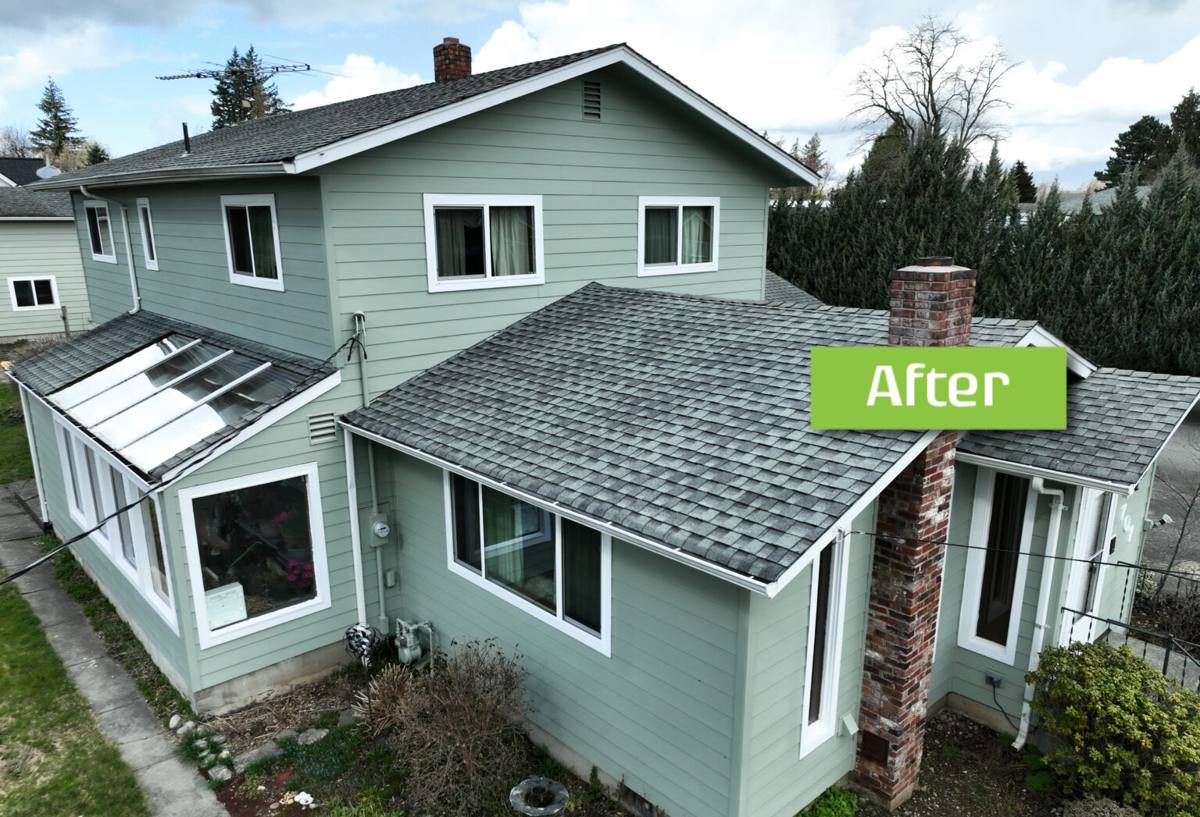
What Storm Damage Actually Looks Like Here
Homeowners in York often expect storm damage to be obvious — a missing shingle, a visible hole. Sometimes it is. Just as often, the damage is quieter and takes longer to show up as a stain on a ceiling or a soft spot in the decking.
Wind Damage
Strong gusts can lift shingle tabs, crease them, or tear them off entirely, especially along ridges, hips, and roof edges where wind pressure concentrates. Lifted shingles don't always blow away — sometimes they get pressed back down and look fine from the ground, but the seal is broken and the next rain gets underneath.
Wind-Driven Rain Intrusion
This is the one that catches people off guard. Rain that's being driven sideways by wind can work its way under flashing, around chimneys, and past vent boots that would otherwise shed water fine in a straight-down rain. It shows up as water stains, damp insulation, or a musty smell in the attic days or weeks after the storm has passed.
Debris Impact
Branches and limbs coming down in wind are common in this area given the tree cover. Impact damage can range from a few cracked or punctured shingles to, in worse cases, damaged decking underneath. Even small punctures matter — a hole the size of a pencil is enough to start a slow leak.
Moss and Standing Debris
Storms often knock loose needles, leaves, and moss mats that were already building up. Piled against a roof valley or behind a chimney, that debris holds water against the roofing material and accelerates rot in the decking below — a slower kind of damage, but one storms tend to trigger by loosening what was already there.
What a Correct Storm Damage Repair Involves
A roof repair that actually holds up in this climate isn't just about patching the visible problem. It has a few non-negotiable steps:
- A full roof inspection, not just a look at the reported damage spot — storm stress often shows up in more than one place
- Checking the decking underneath any damaged section for soft spots, staining, or rot before new material goes down
- Matching shingle type, weight, and where possible color to the existing roof so the repair doesn't stand out or perform differently
- Re-flashing, not just re-sealing, anywhere flashing was compromised — caulk over a failed flashing seam is a short-term fix, not a repair
- Confirming attic ventilation wasn't affected, since blocked or damaged vents contribute to the moisture problems that show up months later
- Clearing debris and checking gutters and downspouts, since a roof repair that ignores clogged drainage just sets up the next leak
Skipping any of these isn't necessarily visible right away. It's the kind of shortcut that shows up as a callback six months later, usually after the next hard rain.
Our Process for Storm Damage Calls in York
1. Fast Initial Assessment
After a storm, the priority is figuring out if the home is actively taking on water and whether temporary protection is needed before a full repair can happen. If tarping or emergency board-up is called for, that comes first.
2. Full Inspection and Documentation
We walk the roof (or use appropriate access for steep or unsafe pitches) and document what we find — photos of the damage, the surrounding areas, and anything that looks like pre-existing wear versus storm-caused damage. This documentation is also what you'll want if you're filing an insurance claim.
3. Honest Scope and Estimate
We tell you what actually needs repair versus what's cosmetic or can reasonably wait. We're not going to recommend a full re-roof for a repair that a proper patch and re-flash will solve, and we'll say so plainly if a repair is more of a band-aid on a roof that's nearing the end of its service life.
4. Repair and Cleanup
Repairs are done with matched materials and proper flashing detail, not just surface patching. We clear debris from the roof and gutters as part of the job, since leftover moss and branch debris is often what set the roof up for trouble in the first place.
Repair Options and Cost Factors
What a storm damage repair costs depends heavily on what's actually wrong under the surface, not just how it looks from the ground. Below is a general guide to the factors that move the price, not a quote — every roof is different.
| Damage Type | Typical Scope | Cost Driver |
|---|---|---|
| Isolated wind-lifted or torn shingles | Spot shingle replacement, re-sealing | Number of shingles, roof pitch and access |
| Flashing failure (chimney, valley, vent) | Remove and re-flash affected area | Flashing type, complexity of the roof feature |
| Debris impact with decking damage | Shingle removal, decking repair, re-shingle | Size of decking area affected, matching materials |
| Water intrusion with attic/insulation damage | Roof repair plus interior drying and insulation replacement | Extent of moisture spread, mold risk |
| Moss-related decking rot uncovered during storm repair | Roof repair plus targeted decking replacement | Rot extent, whether it's isolated or spread along a valley |
Straightforward spot repairs are often a modest, contained cost. Anything involving decking replacement or interior water damage moves into a different range, which is exactly why an honest inspection matters before work starts — not after.
Insurance Claims: What Homeowners Should Know
Most homeowner policies cover sudden storm damage — wind, impact, wind-driven rain — but they typically don't cover gradual deterioration like long-term moss damage or wear that predates the storm. That distinction matters, and it's part of why thorough documentation at the time of inspection helps. We provide photos and a written description of the damage that you can hand to your adjuster, but we don't handle the claim itself or promise a specific payout — that's between you and your insurer. What we can do is give you a straight answer on what looks storm-related versus what looks like pre-existing wear, so you're not guessing when you talk to the adjuster.
Why a Crew That Already Works York Matters
Storm damage repair isn't the place for guesswork, and local familiarity actually changes the outcome here. A crew that regularly works roofs in this part of Whatcom County knows what salt exposure does to fasteners and flashing over time, knows which roof orientations catch the worst of the wind-driven rain, and knows moss patterns well enough to recognize the difference between a fresh storm tear and a shingle that was already failing from months of moisture sitting against it. That matters both for getting the repair right and for giving you an honest read on what's storm damage versus what's just the roof showing its age.
It also matters for response time. After a regional storm, roofing crews get busy fast, and a local crew already routing through the area can usually get eyes on a damaged roof sooner than one coming from farther out — which matters when water is actively getting in.
After the Storm: A Homeowner Checklist
- Check the attic (if safely accessible) for damp insulation, staining, or daylight coming through the decking
- Look for granules collecting in gutters or at downspout outlets — a sign of shingle wear or damage
- Note any interior ceiling stains, even faint ones, and when they first appeared
- From the ground, look for shingles that appear lifted, torn, or missing, especially along ridges and edges
- Clear obvious debris away from roof valleys and gutters if it's safe to do so — don't get on the roof yourself after a storm
- Take photos of any visible damage and note the date, for your own records and for insurance
- Call for an inspection before the next rain, not after — a small leak gets worse fast in this climate
Preventing the Next Round of Damage
Storm damage repair is also a good moment to address the conditions that make York roofs vulnerable in the first place. Clearing moss buildup, checking flashing before it fails outright, and keeping gutters clear all reduce how much damage the next windstorm or heavy rain event actually causes. None of that is glamorous work, but in a climate defined by salt air, driving rain, and a long moss season, it's the difference between a roof that ages normally and one that keeps generating repair calls.
If your roof took a hit in a recent storm, or you're just not sure whether what you're seeing is storm damage or ongoing wear, we're glad to take a look. Fill out the form below for a free, no-pressure estimate — we'll give you a straight read on what's going on and what it would take to fix it right.