 Chuckanut Exterior
 Custom Windows Built for York's Coastal Conditions
Homes in the York area near Chuckanut sit close enough to the water that the weather off the bay becomes a design factor, not just a backdrop. Salt-laden air, wind-driven rain that comes in sideways during winter storms, and a moss season that can stretch for months all put steady stress on window frames, seals, and glass. A window that performs fine in a drier inland climate can start failing here years ahead of schedule if it wasn't chosen or installed with these conditions in mind.
Custom windows aren't just about matching an odd-sized opening. They're about specifying the right frame material, glass package, and flashing detail for a home that's going to spend decades absorbing moisture and salt air. That's the standard we hold every York project to.
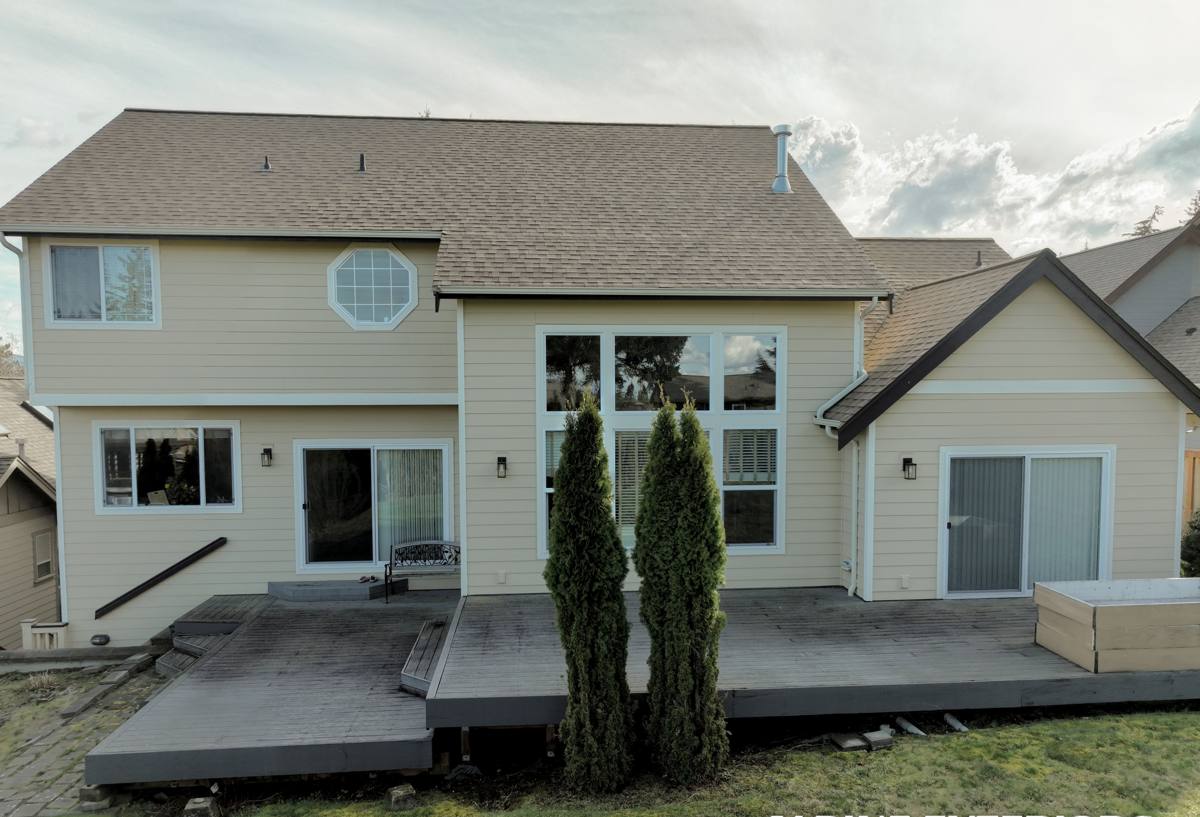
What Whatcom County's Coastal Climate Does to Windows Over Time
Salt Air and Hardware Corrosion
Airborne salt from Chuckanut Bay and the greater Salish Sea settles on exterior surfaces, including window hardware, cladding fasteners, and screen frames. Lower-grade metal components — cheap aluminum cranks, unprotected steel screws, thin mill-finish cladding — corrode faster in this environment than they would even twenty miles inland. Over a few seasons that shows up as stiff or seized hardware, streaking, and pitted finishes.
Driving Rain and Water Intrusion
Storms off the water frequently push rain horizontally against west- and south-facing walls. Windows in that path take on far more wind-driven moisture than a typical wall opening. If the flashing, sill pan, and sealant details aren't done correctly, water finds its way behind the frame and into the wall cavity — and by the time it shows up as a stain on interior trim, the rot underneath is often already established.
Moss, Algae, and a Long Wet Season
Whatcom County's extended damp season keeps exterior wood trim and sills wet for long stretches, which is exactly what moss and algae need to take hold. Once organic growth gets established on a sill or in a frame joint, it holds moisture against the material and accelerates whatever decay process is already underway — a bigger issue for wood components than for vinyl or fiberglass.
What "Custom" Actually Means for a York Window Project
Custom windows are built to your home's actual openings, not the nearest standard size. That matters a lot in this area because:
- Older homes near Chuckanut often have openings that have shifted slightly over decades of settling, and out-of-square framing needs a window built to fit — not a stock unit with gaps shimmed and caulked over.
- Additions and remodels sometimes call for a window shape or size that doesn't exist off the shelf.
- Matching sightlines, trim profiles, and grille patterns across a whole facade usually requires custom sizing so everything lines up visually from the street.
- Coastal-facing walls may warrant a different glass package or frame material than the more sheltered sides of the same house — something a one-size approach can't account for.
Custom doesn't have to mean expensive for its own sake. It means the window is specified to do the job that specific opening, on that specific wall, actually needs done.
Frame Material Options for a Coastal Climate
There's no single "best" frame material for every home — it depends on exposure, budget, and how the house is finished. Here's how the common options generally hold up under salt air and heavy moisture:
| Material | Moisture & Salt Air Performance | Maintenance | Typical Trade-offs |
|---|---|---|---|
| Vinyl | Won't rot or corrode; handles salt air well | Low — occasional cleaning | Fewer color/finish options than clad wood |
| Fiberglass | Very stable in moisture and temperature swings; strong salt air resistance | Low | Higher upfront cost than vinyl |
| Wood-clad | Good if cladding and seals stay intact; wood interior can be affected by long-term moisture if flashing fails | Moderate — watch cladding seams and interior finish | Best appearance for traditional/historic-style homes; more installation-sensitive |
| Aluminum | Conducts cold and can corrode at fasteners/joints without quality coatings | Moderate | Slim sightlines, but generally not our first recommendation on directly exposed coastal walls |
For homes with direct exposure to wind off the water, we usually steer clients toward vinyl or fiberglass on the affected elevations. Wood-clad is still a strong choice on more sheltered walls or where the home's style calls for it, as long as the installation detailing is done right — more on that below.
Glass Packages Worth Discussing for This Area
Frame material gets most of the attention, but the glass package affects comfort, energy bills, and condensation just as much:
- Dual-pane, low-E glass is the baseline for most replacements here — it cuts heat loss and helps control condensation on cold, damp mornings.
- Triple-pane adds another layer of insulation and sound dampening, worth considering on north- or west-facing rooms that take the brunt of winter weather off the bay.
- Argon or krypton gas fills between panes improve insulating performance without changing how the glass looks.
- Condensation resistance matters more in a persistently damp climate than in a dry one — ask about the glass package's condensation resistance rating, not just its U-factor, if moisture on interior glass has been a problem in your home.
Why Correct Installation Matters More Here Than Almost Anywhere Else
A quality window installed with a shortcut flashing job will still leak eventually — and in a driving-rain climate, "eventually" tends to arrive sooner. The details that separate a correct installation from a problem waiting to happen include:
- A properly sloped sill pan that directs any water that does get past the frame back outside, not into the wall.
- Flashing tape and building paper lapped in the correct shingle-style order so water always sheds downward and outward.
- Sealant used at the right joints — and only the right joints. Sealing every seam solid can trap moisture inside the assembly instead of letting it drain.
- Proper fastening and shimming so the frame doesn't rack out of square, which stresses seals and causes operational problems over time.
- Insulation around the frame gap that doesn't compress the frame or leave voids for air and moisture to move through.
None of this is visible once trim goes back on, which is exactly why it has to be done right the first time.
How We Handle a York Custom Window Project
Our process is straightforward, and every step accounts for the conditions this area sees:
- On-site assessment — we look at each opening's exposure, existing framing condition, and any signs of past moisture intrusion before recommending anything.
- Material and glass recommendation — based on which wall the window is on, how exposed it is, and your priorities on budget, appearance, and performance.
- Precise measurement — every opening is measured individually; nothing is assumed to match a "standard" size.
- Manufacturing and scheduling — custom units take longer to build than stock sizes, so we set expectations on timing up front.
- Removal and installation — old units are removed carefully to check the condition of the framing and sheathing underneath before the new window and flashing details go in.
- Sealing, trim, and cleanup — interior and exterior finish work completed and the site left clean.
Signs Your Windows May Need Attention
Coastal-climate wear doesn't always announce itself with an obvious leak. Watch for:
- Fogging or moisture between panes (a failed seal on double- or triple-pane glass)
- Soft or discolored trim or sill wood, especially on rain-facing walls
- Hardware that's stiff, sticky, or visibly corroded
- Persistent moss or algae growth on sills or in frame corners
- Drafts or noticeable temperature difference near the glass
- Difficulty opening, closing, or locking a window that used to operate smoothly
Catching these early is usually a lot less costly than waiting until water has reached the framing.
Why Hiring a Crew That Already Works in This Area Matters
A contractor who mostly installs windows in drier, more sheltered parts of the state may not default to coastal-grade flashing details or salt-air-resistant hardware unless it's specifically requested. For York-area homes near Chuckanut, that shouldn't be an upgrade you have to ask for — it should be the standard approach because it's what the climate here actually requires. Crews who work this coastline regularly already know which walls take the worst of the weather, which materials hold up, and which installation shortcuts cause callbacks two winters later.
If you're weighing a window replacement or a custom-built project for your York-area home, we're happy to take a look and walk you through your options — no pressure, no obligation. Use the form below to request a free estimate.