 Chuckanut Exterior
 Siding Built for Mount Vernon's Weather, Not Just Its Curb Appeal
Homes in the Mount Vernon area sit in one of the more punishing microclimates for exterior materials in Whatcom County. The combination of salt-laden air moving in off the water, long stretches of driving rain through fall and winter, and a moss season that can run six months or more means siding here has to do more than look good on installation day. It has to hold up to constant moisture cycling, resist the organic growth that thrives in shade and damp, and shrug off the fine salt residue that settles on exterior surfaces near the coast.
A lot of siding failures we get called out to inspect in this area aren't failures of the material itself — they're failures of the wrong material paired with the wrong installation detail for this specific climate. That's the gap we focus on closing for Mount Vernon homeowners.
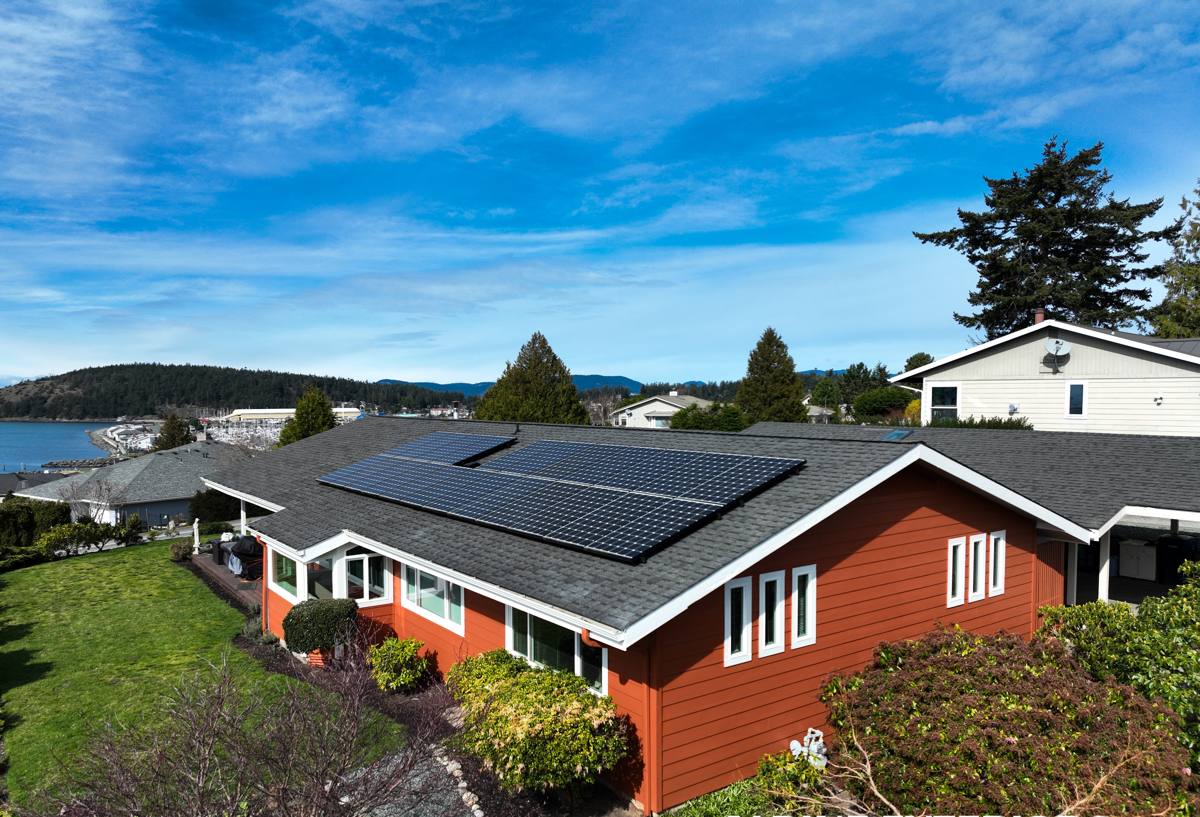
What Salt Air, Rain, and Moss Actually Do to Siding
Salt Air
Airborne salt is corrosive to fasteners and trim hardware, and it accelerates the breakdown of finishes that aren't engineered to resist it. Over years, homes closer to open water or exposed to prevailing coastal wind patterns see faster fading, chalking, and finish degradation than homes further inland — even within the same neighborhood.
Driving Rain
Whatcom County's rain doesn't just fall — wind-driven storms push water sideways into wall assemblies, especially on exposed elevations. Siding systems and installation details that work fine in a dry climate can trap or wick moisture behind the cladding here, leading to rot in the sheathing and framing long before the siding itself shows visible damage.
Moss and Organic Growth
Shaded north-facing walls, tree-lined lots, and the sheer number of damp months each year give moss, algae, and mildew a long runway to establish themselves on exterior surfaces. Porous or absorbent siding materials hold moisture at the surface longer, which feeds that growth. Materials and finishes that shed water quickly and don't provide organic material for growth to feed on hold up dramatically better.
Why We Install Only James Hardie Fiber Cement Here
We made a deliberate decision to standardize on James Hardie fiber cement siding and not install vinyl, LP SmartSide, cedar, primed spruce, or other fiber cement brands like Cemplank or Allura. That's not a marketing position — it's a response to what we consistently see hold up (and not hold up) in this exact climate.
- Non-combustible core: Fiber cement doesn't feed a fire the way wood-based products can, which matters for insurance and long-term risk regardless of coastal exposure.
- Moisture resistance: Hardie's fiber cement formulation is engineered to resist moisture-driven swelling, warping, and rot in a way that untreated or lightly treated wood-based siding cannot match over a multi-decade service life.
- ColorPlus factory finish: A baked-on factory finish resists fading and chalking from UV and salt exposure far better than field-applied paint, and it comes with its own finish warranty.
- Climate-engineered HZ product line: Hardie manufactures region-specific formulations (HZ5 for this part of the Pacific Northwest) designed around local moisture and freeze-thaw conditions rather than a one-size-fits-all product.
We're not saying every other product is unusable everywhere. We're saying that for the specific combination of salt exposure, rain volume, and moss pressure that Mount Vernon homes deal with, we're not willing to install something less suited to it and then have to explain a preventable failure to a homeowner in ten years.
What a Correct Siding Installation Actually Involves
The siding panel itself is maybe half the job. The other half — the part that's invisible once the project is done — is what actually determines whether the installation performs for 30-plus years or fails early.
Water Management Behind the Cladding
A correct installation includes a properly lapped weather-resistive barrier, integrated flashing at every window, door, and penetration, and a rainscreen or drainage gap where conditions call for it. This is what actually keeps wind-driven rain from reaching the sheathing, and it matters more in this climate than almost anywhere else we work.
Fastening and Clearances
James Hardie publishes specific fastener patterns, clearances from grade, roofline, and decking, and gapping requirements at butt joints and trim. Skipping these details voids the manufacturer warranty and creates the exact entry points that let moisture behind the siding.
Caulking and Sealant Strategy
Fiber cement systems are designed with specific joints meant to be sealed and others meant to be left as drainage paths. Over-caulking traps water; under-caulking lets it in. Getting this balance right is a detail that separates an experienced installer from a generalist.
Trim and Transition Details
Corners, transitions to roofing, and penetrations for vents and fixtures are where most water intrusion problems start. These need consistent, code-compliant flashing details, not just caulk as an afterthought.
Our Installation Process for Mount Vernon Homes
- On-site assessment: We evaluate current siding condition, existing water damage, wall orientation and exposure, and moss/growth patterns specific to the property.
- Sheathing and moisture barrier inspection: Once old siding is removed, we check the sheathing for hidden rot before anything new goes up — this is often where we find the real story behind why the old siding failed.
- Weather barrier and flashing installation: Properly lapped house wrap, integrated window and door flashing, and drainage gap installation where the wall assembly calls for it.
- James Hardie panel installation: Installed to manufacturer fastening, clearance, and gapping specifications for the HZ5 product line.
- Trim, caulking, and final detail work: Corner boards, transitions, and sealant applied per the correct joint strategy — not a blanket approach.
- Final walkthrough: We review the completed work with the homeowner and explain any maintenance basics specific to the home's exposure and site conditions.
Comparing Siding Options for This Climate
| Factor | Vinyl | Wood / LP SmartSide | James Hardie Fiber Cement |
|---|---|---|---|
| Moisture resistance | Doesn't absorb, but can trap moisture behind panels; prone to warping in heat/cold swings | Absorbent; vulnerable to rot without diligent maintenance | Engineered to resist moisture-driven swelling and rot |
| Salt air / coastal exposure | Can become brittle and discolored over time | Finish breaks down faster under salt and UV exposure | Factory ColorPlus finish resists fading and chalking |
| Moss and organic growth | Sheds water but seams can trap debris | Porous surface feeds growth if not maintained | Dense, factory-finished surface sheds water and resists growth |
| Fire resistance | Can melt or deform near heat sources | Combustible | Non-combustible core |
| Typical maintenance | Low, but damage often means full-panel replacement | Regular repainting and caulking upkeep required | Occasional wash; factory finish reduces repainting cycle |
Signs Your Current Siding Is Losing the Fight
- Persistent moss or dark streaking on north-facing or shaded walls that returns soon after cleaning
- Soft spots, bubbling, or visible warping, especially near the bottom courses and around windows
- Paint or finish that's chalking, peeling, or fading unevenly across elevations
- Visible gaps at trim, corners, or butt joints where caulking has failed or pulled away
- Musty smells or soft drywall on interior walls that back up to exterior siding
- Fastener staining or rust streaks bleeding through the surface
Why Local Installation Experience Matters
Siding installed to a generic spec sheet without accounting for a specific site's exposure is where a lot of problems start. A wall that catches driving rain off open water needs a different drainage and flashing approach than a sheltered, tree-shaded wall thirty feet away on the same house. Crews who've installed siding across Mount Vernon and the broader Whatcom County area repeatedly have already seen how wind, rain direction, shade patterns, and salt exposure play out on real homes here — not just in a manual.
That local pattern recognition is what keeps small details, like where to add an extra course of flashing or where drainage matters most, from getting glossed over. It's the difference between siding that looks right at handoff and siding that's still performing correctly fifteen years later.
What to Expect Cost-Wise
Siding installation costs vary based on square footage, the condition of the existing wall assembly, how much sheathing repair is needed, trim complexity, and site access. Full tear-off and replacement costs more upfront than lower-grade materials, but the calculation homeowners in this climate should weigh isn't just install cost — it's install cost against expected maintenance and replacement cycles over 20 to 30 years. Getting a clear, itemized estimate that separates material, labor, and any sheathing repair is the best way to compare options honestly.
If your Mount Vernon home's siding is showing wear, or you're planning ahead of a remodel, we're happy to walk the property, look at what your current siding and wall assembly are dealing with, and put together a free, no-pressure estimate for James Hardie installation done right for this climate.