 Chuckanut Exterior
 Window Replacement Built for Mount Vernon's Weather
Mount Vernon sits in a stretch of the Pacific Northwest where windows work hard year-round. The combination of salt-laden air moving in off the Sound, long stretches of driving rain, and a moss season that can run most of the year puts steady pressure on window frames, seals, and the flashing details around them. A window that's a poor match for this climate doesn't usually fail all at once — it fails slowly, through fogged glass, soft trim, and drafts that show up a few winters after installation.
We're based out of Chuckanut in Whatcom County and work window replacement jobs throughout the region, including here in Mount Vernon. That regional experience matters more than it sounds like it should: the right window for a home a few miles inland isn't always the right window for a home exposed to wind off the water, and a crew that's only worked drier climates will sometimes miss details that matter here.
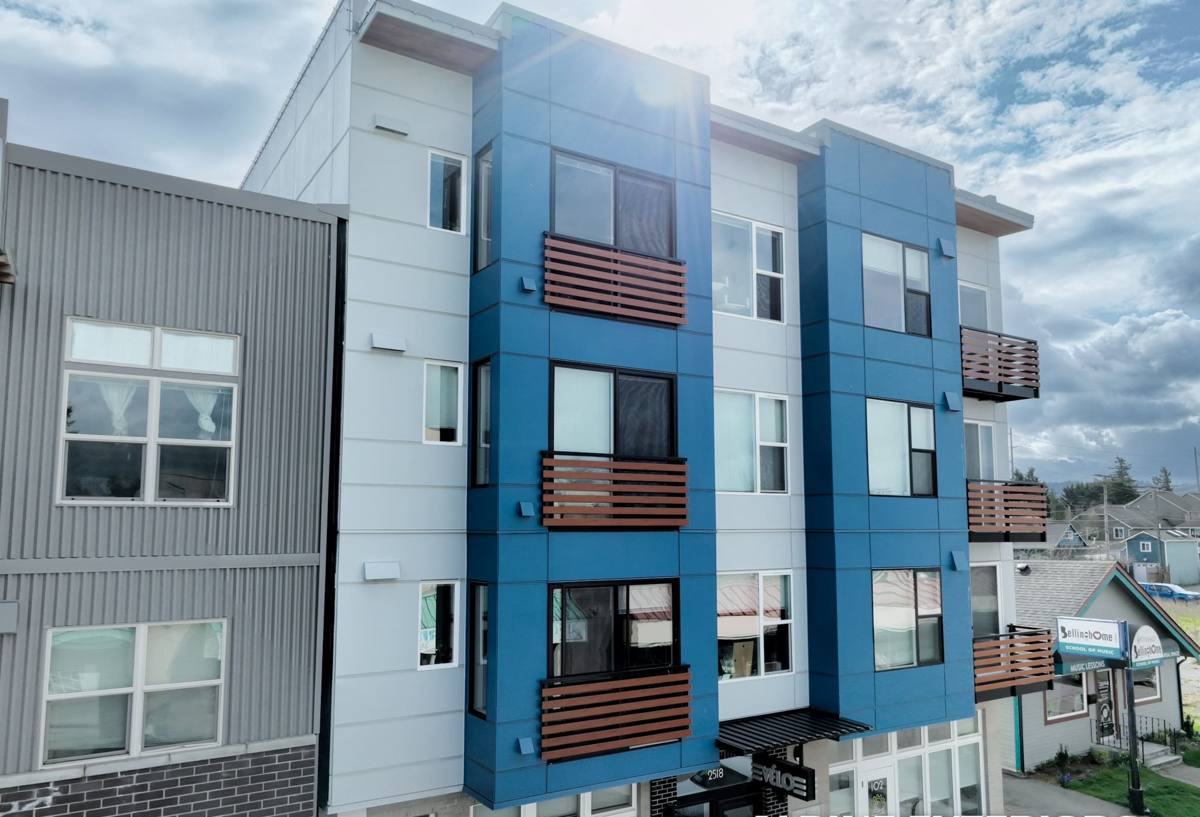
What This Climate Does to Windows Over Time
Before talking about replacement, it helps to understand what's actually working against your windows in this area.
- Salt air accelerates corrosion on hardware, screens, and any exposed metal components — locks, cranks, and balance systems wear out faster than manufacturer literature usually assumes.
- Driving, wind-blown rain tests the flashing and sealant details around a window far more than a straight-down rain would. Water pushed sideways finds gaps that would never be a problem in a calmer climate.
- Moss and constant damp hold moisture against wood trim, sills, and cladding longer than most homeowners expect, which is why wood rot around older windows here tends to start at the sill and bottom corners first.
- Temperature swings between cold, wet nights and mild days stress seals on insulated glass units, which is usually what you're seeing when a window looks foggy or cloudy between the panes.
None of this means windows in Mount Vernon fail faster across the board — it means the details of the installation (flashing, sealant choice, drainage) matter more here than they would in a drier region, and cutting corners on those details shows up sooner.
Signs It's Time to Replace, Not Just Repair
Not every window problem means full replacement. But a few signs consistently point to it being the more sensible option than another round of caulking or hardware fixes.
- Fogging or moisture between the panes of double-pane glass — the seal is gone and can't be repaired, only replaced
- Soft, spongy, or visibly rotted wood at the sill or bottom corners of the frame
- Windows that won't stay open, won't latch, or have become difficult to operate with normal effort
- Noticeable drafts or cold spots near the window even with it fully closed and locked
- Visible daylight or gaps around the frame from outside
- Paint or finish that keeps failing in the same spot no matter how often it's touched up — usually a sign of moisture getting in behind it
- Single-pane glass in a home you plan to keep long-term, where the energy loss adds up year after year
If you're only seeing one or two of these on a single window, a repair or reseal might still make sense. If you're seeing several signs across multiple windows, or the home has a cluster of older original windows, replacement is usually the more cost-effective path once you factor in the cost of repeated repairs.
What a Correct Window Replacement Job Actually Involves
The window itself is only part of the job. Most of the failures we get called out to fix on other contractors' work trace back to the installation details, not the product. A correct replacement in this climate includes:
Proper removal and opening inspection
Once the old window is out, we check the rough opening — sill, jambs, and header — for rot or water damage before anything new goes in. Installing a new window over a compromised opening just hides the problem for a while.
Flashing and drainage, not just caulk
Caulk alone isn't a weatherproofing plan in a climate with sideways rain. A proper install uses flashing tape and, where the wall assembly calls for it, a sloped sill pan so any water that does get behind the window has somewhere to go rather than sitting against the framing.
Correct shimming and fastening
Windows need to be plumb, level, and square, and shimmed in the right spots so the frame doesn't bow under wind load. An out-of-square install stresses the sash and hardware from day one, which shows up later as operating problems.
Insulation without over-packing
The gap around the window frame gets insulated, but not stuffed tight with expanding foam, which can bow the frame inward and cause operating problems. Low-expansion foam or backer rod, used correctly, does the job without distorting the window.
Interior and exterior sealing and trim
Finish sealant on both sides, and trim reinstalled or replaced cleanly, so the whole assembly sheds water the way it's designed to.
Choosing a Frame Material for This Climate
There's no single "best" window material — the right choice depends on your home's exposure, your maintenance preferences, and your budget. Here's how the common options actually perform in a climate like Mount Vernon's:
| Frame Material | How It Holds Up Here | Maintenance |
|---|---|---|
| Vinyl | Handles moisture and salt air well; won't rot or corrode. Good value for most homes. | Low — occasional cleaning, no painting or sealing needed |
| Fiberglass | Very stable in temperature swings and damp conditions; strong long-term performer in coastal-adjacent climates. | Low — durable finish, holds paint well if color changes are wanted later |
| Wood-clad (exterior clad, wood interior) | Good performance if the cladding and flashing details are done correctly; the wood interior is protected from the weather. | Moderate — interior wood may need occasional attention; exterior cladding is low-maintenance |
| Solid wood | Classic look but requires the most diligence in a wet, mossy climate — we're honest with homeowners that this is a higher-upkeep choice here, not a knock on the product itself. | High — regular painting/sealing to keep moisture out |
For most Mount Vernon homes, vinyl or fiberglass ends up being the practical choice because they shrug off the salt air and constant damp without asking for upkeep. Wood-clad is a solid option when the look matters and the installation details are handled right. Solid wood windows can still be the right call for a period-correct restoration, but we make sure homeowners understand the maintenance commitment going in.
New Construction vs. Retrofit (Pocket) Replacement
There are two general approaches to replacing an existing window, and which one applies depends on the condition of your current opening.
Retrofit / pocket replacement
The new window is sized to fit into the existing frame, which stays in place. This is faster, less disruptive to interior and exterior trim, and typically less expensive — but it only makes sense if the existing frame and sill are still sound.
Full-frame (new construction) replacement
The old frame comes out entirely, down to the rough opening, which gets inspected and repaired as needed before the new window and flashing go in. This is the right call when there's rot, water damage, or when you're changing the window size or style. It costs more and takes longer, but it's the only way to properly address a compromised opening.
We won't recommend a pocket replacement over a compromised frame just because it's the cheaper, faster option — if the opening has rot, it needs to be dealt with, or the new window is just sitting on top of the same problem.
What Affects the Cost of a Window Replacement Project
| Factor | Why It Matters |
|---|---|
| Frame material | Vinyl is generally the most budget-friendly; fiberglass and wood-clad cost more upfront but bring different maintenance and longevity trade-offs |
| Retrofit vs. full-frame | Full-frame replacement costs more due to added labor and any framing repair, but is necessary when the opening isn't sound |
| Number of windows and access | Whole-house projects typically cost less per window than one-off replacements; second-story or hard-to-access windows add labor |
| Glass package | Double-pane vs. triple-pane, and any low-E or gas-fill upgrades, affect both cost and long-term energy performance |
| Existing damage | Rot repair at the sill or framing is priced separately from the window itself and varies by how much has to be opened up |
| Trim and finish work | Matching existing interior trim or exterior siding details can add time depending on the home's construction |
Because of how much these factors vary from home to home, we don't quote window replacement over the phone with any real confidence — an in-person look at the openings and existing conditions is what makes an estimate accurate.
Why It Matters to Hire a Crew That Already Works Mount Vernon
Window replacement isn't a specialty product problem, it's a details problem — and the details that matter change with the climate. A crew that mostly works drier inland areas may not think twice about flashing details that are essential here, because in their usual conditions, skipping them doesn't cause visible problems for years. In a climate with regular wind-driven rain and near-constant dampness, those same shortcuts show up as leaks, rot, and callbacks much sooner.
Working this region regularly also means we're familiar with the kinds of homes and construction common to the area, which makes for a smoother estimate and a more accurate sense of what a given project will actually involve before work starts.
Caring for New Windows After Installation
A correctly installed window in this climate still benefits from basic upkeep. A short annual routine goes a long way:
- Rinse salt residue off exterior frames and hardware, especially on homes with direct wind exposure
- Check and clear weep holes (the small drainage openings at the bottom of the frame) so they aren't blocked by debris or moss
- Inspect exterior caulking and trim seals once a year and touch up any cracked or separated sections
- Keep gutters and downspouts clear so water isn't running down the wall directly above a window
- Operate locks and hardware periodically through the year so moving parts don't seize up from disuse
None of this is heavy maintenance — it's the kind of five-minute check that catches small issues before they turn into a call for a repair.
If you're dealing with drafty, foggy, or aging windows on a Mount Vernon home, we're happy to take a look and give you an honest, no-pressure estimate — no obligation, just a straight assessment of what your windows need and what it'll take to fix it right. Use the form below to get started.