 Chuckanut Exterior
 Asphalt Shingle Roofing Built for the Mount Vernon Climate
Homes in the Mount Vernon area sit in a stretch of Northwest Washington where the weather never fully lets up. Salt-laden air drifts in off the water, rain arrives sideways more often than straight down, and the shoulder seasons bring long stretches of damp, shaded conditions that are perfect for moss and algae. An asphalt shingle roof that's installed correctly can handle all of this for decades. One that's installed with shortcuts will show problems within a few winters — curling edges, granule loss, dark streaking, and soft spots where moisture has worked its way under the shingles.
This page is about one thing: doing asphalt shingle roofing right for houses in the Mount Vernon area, given the specific conditions this part of Whatcom and Skagit County deals with every year. It's not a general overview of shingle roofing — it's what we actually pay attention to on local roofs, and why.
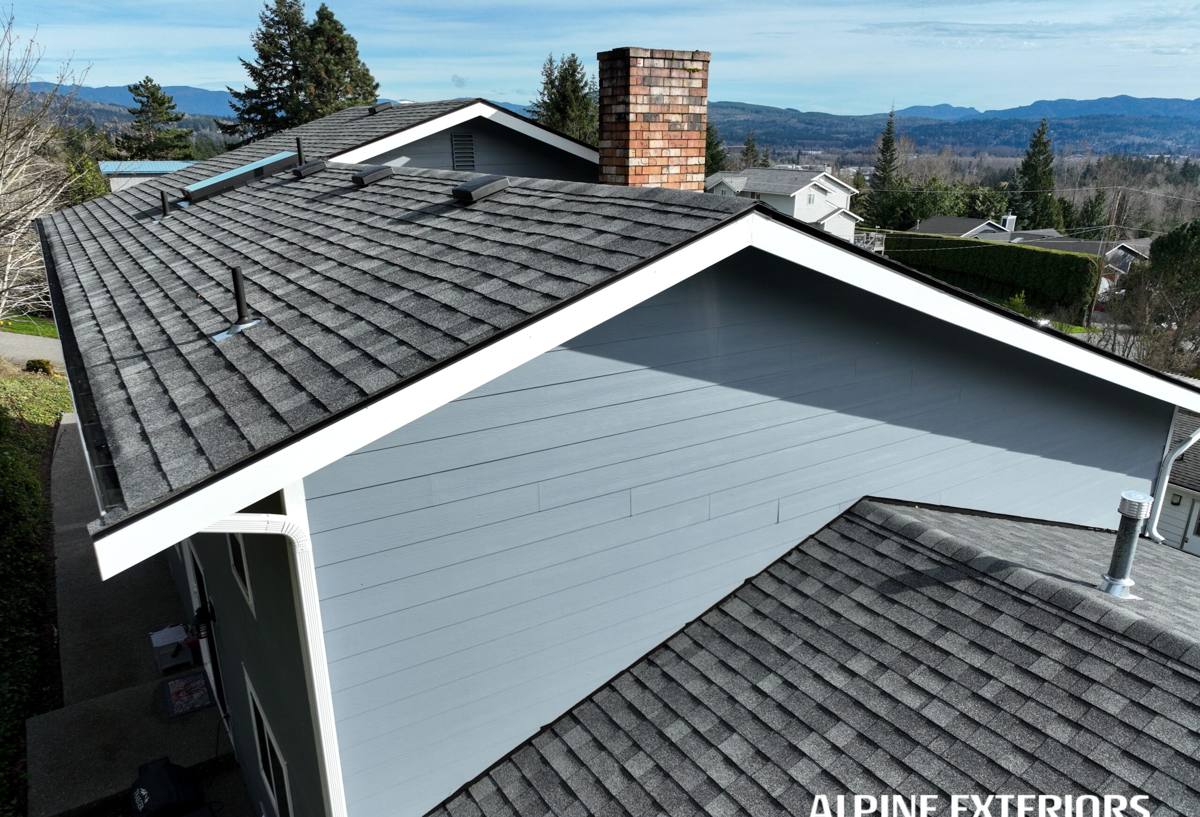
What This Climate Actually Does to a Shingle Roof
Three things drive almost every asphalt shingle problem we see on homes in this region, and they compound each other.
Salt Air and Corrosion
Being close to Puget Sound and the surrounding waterways means metal components — flashing, drip edge, nail heads, vent stacks — are exposed to salt-bearing moisture in the air, not just rain. Ordinary fasteners and thin flashing corrode faster here than they would inland. Over years, corroded flashing is one of the most common reasons a roof that "looks fine" from the ground is actually leaking at a valley or chimney.
Driving Rain and Wind-Driven Wetting
Rain in this region doesn't always fall straight down. Wind off the water pushes it sideways and up under shingle tabs, into exposed nail heads, and along roof-wall intersections. A roof that's only built to shed water moving downhill will eventually let water in through these edges. This is why sealing details at eaves, valleys, and wall flashing matter more here than in drier, calmer climates.
Moss, Algae, and a Long Growing Season
Mild, wet weather that lasts much of the year is exactly what moss and blue-green algae need. Shaded, north-facing slopes and roofs under overhanging trees are especially prone to green or black streaking and moss colonies that take hold in the granule layer. Left alone, moss lifts shingle edges, holds moisture against the roof deck, and shortens the life of the roofing system significantly.
What a Correct Asphalt Shingle Install Involves
A shingle roof is a system, not a single product. Every layer has a job, and skipping or shortcutting one layer undermines the whole roof — no matter how good the shingles themselves are.
- Deck inspection and repair: Old shingles come off, and the roof deck is checked for soft spots, delamination, or rot before anything new goes down. Roofing over a compromised deck just hides the problem.
- Ice and water shield at vulnerable areas: Self-adhered waterproof membrane goes at eaves, valleys, and around penetrations — the spots most exposed to wind-driven rain and ponding.
- Synthetic underlayment across the field: A water-resistant layer under the shingles that protects the deck if wind or wear ever lets moisture past the shingle surface.
- Properly formed valleys and flashing: Metal flashing at valleys, chimneys, skylights, and wall intersections, sized and lapped correctly so water is directed off the roof, not into it.
- Correct nailing pattern and shingle exposure: Manufacturer-specified nail placement and count, not just "enough to hold it down." Under-nailed shingles are one of the top causes of wind damage claims.
- Balanced attic ventilation: Intake at the eaves and exhaust at the ridge, sized to the attic volume, so heat and moisture don't get trapped under the roof deck.
- Starter strips and ridge caps: Small details that seal the most vulnerable edges of the roof — often skipped or done cheaply on rushed jobs.
How Our Process Works
1. On-Site Inspection
We walk the roof (or use a drone where pitch or access makes that safer) and check the deck, flashing, ventilation, and any problem areas — not just the shingles themselves. We'll tell you honestly if a repair makes more sense than a full replacement.
2. A Clear, Written Scope
You get a straightforward explanation of what's being done, what materials are specified, and why — no vague line items. If there's a judgment call, like whether the deck needs partial replacement, we explain the reasoning before we start.
3. Tear-Off and Deck Prep
Old roofing comes off down to the deck. This is the only way to actually see what condition the sheathing is in and to install underlayment and ice-and-water shield correctly — layering new shingles over old is not something we do.
4. Installation to Manufacturer Specification
Underlayment, flashing, starter course, field shingles, and ridge caps go on in that order, following the shingle manufacturer's installation requirements. This is also what keeps a manufacturer's material warranty valid — skipped steps can void it even if the shingles themselves are fine.
5. Site Cleanup and Walkthrough
Nails and debris get cleared from the yard and driveway, and we walk the finished roof with you so you know what was done and what to watch for going forward.
Choosing the Right Shingle for This Climate
Not every asphalt shingle product is a good fit for a wet, salt-air, moss-prone environment. The table below compares the common tiers homeowners in this area choose between.
| Shingle Type | Typical Lifespan Here | Best For | Trade-Offs |
|---|---|---|---|
| 3-Tab (economy) | 15–20 years | Budget-driven projects, rentals | Less wind resistance, shorter warranty, more visible aging |
| Architectural (standard) | 25–30 years | Most single-family homes | Best balance of cost, durability, and appearance for this climate |
| Algae-Resistant Architectural | 25–30 years | Shaded lots, north-facing roofs, tree cover | Slightly higher upfront cost; meaningfully reduces algae/moss staining |
| Premium/Designer | 30+ years | Steep-slope, high-visibility roofs | Higher material and labor cost; heavier product |
For most homes in the Mount Vernon area, we steer people toward algae-resistant architectural shingles. The upcharge over standard architectural shingles is modest, and given how much of the year this region spends wet and shaded, it's one of the better dollar-for-dollar upgrades available.
What Drives the Cost of a Shingle Roof Here
Every roof is different, so we don't quote sight unseen — but the factors below are what actually move the price, more than the shingle brand does. As a general reference, a full asphalt shingle re-roof on a typical single-family home in this region commonly falls somewhere in the wide range of $8,000 to $20,000 or more, depending heavily on the factors below.
| Factor | Why It Matters |
|---|---|
| Roof size and number of facets | More squares and more valleys/hips mean more material and labor hours |
| Pitch and access | Steep or hard-to-access roofs take longer and require more safety setup |
| Deck condition | Rotted or delaminated sheathing found during tear-off adds repair cost |
| Layers of existing roofing | Multiple old layers mean more tear-off labor and disposal |
| Ventilation upgrades | Adding proper intake/exhaust venting where none existed adds scope |
| Shingle tier chosen | Standard vs. algae-resistant vs. premium changes material cost |
Moss and Algae: Prevention Matters as Much as Product
Even a good algae-resistant shingle benefits from a roof design and maintenance routine that limits moss in the first place. We look at a few things specific to moss-prone roofs during install and inspection:
- Whether overhanging branches are keeping sections of the roof shaded and damp longer than necessary
- Whether existing gutters and downspouts are actually moving water off the roof, or letting it back up under the eaves
- Whether zinc or copper strips near the ridge make sense for a particularly shaded roof, to slow future moss growth
- Whether valleys and low-slope sections are draining fully or holding standing water after a storm
Why a Crew That Already Works This Area Matters
Roofing technique doesn't change much from one region to another, but judgment calls do. A crew that regularly works Mount Vernon and the surrounding area already knows which roof orientations tend to hold moss, how much wind exposure a given elevation gets, and which flashing details fail first under this specific combination of salt air and driving rain. That's the difference between a roof that's built to a generic spec sheet and one that's built for what actually happens here, storm season after storm season.
Local crews also tend to have a better handle on permitting and inspection expectations for the jurisdiction, and are easier to reach for warranty questions or a follow-up check years down the road — you're not waiting on a crew that has to drive in from out of the area.
Signs a Mount Vernon Roof Needs Attention
Asphalt shingle roofs usually give some warning before they leak. Worth a call if you're seeing any of the following:
- Granules collecting in gutters or at the base of downspouts
- Shingle edges curling up or tabs that look cupped rather than flat
- Dark streaking or green/black patches, especially on shaded slopes
- Moss visibly growing on the shingle surface, not just in the gutters
- Soft or spongy spots when walked on, or sagging along a ridge or valley
- Daylight visible through the roof deck from inside the attic
- Water stains on interior ceilings near exterior walls or chimneys
Basic Maintenance That Extends Roof Life Here
A well-installed roof still benefits from a bit of upkeep, especially in a climate that pushes moss and algae growth. A simple annual routine covers most of it:
- Clear gutters and downspouts of debris, especially after fall leaf drop
- Trim back branches that overhang the roofline to reduce shade and debris buildup
- Have a visual inspection done after any major windstorm
- Address small moss patches early, before they spread across a slope
- Check attic ventilation isn't blocked by insulation, which traps moisture against the deck
If you're weighing a repair versus a full replacement, or just want an honest read on where your roof stands, we're happy to take a look. Use the form below to request a free, no-pressure estimate for your Mount Vernon property.