 Chuckanut Exterior
 Siding Replacement Built for Silver Beach's Conditions
Silver Beach sits close enough to the water that salt-laden air is part of daily life, and that changes what siding has to survive. Add Whatcom County's driving rain and the long stretch of wet, low-light months that keep moss and algae growing on north- and west-facing walls for much of the year, and you have a climate that is genuinely harder on exterior cladding than most of the country deals with. Siding replacement here is not just a cosmetic upgrade — it's a chance to put a wall system on the house that's actually engineered for salt exposure and sustained moisture, instead of one that's just tolerating it.
We work in this specific pocket of Chuckanut regularly, which means we already know what the salt air does to fasteners and trim over time, how moss establishes itself on shaded siding, and where driving rain tends to find the weak points in a wall assembly. That local pattern recognition shapes how we plan and install every Silver Beach job.
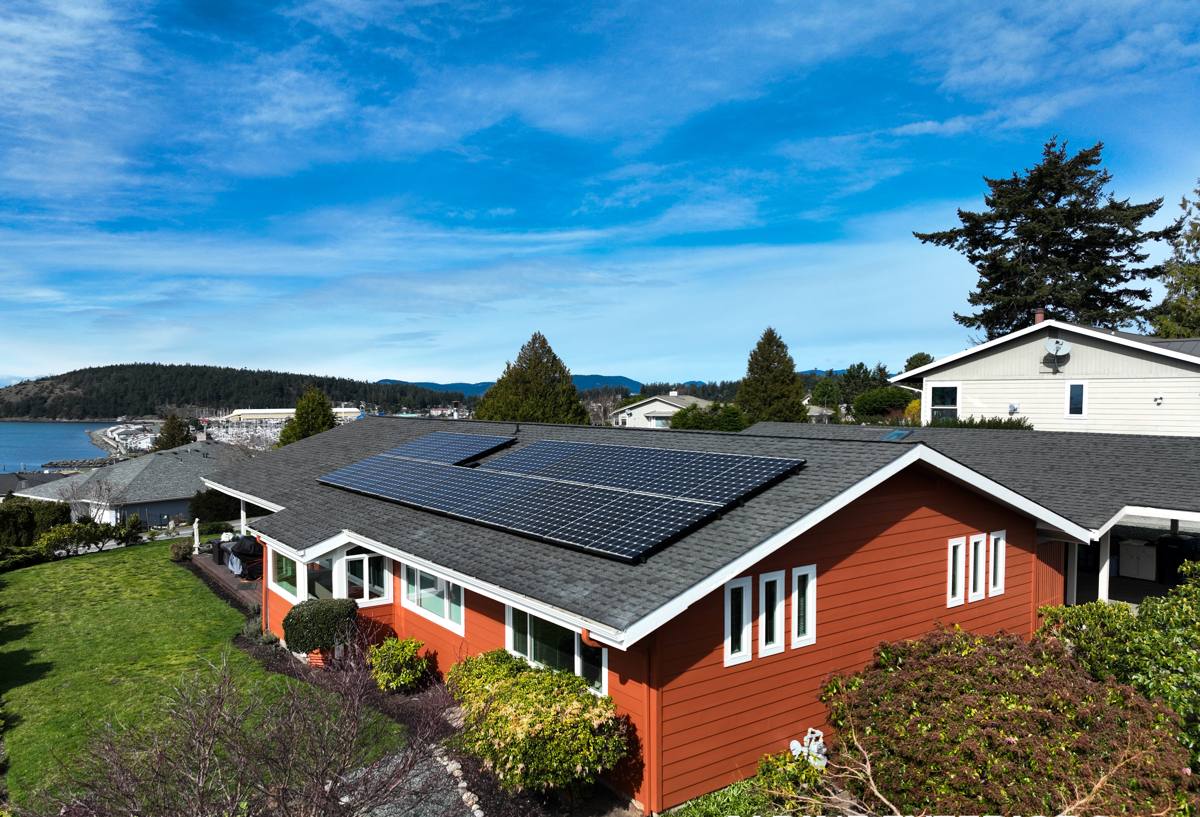
How Salt Air, Rain, and Moss Actually Damage Siding
Salt Air
Airborne salt is corrosive to metal fasteners, flashing, and trim components, and it accelerates the breakdown of finishes that aren't formulated to resist it. Over years, this shows up as rust streaking, failing caulk lines, and paint that chalks and fades faster than it would a few miles inland.
Driving Rain
Wind-driven rain doesn't just fall on siding — it gets pushed sideways and upward into laps, seams, and penetrations. A wall that relies on caulk and paint alone to keep water out, rather than a properly detailed drainage plane behind the siding, will eventually let moisture in. Once that happens, the damage is often happening inside the wall before it's visible outside.
Moss and Algae
Shaded, north-facing walls in Chuckanut stay damp for extended periods during the fall and winter. That moisture supports moss, mold, and algae growth on porous or textured siding surfaces. Beyond the appearance issue, sustained organic growth holds moisture against the siding surface longer, which shortens the service life of moisture-sensitive materials.
Signs a Silver Beach Home Needs Siding Replacement
Not every issue means a full tear-off, but these are the signs we take seriously when we walk a property in this neighborhood:
- Soft, spongy, or crumbling siding when pressed, especially near the bottom courses and around windows
- Persistent moss, algae, or dark staining that returns quickly after cleaning
- Visible warping, buckling, or gaps between siding panels
- Peeling or bubbling paint that keeps failing in the same spots year after year
- Rust streaking from fasteners or trim, or corroded flashing at corners and openings
- Rising interior humidity, musty smells near exterior walls, or unexplained energy bill increases
- Siding that's original to a home 25+ years old, especially wood or older composite products
If you're seeing more than one of these at once, it usually means the siding has already let moisture past the surface, not just on top of it.
What a Correct Siding Replacement Actually Involves
Full Tear-Off, Not a Cover-Over
We remove the existing siding down to the sheathing rather than installing over it. That's the only way to actually inspect for hidden rot, check the condition of the framing, and start the new wall assembly clean. Covering over damaged siding just buries a problem that keeps getting worse behind the new material.
Weather-Resistive Barrier and Flashing
Underneath the siding, a properly lapped weather-resistive barrier and correctly integrated flashing at windows, doors, and penetrations do most of the real work of keeping water out. Siding sheds most of the rain, but the barrier system behind it is what handles the water that gets past the surface — which, in a driving-rain climate like this one, is not a hypothetical.
Fastening and Clearances for Coastal Exposure
We use corrosion-resistant fasteners and follow manufacturer-specified nailing patterns, and we hold proper clearances between the siding's bottom edge and the ground, decks, and roof lines. Tight or incorrect clearances trap moisture against the siding edge, which is exactly where salt-air corrosion and moss growth tend to start first.
Caulking and Sealant Details
Sealant is used at specific joints, not as a substitute for correct flashing. Over-reliance on caulk is a common shortcut that fails faster in salt air and constant rain than a properly flashed and lapped assembly.
Why We Install Only James Hardie Fiber Cement
We don't install vinyl, LP SmartSide, primed spruce, cedar, or other fiber cement brands. That's a deliberate standard, not a lack of options. Vinyl can warp and become brittle with age and temperature swings, and it relies heavily on caulking at seams that salt air degrades faster than inland. Wood and engineered wood products need diligent, ongoing maintenance to resist moisture and organic growth — maintenance that's easy to fall behind on in a climate this wet. Fiber cement from other manufacturers can perform reasonably well, but we've standardized on James Hardie specifically because of its factory-applied ColorPlus finish, its HZ product engineering for wet climates, and the strength of its transferable warranty when the installation is done to spec.
James Hardie fiber cement is non-combustible, dimensionally stable, and doesn't feed moss and algae growth the way wood fiber products can. Its factory finish is baked on under controlled conditions, which holds color and resists the fading and chalking that salt air accelerates in field-applied paint. None of that replaces correct installation — but it gives a Silver Beach home a real head start against the specific conditions it faces.
| Material | Salt Air Behavior | Moss/Moisture Resistance | Maintenance Burden |
|---|---|---|---|
| Vinyl Siding | Seams and fasteners degrade faster; can warp with age | Low absorption but growth collects in seams and laps | Low, but limited repair options once damaged |
| Wood / Primed Spruce / Cedar | Finish breaks down faster in salty, wet air | Absorbs moisture; feeds moss and rot without upkeep | High — regular painting and sealing required |
| Other Fiber Cement (LP SmartSide, Cemplank, Allura) | Generally durable; finish quality varies by brand | Resistant when installed correctly | Moderate; warranty and finish specs vary by manufacturer |
| James Hardie Fiber Cement | Non-combustible, engineered HZ lines for wet coastal climates | Resists moisture absorption and organic growth | Low; factory ColorPlus finish reduces repainting needs |
Our Siding Replacement Process
The steps are consistent, but the details get adjusted to the specific exposure of the house — how much wind-driven rain a wall takes, how shaded it is, and how close it sits to the water.
- On-site evaluation: We walk the exterior, check for soft spots and moisture damage, and note exposure conditions specific to the lot.
- Written estimate: A clear scope and price, with product lines and colors discussed based on the home's exposure.
- Tear-off and inspection: Old siding comes off, sheathing and framing are checked, and any hidden damage is addressed before anything new goes up.
- Barrier and flashing installation: Weather-resistive barrier, flashing, and trim are installed and detailed at every opening and penetration.
- Hardie siding installation: Installed to manufacturer specifications for fastening, clearances, and joint treatment.
- Final walkthrough: We review the finished work with you and confirm everything meets the standard we install to.
Why a Crew That Already Works Silver Beach Matters
A contractor who mostly works inland doesn't always plan for the same conditions as a crew that's regularly out in Chuckanut and along the Whatcom County shoreline. Knowing which walls typically take the worst of the driving rain, where moss tends to establish first, and how much clearance a given lot actually needs isn't something you get from a manual — it comes from doing the work in this specific area repeatedly. That local familiarity shows up in fewer callbacks and a wall system that's actually matched to what the house faces, not a generic installation applied the same way everywhere.
What Siding Replacement Costs Depend On
We don't publish blanket prices because every home is different, but the main cost drivers on a Silver Beach siding replacement are consistent:
| Factor | Why It Matters |
|---|---|
| Home size and wall complexity | More corners, gables, and trim details mean more labor and material |
| Extent of hidden damage | Rot or sheathing damage found during tear-off adds repair scope |
| Siding profile and Hardie product line | Lap, shingle, and panel styles vary in material and install time |
| Trim and accessory work | Window and door trim, corner boards, and fascia affect total scope |
| Site access | Tight lots, slopes, or limited staging area near the water can affect labor time |
After Installation: Keeping It Performing
A correctly installed Hardie siding system needs far less upkeep than wood or vinyl, but a little seasonal attention goes a long way in this climate. Rinsing off accumulated salt residue and checking for moss on shaded walls once or twice a year keeps the surface performing the way it's designed to. Keeping gutters clear and vegetation trimmed back from the walls also reduces the moisture load the siding has to deal with through the wet months.
If your Silver Beach home is showing signs of aging siding, or you just want an honest read on its current condition, we're happy to walk the property with you and put together a clear, no-pressure estimate — no obligation, just a straight answer on what the house actually needs.