 Chuckanut Exterior
 Siding Built for Silver Beach's Waterfront Exposure
Silver Beach sits close enough to the water that its homes take a different kind of weathering than houses a few miles inland in Chuckanut or elsewhere in Whatcom County. Salt-laden air, wind-driven rain off the bay, and a moss season that can stretch for most of the year all put steady pressure on exterior siding. None of this is dramatic, day-to-day damage — it's slow, cumulative wear that shows up years later as swelling, staining, fastener corrosion, or paint failure. A siding installation done for Silver Beach needs to be planned around that reality from the start, not treated the same as a job on a dry, sheltered lot inland.
This page focuses specifically on siding installation for Silver Beach homes: what the local climate demands, what a correct installation actually involves, how our process works, and why it matters to hire a crew that already understands this neighborhood's conditions rather than one learning on the job.
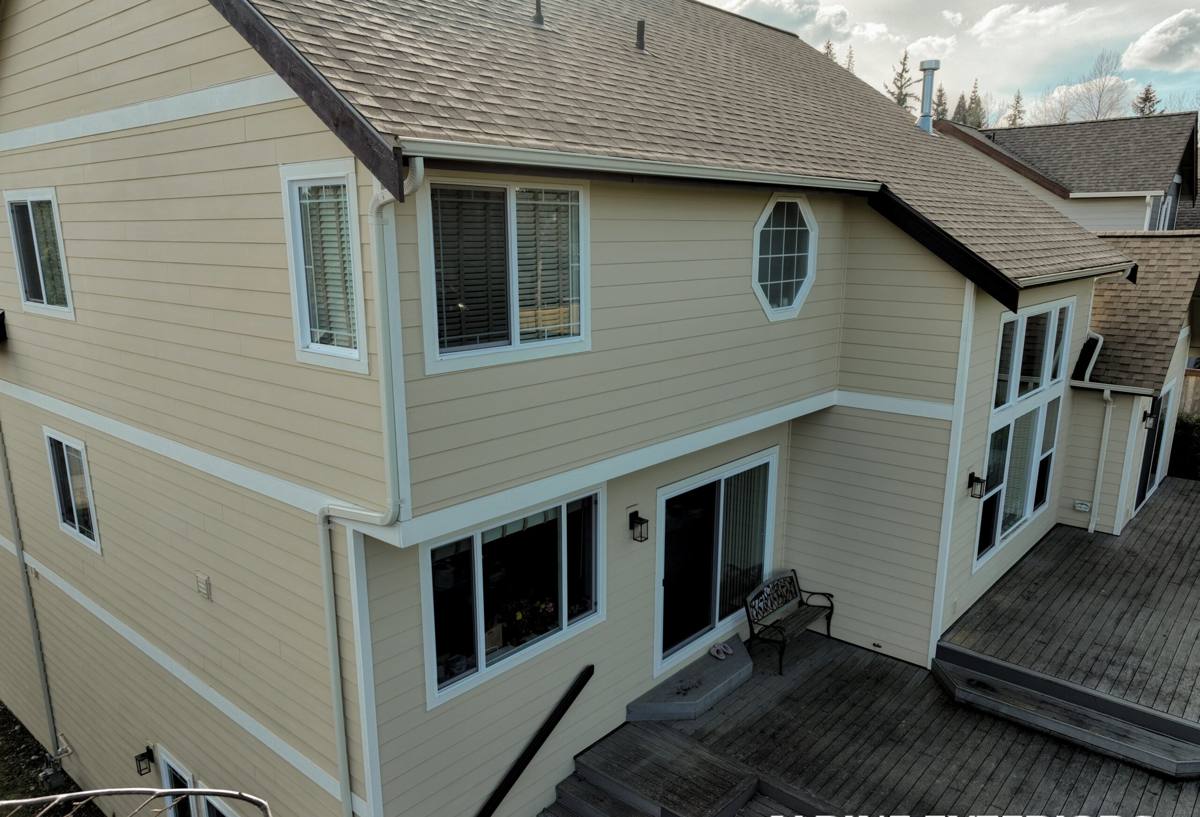
What Salt Air, Driving Rain, and Moss Do to Siding Over Time
Salt Air and Metal Fasteners
Airborne salt accelerates corrosion on anything metal — nail heads, flashing, trim fasteners, and hardware. On homes closer to the water, under-spec or improperly coated fasteners can start showing rust streaks and weakening well before the siding material itself is due for attention. The fix isn't complicated, but it has to be planned for up front: corrosion-resistant fasteners and flashing rated for coastal exposure, not whatever happens to be on the truck.
Driving Rain and Wind-Driven Moisture
Wind off the water pushes rain sideways into wall assemblies, not just straight down. That means seams, laps, and penetrations (hose bibs, light fixtures, vents) take on water pressure that a calmer inland site rarely sees. Siding systems that rely on face-sealing alone, rather than proper drainage behind the cladding, are the first to show problems here — trapped moisture behind the siding, not just what hits the surface.
A Long Moss Season
Shade, moisture, and mild temperatures make this area friendly to moss and algae growth for much of the year. Moss holds moisture against a wall surface longer than open air ever would, and on absorbent or poorly finished materials that constant dampness is what eventually leads to rot, cupping, or finish failure — especially on north-facing walls and areas shaded by trees or neighboring structures.
Why We Install James Hardie Fiber Cement — and Nothing Else
We install James Hardie fiber cement siding exclusively. We don't install vinyl, LP SmartSide, Cemplank, Allura, primed spruce, or raw cedar, and we're upfront about why: those products all have real strengths, but each comes with a trade-off that matters more in a place like Silver Beach than it might elsewhere.
- Vinyl is affordable and low-maintenance, but it can warp or distort under sustained heat and doesn't hold up structurally the way fiber cement does over decades of coastal weather cycling.
- Wood-based products (engineered wood, primed spruce, cedar) are appealing and traditional-looking, but they're organic materials, and organic materials in a high-moisture, moss-prone environment need more consistent upkeep to avoid rot at seams and cut edges.
- Other fiber cement brands compete on price but don't offer the same factory-finish system, climate-specific engineering, or transferable warranty backing that James Hardie has built into its product line.
James Hardie fiber cement is non-combustible, dimensionally stable in wet-dry cycling, and available in an HZ5 formulation engineered specifically for the Pacific Northwest's freeze-thaw and moisture patterns. Paired with the factory-applied ColorPlus finish, it holds color and resists the fading and moisture intrusion that field-painted materials are more prone to over time. That combination is why it's the only product we put our name behind.
What a Correct Siding Installation Involves
The siding itself is only part of the system. Most siding failures we see on coastal properties trace back to what's behind the boards, not the boards themselves. A correct installation in Silver Beach's conditions includes:
- A continuous water-resistive barrier (house wrap) installed shingle-style so any moisture that gets past the siding drains down and out, not into the wall cavity
- Proper flashing at every window, door, and penetration, lapped correctly with the water-resistive barrier so water is directed outward at each transition point
- Rain-screen or drainage gap detailing where appropriate, giving trapped moisture a path to escape and dry rather than sitting against the back of the siding
- Correct fastener type, length, and placement per Hardie's installation specifications — under-fastening or over-driving nails is one of the most common causes of premature siding failure
- Proper clearances at grade, roof lines, and decks so siding doesn't sit in standing water or constant splash-back
- Factory-cut and factory-sealed edges wherever possible, since cut fiber cement edges need to be properly sealed to perform as designed
Skipping or rushing any one of these steps doesn't usually cause an obvious problem right away — it shows up two, five, or ten years later as a callback nobody wants to make.
Choosing the Right Hardie Line for This Neighborhood
James Hardie offers different HZ (HardieZone) engineered formulations for different climate zones, along with a range of panel and lap profiles and ColorPlus finish options. For a location like Silver Beach, the choice isn't just about looks — it's about matching the product to the moisture and salt exposure the home actually faces.
| Consideration | What It Means for Silver Beach |
|---|---|
| HZ5 formulation | Engineered for the Pacific Northwest's moisture and temperature cycling; the standard choice for this climate zone |
| ColorPlus factory finish | Baked-on finish resists fading and moisture intrusion better than field-applied paint, reducing repaint cycles near salt air |
| Lap vs. panel profile | Both perform well when installed correctly; choice is mostly aesthetic and tied to the home's architectural style |
| Trim and fascia matching | Using Hardie trim alongside Hardie siding keeps expansion, finish, and warranty coverage consistent across the whole exterior |
We'll walk through the specific line, color, and profile options during an on-site estimate, since the right combination depends on the home's exposure, existing trim, and the homeowner's style preferences.
Our Process for a Silver Beach Siding Project
- On-site assessment — we look at the home's specific exposure: which walls take the most wind-driven rain, where moss and moisture are already showing, and the condition of the existing wall assembly underneath.
- Tear-off and inspection — once old siding is removed, we inspect sheathing for hidden rot or moisture damage before anything new goes on. This is often where problems that had nothing to do with the visible siding get caught.
- Water management install — house wrap, flashing, and drainage detailing go in first, and this is the step that determines how the whole system performs over the next several decades.
- Hardie installation to spec — correct fastening, clearances, and sealed cut edges, following James Hardie's published installation requirements rather than shortcuts.
- Final trim, caulking, and walkthrough — we finish with trim details and a walkthrough so the homeowner understands what was done and what maintenance, if any, to expect going forward.
Cost Factors for Silver Beach Siding Installation
Every home is different, so we don't quote pricing without seeing the property, but the main cost drivers on a project like this are consistent:
| Factor | Why It Affects Cost |
|---|---|
| Extent of hidden wall damage | Rot or moisture damage found during tear-off adds sheathing repair before new siding can go on |
| Home size and wall complexity | More corners, dormers, and trim details mean more labor and material cuts |
| Siding profile and finish choice | Panel vs. lap, and standard vs. specialty ColorPlus finishes, carry different material costs |
| Access and site conditions | Slopes, tight lot lines, or limited staging area near the water can affect labor time |
| Trim and accessory scope | Full trim replacement alongside siding costs more up front but keeps the whole exterior consistent |
Why Local Experience in Silver Beach Matters
A crew that already works in Silver Beach and the surrounding Chuckanut area isn't guessing at how to handle salt exposure, wind-driven rain, or a long moss season — they've already seen how those conditions play out on real homes nearby. That local familiarity shows up in small but important decisions: which walls typically need extra flashing attention, how much drainage detailing is worth the added step, and what fastener and finish choices actually hold up here rather than just on paper.
It also means fewer surprises during the permitting and inspection process in Whatcom County, since a contractor working the area regularly already understands what inspectors expect to see. For a job that's supposed to last decades, that kind of familiarity is worth more than the lowest bid from a crew unfamiliar with coastal Washington conditions.
If you're considering new siding for a home in Silver Beach, we're happy to take a look and give you a straightforward, no-pressure estimate. There's a form below — reach out and we'll schedule a time to walk the property with you.