 Chuckanut Exterior
 Why Silver Beach Roofs Wear Differently
A roof in Silver Beach doesn't fail the same way a roof does forty miles inland. The combination of salt-laden air, wind-driven rain off the water, and a moss season that can stretch from fall through spring puts a different kind of stress on shingles, flashing, and fasteners than most homeowners realize. Repairs that would hold up fine in a drier, calmer climate can fail early here if they aren't done with the local conditions in mind.
We work on roofs throughout Chuckanut and the surrounding Whatcom County area, and Silver Beach homes show a consistent pattern: premature fastener corrosion, moss intrusion at shaded slopes and valleys, and water finding its way past flashing that was installed correctly for a milder environment but not for this one. A good repair here has to account for all three.
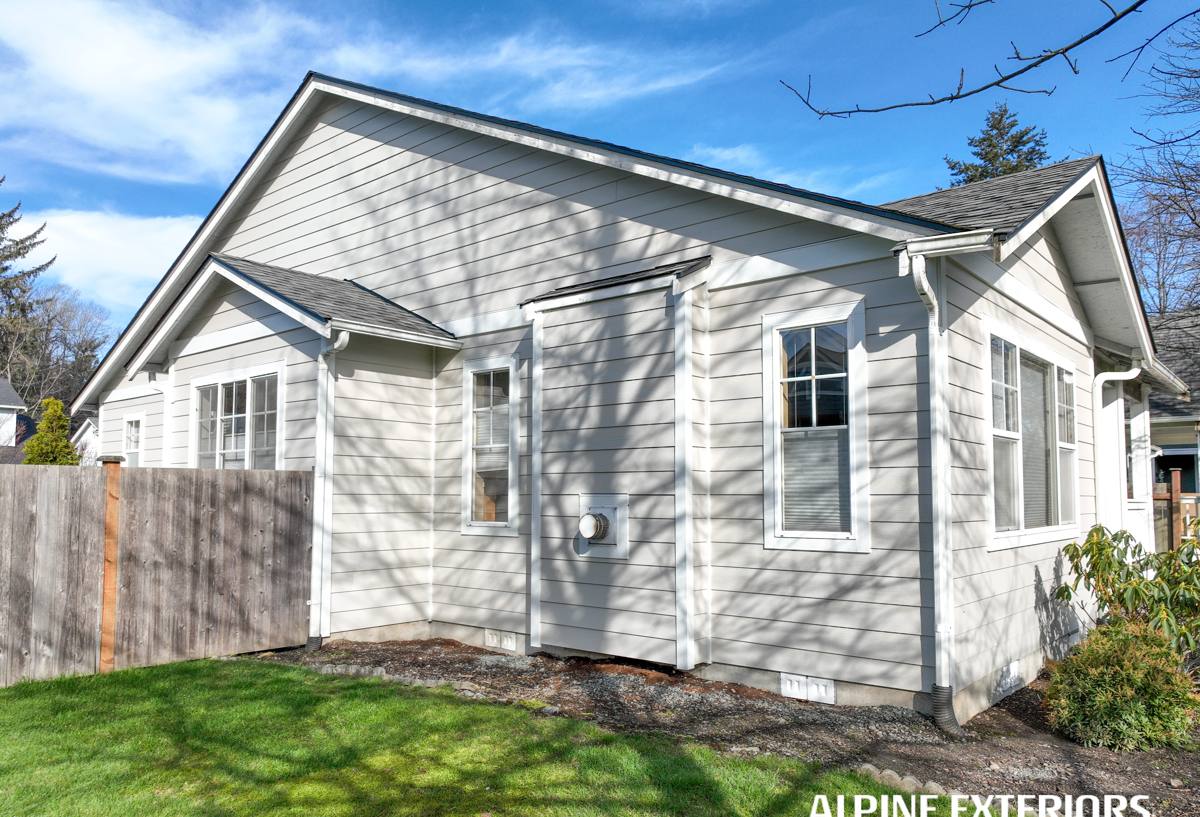
What the Local Climate Actually Does to a Roof
Salt Air and Metal Fatigue
Homes closer to the water pick up airborne salt that settles on roofing metal — flashing, drip edge, nail heads, gutter hardware, and any exposed fasteners. Over time this accelerates corrosion, especially on lower-grade galvanized fasteners or flashing that wasn't rated for coastal exposure. Corroded nail heads lose their grip on shingles, and pitted flashing seams open small gaps that let water in long before a homeowner notices a leak inside.
Driving Rain and Wind-Driven Moisture
Whatcom County gets its share of steady rain, but the driving, wind-pushed rain that comes through the Chuckanut corridor is a different problem. It doesn't just fall — it gets pushed sideways and upward under shingle edges, around vent boots, and into valleys that aren't sealed tight. A repair that only addresses the visible damage and ignores how water moves under wind pressure tends to leak again within a season or two.
A Long Moss Season
Shaded, north-facing slopes and roofs near tree cover stay damp longer here than in sunnier parts of the state, and that dampness is exactly what moss needs to take hold. Moss doesn't just look bad — its root structure lifts shingle edges, holds moisture against the roof deck, and slowly works granules loose. Left unaddressed, a moss patch that started as a cosmetic issue becomes a soft spot in the decking underneath.
Signs a Silver Beach Roof Needs Repair
Most roof problems give warning signs well before there's an active leak inside the house. Homeowners who catch these early save significant money over waiting for a ceiling stain to show up.
- Granules collecting in gutters or at downspout outlets
- Moss or dark streaking concentrated on shaded or north-facing slopes
- Curling, cupping, or cracked shingles, especially on the side facing prevailing wind
- Rust staining below metal flashing or around vent pipes
- Soft or spongy spots when walking the roof (should only be assessed by a professional)
- Daylight visible through the attic roof deck at seams or nail holes
- Water stains on interior ceilings near exterior walls, chimneys, or skylights
- Gutters pulling away from the fascia or sagging under debris and moss buildup
What a Correct Repair Actually Involves
A roof repair done right isn't just swapping out a few shingles. It starts with figuring out why that section failed in the first place, because replacing shingles over a flashing problem or a ventilation issue just buys a little time before the same spot fails again.
Diagnosis Before Anything Else
We trace the actual path water is taking, which is often not directly above where the interior stain shows up. Water can travel along rafters or sheathing seams before dripping somewhere else entirely. Getting this wrong means fixing the wrong spot.
Matching Materials, Not Just Color
Shingle repairs should match the existing roofing not just in color and style but in age-appropriate exposure and nailing pattern. A repair patch that's noticeably newer and stiffer than the surrounding shingles can actually shed water differently and create a new weak point at the seam.
Flashing Gets Treated as Structural, Not Cosmetic
Given how hard salt air is on metal here, we don't patch failing flashing with sealant alone — sealant is a short-term measure, not a fix. Compromised flashing around chimneys, skylights, valleys, and wall intersections gets replaced with corrosion-resistant material and properly integrated under the roofing courses, not just caulked on top.
Deck Repair When Needed
If moss or a long-standing leak has softened the roof deck, patching shingles over rotten sheathing is a waste of money. We open the area, replace the damaged decking, and confirm the framing underneath is sound before closing it back up.
Ventilation Gets a Look
Poor attic ventilation traps moisture that condenses on the underside of the roof deck, which mimics or worsens leak damage and speeds up moss growth from below the surface. Repair work is a natural point to check intake and exhaust venting and correct it if it's undersized or blocked.
Repair vs. Replacement: How We Make the Call
Not every damaged roof needs a full replacement, and not every roof is a good candidate for another repair. Here's roughly how we think through it:
| Factor | Favors Repair | Favors Replacement |
|---|---|---|
| Age of roof | Under 15 years, or well within expected lifespan for material | Nearing or past manufacturer-rated lifespan |
| Extent of damage | Isolated to one slope, valley, or penetration | Spread across multiple slopes or recurring in different spots |
| Deck condition | Sound sheathing under the damaged area | Widespread soft spots or rot |
| Shingle condition elsewhere | Remaining shingles still flexible, granules intact | Granule loss and brittleness roof-wide |
| History of repairs | First or second repair on this roof | Repeated repairs to the same or nearby areas |
We'll tell you honestly which category your roof falls into. If a repair is the right call, we won't push a replacement, and if the damage is bigger than a repair can reasonably fix, we'll explain exactly why rather than patch something that's likely to fail again in a year.
Our Repair Process
- Inspection: We walk the roof (or use a lift/drone where pitch or access requires it) and check the attic from inside where possible, since attic moisture and daylight gaps often tell us more than the exterior does.
- Written diagnosis: You get a clear explanation of what's failing and why, in plain language, before any work starts.
- Scoped repair plan: We outline exactly what will be done — shingle replacement, flashing work, deck repair, ventilation correction — and what it costs, with no surprise add-ons once work begins.
- The repair: Work is done to match the existing roof system and correct the underlying cause, not just cover the symptom.
- Cleanup and debris check: Old materials, nails, and granule debris are cleared from the roof, gutters, and ground — including a magnetic sweep for stray fasteners.
- Follow-up: We tell you what to watch for afterward and when it's worth a follow-up look, particularly heading into the wetter months.
Cost Factors Homeowners Should Understand
Roof repair pricing varies a lot based on scope, and we'd rather explain what drives the cost than quote a number with no context. Broadly, small isolated repairs (a section of shingles, a single flashing point) tend to run in the low hundreds to low thousands of dollars, while repairs involving deck replacement, extensive flashing work, or multiple areas climb from there. Exact pricing depends on roof pitch, access, material match, and what we find once we're up there — which is why we inspect before quoting rather than guessing over the phone.
| What Drives Repair Cost | Why It Matters |
|---|---|
| Roof pitch and access | Steeper or harder-to-reach roofs take longer and need more safety setup |
| Extent of deck damage | Sheathing replacement adds material and labor beyond surface shingle work |
| Flashing complexity | Valleys, chimneys, and multiple penetrations require more custom metal work |
| Material matching | Discontinued or specialty shingle profiles can be harder to source and match |
| Extent of moss/organic growth | Heavy growth may require treatment and cleaning before repair work can even begin |
Why Local Experience on Silver Beach Roofs Matters
A contractor who mostly works drier, inland roofs can still do competent shingle work, but they may not think to upgrade fastener grade for salt exposure, seal a valley for wind-driven rain rather than straight-down rain, or recognize how far moss has already worked under a shingle edge before it's visible from the ground. None of that is exotic knowledge — it's just familiarity that comes from repeatedly working roofs in this specific stretch of Whatcom County and seeing how they age.
We also know the practical side of working in this area: typical HOA or neighborhood expectations around exterior appearance, how tree cover on shaded lots affects moss recurrence even after a repair, and what permitting looks like for anything beyond a straightforward repair. That local familiarity shortens the time between "something's wrong" and "it's fixed correctly."
Protecting the Repair Afterward
A properly done repair still benefits from basic upkeep, especially given how long the moss and rain season runs here.
- Keep gutters and downspouts clear so water isn't backing up under the roof edge
- Trim back overhanging branches that keep a slope shaded and damp
- Have moss treated before it spreads, rather than after it's visibly lifting shingles
- Schedule a roof check after major windstorms, not just on a calendar routine
- Watch attic insulation and ventilation if you notice condensation or musty smell up there
None of this requires climbing on the roof yourself — most of it is ground-level maintenance or a quick call to have it looked at.
Get a Straight Answer on Your Roof
If you're seeing granules in the gutter, moss creeping across a shaded slope, or a stain that showed up after the last hard rain, it's worth getting a real look before it becomes a bigger repair. We offer free, no-pressure estimates for Silver Beach and the surrounding Chuckanut area — use the form below and we'll take a look and tell you honestly what your roof needs.