 Chuckanut Exterior
 Why Silver Beach Roofs Take a Different Kind of Beating
Homes in the Silver Beach area near Chuckanut deal with a combination of weather stresses that a lot of standard roofing advice doesn't account for. You've got salt-laden air moving in off the water that slowly works on exposed metal — fasteners, flashing, gutter hangers — long before most homeowners notice anything wrong. You've got driving, wind-pushed rain that doesn't just fall straight down but gets forced sideways under laps and around penetrations that were only ever designed to shed water falling vertically. And you've got a moss season that, in this part of Whatcom County, runs a lot longer than most homeowners expect — often eight or nine months out of the year when conditions stay damp and shaded enough for it to take hold.
None of these factors are dramatic on their own. But stacked together, year after year, they shorten the working life of roofing materials and turn small storm events into real damage faster than they would in a drier, more sheltered part of the state. A wind gust that might just rattle shingles somewhere inland can lift already-softened or moss-undermined shingles here. That's the context we bring to every storm damage call in Silver Beach — we're not treating it like a generic repair, because the roof underneath the damage has already been fighting a slower, quieter battle before the storm ever hit.
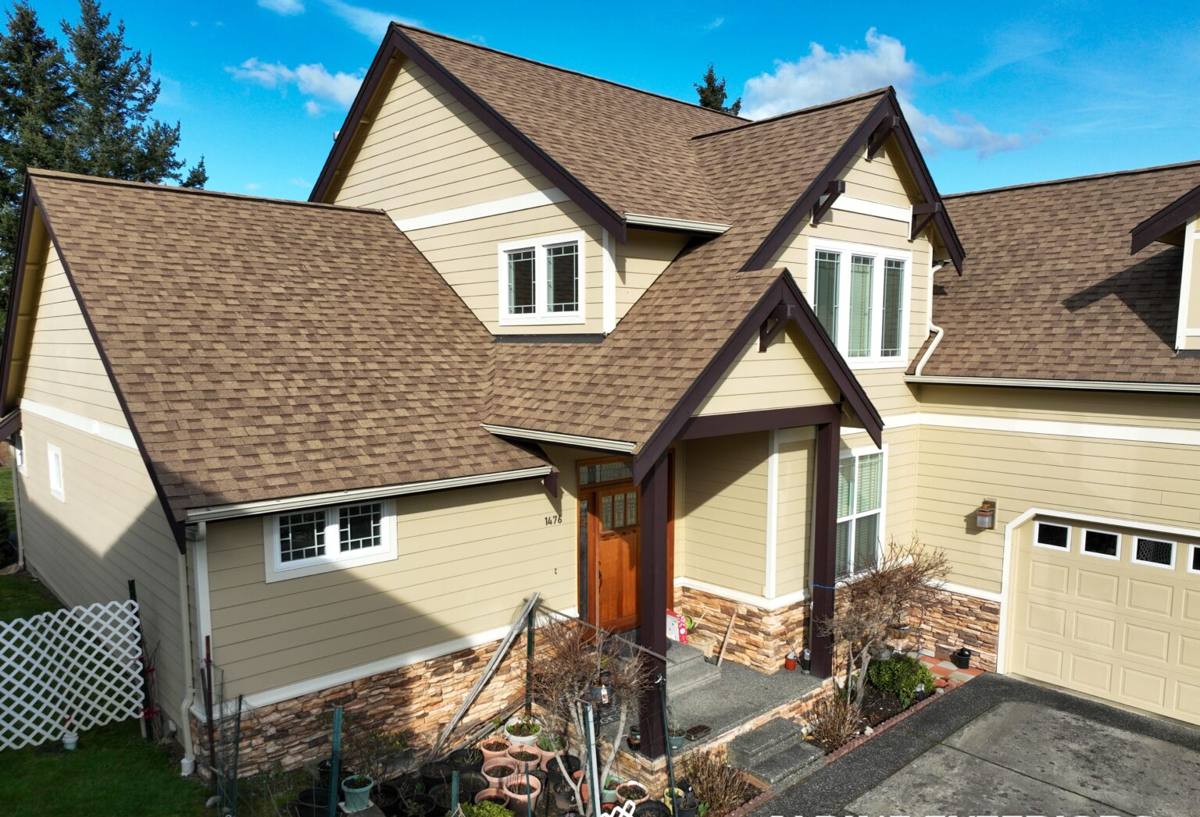
What Storm Damage Actually Looks Like on a Roof
Storm damage isn't always the obvious missing-shingle-in-the-yard scenario. In our experience working on roofs in this area, the damage that causes the most trouble later is often the kind that isn't visible from the ground.
Wind Damage
Wind doesn't need hurricane force to do real damage — it needs the right angle and a roof edge or ridge line that's already a little loose. Lifted or creased shingles, torn ridge caps, and shingles that look fine but have broken their seal are common after a windstorm here. A broken seal doesn't always show as a gap you can see; it shows up months later as a leak.
Water Intrusion
Driving rain finds the weak points: flashing around chimneys and skylights, valleys where two roof planes meet, and any spot where a nail has backed out or a sealant joint has aged past its useful life. Water doesn't need a hole — it needs a path, and wind-driven rain is very good at finding one.
Moss and Debris Damage
Moss isn't just cosmetic. It holds moisture against the shingle surface, works its way under tabs, and over time lifts and separates the layers that keep water out. Add fallen branches or needle buildup from storm winds, and you get trapped moisture sitting on the roof surface between storms — which is often what turns a one-time weather event into an ongoing leak.
Gutter and Drainage Damage
Storms that bring both wind and heavy rain often knock gutters loose or overload them with debris right when the roof needs them working the most. A gutter that's pulling away from the fascia during a storm isn't just a gutter problem — it's water being redirected somewhere the roof and siding weren't built to handle it.
Our Storm Damage Assessment Process
When we get a storm damage call in the Silver Beach area, we don't start with a repair quote — we start with a full assessment, because guessing at storm damage almost always costs a homeowner more later.
- Exterior roof inspection. We walk the roof (weather permitting) or use a ladder-and-camera approach when conditions don't allow safe foot traffic, checking every plane, valley, and penetration — not just the area where damage is visible from the ground.
- Attic and interior check. Water intrusion often shows up in the attic — staining, damp insulation, or discoloration on rafters — before it ever reaches a ceiling. We check this whenever we have access.
- Documentation. We photograph and note every point of damage, which matters both for our repair plan and for any insurance claim you may file.
- Honest scope review. We walk you through exactly what we found — what's storm-related, what's pre-existing wear, and what can wait — before any repair work starts.
- Written repair plan. You get a clear scope and price range in writing, not a verbal estimate that changes once work is underway.
What a Correct Repair Involves — Not Just a Patch
A lot of storm repair work gets done as a quick patch: seal the visible leak, replace the obviously missing shingles, call it done. That approach can hold for a while, but on a Silver Beach roof — where salt air and moss exposure are already working against the materials — a surface patch tends to fail again within a season or two, often in a slightly different spot.
A correct repair addresses the whole affected section, not just the point of failure. That means checking and, where needed, replacing the underlayment beneath damaged shingles, confirming flashing is properly lapped and sealed rather than just caulked over, and making sure the repair ties into surrounding shingles in a way that sheds water the way the original installation was designed to.
| Approach | What It Covers | Typical Outcome Here |
|---|---|---|
| Quick patch | Visible damage only, surface sealant | Often resurfaces as a leak within 1-2 storm seasons |
| Correct repair | Underlayment, flashing, and shingle integration in the full affected area | Restores the roof's actual water-shedding system, not just the symptom |
Cost Factors for Storm Damage Repair
Every roof and every storm event is different, so we won't put a fixed number on a repair we haven't inspected. What we can tell you honestly is what tends to move the price up or down.
| Factor | Why It Matters |
|---|---|
| Size of the affected area | A localized wind tear costs far less to correct than damage spread across a full slope |
| Underlying condition of the roof | Storm damage on an aging roof often reveals pre-existing wear that needs addressing at the same time |
| Access and roof pitch | Steeper roofs and limited access require more time and safety setup |
| Flashing and penetration complexity | Chimneys, skylights, and multiple valleys take more labor to repair correctly than an open field of shingles |
| Moss or debris removal needed | Roofs with heavy moss buildup often need cleaning before repair work can be assessed accurately |
Materials and Methods We Use for This Climate
We choose repair materials and methods with the local conditions in mind, not a one-size-fits-all approach pulled from a drier climate.
For fasteners and flashing, we favor corrosion-resistant materials given the salt air exposure common in the Silver Beach area — standard fasteners that might hold up fine further inland can start showing rust and weakening well before their expected lifespan here. For underlayment, we use products rated for high water exposure, since driving rain puts more demand on the layer beneath the shingles than a typical vertical rainfall pattern does. And where moss has been a recurring issue, we'll talk with you honestly about whether zinc or copper strips, improved airflow, or a different maintenance schedule makes sense for your specific roof — we'd rather solve the moss problem than repeatedly repair the damage it causes.
We work with established shingle and roofing system manufacturers such as GAF and CertainTeed, and we'll walk you through the options that fit your roof's pitch, sun exposure, and budget rather than pushing a single product on every job.
Why Working With a Crew That Already Knows Silver Beach Matters
We're Not Learning Your Neighborhood on Your Dime
A contractor who hasn't worked in this specific stretch of Whatcom County will often underestimate how much salt air and prolonged moss exposure affect material choice and repair longevity. That's not a knock on general roofing skill — it's just a gap that shows up later, usually as a repeat call.
Local Response Matters During Storm Season
When a storm passes through and you've got active water intrusion, how quickly a contractor can actually get to your property matters. Being based in the area means we're not adding hours of drive time onto an already stressful situation.
We Give It to You Straight
Not every roof that takes storm damage needs a full replacement, and not every leak needs the most expensive fix on the list. Part of knowing this area well is knowing when a targeted repair is the honest answer and when it genuinely isn't enough.
Preventing Repeat Damage After the Repair
A storm repair is only worth doing well if it holds up through the next storm season. A few maintenance habits make a real difference for homes in this area:
- Clear moss and debris from the roof surface at least once a year, more often on heavily shaded sections
- Keep gutters and downspouts clear so storm water has somewhere to go besides back under the roofline
- Trim overhanging branches that drop debris and hold moisture against the roof
- Have flashing around chimneys, skylights, and vents checked every couple of years, since these are the first points to fail
- After any significant windstorm, do a visual check from the ground for lifted or missing shingles rather than waiting for a leak to show up inside
- Address small leaks immediately — a small, contained repair now is almost always cheaper than the water damage from waiting
If your Silver Beach home has taken storm damage, or you're not sure whether recent weather has left something worth checking, we're happy to take a look and give you a straight answer. Reach out for a free, no-pressure estimate using the form below.