 Chuckanut Exterior
 Fiber Cement Siding Built for Silver Beach
Silver Beach sits close enough to the water that the weather off the bay is part of daily life for the homes there — salt-tinged air moving through the trees, rain that rarely falls straight down, and enough tree cover on the shaded lots to keep moss a year-round concern rather than a winter one. Siding on a Silver Beach home isn't just cosmetic. It's the one layer standing between that weather and the wall framing behind it, and in this specific setting, the material and the install details matter more than they would on a drier, more sheltered lot inland.
We install James Hardie fiber cement siding exclusively, and every project we run in Silver Beach is built around what this shoreline actually does to a wall over ten, twenty, and thirty years — not around what looks good on the day the crew packs up.
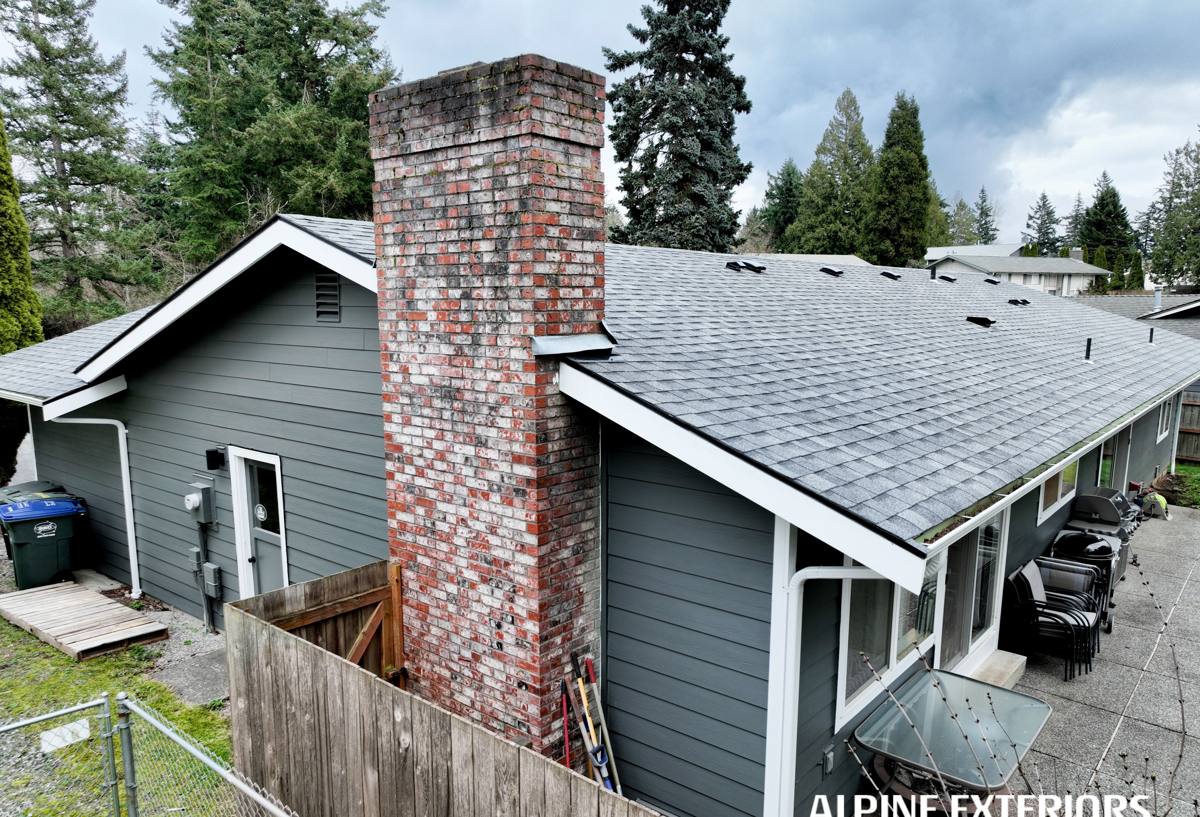
What Silver Beach's Climate Asks of Your Siding
Salt Air and Slow Material Fatigue
Homes near the water take on a steady, low-grade dose of salt-laden air that most inland Whatcom County properties never see. That exposure doesn't cause dramatic failures — it works slowly, breaking down field-applied finishes faster than the manufacturer's label suggests and accelerating corrosion at any fastener, flashing, or trim detail that isn't rated for it. A siding material that handles salt air well isn't the one that looks best on install day; it's the one still holding its finish and its fasteners a decade later.
Driving Rain Against Every Seam and Joint
Storms off the water don't drop straight down onto a Silver Beach roofline — wind pushes rain sideways into whatever wall happens to be facing the weather that day. That means horizontal laps, butt joints, and every point where siding meets a window, door, or corner trim gets tested by water trying to move sideways and upward, not just down. A siding system that's only built to shed vertical rainfall is the wrong system for this kind of exposure.
A Moss Season That Doesn't Really End
Tree cover keeps a lot of Silver Beach's walls shaded well past the point where a sunnier lot would have already dried out. That shade is part of what makes the neighborhood attractive, but it also means moisture sits against north-facing and shaded walls longer, and that's exactly the condition moss needs to establish itself. Once moss takes hold on an organic siding surface, it holds moisture against the wall even longer, which speeds up whatever finish or substrate breakdown is already underway.
Why James Hardie Is the Right System for This Shoreline
None of those three conditions on their own would rule out most siding products. Together, over a multi-decade timeline, they favor a material that doesn't have an organic core to feed moss, doesn't swell or soften at a seam that stays wet longer than it should, and carries a factory finish engineered to hold up against salt and UV rather than a field-applied coating that needs recoating on a fixed schedule.
| Factor | What Silver Beach's Climate Does | How James Hardie Fiber Cement Responds |
|---|---|---|
| Salt air exposure | Accelerates finish breakdown and fastener corrosion | Factory-baked ColorPlus finish and climate-engineered HZ product lines built for coastal exposure |
| Wind-driven rain | Pushes water sideways into laps, joints, and trim | Non-organic core doesn't swell or soften at seams; correct lap and flashing details shed water rather than trap it |
| Extended moss season | Shaded walls stay damp long enough for growth to establish | Inorganic substrate doesn't feed moss and mildew the way wood-based siding does |
| Fire exposure | Dry-season wildfire risk is a regional concern | Non-combustible cement, sand, and cellulose fiber composition |
That's also why we don't install LP SmartSide, vinyl, Cemplank, Allura, primed spruce, or cedar on Silver Beach homes. Each of those is a legitimate product, and other contractors install them competently — but every one of them asks a homeowner to manage a moisture-, maintenance-, or installation-sensitivity trade-off that we don't think makes sense to carry on a shoreline lot with this much salt exposure and shade. We standardized on one system we trust to perform here without asking the homeowner to make up the difference with upkeep.
What a Correct Fiber Cement Install Actually Involves
James Hardie's material performance only shows up if the installation behind it is done right. On a Silver Beach property, a correct install includes:
- Weather-resistive barrier installed and lapped correctly, shingle-style, before any siding goes up
- A drainage plane or rainscreen gap so moisture that does get past the surface can dry out instead of sitting against the sheathing
- Corrosion-resistant fasteners placed at Hardie's specified spacing, not just enough to hold the board in place
- Properly lapped and flashed transitions at every window, door, corner, and roof-to-wall intersection
- Correct clearance maintained between siding and grade, decks, and roof lines so splash-back and standing moisture can't reach the bottom course
- Field-cut edges primed before installation to preserve the factory finish everywhere it wasn't cut on site
Skip any one of these and the wall can still look right for a season or two. The problems that follow — staining at seams, a soft spot near grade, premature finish failure at a corner — take a few wet winters to surface, which is exactly why a rushed install is easy to get away with until the homeowner is the one living with the result.
Our Process for a Silver Beach Project
Walkthrough and Assessment
We start by walking the property and looking at orientation — which walls take direct wind and rain off the water, which stay shaded and slow to dry, and whether the existing wall assembly already shows signs of moisture damage that needs addressing before new siding goes up. Installing new siding over an unresolved moisture problem just buries it.
Planning the Details Before Install Day
We work out flashing details, corner treatments, and how the siding will meet trim, windows, and rooflines before crews start cutting board. Deciding these details on paper first, rather than improvising them on the wall, is what keeps corners from getting cut when the weather turns during a project.
Installation to Manufacturer Spec
Every fastener, lap, gap, and flashing detail follows James Hardie's published installation requirements for this climate zone. That's what keeps the manufacturer's warranty intact and what determines whether the wall performs for decades rather than years.
Final Walkthrough
We walk the finished job with you, explain what maintenance actually looks like going forward (with this material, it's minimal, but worth knowing), and make sure you know what a properly installed detail looks like if you ever want to check the wall yourself.
Why Hire a Crew That Already Works Silver Beach
A siding crew that's worked shoreline properties in this part of Whatcom County has already seen which wall orientations need extra flashing attention because of wind exposure, how much drainage gap actually earns its keep in a climate this damp versus what a generic installation guide assumes, and where salt air tends to find the weak points other crews miss. That judgment doesn't show up on a spec sheet or a materials list — it shows up five, ten, and twenty years later, in the difference between a wall that still looks and performs the way it did on install day and one that's already showing seam staining or finish failure.
Cost Factors for Fiber Cement Siding in Silver Beach
Fiber cement pricing depends on the specifics of the home, not just square footage. A few things that move the number on a given Silver Beach project:
| Factor | Why It Matters |
|---|---|
| Wall exposure and orientation | Walls facing the water directly need more attention to flashing and lap detail than sheltered walls |
| Existing wall condition | Rot or moisture damage found during tear-off needs repair before new siding can go up correctly |
| Home height and complexity | Multiple stories, dormers, and corners add cutting, flashing, and staging time |
| Trim and finish selection | ColorPlus factory finish options and trim profiles vary in material cost |
| Access and site conditions | Sloped or tree-covered shoreline lots can require more staging and site protection |
None of these factors are unique to fiber cement — they'd affect any siding project on a shoreline lot like this. What changes with the material is how much of that cost buys you long-term protection versus how much of it you'll be spending again in a decade on refinishing or repair.
Is Your Current Siding Already Telling You Something?
A few signs are worth a closer look before they become bigger repairs: finish that's chalking or fading unevenly, moss establishing itself on shaded walls, soft spots near the bottom courses or around window trim, or caulked joints that have started to crack open. None of these mean a full replacement is automatically the answer, but on a Silver Beach property, they're worth having a professional actually look at rather than waiting to see how they progress through another wet season.
If you're weighing a siding project for a Silver Beach home, we're glad to take a look at your walls, talk through sun and wind exposure specific to your lot, and give you a straight answer about what we think it needs. Reach out for a free, no-pressure estimate.