 Chuckanut Exterior
 Windows Built for What Silver Beach Actually Deals With
Silver Beach homes sit in a corner of Whatcom County where the weather doesn't do anything halfway. Salt-laden air off the water works into hardware and finishes year-round, driving rain comes in sideways during fall and winter storms, and a long, damp moss season keeps humidity levels high against exterior walls for months at a time. Windows here aren't just a comfort upgrade — they're one of the first lines of defense against moisture intrusion, and one of the biggest factors in how hard your heating system has to work from October through April.
Older single-pane or early-generation dual-pane windows in this area tend to show their age faster than the same product would inland. Seals fail sooner, frames swell or warp, and condensation between panes becomes a regular sight. Energy-efficient window work in Silver Beach isn't just about lowering a utility bill — it's about matching the product and the installation to a climate that's genuinely tougher on windows than most homeowners realize.
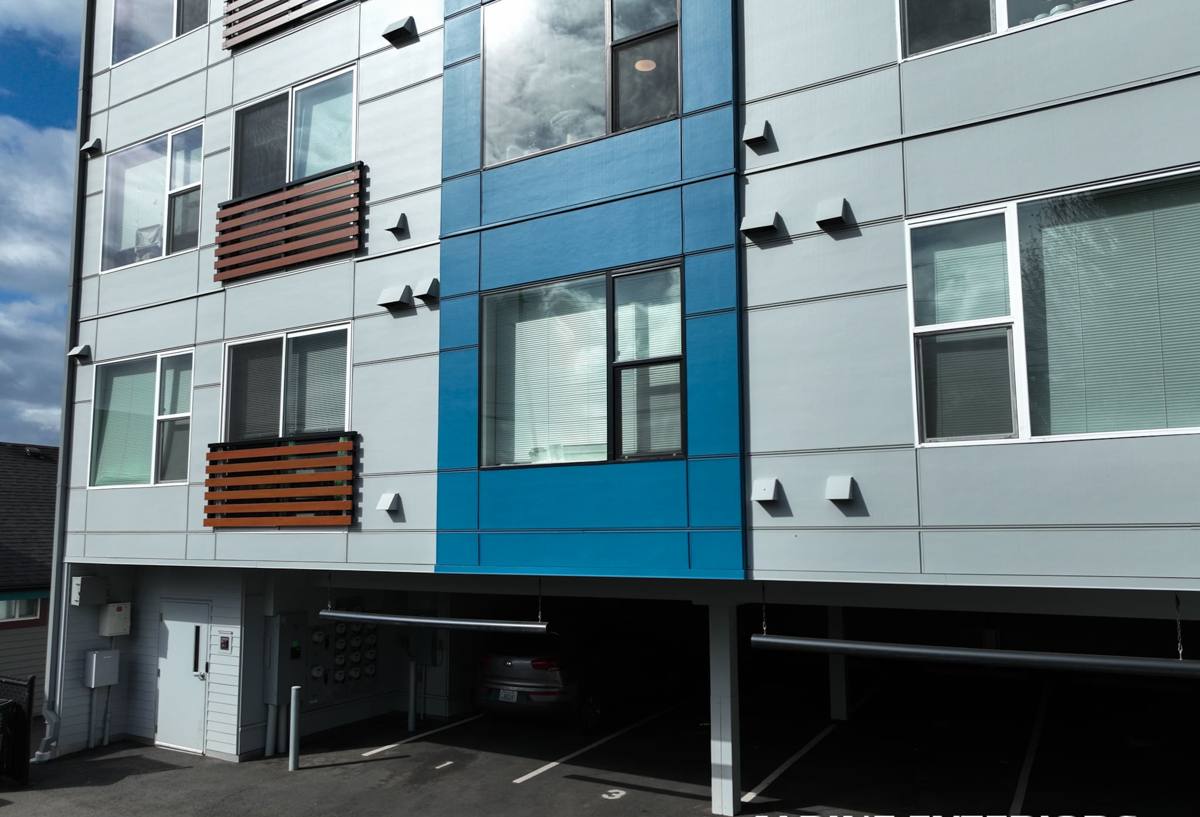
What "Energy-Efficient" Actually Means Here
Energy efficiency in a window comes down to a handful of measurable properties, and in a marine-influenced climate like Whatcom County's, some matter more than others.
U-Factor
This measures how well a window prevents heat from escaping. Lower is better. In our climate zone, a lower U-factor pays off directly in a smaller heating bill during the long stretch of cool, wet months.
Solar Heat Gain Coefficient (SHGC)
This measures how much solar heat passes through the glass. In the Pacific Northwest we generally want moderate SHGC — enough to capture some free warmth on clear days without overheating rooms with a lot of west or south-facing glass in summer.
Air Leakage Rating
This is where a lot of older windows fail quietly. A window can look fine and still leak air around the sash or frame, which lets in both cold drafts and moisture-laden air. Given how much wind-driven rain this area sees, air leakage is often the single most important number on the label.
A genuinely energy-efficient window package for a Silver Beach home usually balances all three, plus proper glazing (double or triple pane with low-E coatings and gas fill) and a frame material that won't degrade in salt air and constant moisture cycling.
Signs Your Current Windows Are Costing You Money
- Visible condensation or fogging between panes — a sign the seal has failed and the insulating gas has escaped
- Cold drafts near the frame even when the window is fully latched
- Frames that feel soft, swollen, or show paint failure, especially on the north and west-facing sides that take the most weather
- Difficulty opening or closing sashes smoothly — often a sign of frame warping from repeated wet/dry cycling
- Noticeably higher heating bills compared to similarly sized homes nearby
- Visible mold or mildew on the interior sill or surrounding drywall, which points to moisture getting past the window assembly
Any one of these on its own isn't necessarily an emergency. But in this climate, they tend to compound — a small air leak becomes a moisture problem, and a moisture problem becomes rot in the surrounding framing if it goes unaddressed through a few wet seasons.
Frame and Glass Options We Install
There's no single "best" window for every home — the right choice depends on your home's exposure, budget, and how much upkeep you want to do. Here's how the common options stack up for a coastal Whatcom County property.
| Frame Material | Energy Performance | Salt Air / Moisture Resistance | Maintenance |
|---|---|---|---|
| Vinyl | Good, often with multi-chamber designs | Strong — won't corrode or rot | Low; occasional cleaning |
| Fiberglass | Very good, low expansion/contraction | Excellent — very stable in temperature and moisture swings | Low |
| Wood-clad | Good, warm interior feel | Depends heavily on cladding quality and installation detailing | Higher; cladding and seams need periodic attention |
| Aluminum | Weaker unless thermally broken | Prone to corrosion near salt air over time | Moderate |
We tend to steer homeowners in this area toward vinyl or fiberglass for most applications, simply because they hold up better against the combination of salt air and constant moisture without the added maintenance burden of a clad or painted surface. That's a practical trade-off, not a judgment on any particular manufacturer — wood-clad windows can perform very well, but they ask more of the homeowner in upkeep, and any weak point in the cladding becomes an entry point for moisture over time.
What a Correct Installation Actually Involves
In a climate that throws driving rain at a house for months on end, the window unit itself is only part of the story. Installation quality is what determines whether that window keeps water out for the next 20-plus years or starts leaking within a few winters.
Flashing and Weather Barrier Integration
Every window opening needs to be flashed and integrated with the home's weather-resistive barrier so that any water reaching the opening is directed back out, not into the wall cavity. This is the step that gets rushed on cut-rate jobs and is almost always the root cause of hidden rot behind a window that "looked fine" on the outside.
Sill Pan Drainage
A proper sill pan gives any water that does get past the window a path back outside instead of sitting against the framing. This matters more here than in drier climates, where a missing sill pan might never cause a visible problem.
Sealant and Insulation
Gaps around the frame need to be insulated and sealed correctly — not overfilled with expanding foam that can bow the frame, and not left with gaps that let air and moisture through. Getting this right is part of what separates an energy-efficient result from a window that's rated well on paper but underperforms once it's in the wall.
We check existing framing for hidden moisture damage before setting a new window, since replacing a window over already-compromised sheathing just locks the problem behind a nicer frame.
Our Process, Start to Finish
- Free on-site assessment — we look at existing window condition, framing, and exposure on your specific home, not just square footage.
- Product recommendation — options matched to your home's orientation, budget, and how much maintenance you want going forward.
- Written estimate — clear scope, materials, and timeline, no vague allowances.
- Removal and inspection — old windows come out carefully, and we flag any hidden rot or moisture damage before it's covered up again.
- Flashing, sill pan, and air-seal detailing — done to manufacturer specs, adjusted for this climate's exposure.
- Final walkthrough — operation check on every window, cleanup, and a review of what to expect during the first wet season.
What Affects the Cost
Every home is different, so we won't quote a number without seeing the job, but these are the main factors that move the price up or down.
| Factor | Why It Matters |
|---|---|
| Frame material | Vinyl is generally the most budget-friendly; fiberglass and wood-clad run higher |
| Glazing package | Triple-pane and specialty low-E coatings add cost but improve performance |
| Number and size of openings | More or larger windows means more material and labor |
| Condition of existing framing | Hidden rot or moisture damage found during removal adds repair scope |
| Access and exposure | Second-story or hard-to-access windows take more time to do safely and correctly |
| Full-frame vs. insert replacement | Full-frame replacement costs more but is often the right call when framing or flashing needs attention |
Broadly, homeowners in this area should expect a wide range depending on these factors — we'll walk through exactly where your project falls after a look at the home in person.
Living With Salt Air and Moss Season
Even a well-installed, well-chosen window benefits from a little seasonal attention in this climate. A few habits go a long way:
- Rinse exterior frames periodically, especially on sides facing prevailing wind and salt spray
- Keep weep holes clear so any water that does reach the frame can drain out
- Check exterior caulking annually and touch up before the wet season sets in
- Clear moss and debris from nearby gutters and trim so runoff doesn't pool against window trim
- Wipe down interior sills if you notice condensation buildup during cold snaps
None of this is heavy maintenance — it's the kind of thing that takes an hour a couple times a year and meaningfully extends the life of the installation.
Why Local Experience Matters for This Job
Window installation looks straightforward from the outside, but the details that actually keep water out — flashing sequencing, sill pan drainage, sealant choice — are exactly the details that get skipped by crews who don't regularly work in a climate like this one. A contractor who's used to drier or more sheltered regions may not think twice about a detail that's non-negotiable here.
Working regularly in Silver Beach and the surrounding Whatcom County area means we've seen how homes in this specific exposure hold up over time — what fails first, what lasts, and where the extra ten minutes on a flashing detail actually pays off five winters later. That's the difference between a window job that looks good at handoff and one that still performs after a decade of driving rain and salt air.
If you're weighing a window replacement or just want a second opinion on whether your current windows are still doing their job, we're happy to take a look. Reach out for a free, no-pressure estimate using the form below.