 Chuckanut Exterior
 Windows Built for Silver Beach's Waterfront Conditions
Silver Beach sits close enough to the water that homes here take on a different kind of weathering than houses a few miles inland. Salt-laden air moves through the neighborhood off the bay, driving rain comes in sideways during winter storms, and the mix of shade, moisture, and mild temperatures that defines Chuckanut and the rest of Whatcom County keeps things damp for months at a stretch. Windows in this setting are doing more work than people realize — they're a seal against wind-driven water, a barrier against corrosion, and, over time, a surface that either sheds moss and mildew or holds onto it.
When we talk about "custom windows" for a property like this, we don't mean custom in the sense of unusual shapes or luxury add-ons (though we can do that too). We mean windows sized, framed, and specified to fit the actual opening, the actual wall assembly, and the actual exposure of that particular home — not a stock size forced into place with extra trim and caulk to hide the gaps.
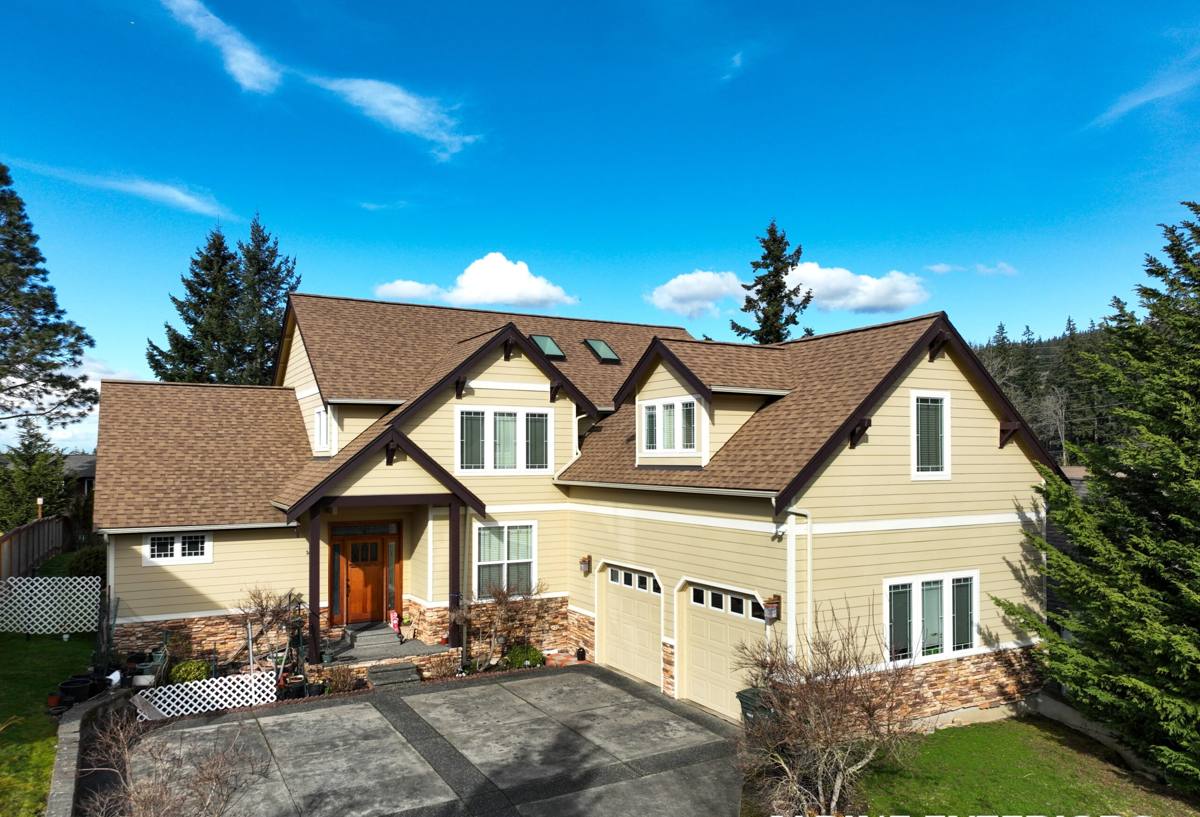
What Silver Beach's Climate Actually Does to Windows
A few conditions show up again and again on homes near the water in this part of Whatcom County:
- Salt air corrosion — aluminum hardware, screws, and lesser window components can pit and corrode faster near the water than they would ten miles inland.
- Wind-driven rain — storms off the water don't just fall straight down; they push rain sideways into wall and window assemblies, which stresses flashing and sealant details more than a typical rain event.
- Persistent moisture and shade — many Silver Beach lots have mature trees and northern or water-facing exposures that stay damp longer after a storm, which is exactly the environment moss, algae, and mildew prefer.
- Temperature swings between glass and frame — condensation on the interior side of older or poorly sealed windows is common in this climate, and it's often mistaken for a leak when it's actually a performance and ventilation issue.
None of this means windows here fail faster by default — it means the margin for error in the product, the installation, and the flashing detail is smaller. A window that would be fine on a dry, sheltered inland lot can underperform at Silver Beach if it's installed the same way.
Moss Season and Your Windows
Moss doesn't grow on the glass, but it absolutely grows in the places where poor drainage and standing moisture collect around a window — sills, trim boards, and the transition between the window and the siding. If those details aren't built to shed water quickly, moss and algae take hold during the long wet stretch of the year and hold moisture against wood trim and sheathing behind it. Good window replacement addresses this at the sill and flashing level, not just at the glass.
What a Correct Custom Window Job Involves
"Custom" starts with accurate measurement and ends with a sealed, flashed, properly supported opening. The steps that matter most for a Silver Beach home:
- Accurate field measurement of each opening — older Chuckanut-area homes often have openings that are slightly out of square or sized differently from what the original plans show.
- Removal and inspection of the old window and the surrounding framing, sill, and sheathing — this is where we find moisture damage or rot that needs to be addressed before a new window goes in, not after.
- Flashing detail specific to the exposure — a water-facing or wind-exposed opening needs a flashing sequence built to shed wind-driven rain, not just a bead of caulk around the perimeter.
- Correct sill pitch and drainage path so water that reaches the sill has somewhere to go instead of sitting against the frame.
- Fastening and shimming to the actual rough opening so the window operates properly and isn't relying on trim or caulk to hold its shape.
- Interior and exterior sealing appropriate to the wall assembly, including insulation around the frame — a gap packed loosely with fiberglass or left empty is a common source of drafts and condensation.
- Trim and finish work that matches the home and sheds water away from the new joint, not toward it.
Skipping or rushing any one of these steps is usually invisible on install day and shows up eighteen months to a few years later as a soft sill, a stained wall, or a window that won't seal against a storm.
Choosing Materials for a Water-Adjacent Property
There's no single "best" window material for every house — the right choice depends on exposure, budget, and how the home is built. For a Silver Beach property, here's how the common options generally compare in this climate:
| Material | Behavior in Salt Air & Wet Climate | Maintenance |
|---|---|---|
| Vinyl | Doesn't corrode; performs well against moisture, though very dark colors can fade faster in sun exposure | Low — occasional cleaning |
| Fiberglass | Excellent stability and moisture resistance, holds paint well if a custom color is wanted | Low to moderate |
| Wood (with proper finish) | Classic look, but requires diligent finish maintenance to resist rot in a wet, shaded climate | High — refinishing on a schedule |
| Clad wood (wood interior, metal/composite exterior) | Good compromise — protected exterior face, warm interior look; cladding hardware near salt air should be corrosion-resistant | Moderate |
| Aluminum-frame | Strong and slim sightlines, but standard aluminum can corrode faster near salt air unless it's a marine-grade or properly coated product | Moderate |
We generally steer Silver Beach homeowners toward vinyl, fiberglass, or a well-clad wood window for anything with direct water exposure, simply because the maintenance burden of an unprotected wood or bare aluminum window in this environment adds up over the years. That's a maintenance and longevity call, not a knock on any manufacturer — a wood window finished and maintained properly will still last, it just asks more of the owner.
Glass and Hardware Considerations
Double-pane, low-E glass is standard for this climate and helps with both the condensation issue mentioned earlier and general comfort. For hardware — locks, hinges, cranks — we favor stainless or coated components on any water-facing window, since standard-grade hardware is where salt air corrosion tends to show up first.
Our Process for a Silver Beach Window Project
The process is the same whether it's one window or a whole-house replacement:
- On-site assessment — we look at each opening, the surrounding trim and siding condition, and the specific exposure (sun, wind, water-facing sides) before recommending anything.
- Honest scoping — if we find rot or moisture damage during the assessment, we tell you before work starts, not as a surprise mid-project.
- Accurate measurement and ordering — custom-sized units built to the actual opening, not a nearest-standard-size compromise.
- Removal, repair, and installation — old window out, any damaged framing or sheathing repaired, new window flashed and installed to the standards above.
- Final sealing, trim, and cleanup — inside and out, with attention to drainage paths so water moves away from the new window.
- Walkthrough — we show you the operation of each window and answer questions before we consider the job done.
Why Local Experience with Silver Beach Homes Matters
A crew that regularly works Chuckanut and the surrounding Whatcom County waterfront neighborhoods has already seen how homes in this specific setting age — where moisture tends to collect, which exposures take the worst of the winter storms, and what the older housing stock in the area typically has behind the siding. That's different knowledge than a crew that mostly works dry, inland, or newer-construction jobs. It affects real decisions on your project: how aggressively to flash a water-facing opening, whether existing trim needs replacing or just refinishing, and which materials are worth the extra cost for your specific exposure versus which upgrades wouldn't move the needle much on a sheltered side of the house.
It also means fewer surprises. We're not guessing at how Whatcom County's wet season behaves — we're building to it.
Signs Your Silver Beach Home May Need Window Attention
- Visible moss, algae, or dark staining building up on sills or trim around windows
- Drafts or cold spots near window frames in winter
- Condensation forming between panes (a sign of failed seal on a double-pane unit) or excessive condensation on the interior glass
- Wood trim that feels soft, spongy, or shows paint failure around a window
- Windows that are difficult to open, close, or lock properly
- Visible daylight or gaps around the frame from outside
- Rising energy bills without another clear explanation
Any one of these on its own isn't necessarily an emergency, but on a water-adjacent property they're worth addressing before the next wet season rather than after.
What to Expect on Cost
Custom window pricing depends on size, material, glass package, and how much repair work is needed once we open up the opening — so we won't quote a number without seeing the home. In general, expect vinyl and fiberglass replacement windows to fall in the more moderate range, clad wood in the middle, and full custom wood units at the higher end, with any hidden rot repair as a separate factor once we're inside the wall. We'll always walk you through the real cost drivers for your specific windows before you commit to anything.
If you're seeing early signs of trouble around your windows, or you're just ready to stop fighting drafts and moisture on a Silver Beach property, we're happy to take a look. Fill out the form below for a free, no-pressure estimate — no obligation, just an honest read on what your windows actually need.