 Chuckanut Exterior
 Roofing a Silver Beach Home Is Not the Same Job as Roofing Inland
Silver Beach sits close enough to the water that the air itself works against a roof year-round. Salt-laden moisture carried in off the Salish Sea settles on shingles, metal flashing, and fasteners every day, whether it's raining or not. Add Whatcom County's long, wet winters and the shaded, damp lots common in this part of Chuckanut, and you get a roofing environment that's genuinely harder on materials than most manufacturer warranties assume. A shingle rated for a "normal" Pacific Northwest climate can still underperform here if it's installed without accounting for salt exposure, near-constant moisture, and heavy moss pressure.
This page is specifically about asphalt shingle roofing for Silver Beach homes — not a general product overview. Everything below reflects what we've learned installing and repairing shingle roofs in this exact neighborhood: what fails first, what holds up, and what a correctly built roof actually needs here.
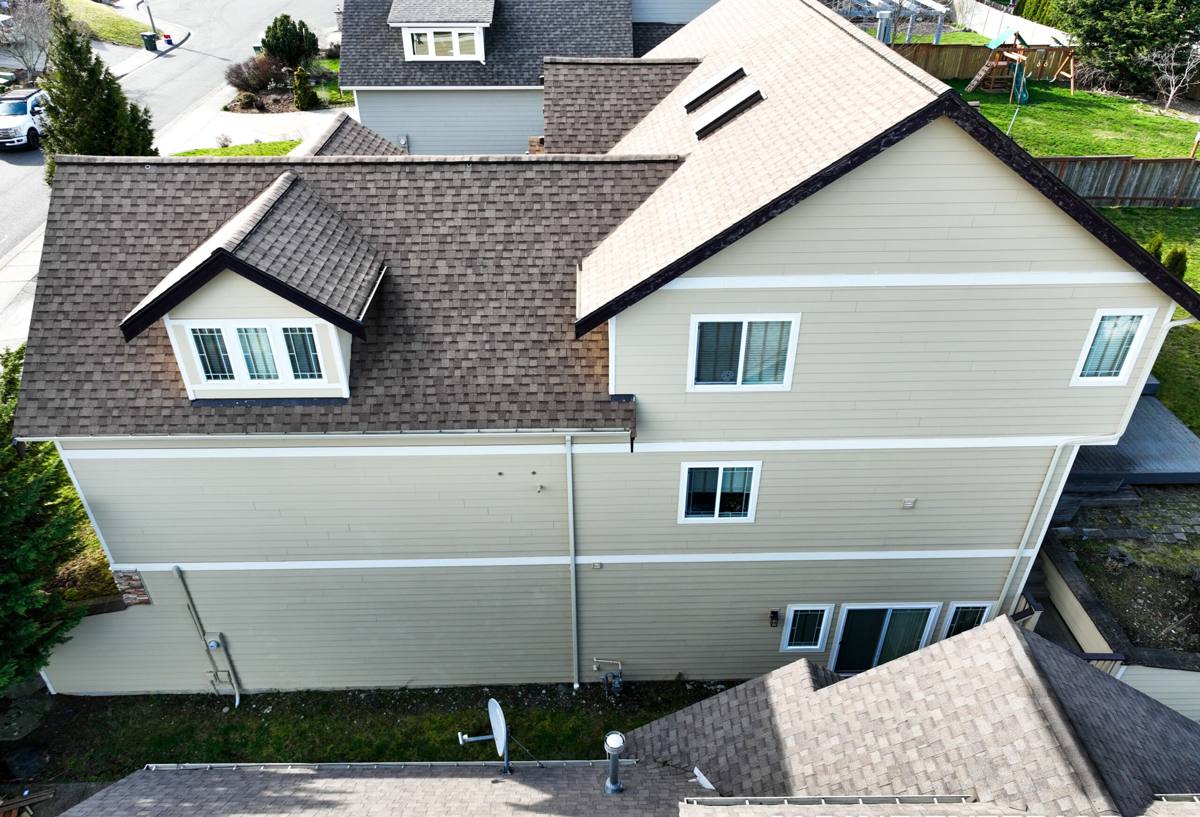
The Three Forces Working Against Your Roof
Salt Air
Airborne salt accelerates corrosion on any exposed metal — nail heads, flashing, vent stacks, and gutter hardware. Standard electro-galvanized fasteners can start showing rust streaks on shingles years before the shingles themselves are worn out. That streaking isn't just cosmetic; it's usually a sign the fastener coating has already broken down.
Driving Rain
Wind off the water doesn't just drop rain straight down — it drives it sideways and up under shingle tabs, into valleys, and around anything that penetrates the roof deck (vents, chimneys, skylights). A roof that would be watertight in a calm inland rain can leak in Silver Beach if flashing details and shingle sealing weren't built for wind-driven water.
Moss Season
Between the shade from mature trees on many Chuckanut lots and Whatcom County's long wet stretch from fall through spring, moss gets a real head start here. Moss holds moisture against the shingle surface, lifts tabs as it grows, and works its way under the roofing over time. Left unmanaged, it shortens the usable life of an asphalt shingle roof more than almost anything else in this climate.
What a Correctly Built Shingle Roof Needs Here
A shingle roof is a system, not just a layer of shingles. In a marine, moss-prone climate like Silver Beach's, every layer of that system needs to be chosen and installed with the local conditions in mind — not just to a generic code minimum.
- Underlayment: A synthetic or self-adhered underlayment rated for high-moisture climates, not a bargain-grade felt that degrades with prolonged dampness.
- Ice-and-water shield at vulnerable points: Eaves, valleys, and any roof-to-wall transitions get a self-sealing membrane, since these are the spots where wind-driven rain most often finds a way in.
- Corrosion-resistant fasteners and flashing: Given the salt air, we treat standard galvanized hardware as a weak point, not a default — stainless or high-grade coated fasteners and flashing hold up considerably longer this close to the water.
- Balanced ventilation: Intake at the eaves and exhaust at the ridge keep the attic dry and temperature-stable, which matters twice as much in a climate where the outside air is already this damp most of the year.
- Proper shingle nailing pattern and sealing: Under-driven or over-driven nails and poor tab sealing are the single most common cause of wind and rain intrusion we find on shingle roofs — and the most common shortcut on a rushed job.
Choosing the Right Shingle for This Climate
Not every asphalt shingle product performs the same way once it's dealing with salt air and sustained moisture. The table below reflects general trade-offs, not brand claims — the right choice depends on your roof's exposure, budget, and how long you plan to stay in the home.
| Shingle Type | Typical Lifespan | Best For | Trade-offs in This Climate |
|---|---|---|---|
| 3-tab asphalt | 15–20 years | Budget-conscious re-roofs, secondary structures | Lower wind rating and less mass; moss and salt exposure tend to shorten real-world life toward the lower end |
| Architectural (laminated) asphalt | 25–30+ years | Most Silver Beach homes | Heavier mat and better sealant strip hold up to wind-driven rain and moss growth better than 3-tab |
| Impact-resistant / algae-resistant asphalt | 25–30+ years, often with extended algae warranty | Heavily shaded lots or roofs with a history of moss/algae staining | Higher upfront material cost, offset by less frequent cleaning and treatment over the roof's life |
For most homes in Silver Beach, we recommend an architectural shingle with an algae-resistant (copper-infused) granule option, simply because the extra moss and algae resistance tends to pay for itself in reduced maintenance over the life of the roof.
How We Approach a Silver Beach Re-Roof
1. Full Tear-Off and Deck Inspection
We don't roof over existing layers. Full tear-off lets us inspect the actual roof deck for soft spots, delamination, or moisture damage that's invisible from above — especially important on older Chuckanut homes where a leak may have been going unnoticed under the surface for a while.
2. Deck Repair Before Anything Goes Down
Any damaged or spongy sheathing gets replaced before underlayment goes on. Skipping this step is one of the most common ways a "new roof" fails early — the shingles look fine while the structure underneath is already compromised.
3. Underlayment and Ice-and-Water Shield
Installed to the standard described above, with extra attention to valleys, eaves, and any wall or chimney transitions — the places wind-driven rain actually gets in.
4. Flashing
New flashing at every penetration and transition, in corrosion-resistant material. Reusing old flashing is a common shortcut that fails early in salt air, and we don't do it.
5. Shingle Installation
Installed to manufacturer nailing specs (not "close enough"), with attention to proper tab sealing so the finished roof performs the way the shingle was actually engineered to perform.
6. Ventilation Check
We confirm intake and exhaust are balanced before calling the job done — an unventilated or poorly ventilated attic undermines even a well-installed shingle roof over time.
7. Cleanup and Walkthrough
Full site and gutter cleanup, plus a walkthrough so you understand what was done and what to watch for going forward.
Living With a Shingle Roof in Silver Beach: Maintenance That Actually Matters
A correctly installed roof still needs some seasonal attention in this climate. The good news is that the maintenance that matters most is simple and infrequent — it's just easy to forget until moss or a leak forces the issue.
- Keep gutters and downspouts clear, especially going into fall — clogged gutters back water up under the eaves, right where ice-and-water shield is doing its job.
- Have moss growth removed gently (not pressure-washed, which can strip granules) as soon as it appears, rather than waiting for a heavy mat to form.
- Trim back overhanging branches where possible — shade and debris are the two biggest drivers of moss growth on Chuckanut roofs.
- After major windstorms, do a visual check (from the ground, or have us look) for lifted or missing tabs.
- Have flashing and fasteners inspected periodically for early corrosion, particularly on homes closest to the water.
- Don't ignore small interior stains on ceilings or in the attic — in this climate, slow leaks from wind-driven rain can go undetected longer than they would inland.
Repair, Partial Re-Roof, or Full Replacement?
Not every roofing problem in Silver Beach means a full replacement. We evaluate honestly based on the roof's age, condition, and how localized the damage is.
| Situation | Likely Path | Why |
|---|---|---|
| Isolated leak, roof under ~12 years old | Targeted repair | Flashing or a small area of shingle damage can usually be fixed without disturbing the rest of a sound roof |
| Heavy moss coverage, shingles still structurally sound | Cleaning plus preventive treatment | Removing moss early can add years of life without replacement cost |
| Widespread granule loss, curling, or multiple leak points | Full replacement | At this stage the underlayment and deck are likely compromised too — patching becomes a short-term fix |
| Roof at or past its rated lifespan with any active leaks | Full replacement | Continuing to repair an end-of-life roof in this climate usually costs more over time than replacing it |
What Affects Cost
We don't quote sight-unseen, but the main factors that move the price on a Silver Beach shingle roof are consistent: roof size and pitch, how many layers need to be torn off, the amount of flashing and penetrations (chimneys, skylights, vents), deck repair needs discovered during tear-off, and the shingle tier you choose. Straightforward asphalt shingle re-roofs on typical residential homes here generally land in a broad mid-range for the region — steeper, more complex, or heavily shaded roofs with more moss damage tend to run higher due to added prep and safety considerations. We'll walk you through the real numbers for your roof during the estimate, not a generic average.
Why Hiring a Crew That Already Works Silver Beach Matters
Roofing crews that mostly work inland, drier parts of Whatcom County can underestimate what this specific stretch of Chuckanut coastline demands — lighter underlayment, standard fasteners, and no real moss strategy are common shortcuts that don't show up as problems until a few winters in. A crew that regularly works Silver Beach knows which details actually matter here: where wind-driven rain tends to find gaps, how fast moss comes back on shaded lots, and which fastener and flashing choices hold up against salt air instead of just meeting code minimums. That local pattern recognition is the difference between a roof that looks right on installation day and one that's still performing correctly ten winters later.
If you're weighing a repair, a partial fix, or a full replacement for your Silver Beach home, we're happy to take a look and give you a straight answer — including telling you if your roof doesn't need full replacement yet. Reach out for a free, no-pressure estimate using the form below.