 Chuckanut Exterior
 Why Windows Wear Out Faster in Samish
Samish sits close enough to the water that homes here deal with a different set of conditions than houses further inland in Whatcom County. Salt-laden air corrodes hardware and finishes faster than dry inland air does. Wind-driven rain off the water doesn't just fall straight down — it gets pushed sideways into window seams, sills, and trim, which is exactly where a mediocre installation fails first. And the long, damp moss season that stretches through fall, winter, and much of spring keeps wood trim and sills wet for weeks at a time, encouraging rot in anything that isn't properly flashed and ventilated.
None of this means Samish homes need exotic solutions. It means the basics — material selection, flashing detail, and sealant work — matter more here than they would in a drier climate, and cutting corners on any of them shows up as a problem within a few wet seasons instead of a decade.
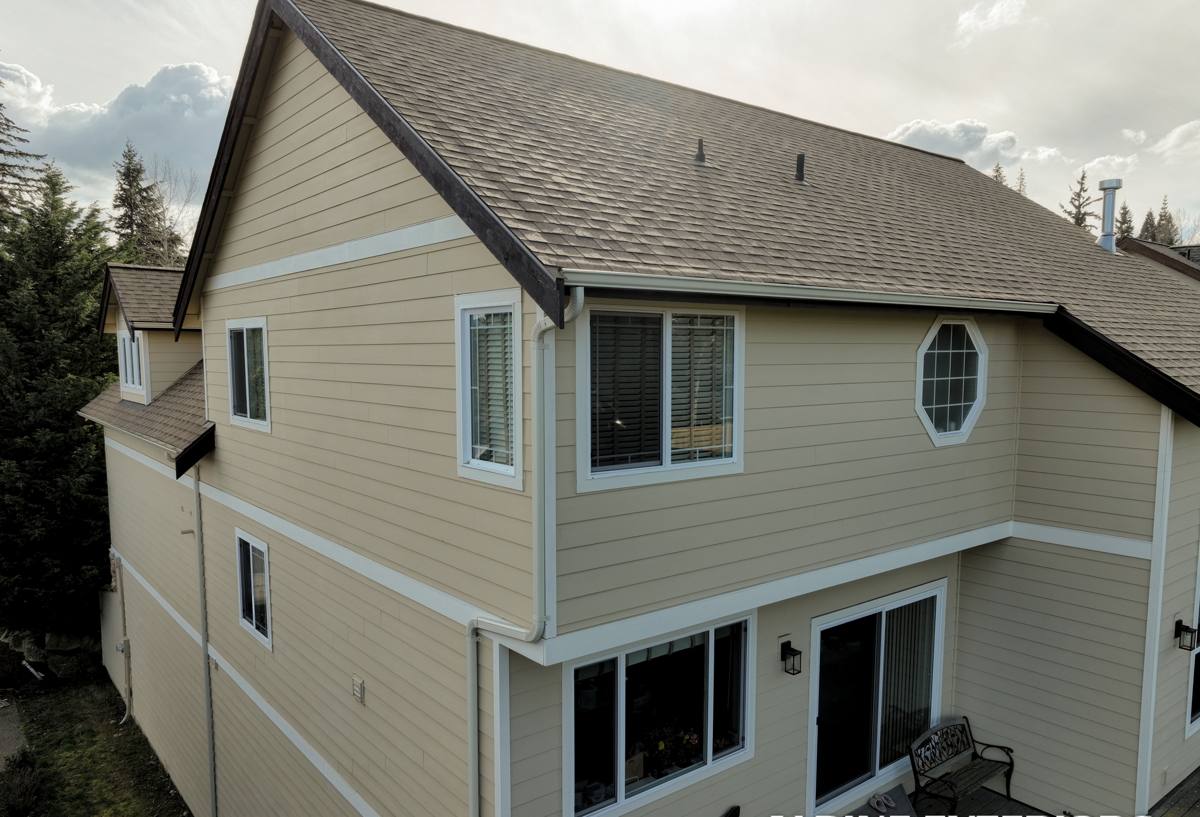
How to Tell Your Windows Are Losing the Battle
Window failure in this climate is usually gradual, and homeowners often notice the symptoms before they connect them to the windows themselves. Common signs we see on service calls in and around Samish include:
- Fogging or a permanent haze between panes — the seal on the insulated glass unit has failed
- Soft or discolored wood at the sill or bottom corners of the frame
- Drafts you can feel with a hand near the frame on a windy day
- Hardware (locks, cranks, hinges) that's corroded, sticky, or won't latch tight anymore
- Visible gaps between the frame and siding, or caulking that's cracked and pulling away
- Paint or finish that's peeling specifically on the side of the house that faces the prevailing wind and rain
Any one of these on its own might just need a repair. Several at once, especially on a home with original windows more than 15-20 years old, usually means replacement is the more honest recommendation.
What a Correct Window Replacement Actually Involves
Flashing and Water Management Come First
The window itself gets most of the attention, but the flashing around it is what actually keeps water out of the wall assembly. A correct install builds a drainage path so any water that gets past the exterior trim runs back out instead of pooling against the sheathing. This is the step most likely to get rushed on a fast, cheap job — and it's the one that causes hidden rot two or three years later, well after the crew that did it is gone.
Fit and Shimming
New windows need to be plumb, level, and square in the opening, shimmed correctly so the frame isn't under stress. A window that's slightly racked will bind, wear its hardware faster, and won't seal evenly — problems that don't show up on install day but show up over the following winter.
Sealing the Right Way, Not the Fast Way
Interior air sealing (usually low-expansion foam or backer rod and sealant) and exterior weatherproofing are two different jobs with two different products. Using one sealant for both, or skipping the interior air seal because it's not visible, is a shortcut that costs the homeowner comfort and energy efficiency for the life of the window.
Choosing Windows That Hold Up Near the Water
Frame material matters more in a salt-air, high-moisture environment than it does in most parts of the country. Here's how the common options actually perform in conditions like Samish sees:
| Frame Material | Performance Near Salt Air & Moisture | Maintenance |
|---|---|---|
| Vinyl | Won't rot or corrode; handles moisture well; good value | Low — occasional cleaning |
| Fiberglass | Excellent stability and moisture resistance; holds paint well if a custom color is wanted | Low |
| Wood-clad (exterior clad, wood interior) | Good look, but the cladding seams are a moisture risk point if installation isn't precise | Moderate — clad exterior is low-upkeep, but any breach needs prompt attention |
| Aluminum | Conducts cold and can corrode faster in salt air unless it's a marine-grade finish | Moderate to high |
We don't push homeowners toward one brand or product line. We do steer people away from bare aluminum frames and budget-grade wood on any elevation that takes direct weather, simply because we've seen how much faster those materials degrade under salt exposure and sustained moisture — it's a maintenance and longevity trade-off, not a knock on any manufacturer.
Glass Packages Worth Considering
Beyond the frame, the glass package affects comfort and condensation control, which matters in a climate that stays damp and cool for much of the year.
- Double-pane, low-E glass is the standard baseline for this region and performs well for most homes
- Triple-pane adds meaningful sound dampening and a warmer interior glass surface, which helps reduce condensation on cold, damp mornings — worth it on north- or water-facing rooms in particular
- Argon or krypton gas fill between panes is standard on most quality units now and adds insulation value at minimal extra cost
We'll walk through which package makes sense room by room rather than defaulting to one spec for the whole house — a guest bedroom that's rarely used doesn't need the same glass as a living room window that takes the brunt of the weather.
Our Process, Start to Finish
We keep the process straightforward because window replacement shouldn't feel like a mystery to the homeowner:
- On-site assessment — we look at every window being considered, check for hidden moisture or framing damage, and measure precisely
- Straight recommendations — we tell you which windows genuinely need replacement now, which can wait, and why
- Written estimate — clear line items, no vague allowances
- Removal and inspection — old windows come out carefully so we can check the opening and framing underneath before anything new goes in
- Correct flashing and installation — done to manage water, not just to look finished
- Interior and exterior finish work — trim, caulking, and touch-up so the job reads as clean inside and out
- Walkthrough — we go over the operation of every new window and answer questions before we consider the job done
What Drives the Cost of a Window Replacement
Every home is different, so we won't quote a number without seeing the job, but the price on most Samish-area projects is shaped by a handful of factors:
| Factor | Why It Matters |
|---|---|
| Number and size of windows | Larger openings and specialty shapes (bay, picture, arched) cost more in materials and labor |
| Frame material chosen | Vinyl is typically the most budget-friendly; fiberglass and clad-wood cost more upfront |
| Condition of the existing opening | Rot or framing damage found during removal adds repair work before the new window goes in |
| Full-frame vs. insert replacement | Full-frame replaces trim and flashing too; inserts reuse the existing frame and cost less but only make sense if that frame is still sound |
| Access and elevation | Second-story or hard-to-reach windows take more time and equipment |
Be cautious of any bid that's dramatically lower than the others — it's usually a sign that flashing, insulation, or cleanup is being skipped, not that the contractor found a special deal.
Why It Matters That We Already Work in Samish
A crew that regularly works Whatcom County homes near the water already knows what to look for when a window comes out — where rot tends to hide, how the local wind and rain patterns stress a wall assembly, and which materials actually last here versus which ones look fine on a spec sheet but struggle in this specific climate. That familiarity shows up in fewer surprises during the job and a finished install that's built for the conditions your home actually faces, not generic ones.
Before hiring anyone for window work in this area, it's worth confirming a few basics:
- They carry current licensing and insurance, and will show it without hesitation
- They'll explain their flashing and sealing method, not just the window brand
- They give a written, itemized estimate — not a vague verbal number
- They have experience with coastal or high-moisture installations specifically
- They stand behind both the product warranty and their own installation workmanship
Keeping New Windows Performing Long-Term
A correctly installed window still benefits from basic upkeep, especially in this climate. Rinse salt residue off exterior frames and hardware periodically, keep weep holes clear of debris so water can drain as designed, check exterior caulking annually for cracking, and clean track and hardware components so they don't seize from grit or corrosion. None of this is demanding work, but skipping it entirely shortens the life of even a well-installed window.
If you're weighing window replacement for a home in Samish, we're glad to take a look and give you a straight assessment — no pressure, no inflated urgency. Fill out the form below to schedule a free estimate.