 Chuckanut Exterior
 Windows Built for the Samish Waterfront, Not a Showroom in Another Climate
Samish sits close enough to the water that homes here take a different kind of weather beating than houses a few miles inland in Chuckanut proper. Salt-laden air off the bay works into weep holes and hardware, driving rain comes in sideways during winter systems, and the long, damp shoulder seasons keep north-facing trim and sills wet for weeks at a time. Windows that are rated fine on paper can still underperform here if they weren't selected and installed with this specific exposure in mind.
We work windows in Samish regularly, which means we're not guessing at how a given frame material, glass package, or flashing detail holds up under this coastline's conditions — we're going back to check on work we did seasons ago and seeing what actually happens over time.
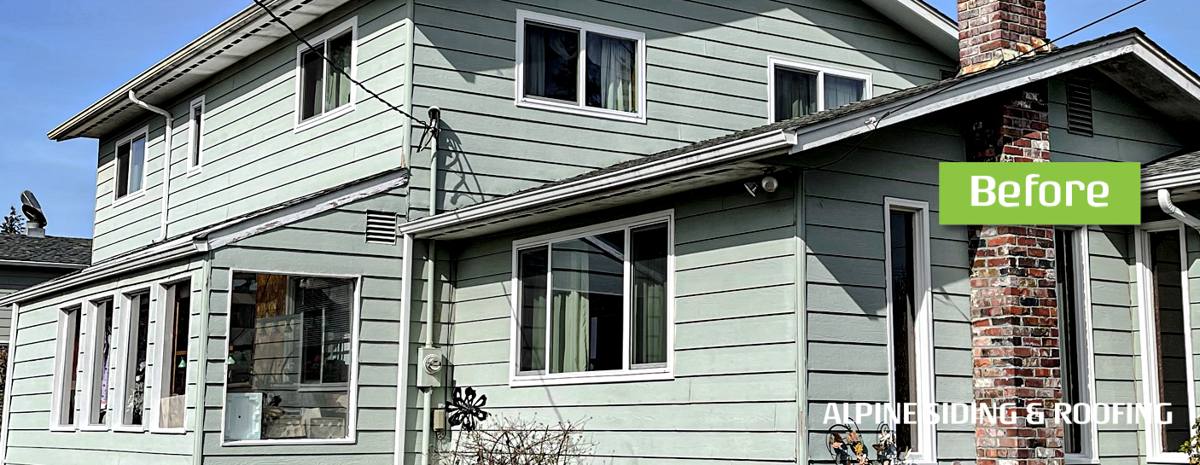
What Salt Air, Rain, and Moss Actually Do to a Window
Each of these three factors stresses a window differently, and a good replacement plan accounts for all three at once, not just the one that's easiest to sell against.
Salt Air
Airborne salt is corrosive to unprotected metal hardware — hinges, cranks, balance systems, and screws — and it accelerates the breakdown of some sealants and finishes faster than the manufacturer's inland warranty testing accounts for. Aluminum-clad and bare metal components closest to the water need corrosion-resistant hardware and finishes, or they'll start sticking, pitting, or staining within a few years.
Driving Rain
Wind-driven rain doesn't just hit the glass — it gets forced sideways and upward into any gap in the flashing, sill pan, or window-to-wall transition. A window can be a fine product and still leak if the installation around it wasn't detailed for wind-driven, not just gravity-fed, water. This is where most window failures we're called out to actually originate: not the unit itself, but what's (or isn't) behind the trim.
Moss and Sustained Dampness
Whatcom County's long wet season keeps shaded sills, sashes, and cladding damp far longer than a drier climate would. That moisture is exactly what moss, algae, and mildew need to establish. On wood or wood-composite sills and trim, sustained dampness plus organic growth is a slow path to rot if the window wasn't detailed to shed water and dry out between storms.
Choosing the Right Frame Material for This Exposure
There's no single "best" window material — there's a best fit for this site's exposure, sun, and your maintenance appetite. Here's how the common options actually compare for a Samish-area install:
| Frame Material | Salt Air Behavior | Moisture/Moss Resistance | Maintenance |
|---|---|---|---|
| Vinyl | Won't corrode; UV can affect color over many years | Good — non-porous, doesn't rot | Low; occasional track cleaning |
| Fiberglass | Excellent; stable and non-corroding | Very good; dimensionally stable in wet/dry cycles | Low |
| Wood-clad (composite/vinyl or aluminum exterior) | Depends on exterior cladding quality; interior wood shielded from weather | Good on exterior face; interior can still show condensation if not sealed properly | Moderate; watch cladding seams |
| Bare aluminum | Prone to pitting/corrosion near salt water without a marine-grade finish | Fair; conducts cold and can condensate more | Moderate to high near water |
For homes close to the Samish shoreline, we lean toward vinyl or fiberglass for most rooms, reserving wood-clad interiors for spaces where the warmer look matters and the window is more sheltered from direct weather.
Glass Packages That Make Sense in This Climate
Whatcom County's grey, overcast stretches and cool, damp air change what glass package actually earns its cost here versus what's marketing.
- Low-E coating: worth it on every window — it manages heat loss through our long heating season and cuts glare on the bright days we do get.
- Argon or krypton gas fill: improves insulation value with minimal added cost; a reasonable standard upgrade, not a luxury one.
- Warm-edge spacers: reduce the cold edge effect that drives interior condensation on north- and water-facing rooms — genuinely useful here, not cosmetic.
- Impact or laminated glass: worth discussing for exposed, storm-facing elevations, but not something we push on every window; it adds cost that only pays off on the sides that actually take direct weather.
- Tinted or reflective coatings: rarely necessary in this climate and can work against the natural light homeowners actually want through our darker months.
What a Correct Installation Actually Involves
The window unit itself is maybe half the job. The other half — the part that determines whether it leaks in year three — is the flashing and integration with your wall assembly.
Before the Old Window Comes Out
We check the rough opening for existing water damage or soft framing. On a Samish-area home, it's not unusual to find some degree of moisture staining or minor rot around older, under-flashed windows, especially on walls that face prevailing weather. Finding this now, not after the new window's in, is the whole point of doing it properly.
Sill Pan and Flashing
A sloped sill pan and correctly lapped flashing (bottom-up, so water always sheds outward and down, never into the wall) is non-negotiable on a site with this much wind-driven rain. This is the detail that separates a window that survives twenty years of Samish winters from one that needs re-caulking every other season.
Sealing and Insulating the Gap
The gap between the window frame and rough opening gets backer rod and low-expansion foam or sealant — not just caulk around the trim. Overfilled or wrong-material gap-filling can bow frames or trap moisture; underfilled gaps are a straight path for drafts and condensation.
Exterior Trim and Finish
Whatever trim and caulk joints are exposed to weather need to be detailed so water runs off, not pools. In a moss-prone climate, we also think about how easily a homeowner can get in there to clean and recoat trim down the road — a detail that's invisible on install day and very visible five years later.
Our Process for a Samish Window Project
- On-site walkthrough — assess exposure by elevation (which sides face the weather, water, and sun)
- Frame material and glass package recommendation matched to each elevation, not a single spec for the whole house
- Written estimate with no pressure to decide on the spot
- Removal, opening inspection, and any needed framing repair called out before we proceed
- Sill pan, flashing, and air-seal installed to shed wind-driven rain
- Interior and exterior trim finished and sealed
- Final walkthrough and operation check on every window before we consider the job done
Cost Factors for a Samish Custom Window Project
Every window project's price depends on a handful of real variables — here's what actually moves the number, in general terms rather than fixed pricing:
| Factor | Why It Matters |
|---|---|
| Frame material | Vinyl is typically the most affordable; fiberglass and wood-clad cost more upfront but may suit exposed or feature elevations better |
| Window size and configuration | Custom shapes, large picture units, or multi-panel combinations cost more than standard sizes |
| Number of elevations facing direct weather | Water-facing sides may need upgraded flashing detail or impact-rated glass, adding labor and material |
| Condition of the existing opening | Hidden rot or damaged framing found during removal adds repair work before the new window goes in |
| Glass package | Low-E and gas fill are modest upgrades; laminated or impact glass adds more |
| Access and site conditions | Upper stories, tight side yards, or landscaping near the work area can affect labor time |
We'll walk through which of these apply to your home during the estimate, so the number you get reflects your actual project, not a generic average.
Why a Crew That Already Works This Area Matters
A contractor who only occasionally works near the water can spec a fine window and still get the flashing detail wrong for wind-driven rain, or pick hardware that pits within a couple of winters. We're out here regularly enough to know which elevations on a Samish home tend to take the worst of the weather, where moss tends to establish first, and which details are worth spending on versus which are marketing. That local pattern recognition is most of what separates a window installation that holds up from one that needs attention again in a few years.
Signs Your Current Windows Are Losing the Fight
A quick self-check worth doing before winter, especially on water-facing rooms:
- Fogging or moisture between panes (failed seal on double- or triple-glazed units)
- Persistent condensation on the inside of the glass or frame, even with normal ventilation
- Soft or discolored trim and sill wood, or visible moss/algae staining that keeps coming back
- Hardware that's stiff, corroded, or won't latch fully anymore
- Drafts you can feel by hand around the frame on a windy day
- Visible daylight or gaps around the frame from outside
Any one of these on its own isn't necessarily urgent, but a few together on the same window usually means the seal or flashing has already given up, even if it's not obvious from inside yet.
Maintaining New Windows Through a Moss Season
Even a correctly installed window benefits from a bit of seasonal attention in this climate. Keep weep holes clear of debris and moss so water can actually drain out of the frame. Rinse pollen, salt residue, and organic buildup off sills and tracks a couple of times a year, more often on shaded, north-facing elevations where growth establishes fastest. Check exterior caulk joints annually for cracking or separation, since UV and freeze-thaw cycling will eventually open small gaps even in good sealant. None of this is heavy work, but skipping it is how a well-installed window starts showing problems years earlier than it should.
If you're weighing a window project for your Samish home, we're glad to walk the property, look at what each elevation is actually dealing with, and put together a straightforward, no-pressure estimate using the form below.