 Chuckanut Exterior
 Roofing in Samish Isn't the Same Job as Roofing Inland
Samish sits close enough to the water that the air itself works against a roof year-round. Between salt-laden air drifting off the bay, driving rain that comes in sideways during winter storms, and a moss season that can run eight or nine months out of the year, roofs in this part of Whatcom County take a beating that inland Washington homes never see. A roof replacement here has to account for all three of those forces at once, not just meet minimum code.
We work on homes throughout Chuckanut and the Samish area regularly, and the patterns repeat: fasteners corroding faster than the shingles around them, moss lifting shingle edges and holding moisture against the deck, and flashing details that were fine for a drier climate failing within a few years out here. A correct replacement addresses each of those failure points directly instead of treating this as a generic reroof.
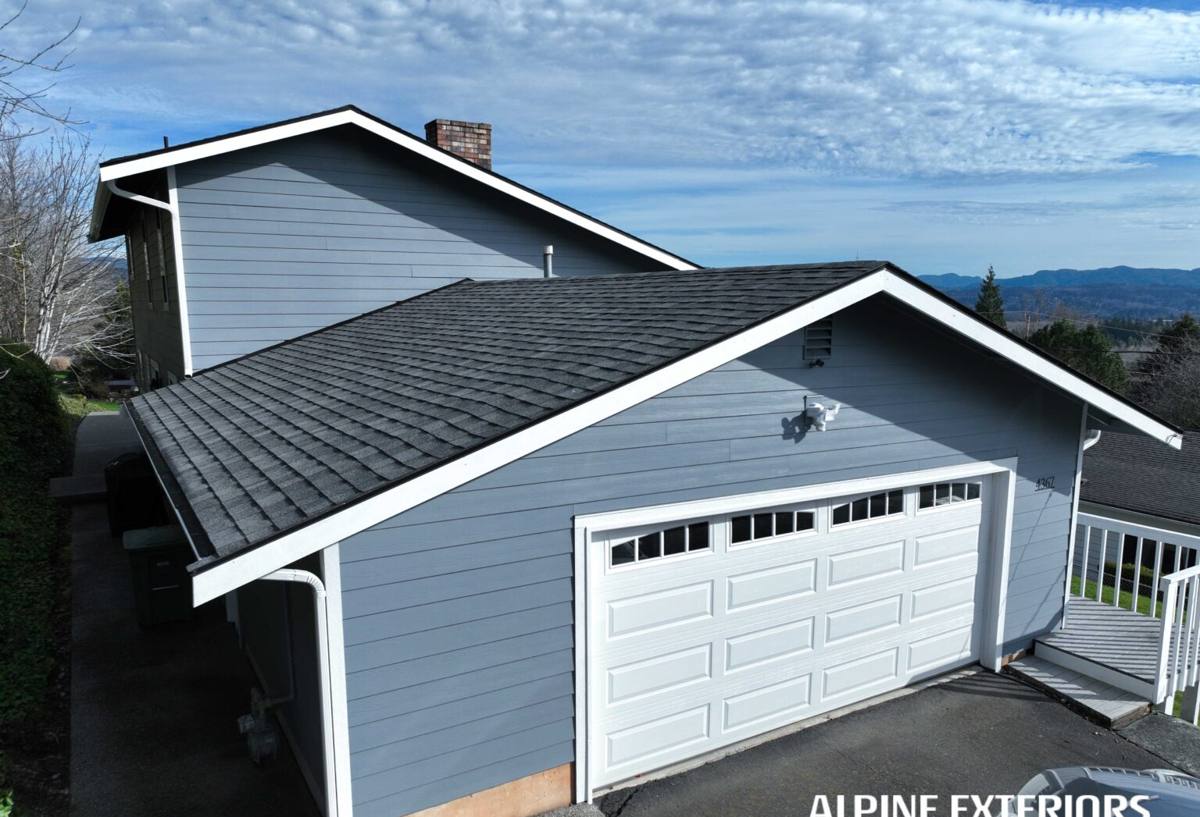
What Salt Air, Rain, and Moss Actually Do to a Roof
Salt Air and Corrosion
Airborne salt accelerates corrosion on exposed metal — nails, flashing, gutter hangers, and any fastener that isn't rated for coastal exposure. On a standard-grade roof, that corrosion often shows up first at nail heads and drip edges, well before the shingles themselves are worn out. Once fasteners start failing, shingles loosen, and a roof that "still looks fine" from the ground can already be letting water in at the edges.
Driving Rain and Wind-Driven Moisture
Rain that falls straight down is a much easier problem to manage than rain that's being pushed sideways by wind off the water. Wind-driven rain finds gaps in flashing, works its way under shingle tabs, and tests every seam around chimneys, skylights, and roof-to-wall transitions. Roofs built for calmer conditions often skip details — like extended underlayment laps or storm-collar flashing — that matter a lot more here.
The Long Moss Season
Shade from evergreens, consistent damp air, and mild temperatures all add up to a moss season that starts earlier and lasts longer around Samish than it does further inland. Moss isn't just cosmetic — it holds moisture against the roof surface, lifts shingle edges as it grows, and slowly breaks down the granule surface that protects asphalt shingles from UV and water. Left unaddressed, moss growth can shave real years off a roof's service life.
Signs a Samish Roof Needs Replacing — Not Just Patching
Not every roof problem calls for a full replacement, but there's a point where patching stops being cost-effective and starts being a way to delay an inevitable, larger repair bill. Homeowners in this area should watch for:
- Granule loss heavy enough that shingles look patchy or bald in spots, especially on south- and west-facing slopes
- Moss or algae streaking that comes back within a season or two of cleaning
- Soft spots, sagging, or spongy areas when walked on — a sign the deck underneath is wet or deteriorating
- Rusted or visibly corroded flashing, valleys, or fasteners
- Shingles that are curling, cracking, or losing their tabs, particularly near edges and penetrations
- Daylight visible through the roof deck from inside the attic
- Recurring leaks in the same spot despite prior repairs
- A roof that's simply reached the end of its rated lifespan, even if it "looks okay" from the street
If you're seeing two or more of these at once, that's usually the point where a replacement is more economical than continuing to chase individual repairs.
What a Correct Roof Replacement Involves
Full Tear-Off and Deck Inspection
We don't recommend layering new shingles over old ones. A full tear-off is the only way to actually see the condition of the roof deck — plywood or plank sheathing that's been sitting under a failing roof in a wet climate is often softer or more damaged than it looks from above. Any rotten or delaminated decking gets replaced before anything new goes down; skipping this step just buries a problem under new materials.
Underlayment Built for Wet Climates
The underlayment layer matters as much as the shingle on top of it in a climate like this. Synthetic underlayment holds up better to prolonged moisture exposure than older felt products, and self-adhered ice-and-water barrier belongs at eaves, valleys, and any low-slope transition where wind-driven rain is most likely to force its way underneath the shingle layer.
Ventilation That Matches the Home
A roof that can't breathe traps moisture in the attic, which speeds up deck rot and helps moss and mildew take hold from underneath as well as above. Balanced intake and exhaust ventilation — sized correctly for the attic volume — is part of a proper replacement, not an optional add-on.
Flashing and Fastener Details
Given the corrosion risk from salt air, we spec corrosion-resistant flashing and fasteners rather than standard-grade hardware, particularly around chimneys, skylights, dormers, and any roof-to-wall intersection. These are the spots that fail first on an underspecified roof, and they're the most expensive to fix later once the underlying decking has been compromised by a slow leak.
Comparing Roofing Materials for a Samish Home
There's no single "best" roofing material for every home — the right choice depends on your roof's exposure, slope, budget, and how much moss and moisture management you want to take on long-term. Here's how the common options stack up for this specific climate:
| Material | Moss & Moisture Resistance | Salt Air Durability | Typical Lifespan | Maintenance |
|---|---|---|---|---|
| Architectural asphalt shingle | Good with proper ventilation; needs periodic moss treatment | Good when paired with corrosion-resistant flashing/fasteners | 25–30 years | Moderate — periodic moss/debris removal |
| Standing seam metal | Excellent — sheds moss and moisture well | Very good with coastal-rated coatings and fasteners | 40–50+ years | Low — occasional inspection |
| Synthetic/composite shake | Very good — resists moisture absorption | Good with correct fastener specification | 30–40 years | Low to moderate |
We install and stand behind more than one of these systems rather than pushing a single product, because the honest answer depends on your specific roof. Where we steer homeowners away from a material, it's for practical reasons — moisture behavior, installation sensitivity, or long-term maintenance burden in this specific climate — not because a product is inherently bad.
Our Replacement Process
- On-site inspection and estimate — we walk the roof, check the attic and deck condition where accessible, and talk through material options honestly, including trade-offs.
- Written scope and timeline — you get a clear, itemized plan before any work starts, including what's included in tear-off, decking repair, underlayment, and flashing.
- Weather-aware scheduling — we plan around forecasted rain windows as much as possible, since a rushed tear-off in wet weather invites the exact moisture problems we're trying to prevent.
- Tear-off and deck repair — old roofing comes off completely and any compromised decking is replaced before new material goes down.
- Underlayment, flashing, and ventilation installation — done to the details above, not the bare minimum code allows.
- Final walkthrough — we go over the finished roof with you, including care and moss-prevention guidance specific to your property's shade and exposure.
Why It Matters That We Already Work Samish
A crew that mostly works drier, inland areas can still install a technically correct roof — but they're less likely to default to the coastal-grade details that matter here unless they're specifically asked. Working Chuckanut and the surrounding Whatcom County shoreline regularly means we're not guessing at how fast moss regrows on a shaded north slope near the water, or which flashing details actually hold up after a few winters of driving rain off the bay. That local pattern recognition shows up in the small decisions — fastener grade, underlayment coverage, ventilation sizing — that determine whether a roof lasts its full rated lifespan or starts failing early.
It also means we're realistic with homeowners about timelines. Weather windows for tear-off work can be tighter here than in drier parts of the state, and a crew that plans around that reality avoids the problems that come from rushing a tear-off ahead of incoming rain.
Keeping a New Roof Performing Long-Term
A correct installation gets you most of the way to a long-lasting roof, but a little ongoing care matters in this climate:
- Keep gutters clear so water isn't backing up under the eaves during heavy rain
- Trim back overhanging branches where practical to reduce shade and debris buildup that feeds moss
- Have moss growth treated before it spreads, rather than after it's established across a slope
- Schedule a periodic roof check, especially after major storms, to catch flashing or fastener issues early
None of this requires a big time investment, but skipping it is how a well-installed roof still ends up with an avoidable, shortened lifespan in a climate this demanding.
What Affects Your Replacement Cost
Every roof is priced individually, but the main cost drivers for a Samish replacement are roof size and pitch, the condition of the existing deck (and how much needs replacing), the material you choose, and the complexity of features like valleys, dormers, and chimneys that each need their own flashing work. A steep, cut-up roof with several penetrations will cost more to do correctly than a simple gable roof of the same square footage — not because of markup, but because there's genuinely more flashing and labor involved in doing those details right.
If you're seeing signs of wear on your roof, or you just want an honest read on where yours stands, we're happy to take a look. Reach out for a free, no-pressure estimate using the form below — we'll give you a straight assessment of what your roof needs and why.