 Chuckanut Exterior
 Decks in Samish Face a Different Set of Conditions
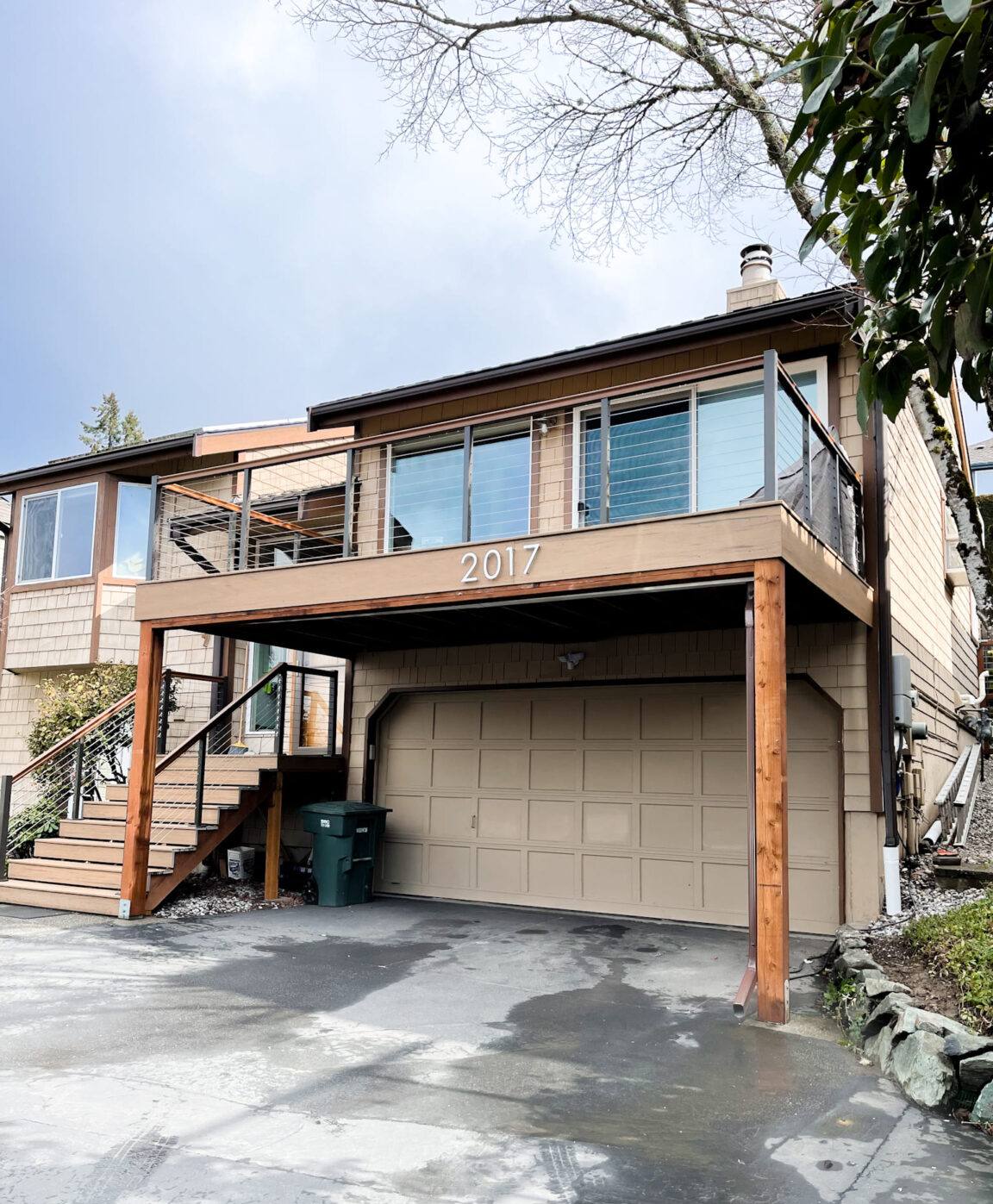
A deck built for Samish, near Chuckanut in Whatcom County, has to hold up to conditions that a lot of generic deck plans never account for. This stretch of shoreline along Samish Bay sits right in the path of salt-laden air, and the tree cover that gives these lots their privacy also means shade, dampness, and a moss season that can run most of the year. A deck design that works fine in a dry inland subdivision can start showing problems here within a couple of seasons — corroding hardware, soft spots at the ledger, decking that stays slick with algae long after a storm has passed.
This page is about one thing: building and maintaining a custom deck for a home in the Samish area, where the climate is the main design constraint, not an afterthought.
What the Local Climate Actually Does to a Deck
Salt Air and Metal Fasteners
Even a few hundred yards from the water, salt-bearing air carries onto siding, railings, and every exposed fastener on a deck. Standard zinc-coated screws and joist hardware corrode faster here than the box label suggests, and once a fastener starts rusting it weakens from the inside before it ever looks bad on the surface. This is the single most common shortcut we see on older decks near the bay — the framing itself is fine, but the hardware holding it together isn't rated for the exposure it's actually getting.
Driving Rain and Water Intrusion
Rain in this part of Whatcom County doesn't just fall straight down — wind off the water pushes it sideways, driving it up under flashing and into any gap in the house-to-deck connection. The ledger board, where the deck attaches to the house, is the single most failure-prone point on any deck in a climate like this. Water finds its way behind poorly flashed ledgers and works on the rim joist and sheathing for years before anyone notices, usually as soft framing or a stain on an interior wall.
Moss, Algae, and Shaded Lots
Many Samish properties sit under fir, cedar, or maple canopy, which is a real asset for privacy and shade but keeps decking damp long after the rest of the yard has dried out. Moss and algae take hold fastest on horizontal wood surfaces that stay wet, and once established they hold moisture against the boards and make the deck surface genuinely slippery — a real safety issue on stairs and near entry doors, not just a cosmetic one.
Choosing Decking Material for a Samish Lot
There's no single "best" decking material — the right choice depends on how shaded the lot is, how close it sits to the water, and how much upkeep the homeowner actually wants to do. We walk every material's trade-offs honestly rather than pushing whatever's easiest for us to install.
| Material | Moisture & Moss Behavior | Hardware Needs | Upkeep in This Climate |
|---|---|---|---|
| Pressure-treated wood | Absorbs water readily; moss and algae take hold quickly in shaded spots | Requires corrosion-resistant coated or stainless fasteners | Annual cleaning, periodic sealing or staining |
| Cedar | Naturally rot-resistant but still needs to shed water; can still host surface moss | Stainless steel strongly preferred to avoid staining | Regular cleaning and refinishing to hold its color and resist moss |
| Composite decking | Doesn't absorb water like wood, but can still grow surface algae if never cleaned | Hidden fastener systems in stainless or coated hardware | Lower — periodic washing keeps it looking new |
| PVC/capped polymer | Fully sealed surface; best resistance to moisture and moss buildup | Same corrosion-resistant hardware standards apply | Lowest maintenance of the group, higher upfront material cost |
Whatever material a homeowner chooses, we don't cut corners on the hardware underneath it — the fasteners and structural connectors are what actually determine how long the deck lasts near the water, regardless of what the surface boards are made of.
What a Properly Built Deck Involves Here
Ledger Board Flashing and Waterproofing
The ledger connection gets full metal flashing integrated with the house's water-resistive barrier, not just a bead of caulk over the top. Done correctly, water is directed out and away from the house framing instead of being allowed to pool behind the ledger. This is the detail that separates a deck that's still solid in fifteen years from one that needs a rim joist replaced in five.
Framing, Footings, and Fasteners
Structural connectors, joist hangers, and all exposed fasteners get specified for coastal exposure — stainless steel or heavy-duty coated hardware rated for the corrosion this environment causes, not the minimum the code technically allows. Footings are sized and set to the actual soil conditions on the lot, which on wooded, sloped Samish properties can vary quite a bit from one corner of the deck to the other.
Drainage and Airflow Underneath
Standing water and trapped moisture under a deck are what accelerate rot and moss growth on the framing itself. We grade and, where needed, add drainage under low decks so water moves away from the structure instead of sitting under it, and we keep enough clearance and airflow underneath that the framing actually gets a chance to dry out between storms.
Permits and Code in Whatcom County
Most custom deck projects in Whatcom County require a building permit, particularly once the deck is attached to the house or built above a certain height, and guardrail and stair requirements are set by code, not by preference. We handle the permit application and inspection process as part of the job, and we won't build a deck to a lower structural standard than code requires just to save time — a permitted, inspected deck also protects the homeowner if the property is sold later.
Our Process for a Samish Deck Build
We keep the process straightforward and grounded in what the site actually needs, not a generic template:
- An on-site visit to look at sun and shade exposure, slope, soil, and how close the lot sits to salt air exposure from the bay.
- A design conversation covering layout, decking material trade-offs, and railing options based on the homeowner's priorities and budget.
- A written scope and honest estimate before any work begins — no vague allowances that turn into surprise costs later.
- Permit submission and structural planning sized to the specific site conditions.
- Construction with corrosion-rated hardware and properly flashed ledger connections throughout.
- A final walkthrough covering how to maintain the specific materials installed, given the shade and moisture on that particular lot.
Keeping a Samish Deck Ahead of Moss and Salt
Even a well-built deck needs some seasonal attention in this climate. None of this is complicated, but skipping it is how moss and corrosion get a head start.
- Sweep debris and needles off the deck surface regularly — trapped organic matter under leaves is where moss and algae start.
- Wash the decking surface at least once or twice a year to remove the thin biofilm that leads to moss growth before it takes hold.
- Check railings, stairs, and any hardware you can see for early rust or staining, especially on decks closer to the water.
- Keep gutters and downspouts near the deck clear so roof runoff isn't dumping extra water onto or under the structure.
- Trim back overhanging branches where practical to let more light and airflow reach shaded sections of the deck.
- Reseal or refinish wood decking on the schedule appropriate to the product — don't wait until it's visibly graying or absorbing water.
Why Local Experience in Samish and Chuckanut Matters
A crew that mainly builds decks inland doesn't run into salt-air corrosion or a genuine moss season as a matter of routine, so it's easy to under-spec hardware or skip drainage details that don't matter elsewhere but matter a great deal here. Working regularly in the Samish and Chuckanut area means we've seen what actually fails on decks in this specific environment — which fasteners hold up, which ledger details keep water out, and which decking materials handle shade and salt air without turning into a maintenance headache. That's the standard we build to on every project in this area, not a generic spec sheet.
If you're planning a new deck or replacing one that's showing its age, we're happy to come take a look and put together a free, no-pressure estimate based on your specific lot and how it sits relative to sun, shade, and the water. There's no obligation — just an honest read on what your project actually needs.