 Chuckanut Exterior
 Siding for Samish Has to Answer to the Bay
Homes along the Samish corridor near Chuckanut sit in one of the harder exposure zones in Whatcom County. You've got salt-laden air coming off the water, driving rain that hits siding sideways more often than straight down, and a moss season that can run eight or nine months out of the year once the canopy shades a north wall. None of that is exotic weather — it's just Pacific Northwest coastal weather doing what it does, year after year, to whatever material is bolted to the house. The siding that holds up here isn't the siding that looks best in a showroom. It's the siding engineered for exactly this kind of exposure, installed by people who understand why that matters.
This page is about one job, in one place: James Hardie fiber cement siding on Samish-area homes. Not a general siding pitch — a straight explanation of what this climate does to a house, what a correct Hardie installation looks like in response, and why we've made a point of learning this specific stretch of Whatcom County instead of treating it like any other job site.
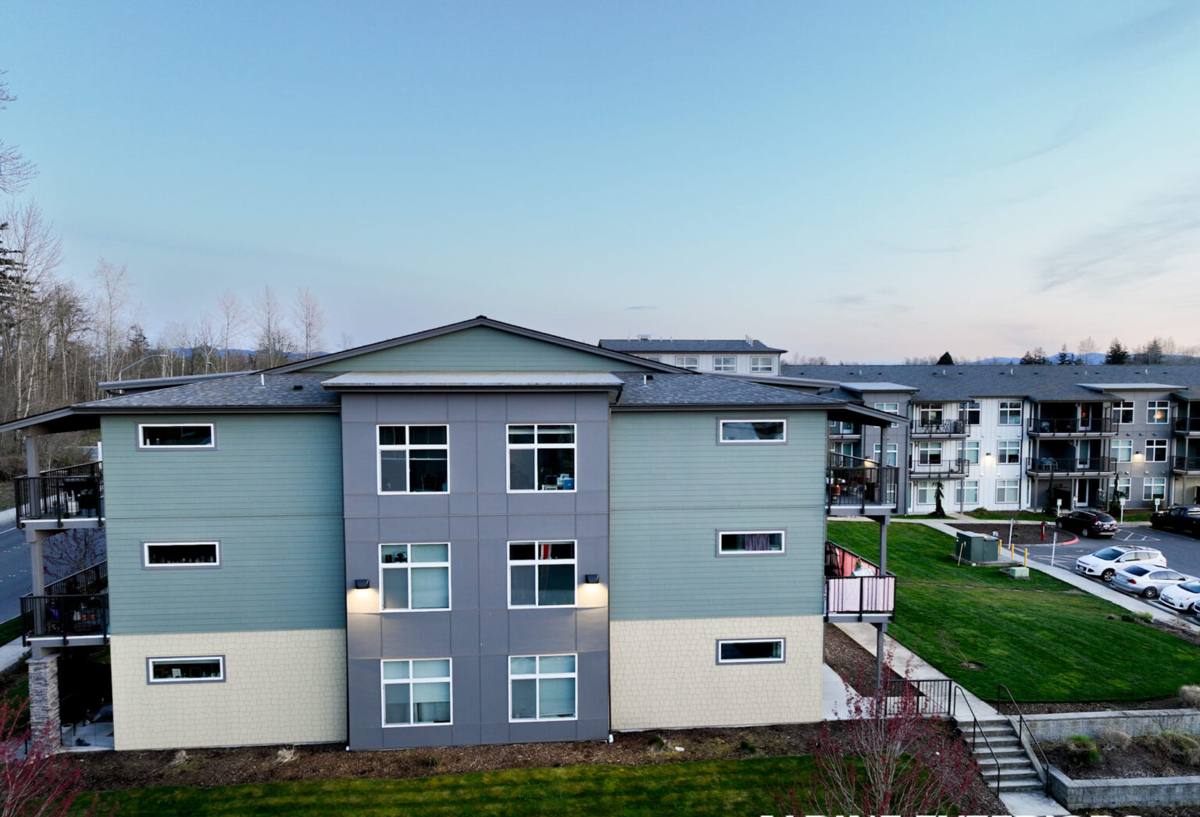
What Salt Air, Rain, and Moss Actually Do to a Wall
Each of these three factors attacks a house differently, and a siding system has to hold up to all three at once, not just one.
Salt Air
Airborne salt is corrosive to exposed metal — fasteners, flashing, trim edges — and it's abrasive to painted or coated surfaces over time. On a lot of siding materials, that shows up as fastener bleed-through, chalking finishes, or coatings that fail years ahead of schedule on the water-facing elevations. Fiber cement itself doesn't corrode, but every metal component in the assembly and every finish on the panel still has to be chosen with salt exposure in mind.
Driving Rain
Wind off the bay pushes rain sideways into wall assemblies, not just down over them. That means lap joints, butt seams, window and door flashing, and the drainage plane behind the siding are doing real work here — this isn't a climate where sloppy flashing details get away with it for long. Water that gets behind the cladding needs somewhere to go, and it needs a wall assembly that lets it dry out afterward.
Moss and Sustained Moisture
Shaded, north-facing walls and anything near overhanging trees stay damp longer here than almost anywhere else in the county. Wood-based siding and some engineered wood products are vulnerable to that in a way fiber cement simply isn't — sustained moisture is what causes rot, swelling, and the soft, spongy siding you sometimes see on older homes tucked back from the water under tree cover.
Why We Install Only James Hardie in This Climate
We don't install LP SmartSide, vinyl, Cemplank, Allura, primed spruce, or cedar. That's not a marketing position — it's a decision built around jobs exactly like the ones we do in Samish. Every one of those alternatives has a real strength somewhere, but each also has a trade-off that shows up faster in a salt-air, high-rain, moss-prone environment than it would somewhere drier and more sheltered.
- Wood-based products (cedar, primed spruce, LP SmartSide): engineered wood and solid wood siding rely on their coatings and edge-sealing to keep moisture out. In a climate where walls stay wet for extended stretches, any gap in that protection — a cut edge, a fastener hole, a joint that opens up slightly — becomes an entry point for the kind of sustained moisture that leads to swelling and rot.
- Vinyl: holds up fine to rain, but it moves with temperature swings, can become brittle over time, and its color is baked into the material rather than a separately engineered finish — so fading and chalking are a when, not an if. It also doesn't offer the fire-resistance profile fiber cement does.
- Other fiber cement brands (Cemplank, Allura): mechanically similar to Hardie in concept, but we standardized on Hardie for its HardieZone engineering (siding formulated for specific climate zones), its factory-applied ColorPlus finish, and a warranty structure we can stand behind without qualifications.
James Hardie fiber cement is non-combustible, dimensionally stable across our wet winters and dry summers, and manufactured specifically to resist moisture intrusion, cracking, and pest damage. For a coastal Whatcom County property, that combination isn't a luxury upgrade — it's the baseline the climate demands.
HardieZone and Why Product Selection Matters Here
James Hardie engineers its siding by climate zone under its HardieZone system, and picking the right formulation for a Samish property is part of doing the job correctly, not an upsell. Product selection, panel profile, and finish all get chosen with the specific exposure of each elevation in mind — a wall facing open water and prevailing wind gets treated differently than a sheltered, tree-covered side of the same house.
| Factor | Why It Matters in Samish |
|---|---|
| HardieZone formulation | Matched to Pacific Northwest moisture and freeze-thaw patterns rather than a generic national spec |
| ColorPlus factory finish | Baked-on, not field-applied — holds color and resists the chalking that salt air accelerates on site-painted surfaces |
| Panel profile (lap, shingle, panel) | Affects how water sheds on a given elevation and how the assembly performs under wind-driven rain |
| Fastener and flashing metal | Corrosion-resistant hardware is not optional this close to salt air |
What a Correct Installation Involves
Most siding failures we see on older Samish-area homes aren't a failure of the material — they're a failure of the installation details underneath it. Fiber cement is only as good as the wall assembly it's fastened to.
Drainage Plane and Rain Screen
Given how much wind-driven rain this area sees, an installation that doesn't include a proper drainage gap behind the siding is setting the wall up to trap moisture. A correct install creates a path for incidental water to drain and for the wall to dry, rather than sealing moisture in against the sheathing.
Flashing at Every Penetration
Windows, doors, hose bibs, vents, deck ledgers — every penetration through the siding plane is a potential entry point for driving rain. Flashing has to be layered correctly (shingle-fashion, so upper courses overlap lower ones) at every single one, not just the obvious spots.
Fastening and Clearances
Hardie specifies exact fastener types, spacing, and penetration depth — and minimum clearances from grade, roof lines, and decks. Skipping these to save time is the single most common way we see installations shortened, and it's exactly what shows up as problems five or ten years later.
Caulking and Joint Treatment
Butt joints, trim transitions, and panel seams need the right sealant, applied correctly, in a climate that will test every joint every winter. Over-caulking is as much a problem as under-caulking — joints still need to allow the assembly to move and dry.
Our Process on a Samish Job
- On-site assessment: we walk every elevation, note exposure differences (water-facing vs. sheltered, sun vs. shade), and check the existing wall assembly for moisture damage before quoting anything.
- Product and profile selection: HardieZone formulation, panel profile, and ColorPlus color are matched to the house and its exposure, not applied as a one-size answer.
- Tear-off and sheathing check: old siding comes off, sheathing gets inspected for hidden rot or moisture damage, and any repairs happen before a single new panel goes up.
- Drainage plane and flashing install: weather-resistive barrier, rain screen, and flashing at every penetration go in first — this is the part of the job that determines how the house performs in twenty years, and it's invisible once the siding is on.
- Hardie panel installation: installed to manufacturer fastening and clearance specs, elevation by elevation.
- Final inspection and walkthrough: we check joints, clearances, and finish quality, and walk the homeowner through what to expect and how to care for it.
Cost Factors on a Samish Property
Every job is different, and we'll give you real numbers after we've walked your specific house — but these are the factors that move the price up or down on jobs in this area.
| Factor | Effect on Scope |
|---|---|
| Existing wall condition | Hidden moisture damage from prior siding adds repair scope before install can start |
| House size and elevation count | Straightforward square footage plus the complexity of gables, dormers, and trim detail |
| Access and terrain | Sloped lots and water-facing sites near the bay can require additional staging and scaffolding |
| Panel profile and color | Lap vs. shingle profile and ColorPlus color selection affect material cost |
| Trim and detail work | Windows, corners, and fascia treatments add labor beyond flat wall coverage |
Why a Crew That Already Works This Area Matters
A siding contractor who's worked houses along the Chuckanut and Samish corridor already knows which elevations take the worst of the weather, what wall conditions to expect once old siding comes off, and how local permitting and inspection tends to go in Whatcom County. That's not a small thing. A crew seeing this exposure for the first time is learning on your house; a crew that's already done it isn't guessing at drainage details or product selection — they're applying what already held up on the last job down the road.
It also means fewer surprises mid-project. Knowing in advance that a north-facing wall under tree cover is going to need extra attention to moss and drying, or that a water-facing elevation needs the more weather-resistant HardieZone formulation, comes from having done this work here before — not from a generic checklist.
Living With Hardie Siding in This Climate
Once it's installed correctly, James Hardie siding is genuinely low-maintenance for this environment — but "low-maintenance" doesn't mean "no attention." A short annual routine keeps it performing the way it's designed to:
- Rinse off salt residue and general grime once or twice a year, especially on water-facing elevations
- Keep gutters clear so water isn't overflowing directly onto siding runs
- Trim back vegetation and tree cover that's keeping any wall section shaded and damp longer than the rest of the house
- Check caulking at trim and penetrations every year or two and touch up if it's cracking or pulling away
- Address moss on adjacent roofing or trim promptly so it doesn't spread onto siding surfaces
- Watch for any soft spots, staining, or paint failure at the base of walls near grade, which can signal a drainage issue worth checking
Get a Straight Answer on Your Samish Home
If you're weighing a siding replacement on a Samish or Chuckanut-area property, we're happy to walk the house, look at what your specific elevations are dealing with, and give you a straightforward assessment — no pressure, no generic sales pitch. Use the form below to request a free estimate.