 Chuckanut Exterior
 Deck Replacement Built for Samish Conditions
Samish sits close enough to the water and the bay that homes here take a different kind of weathering than decks built further inland in Whatcom County. Salt-laden air moves through the area regularly, driving rain comes in sideways off the water during winter storms, and the shoulder seasons bring long stretches of damp, shaded conditions that keep moss and algae established on horizontal wood surfaces for months at a time. A deck that was built to a generic spec, or built for a drier climate, tends to show its age here faster than the homeowner expected. If you're looking at soft spots underfoot, ledger board staining, railings that wiggle, or boards that stay slick with moss well into late spring, you're looking at a deck that's telling you it's done working with a repair-only approach.
Replacement is a bigger decision than a repair, and it should be. Done right, it's also the point where you fix the structural and drainage issues that caused the original deck to fail, instead of just replacing the parts that rotted.
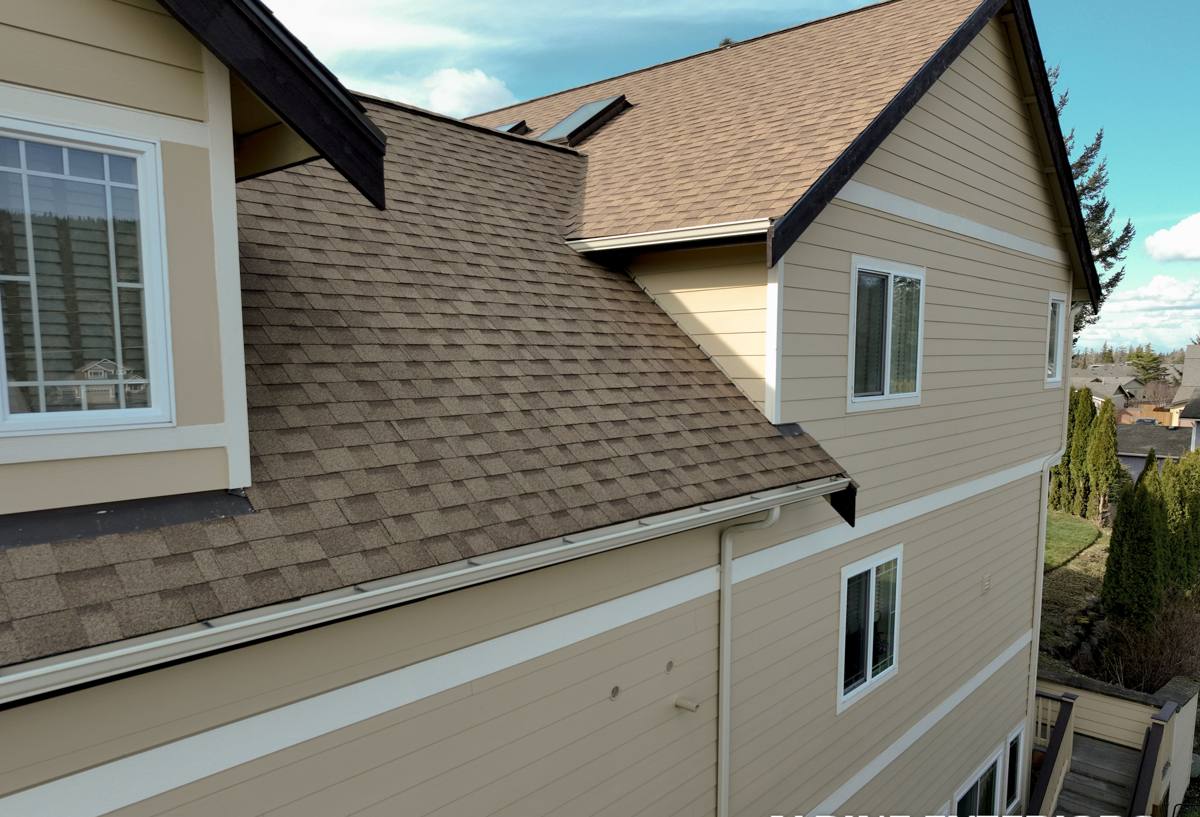
Why Samish Decks Wear Out Faster Than the Owner Expects
Salt Air and Metal Fasteners
Proximity to the water means airborne salt settles on exposed surfaces, including the metal hardware holding a deck together. Standard fasteners and generic joist hangers corrode faster under this exposure, and once a fastener starts to rust, the wood around it stays damp longer, which accelerates rot right at the connection points that matter most structurally.
Driving Rain and Ledger Board Failure
Wind-driven rain doesn't just fall on a deck, it gets pushed sideways into the gap between the deck boards and the house, and into any flashing that isn't sealed correctly. The ledger board — where the deck attaches to the house — is the single most common failure point we find on older decks in this area, and it's almost always a flashing or fastening problem rather than a wood quality problem.
Moss, Shade, and Surface Deterioration
Whatcom County's long wet season, combined with tree cover and lower winter sun angles common around Samish properties, means many decks stay damp and shaded for extended stretches. Moss and algae aren't just cosmetic — they hold moisture against the wood surface, and on composite decking they can stain in ways that are very difficult to fully clean off. Untreated, this speeds up surface checking on wood and can void warranty coverage on some composite products if manufacturer cleaning guidelines were ignored.
Signs a Samish Deck Needs Replacement, Not Repair
- Soft, spongy, or bouncy decking boards, especially near the house or in shaded corners
- Visible rot or dark staining at the ledger board where the deck meets the siding
- Rusted, streaking, or failing fasteners and joist hangers
- Railings or posts that flex or wiggle under normal hand pressure
- Persistent moss or algae that returns within weeks of cleaning
- Gaps opening up between boards, or boards cupping and splitting
- A deck more than 15-20 years old built with older lumber grades or no flashing at all
- Stairs or landings that feel unstable, especially after freeze-thaw cycles
Any one of these on its own might be repairable. Two or more together, especially involving the ledger board or the framing underneath, usually means the deck has reached the point where patching costs almost as much as doing it right and leaves the underlying problem in place.
What a Correct Deck Replacement Involves Here
Structural Assessment First
Before any material gets ordered, we check the framing, footings, and ledger connection. In this climate, we pay particular attention to whether the original ledger flashing exists and is intact, since that's the detail most often skipped or done poorly on older builds. If the footings are undersized or the framing has already taken on moisture damage, that gets addressed as part of the replacement, not left for later.
Flashing and Water Management
This is the step that actually determines how long the new deck lasts near the water. Proper ledger flashing, correctly lapped house wrap or siding integration, and attention to how water sheds off the deck surface all matter more here than in drier parts of the state. We treat this as a non-negotiable part of the job, not an upgrade option.
Fastener and Hardware Selection
Given the salt air exposure common in Samish, we use corrosion-resistant fasteners and connectors rated for coastal or high-moisture use rather than standard interior-grade hardware. It costs a little more up front and is the difference between hardware that lasts the life of the deck and hardware that starts rusting within a few seasons.
Decking Material Suited to Shade and Moisture
We'll talk through wood versus composite honestly based on how much shade and moisture your specific property sees, not a one-size answer. Both have real trade-offs here, covered below.
Decking Material Options for Samish's Climate
| Material | How It Handles Moisture & Moss | Maintenance Reality | General Cost Position |
|---|---|---|---|
| Pressure-treated wood | Resists rot when sealed and maintained; moss still grows on the surface in shaded, damp spots | Needs periodic cleaning, re-sealing, and moss treatment to hold up long-term | Lowest upfront cost |
| Cedar | Naturally more rot- and insect-resistant, but still needs surface protection against moss staining | Requires regular oiling or sealing to keep its look and resist moisture uptake | Mid-range |
| Composite decking | Doesn't rot, but moss and algae can still grow on the surface and stain some products if not cleaned per manufacturer guidance | Lower overall maintenance, but not maintenance-free in a moss-prone climate | Higher upfront, generally lower lifetime upkeep cost |
The honest answer for most Samish homes is that shade exposure matters more than brand preference. A deck that sits mostly in the sun can do fine with a well-maintained wood system. A deck tucked under trees or on the north side of the house benefits more from composite, paired with a cleaning routine, because the surface moss issue shows up regardless of material — it's just easier to manage on composite over time.
What We Won't Recommend Without Caveats
We're cautious about decking systems that trap moisture underneath the board profile in a climate this damp, since that can hide rot in the substructure longer before it's visible. It's less about any one product being bad and more about matching the system's ventilation and drainage behavior to how much water this region actually sees. We'll walk through this specifically for your property rather than pushing one system across the board.
Our Process for a Samish Deck Replacement
- On-site assessment — we look at the framing, ledger, footings, and drainage, not just the visible boards
- Honest scope discussion — what actually needs replacing versus what's salvageable, explained plainly
- Material walkthrough — wood versus composite trade-offs specific to your property's sun and shade exposure
- Written estimate — clear line items, no vague allowances buried in the total
- Demolition and disposal — old decking, framing, and hardware removed and hauled off
- Rebuild with correct flashing and coastal-rated hardware — the part that determines longevity
- Final walkthrough — we check railings, stairs, and surface finish with you before calling it done
Permits and Local Considerations
Deck replacements involving structural changes, height above grade, or footing work typically require a permit in Whatcom County, and requirements can vary depending on your specific property and whether the deck's footprint or height is changing. We handle the permit conversation as part of the project scope rather than leaving it for the homeowner to sort out separately, and we'll flag it early if your project falls into that category.
Maintaining a New Deck Through Whatcom County's Wet Season
- Clear leaves and debris from between boards before fall rains set in, so water doesn't pool against the wood or trap organic matter
- Treat moss and algae early in the season rather than waiting until it's established and slick
- Check the ledger flashing area annually for staining or gaps, since this is the first place a problem will show
- Re-seal wood decking on the manufacturer's recommended schedule, not just when it looks faded
- Follow the specific cleaning guidance for your decking material — composite and wood systems have different do's and don'ts for moss removal
- Keep gutters and downspouts near the deck clear so runoff isn't dumping extra water onto the deck surface or framing
Why Hiring a Crew That Already Works in Samish Matters
A deck replacement done by a crew unfamiliar with this specific stretch of Whatcom County's climate often looks fine on installation day and starts showing problems within a couple of seasons — usually at the ledger connection, at fastener corrosion points, or in shaded corners where moss takes hold fastest. We work on homes throughout Chuckanut and the surrounding Samish area regularly, which means we're not guessing at how the salt air, rain patterns, and shade conditions here affect a given material or detail — we've already seen how it plays out on decks like yours. That local pattern recognition is what separates a deck that needs attention again in three years from one that holds up for the long haul.
If your deck is showing any of the wear signs above, or you just want an honest read on repair versus replacement, we're happy to come take a look. Estimates are free, there's no pressure, and you'll get a straight answer about what your deck actually needs — use the form below to get started.