 Chuckanut Exterior
 Why Samish Roofs Need a Different Approach
Samish sits close enough to the water that salt air is part of daily life, and that changes what a roof has to survive. Add in the long, wet stretch of driving rain that runs from fall through spring, plus a moss season that can last most of the year in shaded, tree-covered lots, and you have a set of conditions that punishes the wrong roofing choice fast. A roof that would hold up fine in a drier inland climate can start showing corrosion, streaking, or moss intrusion within a few seasons out here.
Metal roofing, done correctly, is one of the better answers to this combination of problems. It sheds water quickly, doesn't give moss the organic surface it needs to root in, and — when the metal and coatings are matched to a coastal-influenced environment — resists the slow corrosion that salt-laden air causes over time. The key phrase is "done correctly." Metal roofing is unforgiving of shortcuts in a way that asphalt shingles are not, and a lot of the roofs we get called out to inspect in and around Chuckanut have problems that trace back to installation, not the material itself.
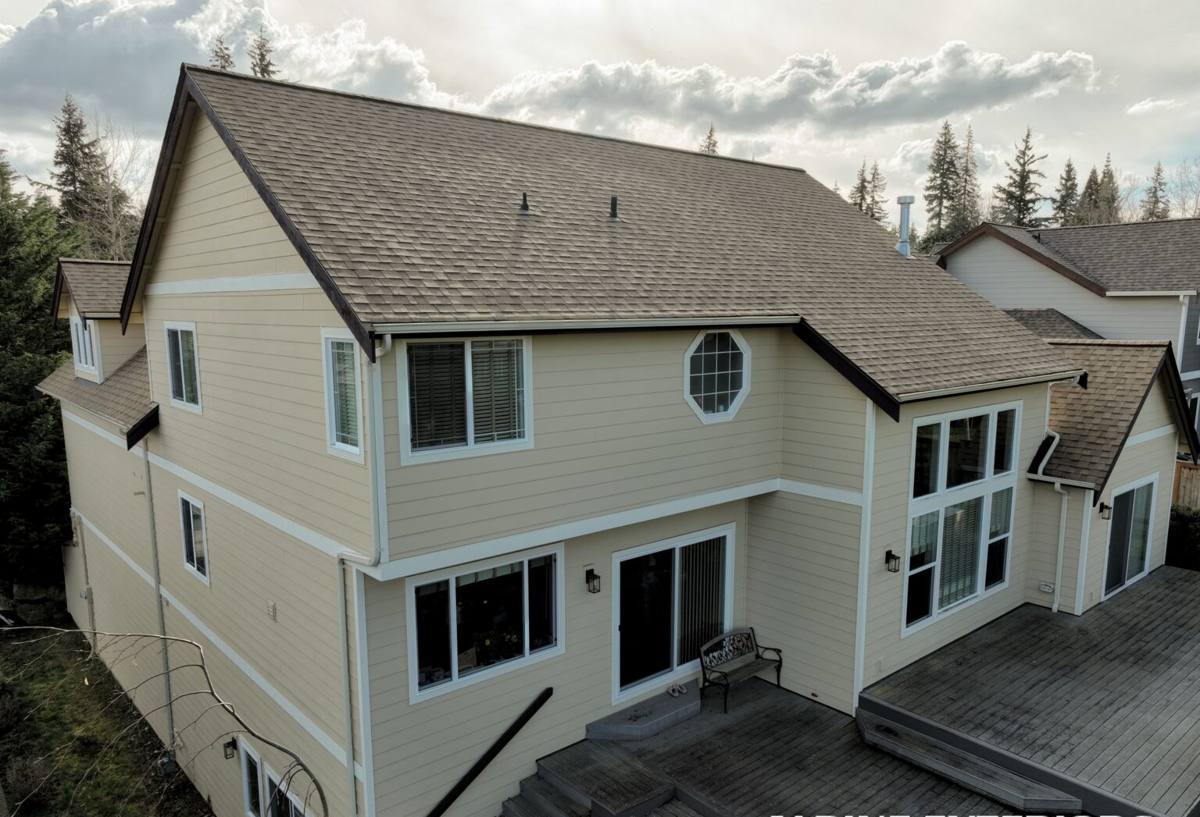
What Salt Air Actually Does to a Roof
Salt-laden air doesn't need to be blowing directly off open water to matter. Moist, salt-carrying air moves inland on prevailing winds and settles on every exposed surface, including roofing. Over time it accelerates corrosion on unprotected steel, degrades cheap coatings, and causes fasteners and flashing to fail well before their rated lifespan if the wrong grade of hardware was used.
This is why material selection matters more here than in a lot of other parts of Washington. A metal roofing system that's marketed as suitable for "coastal" conditions somewhere with mild, dry salt exposure isn't automatically suitable for Whatcom County's combination of salt air and near-constant moisture. We look at both factors together — not just "is this metal coastal-rated" but "how does this specific coating and fastener system hold up under salt air that stays wet for days at a time."
Aluminum vs. Coated Steel
Both metals have a place in Samish roofing, but they behave differently:
- Aluminum doesn't rust — it forms a stable oxide layer and generally handles salt exposure very well over the long term, though it's a softer metal and more prone to denting.
- Galvanized or Galvalume steel is stronger and more impact-resistant, but its corrosion resistance depends entirely on the coating staying intact. Any scratch, cut edge, or fastener puncture that isn't properly sealed becomes a point where rust can start, and salt air speeds that process up considerably.
Neither is a wrong answer across the board — the right choice depends on the specific roof, its exposure, budget, and how the panels will be cut and fastened. What matters is that whoever is installing it treats every cut edge and penetration as a place that needs sealing, not just a place that needs a fastener.
Getting Ahead of Moss Before It Starts
Samish's tree cover and long damp season create ideal moss conditions. Moss doesn't grow on bare metal panel the way it does on asphalt shingles or wood shakes, because metal doesn't give it the organic, moisture-holding surface it needs to establish roots. That's one of the real practical advantages of metal roofing here — but it's not automatic immunity.
Moss and organic debris can still build up in valleys, around penetrations, and anywhere water and leaf litter collect and sit rather than draining freely. Poor panel overlap, undersized gutters, or valleys that weren't detailed to move water and debris off the roof quickly all give moss an opening even on a metal surface. Correct installation — proper slope detailing, adequate overlap, clean valley flashing — is what actually keeps moss from becoming a problem, not just the fact that the roofing material is metal.
What a Correct Metal Roofing Installation Involves
A metal roof is a system, not just a set of panels. Every layer underneath and every detail around penetrations affects how the roof performs in this climate:
| Component | Why It Matters in Samish's Climate |
|---|---|
| Underlayment | A high-quality synthetic or self-adhered underlayment is the backup layer if wind-driven rain ever gets past the panels — critical given how much driving rain this area sees |
| Fasteners | Must match the panel metal to avoid galvanic corrosion, and must be rated for coastal/salt exposure, not just general use |
| Flashing & Valleys | Poorly detailed flashing is the single most common cause of leaks on metal roofs — every penetration and valley needs to be sealed and lapped correctly |
| Ventilation | Proper intake and exhaust airflow prevents condensation from forming under the panels, which is its own moisture problem separate from rain |
| Panel Overlap & Seams | Determines how well the roof sheds sustained, wind-driven rain rather than allowing capillary creep at the seams |
Skipping or rushing any one of these doesn't show up as a problem on day one. It shows up two, five, or ten years later as a leak, a corroded fastener line, or moss taking hold in a valley that should have been self-clearing. That delayed failure pattern is exactly why installation quality matters as much as material quality on a metal roof.
Panel Style Comparison
Not every metal roofing profile performs the same way in wet, salt-influenced conditions. Here's how the common options compare for a Samish home:
| Panel Type | Water Performance | Best Fit |
|---|---|---|
| Standing Seam | Excellent — concealed fasteners and raised seams minimize penetration points | Homes with heavy rain exposure or complex rooflines |
| Exposed Fastener Panels | Good, but fastener seals need periodic checking since they penetrate the panel face | Budget-conscious projects, simpler roof shapes |
| Metal Shingles/Shakes | Good — designed to mimic traditional roofing while shedding water in layers | Homes wanting a traditional look with metal's durability |
Standing seam tends to be our default recommendation for homes with heavy tree cover or more complex roof geometry, simply because it has the fewest points where water and debris can find a way in over time. That said, it's a real trade-off against upfront cost, and exposed fastener systems installed correctly and maintained on schedule can perform well for the right home and budget.
Our Process on a Samish Metal Roof
- On-site inspection — we look at the existing roof structure, decking condition, ventilation, and exposure to prevailing wind and salt air before recommending anything.
- Material and profile selection — matched to the home's exposure, roofline, and your budget, not a one-size-fits-all recommendation.
- Tear-off and deck check — we confirm the decking underneath is sound before covering it, since a metal roof over damaged sheathing just hides a bigger problem.
- Underlayment and flashing detail — this is where most long-term performance is decided, and where we spend the time that gets rushed on lower-quality jobs.
- Panel installation — correct fastener spacing, sealed penetrations, and proper overlap for wind-driven rain.
- Final walkthrough — we go over valleys, flashing, and drainage paths with you before calling the job done.
Maintaining a Metal Roof in This Climate
Metal roofing is lower-maintenance than most alternatives, but "low-maintenance" isn't "no-maintenance" — especially with the tree cover and moisture common around Samish. A short annual checklist keeps small issues from becoming expensive ones:
- Clear leaves and debris out of valleys and off any flat transitions before fall rains start
- Check gutters and downspouts are flowing freely, not backed up with organic debris
- Look for any early streaking or discoloration near fasteners or seams, which can signal a coating or sealant issue
- Confirm attic or roof ventilation isn't blocked, especially after storms
- Have a professional check flashing and penetrations every few years rather than waiting for a visible leak
What Roofing Costs Depend On
We won't quote a number without seeing the roof, but the main factors that move the price on a Samish metal roofing project are consistent:
| Factor | Impact |
|---|---|
| Panel type | Standing seam costs more upfront than exposed fastener panels, largely due to labor and material |
| Roof complexity | More valleys, penetrations, and roof planes mean more flashing detail and labor time |
| Existing deck condition | Any sheathing repair or replacement adds cost but is not optional if it's compromised |
| Tear-off vs. overlay | Removing old roofing costs more but is generally the right call on older roofs with hidden damage |
| Access and roof pitch | Steeper or harder-to-access roofs take longer and require more safety setup |
Why a Local Chuckanut Crew Matters Here
A roofing crew that already works in and around Chuckanut and Samish has seen firsthand how the salt air, rain patterns, and tree cover in this specific stretch of Whatcom County actually affect roofs over time — not in a general sense, but on homes like yours. That local experience shapes practical decisions: which fastener grades hold up, where moss tends to establish first, how much ventilation a shaded roof actually needs. It's the difference between a roof built to a generic spec sheet and one built for what this area actually does to a roof year after year.
If you're considering metal roofing for a home in Samish, we're happy to take a look and walk you through what your specific roof needs — no pressure, no obligation. Reach out using the form below for a free estimate.