 Chuckanut Exterior
 Why Samish Decks Wear Differently
If you live in the Samish area near Chuckanut, your deck is working harder than a deck fifty miles inland. The combination of salt-laden air off the water, long stretches of driving rain, and a moss season that can run from October well into April puts a specific kind of stress on wood, fasteners, and finishes. We've repaired enough decks in this pocket of Whatcom County to know the failure patterns aren't generic — they follow the weather.
Salt air accelerates corrosion on anything metal: nails, screws, joist hangers, railing brackets. Once those fasteners start to rust and lose grip, the wood around them gets loose, water intrudes further, and the cycle speeds up. Add near-constant moisture from rain and shade, and you get the ideal conditions for rot and moss to take hold in places a drier climate would never see trouble.
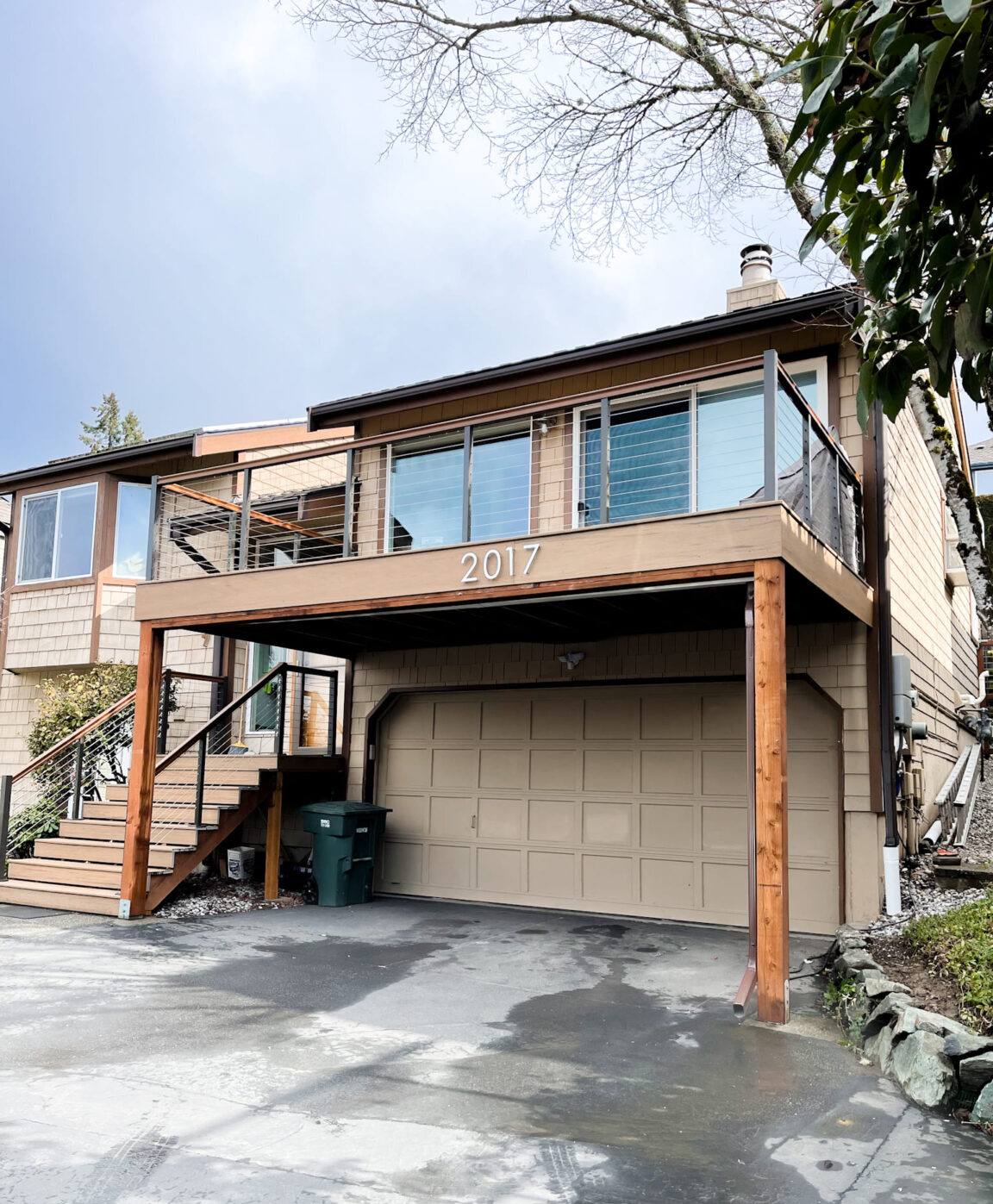
What Local Conditions Actually Do to a Deck
Salt Air and Metal Fasteners
Standard galvanized fasteners hold up fine in a lot of the country. Close to Chuckanut's shoreline influence, they corrode faster than most homeowners expect. We see rust streaking down decking boards, screw heads that shear off when we try to back them out, and joist hangers that have thinned to the point of losing structural value. This is one of the most common reasons a deck that "looks fine" from a few feet away is actually unsafe underneath.
Driving Rain and Water Intrusion
Rain that comes in sideways — which is common here — gets pushed under railings, into board gaps, and behind ledger boards in a way that straight-down rain doesn't. Over time this shows up as soft spots near the house connection, staining on fascia boards, and swelling at butt joints where two deck boards meet end to end.
Moss and Prolonged Dampness
A long moss season means extended periods where boards simply don't get to dry out between rain events. Moss holds moisture directly against the wood surface, which is worse for the deck than rain alone. Left unaddressed, moss-covered boards develop soft, spongy spots long before they show obvious rot from the top.
Signs Your Samish Deck Needs Repair, Not Just Cleaning
- Boards that flex, bounce, or feel soft underfoot, especially near the house or in shaded corners
- Rust streaks running down from screw heads or nail holes
- Railings or posts that wiggle more than a firm push should allow
- Persistent moss or dark green-black staining that returns within weeks of cleaning
- Gaps that have widened unevenly, or boards that have cupped (edges higher than the center)
- Visible daylight or gaps where the deck meets the house (ledger board area)
- A musty smell coming from underneath the deck
- Stair stringers that feel less solid than they used to, particularly at the base
Any one of these on its own might be minor. Two or three together usually means water has been getting into the structure for a while, not just the surface.
What a Correct Repair Actually Involves
A lot of "deck repair" in this climate gets done as a surface fix — pressure wash, replace an obviously rotten board, re-stain, done. That approach misses what's happening underneath, and in a Samish-area climate, underneath is exactly where the damage starts. Our process is built around checking the structure first, then addressing the surface.
Step 1: Structural Inspection
We check the ledger board connection to the house first, since that's the single most safety-critical joint on most decks and the one most exposed to wall-driven rain. From there we check joists, beams, posts, and footings for soft spots, rust, and movement, probing suspect areas rather than just looking at them.
Step 2: Fastener Assessment
Given how fast standard fasteners corrode in this environment, we check hardware condition throughout, not just at obvious rust spots. Compromised joist hangers, ledger bolts, or post connections get flagged as structural priorities, separate from cosmetic board replacement.
Step 3: Board-by-Board Evaluation
We probe decking boards for soft spots rather than relying on a visual pass, since moss-related rot often starts on the underside or at board edges before it's visible from above. Boards get sorted into repair categories: fine as-is, clean and reseal, or replace.
Step 4: Repair or Replace, Matched to Cause
Once we know what caused the damage, the fix addresses that cause — not just the symptom. A soft board caused by a drainage problem underneath the deck gets a different fix than a soft board caused by a failed finish. Replacing wood without correcting the underlying moisture path just buys a few years before the same spot fails again.
Step 5: Fastener and Hardware Upgrade
Where standard fasteners contributed to the failure, we use corrosion-resistant hardware rated for coastal-influenced conditions on the repaired sections. It costs more up front than standard hardware, but replacing rusted screws and hangers again in a few years costs more than that difference.
Step 6: Moisture Management
Where drainage or airflow under the deck is part of the problem, we address it as part of the repair — gaps for airflow, correcting negative slope where boards are pooling water, and confirming the ledger flashing is actually shedding water away from the house rather than into it.
Repair vs. Replacement: How We Decide
| Factor | Favors Repair | Favors Replacement |
|---|---|---|
| Structural framing (joists, beams, posts) | Solid, no soft spots when probed | Widespread soft spots or rot at multiple joists |
| Ledger board condition | Sound, properly flashed | Rot, rust, or gapping at the house connection |
| Decking board damage | Isolated boards or sections | Damage spread across most of the surface |
| Fastener condition | Localized rust, easily replaced | Widespread corrosion affecting hardware integrity |
| Deck age | Under 15-20 years, built to a sound structure | Original structure already near end of service life |
| Cost trajectory | Repair cost is a fraction of replacement | Repeated repairs are approaching replacement cost |
Most decks we look at in the Samish area fall into the repair category — the framing is sound and the damage is concentrated in predictable spots (near the house, in shaded corners, at fastener points). Full replacement usually only makes sense when the structural framing itself has failed in multiple locations.
Why Hiring a Crew That Already Works This Area Matters
Deck repair isn't uniform across regions, and Whatcom County's shoreline-influenced climate is different from what a lot of general contractors are used to. A crew that hasn't worked decks in salt air and long wet winters can miss the fastener corrosion pattern entirely, or underestimate how much moisture has traveled behind a ledger board that looks fine from outside.
Working regularly in and around Chuckanut and the Samish area means we've seen how these decks age, what fails first, and what actually holds up long-term versus what looks good for a season and then needs redoing. That's not something you can substitute with a generic repair checklist — it comes from repeatedly seeing the same climate do the same things to wood and metal.
What to Ask Any Contractor Before Hiring
- Will they inspect the structural framing and fasteners, or just replace visibly damaged boards?
- Do they check the ledger board connection to the house as part of the inspection?
- What hardware do they use for the repair, and is it suited to a coastal-influenced climate?
- Will they address moisture or drainage causes, not just replace damaged wood?
- Can they explain why a board failed, not just that it did?
Maintenance That Actually Extends Deck Life Here
Repair work holds up longer when it's paired with maintenance suited to this climate. A few habits make a real difference in the Samish area specifically:
- Clean moss off promptly rather than letting it sit through a wet season — the longer it stays, the more moisture it traps against the wood
- Keep gutters and downspouts directing water away from the deck structure, not onto or under it
- Check fastener condition annually, since corrosion here progresses faster than in drier inland areas
- Reseal or refinish on a schedule suited to constant moisture exposure, not a generic national recommendation
- Keep vegetation trimmed back from the deck to improve airflow and sun exposure, which helps boards dry between rain events
Timeline and What to Expect
Most deck repairs in this area take anywhere from one to a few days once the scope is confirmed, depending on how much structural work is involved versus surface-level board replacement. We give you a clear picture after the inspection — what's structural, what's cosmetic, and what order it needs to happen in — before any work starts. There's no reason to guess at scope when a proper inspection tells us exactly what's going on underneath.
If your deck near Samish or Chuckanut is showing soft spots, rust, or moss that keeps coming back, it's worth having it looked at before another wet season adds to the damage. We offer a free, no-pressure estimate — use the form below to get started.