 Chuckanut Exterior
 Samish sits in a part of Chuckanut where the weather doesn't give a house much of a break — salt air moving in off the water, rain that gets driven sideways into walls instead of falling straight down, and a moss season that can run most of the year on the shaded sides of a roof or wall. Windows absorb more of that abuse than almost any other part of the exterior, because every window opening is a seam in the wall where water is actively looking for a way in. When we install windows in Samish, we're not just setting a unit into a rough opening and running a bead of caulk around the trim — we're building a detail that has to keep performing through decades of that exposure, not just the first few dry summers.
What Samish's Climate Actually Does to Windows
Three things wear on windows here more than in a lot of other places, and they compound each other. Salt-laden air off the water accelerates corrosion on hardware, fasteners, and any exposed metal — locks, hinges, and screws that would last decades inland can start showing rust and stiffness in a fraction of that time. Wind-driven rain doesn't just wet a wall; it pushes water into any seam, joint, or gap that isn't properly flashed, working its way in under pressure rather than simply running off. And the tree cover common around Chuckanut keeps a lot of walls shaded and damp long after a storm has passed, which is exactly the environment moss and mildew need to establish themselves at trim lines and sills.
Salt Air and Hardware
Standard-grade hardware corrodes faster near the water than it does even a few miles inland. We specify corrosion-resistant hardware on installs in this area for that reason — it costs a little more up front and saves a homeowner from fighting a stuck latch or a rusted crank handle a few winters down the road.
Wind-Driven Rain and Seal Integrity
A window that's sealed with caulk alone, and nothing behind it, is relying on a material that shrinks, cracks, and loses adhesion over time to be the only thing keeping water out. In a climate where rain regularly comes in sideways, that's not a durable strategy — it's a maintenance item waiting to become a leak.
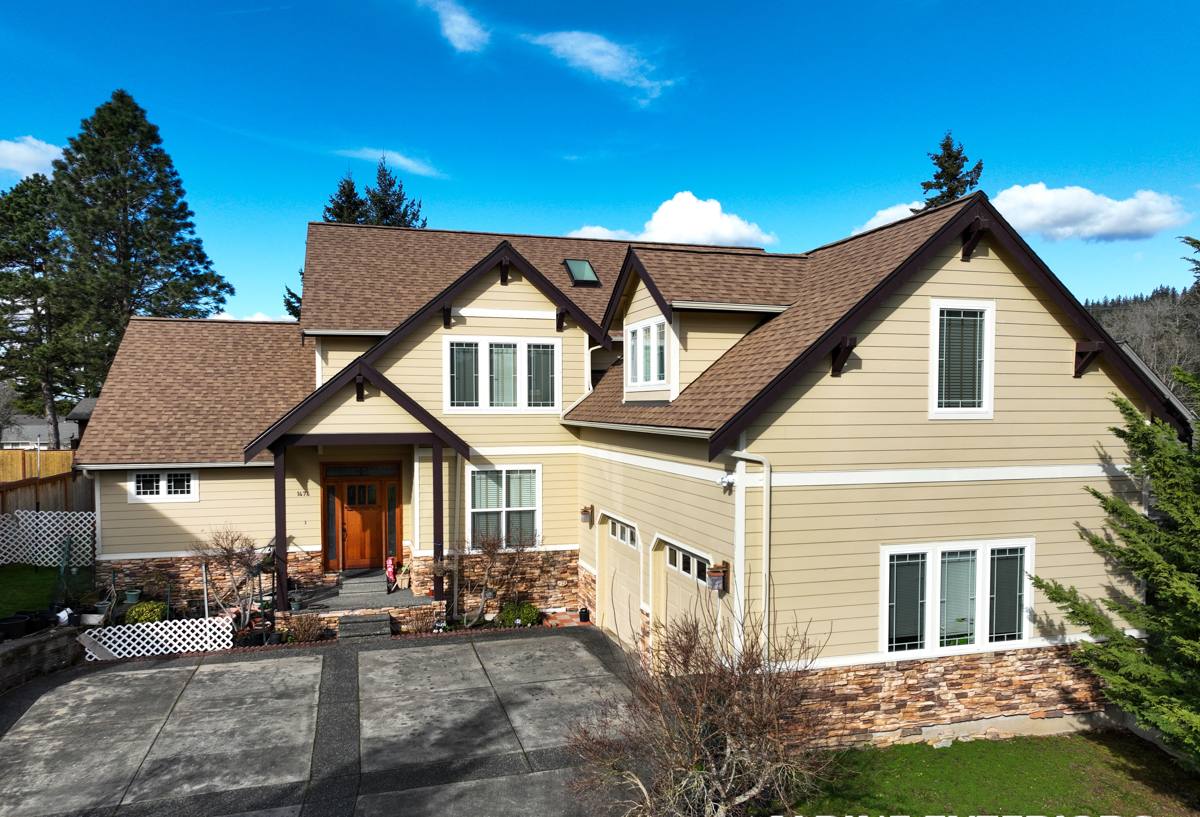
Signs an Older Window in Samish Needs Attention
Because window failures here tend to develop gradually, it's easy to live with early warning signs without realizing what they mean. A few worth paying attention to:
- Noticeable drafts around the sash or frame, even when the window is fully latched
- Fogging or a permanent haze between panes, which means the insulated glass seal has failed
- Soft, discolored, or spongy wood at the sill or lower frame
- Windows that stick, won't latch fully, or have visibly warped in their opening
- Water staining or dark streaks on the wall or trim below a window
- Moss or mildew building up at the window trim, especially on north-facing walls
Any one of these on its own might just mean a single window needs attention. Several of them together, especially on the same wall, usually points to a flashing or drainage problem behind the siding rather than a problem with the window unit itself.
What a Correct Window Installation Actually Involves
A proper installation starts before the new window ever goes in the opening. The rough opening gets inspected and, if needed, repaired — soft sill framing or water-damaged sheathing doesn't get covered up, it gets addressed. From there, the sequence matters as much as the materials: a sloped sill pan goes in first so any water that does get past the window has somewhere to drain instead of pooling, then the window is set, then jamb and head flashing get integrated with the wall's weather-resistive barrier in the correct shingle-lap order, so water is always directed down and out rather than trapped behind the siding.
Flashing Is the Detail That Determines Performance
We treat flashing as the non-negotiable part of the job, not an upgrade a homeowner has to ask for. Caulk still gets used, but as a supplement to a properly lapped flashing system, not a substitute for one. That distinction is usually the actual difference between a window that stays dry for its full service life and one that starts leaking within a few wet seasons.
Full-Frame Replacement vs. Insert Replacement
Not every window in Samish needs the same approach. Two common paths exist, and the right one depends on the condition of what's already there.
| Factor | Full-frame replacement | Insert (pocket) replacement |
|---|---|---|
| Disruption to siding | Removes surrounding siding and trim to access the full opening | Existing frame stays in place; new unit fits inside it |
| Access to inspect flashing | Full access to sill, sheathing, and flashing behind the wall | Limited — existing flashing is not exposed or corrected |
| Best suited for | Frames with rot, water damage, or failed flashing | Sound frames with no water intrusion history |
| Relative cost | Higher, due to siding and trim work | Lower, faster installation |
Given how much wind-driven rain this area sees, we're cautious about recommending insert replacements on any window with a history of leaking or visible water damage — sealing a new window inside a frame with a compromised flashing detail just hides the problem instead of fixing it. Where the existing opening is genuinely dry and sound, an insert replacement is a legitimate, less invasive option.
Choosing Frame Material and Glazing
We install vinyl and fiberglass window systems and walk homeowners through the real trade-offs rather than pushing one option as universally correct. Both resist rot in a way uncladded wood frames don't, which matters given how much moisture this region carries through the year. Vinyl tends to be the more budget-friendly choice and performs well in mild, wet climates. Fiberglass holds its dimensions more consistently through temperature swings and can be painted later if a homeowner wants to change the color, which vinyl generally can't. On glazing, a double-pane, low-E package is standard for this climate and handles both heat retention in winter and interior condensation control; triple-pane is available for homeowners who want the extra performance, though the marginal benefit in a marine climate like Whatcom County's is smaller than it is in a colder, drier region.
How Window Work Ties Into the Rest of the Exterior
Windows don't fail in isolation. A window installed without attention to the siding, trim, and drainage plane around it can look fine for a season or two and still leak, because water that gets past a poorly integrated window travels into the wall assembly instead of showing up somewhere visible right away. We handle siding, roofing, and window work as connected trades rather than standalone jobs, which means the person flashing a window opening understands exactly how that flashing needs to tie into the siding and roof-to-wall details around it — not just how to caulk a trim board.
Our Process for a Samish Window Installation
We start with an on-site look at the existing windows — checking frame condition, seal integrity, hardware function, and how the current flashing ties into the surrounding siding. From there we give a straightforward read on which windows are reasonable repair candidates and which make more sense to replace, along with a written scope before any work begins. Flashing and drainage detailing are standard practice on every window we install, not an optional add-on, and we're upfront about realistic timelines, since custom-sized window orders in this region can take several weeks to arrive before installation can even start.
Why a Crew That Already Works Samish Matters
A contractor who works Chuckanut and the surrounding Whatcom County area regularly already knows how salt air, wind-driven rain, and a long moss season behave here compared to a drier or more sheltered part of the state. That shows up in the small decisions — how much lap a flashing detail gets, what hardware grade gets specified, how a north-facing wall near tree cover gets treated differently from a south-facing one — and those decisions are what actually determine whether an installation holds up for one wet winter or several decades.
A few things worth asking before hiring anyone for window work in this area:
- How do you flash a new window into the existing siding — walk me through the actual sequence
- Are you a current, licensed Washington contractor with active liability insurance
- Will I get a written scope that separates the manufacturer's product warranty from your installation warranty
- What hardware grade do you specify for a home this close to the water
- What's the realistic lead time on ordering, given my window sizes
If windows in your Samish home are drafty, fogged, sticking, or you're just not sure whether repair or replacement makes more sense, we're happy to take a look and give you a straightforward, no-pressure read. Reach out below for a free estimate.