 Chuckanut Exterior
 Storm Damage Roof Repair for Samish Homes
Samish sits close enough to the water that every roof up here does double duty. It has to shed heavy winter rain off Chuckanut Bay and the Salish Sea, and it has to survive salt-laden air that never quite lets a roof dry out completely. When a windstorm comes through Whatcom County, or a heavy rain event sits over the area for days, the damage that shows up on a Samish roof is often different from what we see on a roof twenty miles inland. That's the reason a generic storm-damage checklist doesn't serve this area well, and why we treat storm repair here as its own specialty rather than a one-size-fits-all service.
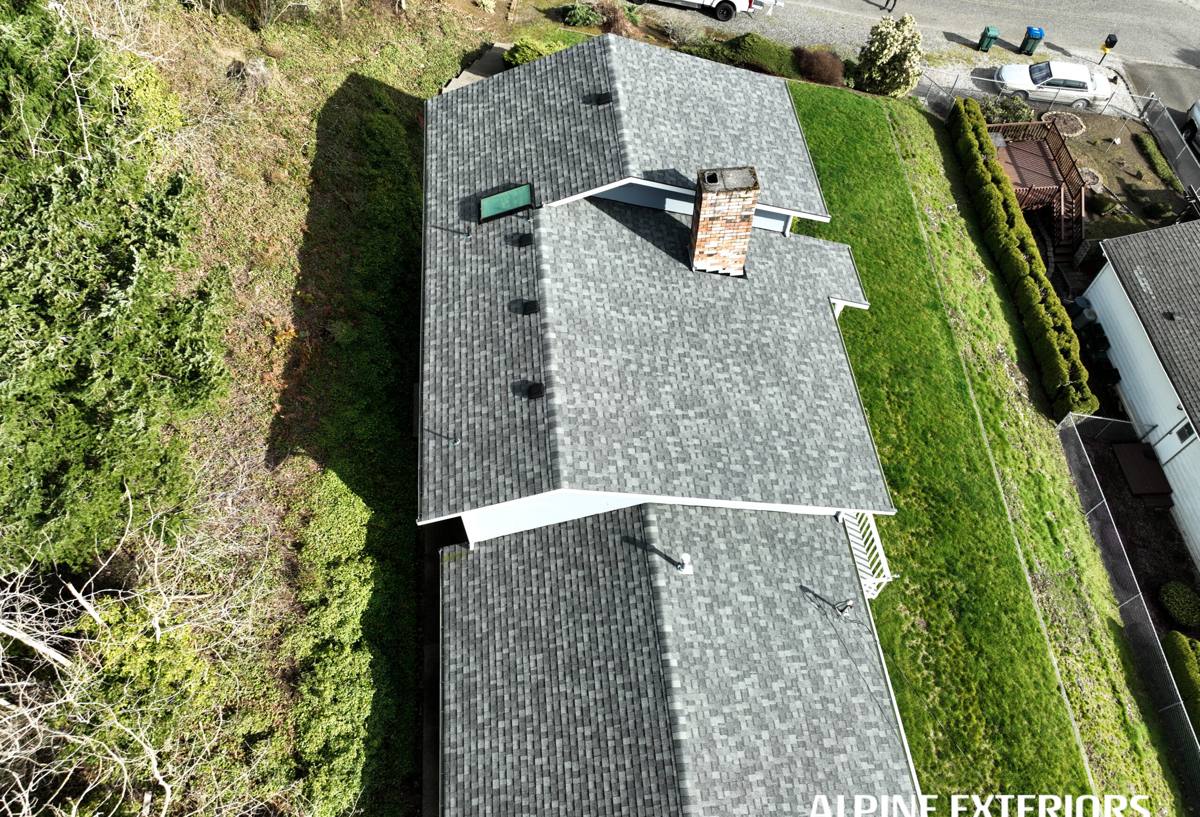
Why Storm Damage Looks Different in Samish
Three things stack up against roofs in this part of Whatcom County: wind-driven rain, salt air, and a moss season that runs longer than most homeowners expect.
Driving Rain and Wind
Storms coming off the water don't just drop rain straight down — the wind pushes it sideways, under shingle laps and into any gap a fastener or flashing detail leaves open. A roof that would shed a calm rain without issue can leak in the same spot during a wind-driven storm, because water is being forced uphill under the shingle rather than running down and off.
Salt Air
Proximity to the bay means metal components — nails, flashing, gutter hardware, valve caps on vents — corrode faster here than they would further from the water. Corrosion weakens fasteners and flashing seams well before the shingles themselves show their age, so storm damage often finds the weak point first.
Extended Moss Season
Cool, damp, shaded roof sections in this area can stay wet for months at a stretch, and moss takes hold anywhere debris and shade combine. Moss doesn't just look bad — it lifts shingle edges and holds water against the roof deck, which means a storm hitting a moss-affected roof causes more damage than the same storm would on a clean one.
What Actually Counts as Storm Damage
Not everything that looks wrong on a roof after a storm was caused by that storm, and this distinction matters for both the repair plan and any insurance claim. We look for damage with a clear, sudden cause — as opposed to gradual wear that a storm simply made visible.
- Shingles that are creased, torn, or missing outright, especially on the side of the roof that faced the wind
- Lifted or cracked flashing around chimneys, skylights, and roof-to-wall transitions
- Granule loss concentrated in one area rather than spread evenly across the whole roof
- Fresh water staining on interior ceilings or in the attic that wasn't there before the storm
- Gutters pulled loose or downspouts separated from wind load or debris impact
- Punctures or dents from wind-blown branches or debris
Long-standing moss growth, worn-out fasteners from years of salt exposure, or shingles simply at the end of their service life are wear-and-tear issues. A storm can expose these problems, but they're not the same as storm damage, and an honest inspection separates the two before any repair plan or claim is written up.
What a Correct Repair Involves
A storm repair that's done right isn't just replacing whatever shingles are missing. It follows a sequence, because skipping a step tends to show up as a repeat leak within a season or two.
1. Stop Further Water Entry
If the roof is actively leaking or has exposed decking, the first priority is a secure tarp or temporary seal — not cosmetic, just enough to keep water out until the real repair happens.
2. Check the Deck, Not Just the Shingles
Any spot where water got underneath the roofing needs the decking checked for soft spots or rot. Re-roofing over damaged decking is one of the most common shortcuts we see, and it's the one that causes the most expensive problems later.
3. Match Flashing to the Actual Water Path
Flashing around chimneys, valleys, and wall transitions has to be shaped and lapped correctly for water to run off rather than behind it. In a driving-rain climate like this one, flashing that's "close enough" often isn't.
4. Replace Underlayment in the Affected Section
If water got past the shingle layer, the underlayment beneath it has likely absorbed moisture and needs to come out with the damaged shingles, not stay in place under new ones.
5. Tie the Repair Into the Existing Roof
New shingles need to blend into the existing coursing and match the exposure pattern so the repaired section sheds water the same way the rest of the roof does — not just look patched from the ground.
Our Process for Samish Storm Calls
When a storm passes through and you call us, here's what actually happens, in order:
- Phone conversation — we ask what you're seeing (missing shingles, a leak, debris on the roof) so we can bring the right materials the first time.
- On-site inspection — we walk the roof and the attic where accessible, and check gutters, flashing, and vent boots along with the shingle field.
- Plain-language report — what's storm damage, what's pre-existing wear, and what we'd recommend, in terms you can actually use — including for an insurance claim if one applies.
- Repair or temporary protection — if full repair can't happen the same visit due to weather or material availability, we secure the roof first.
- Completed repair — done to the standard described above, not a patch-and-hope job.
Repair or Replace: What Actually Drives the Decision
Storm damage doesn't always mean a full new roof, but sometimes repair is the more expensive option in the long run. Here's how we think through it:
| Factor | Leans Toward Repair | Leans Toward Replacement |
|---|---|---|
| Age of existing roof | Under 12–15 years | Near or past expected service life |
| Extent of damage | Isolated to one section or slope | Spread across multiple slopes |
| Decking condition | Solid, dry underneath | Soft, rotted, or repeatedly wet |
| Moss/algae history | Minor, cleanable | Long-term growth with shingle degradation |
| Prior repairs | First storm event on this roof | Multiple past patches in different spots |
We'll give you our honest read on where your roof falls on this table rather than defaulting to the answer that's most convenient for us.
Insurance Claims: What Homeowners Should Know
Most homeowners' policies cover sudden storm damage but not gradual wear, which is exactly why the distinction in the section above matters. A few things help the process go smoothly:
- Document the damage with dated photos as soon as it's safe to do so
- Get an inspection before or alongside filing, so your claim describes the damage accurately
- Ask for a written scope of repair, not just a verbal estimate, to compare against the adjuster's assessment
- Be cautious of anyone going door-to-door immediately after a storm pushing you to sign a contract on the spot — take the time to get an inspection you trust first
We're happy to walk a Samish homeowner through what we're seeing and provide documentation that supports a claim, but we work for you — not for the insurance company, and not on commission from a claim's approval.
Materials: What We Use and Why
For storm repairs in this climate, we lean toward synthetic underlayment over traditional felt in exposed or vulnerable sections, because it holds up better to the repeated wetting this area sees before the shingle layer goes back on. For flashing and fasteners, corrosion-resistant materials are worth the modest upcharge given how much faster standard hardware degrades this close to the water. These are our standard practices based on how materials actually perform here — not a claim that other approaches are unusable, just a reflection of the trade-offs we've found matter most for Samish roofs specifically.
Moss and Salt Air: Ongoing Maintenance That Prevents Storm Damage
A lot of what looks like storm damage is really a roof that was already compromised by moss or corrosion before the storm hit. A short seasonal maintenance routine reduces how much damage any given storm can do:
- Clear debris from valleys and behind chimneys before the wet season sets in
- Treat or manually remove moss rather than letting it establish and lift shingles
- Check gutters and downspouts are securely fastened and clear, so wind-driven water has somewhere to go
- Have flashing and fastener condition checked every couple of years given the pace of salt-air corrosion here
Why It Matters That We Already Work in Samish
A crew that already works this stretch of Whatcom County knows what a Samish roof is up against before we ever climb the ladder — the wind exposure from the bay, how long moss sits on shaded slopes here, and how fast salt air eats through standard-grade hardware. That means fewer surprises during the inspection and a repair plan built around how this specific area's weather behaves, not a generic checklist. It also means a faster response when a storm hits and several roofs in the area need attention at once.
If your roof took a hit in the last storm, or you're not sure whether what you're seeing is storm damage or years of moss and salt air catching up with it, we're glad to take a look. Fill out the form below for a free, no-pressure estimate — no obligation, just a straight answer about what your roof actually needs.