 Chuckanut Exterior
 Asphalt Shingle Roofing for Samish Homes
Samish sits close enough to open water that homes here take a different kind of weather beating than roofs just a few miles inland. Salt-laden air moves through on the wind, driving rain comes in sideways during winter storms, and the shaded, damp pockets around mature trees give moss a long season to get established. An asphalt shingle roof that would hold up fine in a drier, more sheltered part of Whatcom County can wear out early here if it wasn't chosen and installed with this specific environment in mind.
This page covers what actually matters for asphalt shingle roofing in Samish: how the local climate affects shingle performance, what a properly built roof system looks like in this setting, and what our process looks like from first estimate to final cleanup.
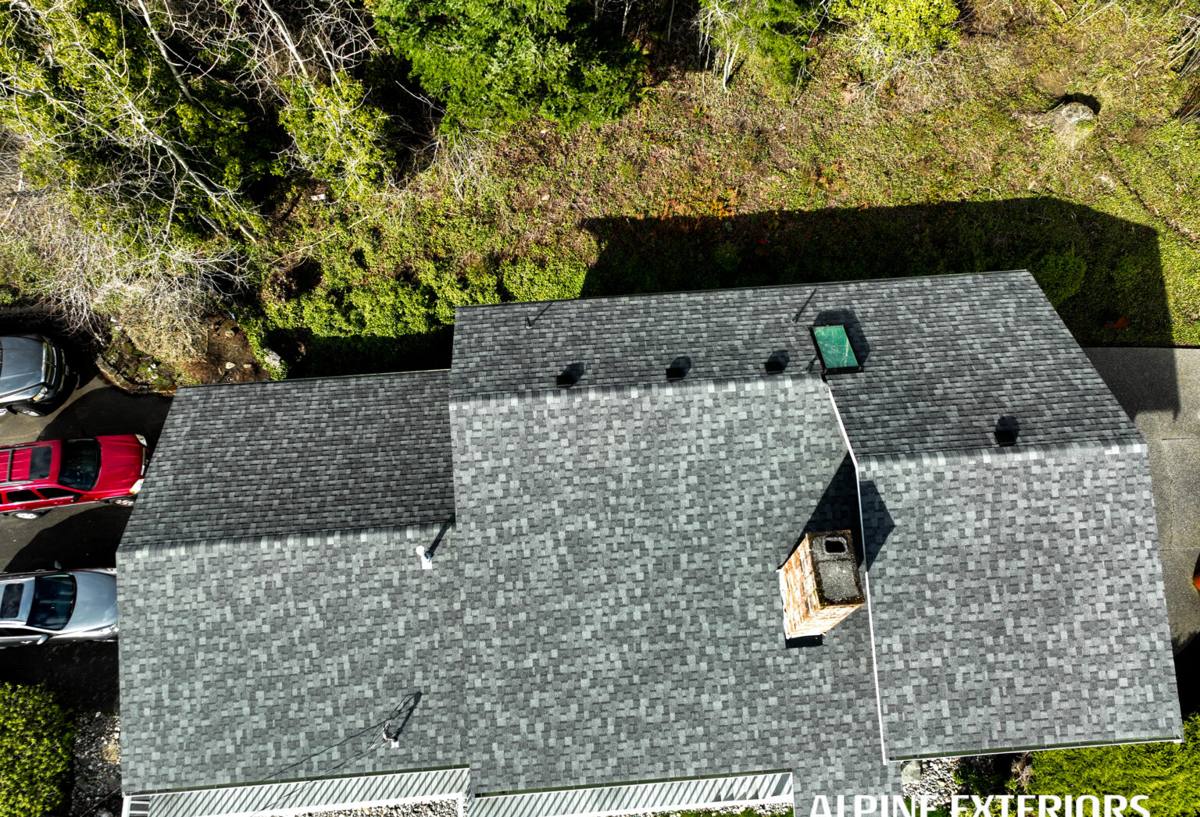
What Salt Air, Rain, and Moss Actually Do to a Roof
Each of these three factors stresses a roof differently, and they compound each other over time.
Salt Air
Airborne salt accelerates corrosion on any exposed metal component — nail heads, flashing, vent caps, and gutter hardware. On a roof near the water, low-grade or under-coated metal fasteners and flashing can start showing rust streaks years before they would inland. This doesn't ruin the shingles directly, but corroded flashing and fasteners are one of the most common causes of leaks we find on roofs in coastal Whatcom County neighborhoods.
Driving Rain
Wind-driven rain doesn't just fall straight down and run off — it gets pushed sideways and upward under shingle edges, around vents, and into any gap in flashing or underlayment. A roof built for a calmer climate can get away with looser detailing at eaves, valleys, and penetrations. A roof exposed to regular driving rain off the water needs tighter, more deliberate flashing and underlayment work, because water is being pushed into places gravity alone wouldn't take it.
Moss
Moss needs moisture, shade, and time — Samish has all three for a good chunk of the year. Moss doesn't just look bad; it holds water against the shingle surface, works its way under shingle tabs and edges, and lifts them slightly over time. That lifting is what lets wind and rain get underneath the shingle, which is where real leaks start. Roofs with heavy tree cover or north-facing slopes are the most affected.
Choosing the Right Asphalt Shingle for This Climate
Not every asphalt shingle product is built the same way, and in a climate like this, the differences matter more than they would somewhere drier. We look at algae resistance, wind rating, and how the shingle is engineered to shed water at the granule and seal-strip level.
| Shingle Feature | Why It Matters in Samish |
|---|---|
| Algae-resistant (AR) granules | Copper or zinc-infused granules slow the growth of the algae and moss that thrive in our damp, shaded conditions — standard granules stain and green up faster here |
| High wind rating | Coastal exposure means more sustained wind events; a higher wind rating reduces the chance of lifted tabs that let driving rain underneath |
| Wide, reinforced sealant strip | Keeps shingles bonded tight against wind-driven rain instead of just resting under their own weight |
| Manufacturer's algae warranty | A real algae-resistance warranty (not just marketing language) reflects a product actually tested for climates like this one |
We don't push one specific brand as the only acceptable option — several manufacturers make solid architectural shingles with algae resistance and strong wind ratings. What we do insist on is that whatever product goes on a Samish roof has those features. A budget shingle without algae resistance or a reinforced seal strip will visibly moss over and underperform in wind years faster than the price difference justifies.
What a Correct Installation Looks Like Here
The shingle itself is only part of the system. Most of the leaks we get called out to fix trace back to the layers underneath the shingles, not the shingles themselves. For a roof in this climate, we treat the following as non-negotiable:
- Ice and water shield at eaves and valleys — a self-adhering waterproof membrane in the areas most exposed to backed-up water and driving rain, not just standard felt
- Synthetic underlayment across the full deck — more tear- and moisture-resistant than old-style felt, and it holds up better if weather delays shingle installation mid-job
- Corrosion-resistant flashing and fasteners — appropriate metal choices around chimneys, walls, and roof-to-wall transitions so salt air doesn't compromise them early
- Proper nail placement and count — correct nailing pattern and nail count per shingle, matched to the wind exposure of the site, not just the manufacturer's minimum
- Balanced attic ventilation — intake at the eaves and exhaust at the ridge, sized correctly, so moisture doesn't build up under the deck and accelerate rot or moss growth from below
- Drip edge on every eave and rake — directs water off the roof edge instead of letting it wick back under the shingles or into the fascia
Skipping any one of these doesn't always cause an immediate problem — it usually shows up two, five, or eight years later as a leak, premature granule loss, or rot at the deck. That delayed timeline is exactly why cutting corners on installation is hard for a homeowner to catch until it's already cost them.
Our Process, Start to Finish
1. On-Site Assessment
We walk the roof and attic, not just look from the ground. We check deck condition, existing ventilation, flashing condition around penetrations, and how much shade and moss exposure the specific slopes have. Two roofs on the same street can need different answers depending on tree cover and slope orientation.
2. Straight Estimate
You get a written scope covering shingle product, underlayment, flashing, ventilation work, and cleanup — not a vague lump-sum number. If something on your existing roof needs attention beyond the shingle replacement itself (deck rot, undersized ventilation, old flashing), we point it out and explain why, rather than surprising you mid-job.
3. Tear-Off and Deck Inspection
We remove the old roofing down to the deck and inspect the sheathing for soft spots or rot before anything new goes down. Covering up a compromised deck is one of the fastest ways to guarantee a repeat problem.
4. Installation
Underlayment, ice and water shield, flashing, ventilation components, and shingles go on in that order, built to the standards above — not just to code minimums.
5. Cleanup and Walkthrough
Magnetic sweep for stray nails, full site cleanup, and a walkthrough so you know what was done and what to watch for going forward.
Maintenance That Actually Extends Roof Life Here
A well-installed roof still needs some upkeep in this climate, especially around moss and debris. A little attention goes a long way toward getting full value out of the roof.
- Keep gutters clear of needles and leaves, especially heading into fall storms
- Have moss growth treated or gently removed before it spreads across a full slope — don't pressure wash shingles, which strips granules
- Trim back overhanging branches to cut down on shade, debris, and moisture retention on the roof surface
- Check attic ventilation isn't blocked by insulation at the eaves, which can trap moisture under the deck
- After major windstorms, do a visual check (or have us check) for lifted or missing shingles before the next rain
- Schedule a roof check every couple of years, even without visible problems, so small issues get caught while they're still small
Signs Your Samish Roof Needs Attention Now
Some warning signs are easy to miss from the ground. Watch for: dark streaking or thick moss growth across a slope, granules collecting in gutters or downspouts, curling or cupped shingle edges, daylight visible through the attic roof deck, or musty smells in upstairs rooms after heavy rain. Any of these is worth a look before it turns into interior water damage.
Why Hire a Crew That Already Works in Samish
Roofing crews who mostly work drier, inland areas don't always default to coastal-grade detailing unless a homeowner specifically asks for it. A crew that regularly works this stretch of Whatcom County already knows to spec algae-resistant shingles, corrosion-resistant flashing, and eave protection as the baseline — not as an upsell. We've seen firsthand what happens to roofs built for a different climate: premature moss, early granule loss, and flashing failures years ahead of schedule. Building it right the first time costs less than fixing it early.
If you're planning a roof replacement or want a second opinion on the condition of your current asphalt shingle roof, we're happy to take a look and give you a straight, no-pressure assessment. Use the form below to request a free estimate.