 Chuckanut Exterior
 Siding Repair Built for Samish's Coastal Conditions
Homes in the Samish area near Chuckanut sit close enough to open water that the siding takes a different kind of beating than a house twenty miles inland. Salt-laden air off the bay, long stretches of driving rain, and a moss season that can run most of the year all work on exterior siding at the same time. A repair that only patches the visible damage without accounting for what's happening behind the surface tends to fail again within a season or two. This page covers what siding repair actually needs to look like for a Samish home, what our process involves, and why it matters that the crew doing the work already understands this stretch of Whatcom County.
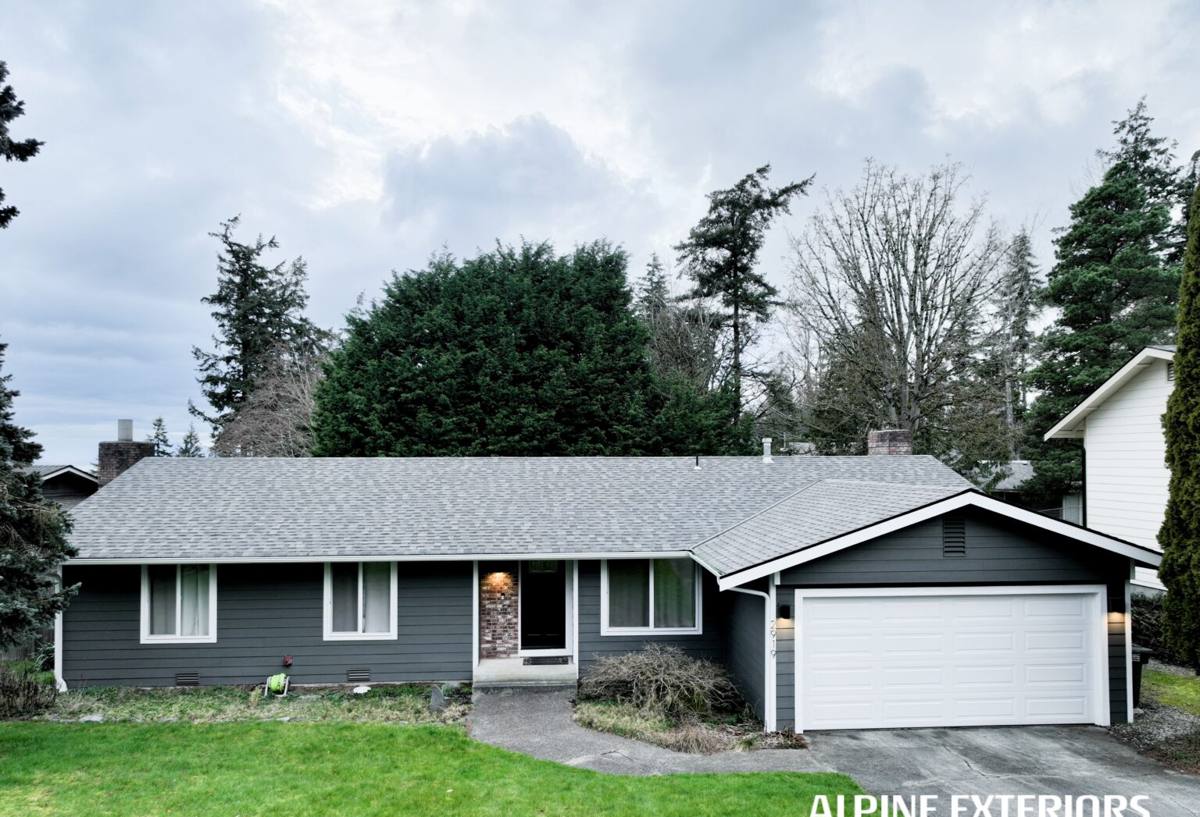
How Salt Air, Rain, and Moss Attack Siding in This Area
Salt-Laden Air
Properties closer to Chuckanut and Samish Bay deal with airborne salt that settles on exterior surfaces and accelerates the breakdown of paint films, caulk, and fasteners. Salt exposure doesn't just fade a finish — it holds moisture against the siding surface longer than dry air would, which is what actually causes rot and delamination over time.
A Long, Wet Season
Whatcom County's wet season stretches across most of the year, and Samish homes see repeated cycles of saturation and drying. Every one of those cycles stresses seams, butt joints, and anywhere siding meets trim, windows, or roof lines. Small gaps that would never matter in a dry climate become entry points for water here.
Moss and Organic Growth
Shaded, damp conditions near the water are exactly what moss and algae need to establish themselves on siding, trim, and the ground line where a wall meets the foundation. Once organic growth takes hold, it holds moisture against the material around the clock, not just during storms, which is why moss-covered siding often hides worse damage underneath than what's visible from the yard.
Signs Your Samish Home Needs Siding Repair (Not Just Paint)
Homeowners often call us after noticing a cosmetic issue, but several of the signs below point to moisture already inside the wall assembly — which paint alone will never fix.
- Soft or spongy spots when you press on the siding, especially near the bottom courses
- Visible cracking, buckling, or boards pulling away from the wall
- Persistent moss or dark streaking that returns within weeks of cleaning
- Paint that's bubbling, peeling, or failing faster than it should for its age
- Staining or discoloration around window and door trim
- Gaps opening up at seams, corners, or where siding meets trim boards
- Any musty smell or visible staining on interior walls that back up to exterior siding
Why "Just Caulk and Paint" Doesn't Fix the Underlying Problem
A lot of siding repair calls we get in Samish are second opinions after a quick caulk-and-paint job didn't hold. Caulk is a maintenance item, not a repair strategy — it seals a gap for a while, but it doesn't address why water was finding that gap in the first place, and it does nothing for material that's already absorbed moisture. If the substrate underneath is already compromised, painting over it traps moisture in rather than letting the wall dry, which usually makes the problem worse and harder to see until it's further along.
What a Correct Siding Repair Involves
Moisture Investigation First
Before we touch a single board, we look at where the damage is relative to windows, rooflines, decks, and grade — because siding damage is almost always a symptom of a water management issue somewhere else. We check flashing, kick-out details, and caulking at penetrations, and we probe surrounding boards to find the true extent of the damage, not just the section that looks bad from the driveway.
Matching Material and Finish
Repairs on James Hardie fiber cement use the same profile, exposure, and ColorPlus factory finish as the original installation wherever the product line allows, so a repaired section blends into the wall instead of standing out as an obvious patch. Where an exact match isn't available because of product changes over time, we're upfront about that before starting.
Flashing and Water Management
Any repair that doesn't correct the underlying water path is a temporary fix. That means installing or correcting flashing at horizontal joints, window heads, and anywhere trim meets siding, and making sure water sheds away from the wall assembly instead of behind it.
Fastening and Finish Detail
We fasten to manufacturer spec, maintain proper clearances at the ground line and roof lines, and finish joints and cut edges the way Hardie's installation guidelines call for — the details that get skipped are usually the ones that cause the next round of failure.
Repair or Replace? How We Help Samish Homeowners Decide
Not every damaged section needs a full re-side, but not every problem should be patched either. Here's how we generally think through it on a Samish home:
| Situation | Usually Repair | Usually Replace |
|---|---|---|
| Damage confined to one or two isolated areas | Yes | No |
| Rot or moisture damage traced to a single flashing failure | Yes | No |
| Widespread moss staining and soft boards across multiple walls | No | Yes |
| Siding is near or past its expected service life | No | Yes |
| Original material is no longer available or compatible | Sometimes | Sometimes |
| Damage is cosmetic with no moisture intrusion found | Yes | No |
We'll always tell you honestly which side of that line your home falls on, including when a repair is the right call and a full replacement would be overkill.
Why We Repair Exclusively with James Hardie Fiber Cement
We only install and repair with James Hardie fiber cement siding — we don't work in vinyl, LP SmartSide, cedar, or primed spruce, and we won't patch a repair with a different material even if it's faster or cheaper in the moment. Fiber cement doesn't absorb water and swell the way wood-based products can, and it's non-combustible, which matters given the wildfire smoke seasons the Pacific Northwest has seen in recent summers. Hardie's HZ5 product line is engineered for the kind of freeze-thaw and moisture cycling that coastal Whatcom County sees, and the factory-applied ColorPlus finish holds color and resists the salt-air fading that plagues field-painted siding near the water. When we repair a section, using Hardie means the patch performs the same way the surrounding siding does for the rest of its service life, rather than becoming the weak point in the wall five years from now.
Our Process for Samish Siding Repair Calls
- We walk the exterior with you and identify every area of concern, not just the spot you called about
- We check for moisture intrusion behind the siding, not just surface damage
- We give you a straight assessment — repair, partial re-side, or full replacement — with our reasoning
- We provide a written estimate before any work begins, no surprise change orders for problems we should have caught up front
- We correct the underlying water management issue (flashing, caulking, clearances) alongside the siding repair itself
- We match material, profile, and finish as closely as current Hardie product lines allow
- We clean up the site and walk the finished repair with you before we consider the job done
Why Local Experience in Samish and Chuckanut Matters
A crew that already works this stretch of coastline knows that a house facing open water needs closer attention to flashing and joint sealing than one tucked further inland, and knows what moss growth patterns typically look like on shaded, damp walls in this specific climate. That familiarity means less time spent diagnosing and more time spent fixing the actual problem. It also means we're realistic about timelines — wet-season scheduling around Chuckanut and Samish requires planning around weather windows, and we build that into how we quote and schedule repair work rather than promising a start date we can't keep.
After the Repair: Keeping Moss and Moisture From Coming Back
A correct repair sets you up to avoid the same problem twice, but a few habits on your end help it last:
- Keep gutters clear so water isn't overflowing directly onto siding below
- Trim back vegetation and tree cover that keeps siding shaded and damp longer than it needs to be
- Rinse moss and algae off siding gently at least once a year before it gets a foothold
- Watch caulking at trim and window joints and have it refreshed before it cracks open
- Keep an eye on the ground-line clearance between siding and soil, mulch, or hardscaping
If you're seeing soft spots, moss that keeps coming back, or paint that won't hold near Samish or Chuckanut, we're happy to take a look and give you a straight answer on what it actually needs. There's no cost and no pressure for an estimate — just a clear read on what's going on with your siding and what it would take to fix it right.