 Chuckanut Exterior
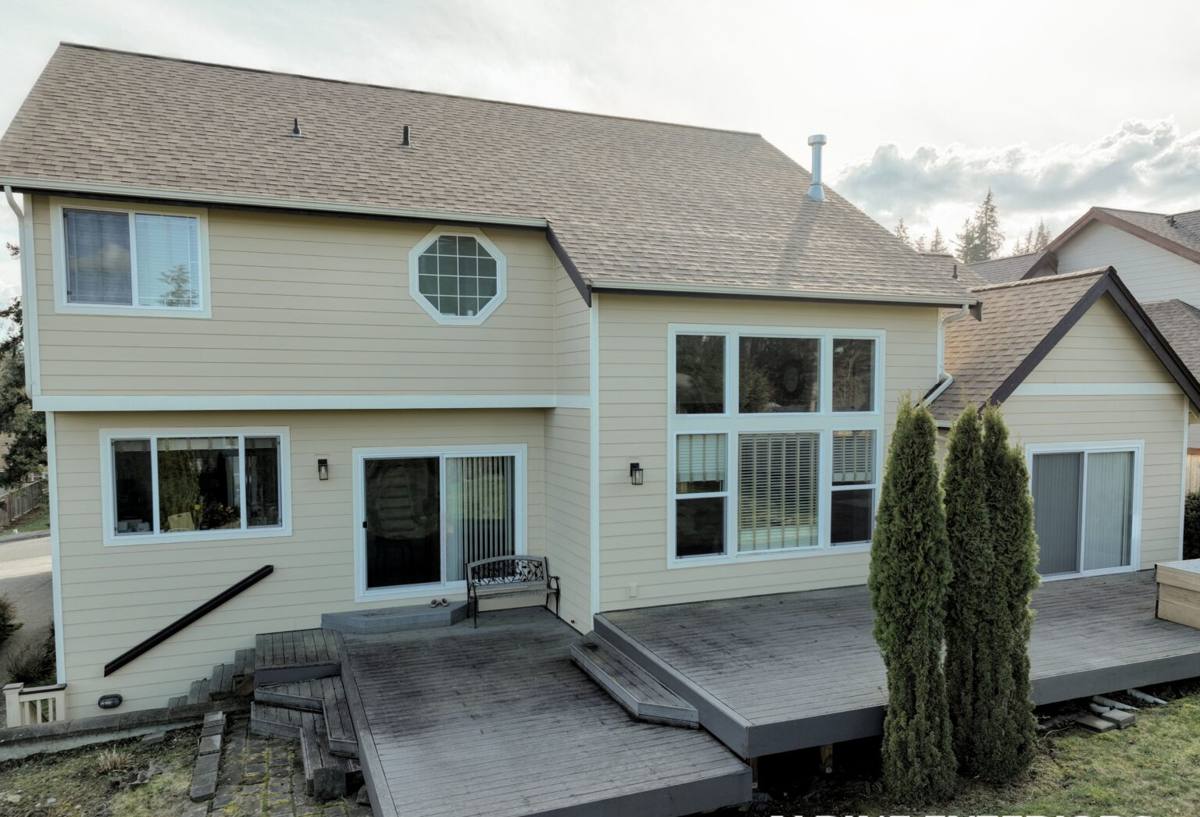
 Building a Deck That Actually Holds Up in Bow
Bow sits close enough to the water that salt air is part of daily life here, and that changes what a deck needs to survive. Add Whatcom County's long wet season and the moss that comes with it, and you've got a climate that's genuinely tough on outdoor structures. A deck built the way it might be built in a drier inland town won't last the same number of years out here — the fasteners corrode faster, the wood stays damp longer between rain events, and moss gets a foothold anywhere water sits or air can't move.
We build decks in Bow the way this specific climate requires, not the way a general framing crew might build one somewhere else. That means different fastener choices, different attention to drainage and airflow, and different material recommendations than you'd get from a contractor who mostly works drier ground.
What Salt Air and Driving Rain Do to a Deck
Two separate problems show up on decks near the coast, and they compound each other.
Salt Air and Corrosion
Airborne salt accelerates corrosion on anything metal — fasteners, joist hangers, railing hardware, even the coating on some flashing products. A deck built with standard hot-dip galvanized hardware might hold up fine inland but corrode noticeably faster within a few miles of the water. Over years, corroded fasteners lose holding strength, and a deck's structural integrity depends entirely on those connections doing their job.
Driving Rain and Moisture Cycling
Rain that comes in sideways, pushed by wind off the water, gets into places vertical rain never reaches — the undersides of rail caps, the backs of ledger boards, gaps between deck boards and framing. Wood that stays damp for long stretches between dry spells is what rots, warps, and eventually fails. It's not one soaking that causes the damage; it's the repeated cycle of wet-to-dry-to-wet that Whatcom County's weather pattern delivers for months at a time.
Choosing Decking Material for This Climate
There's no single "best" decking material — every option is a trade-off between cost, maintenance, and how it behaves in wet, salty air. Here's how the common choices actually compare for a Bow property.
| Material | Moisture Behavior | Maintenance | Typical Lifespan Here |
|---|---|---|---|
| Pressure-treated pine | Absorbs water readily; needs to dry between rain events or it stays swollen | Annual cleaning and re-sealing recommended | 15–20 years with upkeep |
| Cedar | Naturally rot-resistant, but surface graying and softening happen faster in salt air | Sealing every 1–2 years to hold color and resist moisture | 15–25 years with upkeep |
| Composite decking | Doesn't absorb water into the board itself; resists rot | Periodic cleaning to prevent surface mold/moss buildup | 25–30+ years, varies by product warranty |
| Tropical hardwoods (ipe, etc.) | Very dense, naturally moisture-resistant | Oiling to maintain appearance; low rot risk | 30+ years structurally |
Composite has become the common recommendation for coastal Whatcom County decks because it removes the wood-absorbing-water problem entirely — but it's not maintenance-free. Composite surfaces still collect pollen, algae, and moss film in a wet climate, and it needs periodic washing to stay slip-safe. Cedar and pressure-treated wood are legitimate choices too, especially on a budget, but they ask more of the homeowner in upkeep. We'll walk through the honest trade-offs for your specific deck rather than pushing one product as a default.
Framing and Substructure: Where Bow Decks Actually Fail
Most deck failures don't start at the decking boards — they start underneath, where nobody looks until there's a problem. The substructure is where we spend the most attention.
- Ledger board attachment — where the deck ties into the house is the single most common failure point on any deck, and it's worse in a wet climate if flashing isn't detailed correctly.
- Joist hangers and fasteners — we spec stainless steel or high-grade coated hardware rated for coastal/wet exposure rather than standard galvanized, which corrodes faster this close to salt air.
- Post bases — posts set directly in concrete without a proper base connector wick moisture and rot from the bottom up; elevated post bases keep wood out of standing water.
- Beam and joist spacing — sized to the actual load and span, not the minimum the lumber will technically allow.
A deck can look finished and solid on top while the framing underneath is already compromised. That's why we build the structure to the same standard whether it's going to be covered in composite, cedar, or hardwood.
Drainage and Airflow: The Details That Prevent Moss
Moss and algae need two things to establish themselves on a deck: moisture and shade or reduced airflow. You can't control the rain, but you can control how the deck handles it.
Board Spacing and Gapping
Correct gapping between deck boards lets water drain through instead of pooling on the surface. Too tight, and water sits; too wide, and debris collects in the gaps and holds moisture against the board edges. We set spacing based on the specific material's expansion characteristics, since composite and wood move differently with temperature and moisture.
Under-Deck Ventilation
Low decks close to grade, or decks with skirting, trap humid air underneath if there's no ventilation path. That trapped moisture accelerates rot in the framing and gives moss a permanently damp environment to grow in, out of sight. We build in ventilation gaps and keep the underside clear of vegetation and debris that blocks airflow.
Surface Drainage and Slope
A deck surface should have a slight slope away from the house so water sheds instead of pooling near the ledger board — the area most vulnerable to rot. It's a small detail that's easy to get wrong and expensive to fix later.
Permits and Code Considerations
Most deck projects in unincorporated Whatcom County require a building permit, particularly for decks attached to the house or elevated above a certain height. Requirements can include guardrail height, stair geometry, footing depth (frost depth matters here), and ledger attachment method. We handle the permit process as part of the job — pulling the permit, meeting inspection requirements at the framing stage, and building to current code rather than to whatever the old deck happened to be built to. If your property has specific shoreline or setback considerations given its proximity to water, that gets factored into the design before we ever start digging footings.
Our Deck Building Process
- On-site assessment — we look at sun/shade exposure, prevailing wind and rain direction, existing drainage, and how the new deck will tie into the house.
- Design and material selection — honest conversation about budget versus maintenance trade-offs for your specific site conditions.
- Permitting — we pull what's required and design to meet current Whatcom County code.
- Demolition of the old deck (if applicable) — including inspection of ledger and framing condition once it's exposed.
- Framing — corrosion-resistant hardware, proper post bases, correctly sized and spaced structural members.
- Decking installation — correct fastening and spacing for the chosen material.
- Railing, stairs, and finish details — built to code guardrail and stair specs.
- Final walkthrough — we go over care and maintenance specific to the material you chose.
Maintenance Checklist for Bow Homeowners
A well-built deck still needs seasonal attention in this climate. This is what we recommend regardless of who built it:
- Sweep debris out of board gaps before it decomposes and holds moisture
- Rinse or scrub visible moss/algae film off the surface at the start of the wet season and again in spring
- Check under-deck ventilation isn't blocked by stored items, plants, or debris
- Inspect fasteners and hardware annually for corrosion, especially on railings and stairs
- Re-seal wood decking (cedar or pressure-treated) on the manufacturer's recommended schedule, not just when it looks dry
- Check the ledger board area and flashing for signs of water staining or soft wood
- Keep gutters and downspouts near the deck clear so runoff isn't dumping extra water onto or near the structure
Why a Crew That Already Works Bow Matters
A contractor who mostly builds decks inland, away from the water, doesn't think about salt-air hardware corrosion or moss-driven ventilation gaps as a default — because they haven't had to. Working regularly in Bow and the surrounding Chuckanut area means we've seen how decks actually age here, not just how they're supposed to perform on paper. That shows up in the fastener grade we spec, the ventilation details we build in without being asked, and the material conversations we have upfront instead of after moss shows up in year three.
If you're planning a new deck, replacing an aging one, or want an honest look at what shape your current deck is in, we're happy to walk the property with you. Reach out for a free, no-pressure estimate using the form below.