 Chuckanut Exterior
 Window Installation Built for Bow's Coastal Exposure
Bow sits along the Chuckanut corridor, close enough to the water that homes here take on a different kind of weather than you'd find a few miles inland. Salt-laden air off the bay, wind-driven rain that comes in sideways during winter storms, and shaded, moss-prone lots all put extra demands on a window that a standard installation job doesn't always account for. Windows here don't fail because the glass wears out — they fail because water finds a gap in the flashing, hardware corrodes faster than it should, or a sill sits wet under moss long enough to soften the wood underneath.
We install windows the way homes in this part of Whatcom County actually need them installed: with attention to water management first, product selection second, and aesthetics third. Get those three in the wrong order and you end up with a window that looks fine for a year or two and then starts leaking, fogging, or sticking.
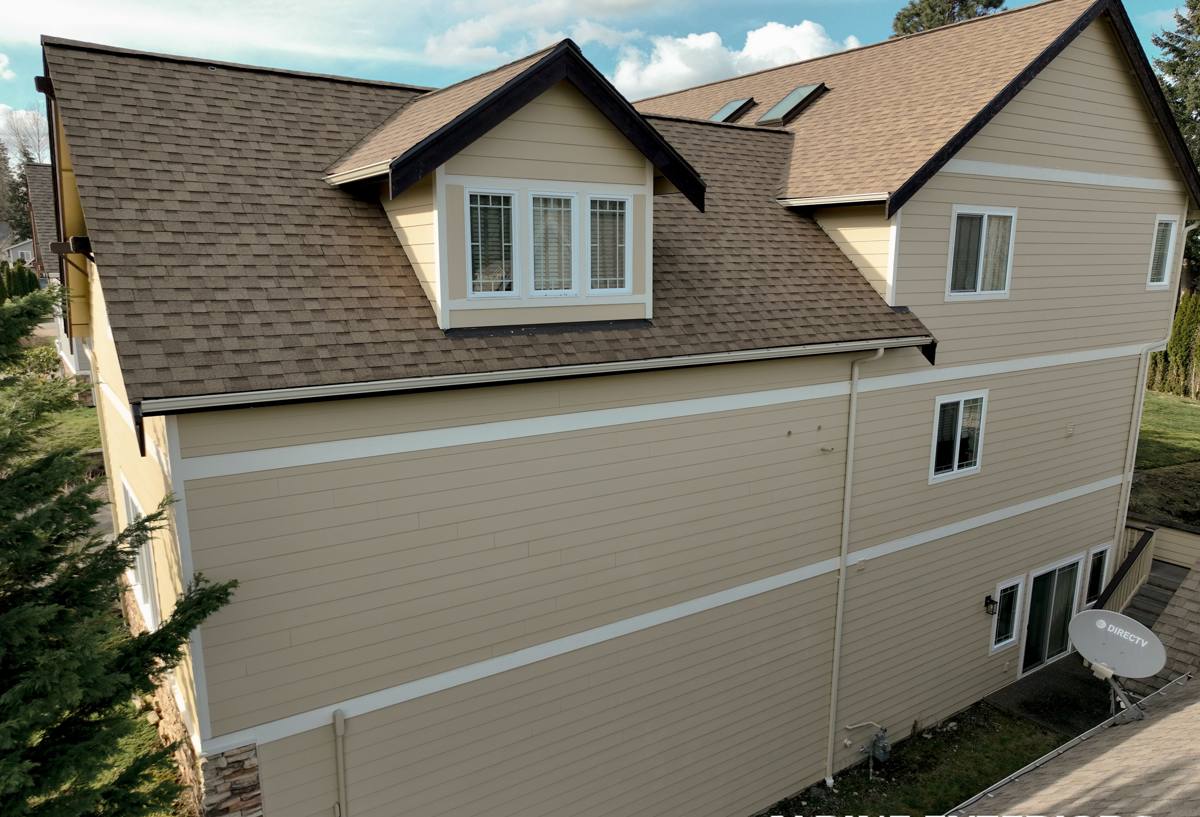
What Salt Air, Rain, and Moss Do to Windows Over Time
Salt Air and Hardware Corrosion
Homes close to the water deal with airborne salt settling on window hardware, screens, and exposed metal fasteners. Over years, that accelerates corrosion on cheaper hinges, locks, and cranks — especially on the weather-facing sides of a house. It's not usually dramatic; it shows up as a lock that starts sticking, a crank handle that gets stiff, or a screen frame that pits and discolors well before the glass unit itself has any problems.
Wind-Driven Rain and Flashing Failures
Rain that falls straight down is easy to shed. Rain that's being pushed sideways by wind off the bay behaves differently — it gets driven up under trim, into reveals, and against seams that were never designed to handle water moving in that direction. When a window was installed without proper pan flashing or with house wrap that wasn't lapped correctly at the opening, this is exactly the condition that exposes the mistake. It can take a few storm seasons before a leak shows up inside, by which point there's often already damage to the framing behind the wall.
Moss, Shade, and Sill Rot
Tree cover and the region's long wet season mean moss and algae growth on window sills, exterior trim, and tracks isn't unusual, particularly on north-facing walls or windows tucked under eaves and overhangs. Moss holds moisture against wood far longer than open air would, and if the sill or trim underneath isn't well-sealed or isn't a moisture-tolerant material, that constant dampness is what leads to soft, rotting wood at the sill — often the first place a window installation starts to fail.
What a Correct Window Installation Actually Involves
Inspecting the Rough Opening
Before a new window goes in, the opening gets checked — not just measured. That means looking at the sheathing and framing around the old window for any signs of past water intrusion, soft or discolored wood, or rot that needs to be cut out and replaced before anything new is installed. Skipping this step is the single most common shortcut that causes problems down the road, because a new window installed into a wet or compromised opening will fail again regardless of how good the window itself is.
Flashing and Water Management
Proper installation means a sloped sill pan so any water that gets past the window drains back out rather than pooling, correctly lapped flashing tape integrated with the house's weather-resistive barrier, and head flashing that sheds water out and away from the top of the opening. In an area that gets driving rain off the water, this sequencing matters more than in a drier climate — done out of order, flashing can actually funnel water into the wall instead of away from it.
Sealing and Insulating
The gap between the window frame and the rough opening gets insulated (not just caulked shut) so there's no thermal gap and no path for bulk water. Exterior sealant goes on the joints where it belongs — and only where it belongs, since sealing every seam without a drainage path can trap moisture inside the wall instead of keeping it out. This is a detail that's easy to get backwards if a crew isn't paying close attention.
Choosing the Right Window for a Bow Property
There isn't one "best" window for every house — the right choice depends on sun exposure, how close the home sits to the water, and how much upkeep you want to do. Here's how the common frame materials generally compare for a coastal, high-moisture setting like this one:
| Frame Material | Moisture & Salt Resistance | Maintenance | Typical Lifespan |
|---|---|---|---|
| Vinyl | Good — won't rot or corrode | Low — occasional cleaning | 20–30 years |
| Fiberglass | Very good — stable in wide temperature and moisture swings | Low | 30–40 years |
| Wood-clad | Depends heavily on cladding and seal integrity | Higher — finish and seals need periodic attention | 20–30 years with upkeep |
| Aluminum | Prone to corrosion near salt air unless well-coated | Moderate | 15–25 years near the coast |
We'll walk through these trade-offs honestly during your estimate rather than steering you toward whatever happens to be easiest for us to install. For a lot of Bow homes, vinyl or fiberglass frames make the most sense simply because they hold up with the least ongoing maintenance against salt air and moisture — but a wood-clad window can still be the right call on a home where appearance and matching existing trim matters more, as long as the finish and seals get maintained.
Our Installation Process, Step by Step
- On-site assessment of existing windows, framing condition, and any visible water damage or moss buildup
- Honest recommendation on frame material and glass package based on the window's sun and weather exposure
- Careful removal of the old window and inspection of the opening for hidden rot before proceeding
- Repair of any damaged sheathing or framing found during removal
- Installation of sloped sill pan flashing, properly lapped weather barrier integration, and head flashing
- Setting and leveling the new window, followed by insulation and appropriate exterior/interior sealing
- Trim and finish work to match the surrounding exterior
- Final walkthrough so you can operate the window and confirm everything before we consider the job done
Signs Your Current Windows Are Already Failing
If you're not sure whether it's time to replace a window versus just repair it, these are the signs worth taking seriously in this climate:
- Fogging or condensation between panes (a sign the seal on the glass unit itself has failed)
- Visible moss, algae, or dark staining building up on the sill or lower trim
- Soft or spongy wood when you press on the sill or the trim around the frame
- A lock, crank, or latch that's become stiff, pitted, or hard to operate
- Drafts or a noticeable temperature difference near the window on windy days
- Peeling paint or bubbling finish concentrated around one window versus others on the same wall
- Water staining on interior drywall or trim below or beside the window after a storm
Cost Factors Worth Understanding
Window installation pricing varies quite a bit based on a few honest factors rather than a flat per-window rate:
- Frame material and glass package — vinyl runs lower than fiberglass or wood-clad; double- versus triple-pane glass changes the price per unit
- Condition of the existing opening — if we find rot or water damage during removal, repairing it before the new window goes in adds to the scope
- Number of windows done at once — doing several windows in one visit is generally more cost-efficient than one-off replacements
- Access and window size — upper-story or oversized windows take more time and sometimes equipment
- Trim and exterior finish work — matching existing trim profiles or siding can add labor depending on the material
We'll give you real numbers for your specific windows during the estimate — we don't think broad online price ranges are useful when the opening condition and window count can move the number so much.
Why a Crew That Already Works in Bow Matters
A window installer who mostly works drier, inland areas doesn't always think about pan flashing the same way, or about what moss buildup on a north-facing sill is really telling you about moisture underneath. Working regularly in and around the Chuckanut area means we're used to sequencing flashing correctly for wind-driven rain off the water, recognizing early moss or algae growth as a moisture signal rather than just a cosmetic issue, and choosing hardware and frame materials that actually hold up against salt air over the long run. It's the difference between a window that's installed correctly on paper and one that's installed correctly for where it actually sits.
Maintenance After Your New Windows Are In
A properly installed window in this climate still benefits from a little seasonal attention: rinsing salt residue off hardware and glass a couple of times a year, clearing moss or debris from sills and tracks before it has a chance to sit and hold moisture, and keeping an eye on exterior caulking so it's re-sealed if it ever cracks or pulls away. None of this is heavy maintenance — it's mostly just not letting moisture sit somewhere it shouldn't.
If you're dealing with drafty, foggy, or failing windows on a Bow property — or just want a straight answer on whether replacement makes sense before winter storms roll in — we're happy to take a look. Reach out below for a free, no-pressure estimate.