 Chuckanut Exterior
 Custom Windows for Bow Homes: Built for This Corridor, Not a Catalog
Bow sits along one of the more exposed stretches of window-buying country in the state. Homes here face a mix of salt-laden air off the water, driving rain that comes in sideways more often than straight down, and a moss season that stretches longer than most homeowners expect. A window that works fine in a dry inland neighborhood can fail here in half the time if it wasn't chosen and installed with this specific exposure in mind. Custom windows for a Bow property aren't just about matching a floor plan or a room's dimensions — they're about matching the assembly to the climate load the house actually takes on, year after year.
This page covers what we look at when we scope a custom window job in Bow specifically: the material trade-offs that matter here, what correct flashing and sealing looks like on this coastline, how our process runs from first look to final walkthrough, and why a crew that already works this stretch of Whatcom County catches problems a first-timer to the area might miss.
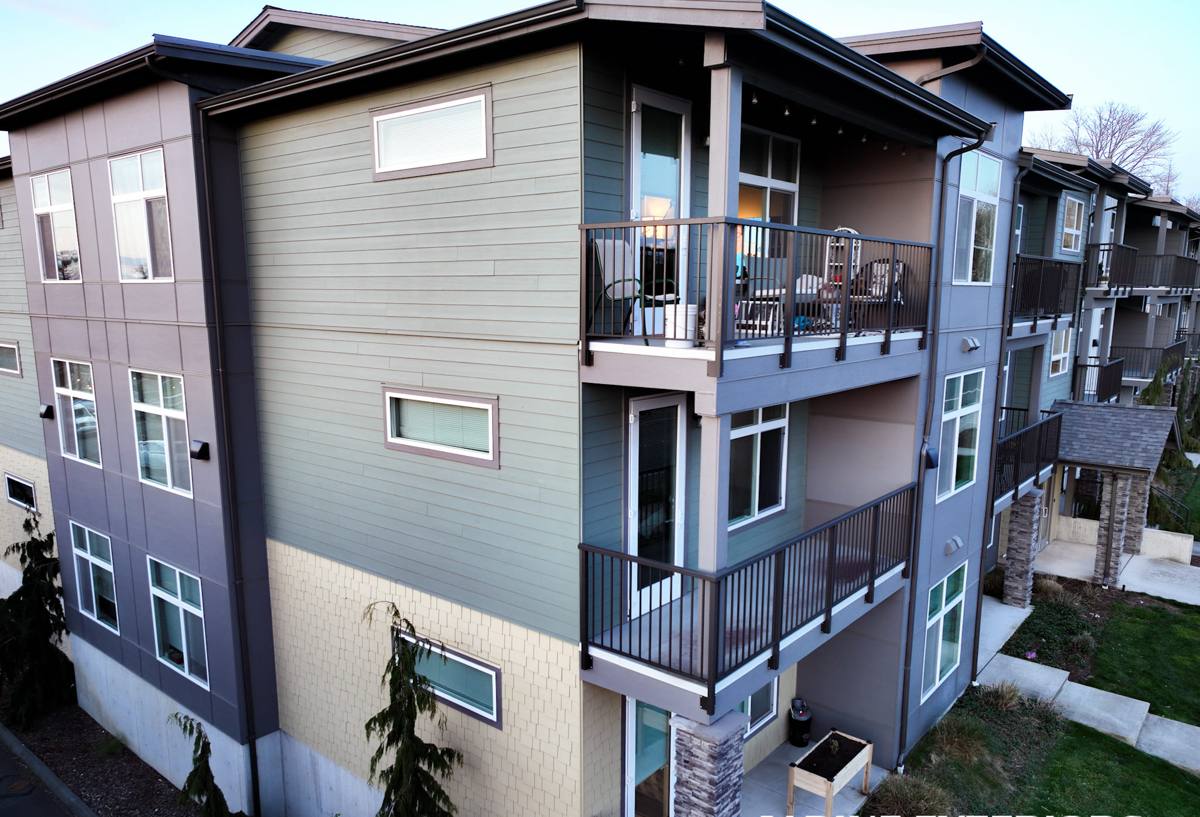
What Salt Air, Driving Rain, and Moss Season Actually Do to Windows
Three separate stressors compound on Bow homes, and each one targets a different part of a window assembly:
Salt Air
Airborne salt is corrosive to unprotected metal hardware, fasteners, and some lower-grade aluminum components. It doesn't take a beachfront lot — homes set back from the water still pick up salt-laden air on windy days, and it settles into hardware, weep holes, and any exposed metal trim over time. Hardware finish quality and fastener material matter more here than they would on a dry side of the mountains.
Driving Rain
Rain that hits a wall at an angle — rather than falling straight down — pushes water into gaps that a vertical-rain assumption would never account for. This is where flashing detail, sill pan design, and the quality of the seal between the window unit and the rough opening decide whether water stays out or works its way into the wall cavity over a few wet seasons.
Moss and Sustained Moisture
A long moss season means extended periods where wood trim, sills, and even some composite materials stay damp rather than getting a chance to dry out between rains. Moss holds moisture against a surface long after the rain itself has stopped, which accelerates rot in untreated wood and can trap moisture against poorly sealed frames.
None of this means custom windows are a bad investment in Bow — it means the spec has to account for these three things from the start, not get patched after the fact.
What a Correct Custom Window Installation Involves
"Custom" windows means the units are built to the exact opening and design intent of the home, rather than pulled from stock sizes. But the size and shape are only part of getting it right. A correct installation on a Bow home includes:
- A proper sill pan under every unit, sloped to shed any water that gets past the primary seal, not just a bead of caulk on a flat sill
- Flashing integrated with the home's existing water-resistive barrier — house wrap or building paper — in the correct shingle-lap order, not taped on top of it
- Corrosion-resistant fasteners and hardware appropriate for a salt-air environment, not standard-grade hardware chosen for cost alone
- Sealants and backer rod sized and applied correctly at the frame-to-opening joint, matched to the expected joint movement
- Weep holes and drainage paths left clear and functional, not accidentally sealed over during trim-out
- Interior and exterior trim details that shed water away from the frame rather than channeling it toward the joint
Skipping any one of these doesn't usually cause an immediate problem — it shows up two or three winters later as a soft spot in trim, a musty smell near a window, or a stain on interior drywall. That lag is exactly why installation quality on the first pass matters more here than in a milder climate.
Choosing the Right Window Material for a Bow Property
There's no single "best" window material — the right choice depends on the specific exposure of that wall, the home's existing trim style, and how much upkeep the homeowner wants to take on. Here's how the common options stack up for this coastal, high-moisture corridor:
| Material | Salt Air Behavior | Moisture/Moss Season | Upkeep |
|---|---|---|---|
| Vinyl | Doesn't corrode; hardware quality still matters | Won't rot; performs consistently | Low — occasional cleaning |
| Fiberglass | Very stable, resists corrosion well | Excellent — dimensionally stable when wet or dry | Low |
| Aluminum | Can corrode if not marine-grade or properly coated | Handles moisture but can condense; thermal bridging in cold snaps | Moderate |
| Wood / Wood-Clad | Cladding protects exterior face if intact and sealed | Exposed or damaged wood is vulnerable in a long moss season | Higher — regular inspection and refinishing |
We're generally cautious about recommending unclad, exposed wood exteriors for Bow's more weather-exposed elevations — not because wood is a poor material, but because sustained dampness during moss season punishes any gap in the finish, and that's a maintenance commitment a lot of homeowners underestimate going in. Clad wood, fiberglass, or a quality vinyl system tend to be a better match for exposed walls, with real wood interiors kept where the look matters most and the exterior face is protected.
How Our Process Works
1. On-Site Assessment
We look at each opening individually — orientation, current condition of the existing frame and trim, signs of past water intrusion, and how exposed that specific wall is to prevailing wind and rain direction. Two windows on the same house can need different specs if one faces the weather and the other doesn't.
2. Custom Measurement and Spec
Openings are measured precisely, and we spec material, glazing, and hardware based on that wall's actual exposure rather than a one-size answer for the whole house.
3. Removal and Opening Prep
Old units come out carefully so we can inspect the rough opening, sill, and surrounding framing for any hidden moisture damage before anything new goes in. Problems found here get addressed before installation, not covered over.
4. Installation
Sill pans, flashing integration, fastening, and sealing are done in the order that actually sheds water — following the details outlined above, not shortcuts that look fine on install day but fail in year two or three.
5. Trim, Cleanup, and Walkthrough
Interior and exterior trim is finished, the site is cleaned up, and we walk the job with the homeowner to confirm operation, seal quality, and appearance before we consider it done.
What Drives Cost on a Custom Window Job
Every job is different, but these are the main factors that move the price up or down on a Bow custom window project:
| Factor | Why It Matters |
|---|---|
| Number and size of openings | More units and larger glass areas mean more material and labor |
| Material choice | Fiberglass and quality clad-wood typically cost more upfront than vinyl |
| Wall exposure | Fully exposed walls facing prevailing weather often need more robust flashing detail |
| Condition of existing opening | Rot or past water damage found during removal adds repair scope |
| Shape and configuration | Bays, arches, and custom shapes cost more than standard rectangular units |
| Access and site conditions | Second-story or hard-to-access openings add labor time |
We give an honest, itemized estimate before any work starts so there's no guessing on what's driving the number.
Signs a Bow Home May Need New Custom Windows
- Visible fogging or moisture between panes of double- or triple-glazed units
- Soft, discolored, or spongy trim around a window frame
- Drafts or noticeable temperature difference near a closed window
- Windows that are hard to open, close, or lock — often a sign of frame movement
- Corrosion or staining on hardware and metal components
- Musty smell or visible mold near a window during or after the wet season
- Peeling paint or finish failure on wood trim that keeps recurring in the same spot
Why a Crew That Already Works in Bow Makes a Difference
The technical side of a good window install is the same everywhere — proper flashing, correct sealing, sound material choice. What changes is judgment: knowing which walls in this part of Whatcom County take the harshest weather, recognizing early-stage moss and moisture damage before it's obvious, and not being surprised by how much a "light rain" day can still drive water sideways into an opening. A crew that's done this work in Bow and the surrounding area has already seen how these houses age under these specific conditions, and that shows up in the choices made on-site, not just in the estimate.
Maintenance That Extends the Life of Custom Windows Here
Even a well-installed window benefits from a little seasonal attention in this climate:
- Rinse accumulated salt residue off frames and glass periodically, especially after windy weather
- Keep weep holes clear of debris, moss, and dirt so water can drain as designed
- Check exterior caulking annually for cracking or separation and address it early
- Trim back vegetation and clear moss buildup near window trim and sills
- Operate hardware periodically through the wet season to keep mechanisms from seizing
None of this is heavy maintenance — it's the kind of five-minute check that prevents a small issue from becoming a repair.
If you're weighing new custom windows for a home in Bow, we're happy to take a look and give you a straightforward, no-pressure estimate based on what your specific walls and openings actually need. Use the form below to get started.