 Chuckanut Exterior
 Why Bow Homes Need Siding Built for This Exact Climate
Bow sits close enough to the water that salt-laden air is a daily fact of life, not an occasional nuisance. Add Whatcom County's long wet season — months of driving rain off the Salish Sea, followed by a moss season that can stretch from fall clear into spring — and you have a combination that wears through the wrong siding material faster than most homeowners expect. Wood siding absorbs and releases moisture with every weather swing, which eventually shows up as cupping, splitting, or rot at the butt joints. Vinyl softens and flexes in the salt-heavy air near the water, and its seams give moisture a place to work behind the panel. Homes in Bow don't need siding that merely survives one bad winter — they need a wall system that holds its shape and finish through decades of this cycle.
That's the starting point for every siding conversation we have with Bow homeowners: what does this specific lot, this specific exposure, and this specific climate actually demand from the product going on the wall.
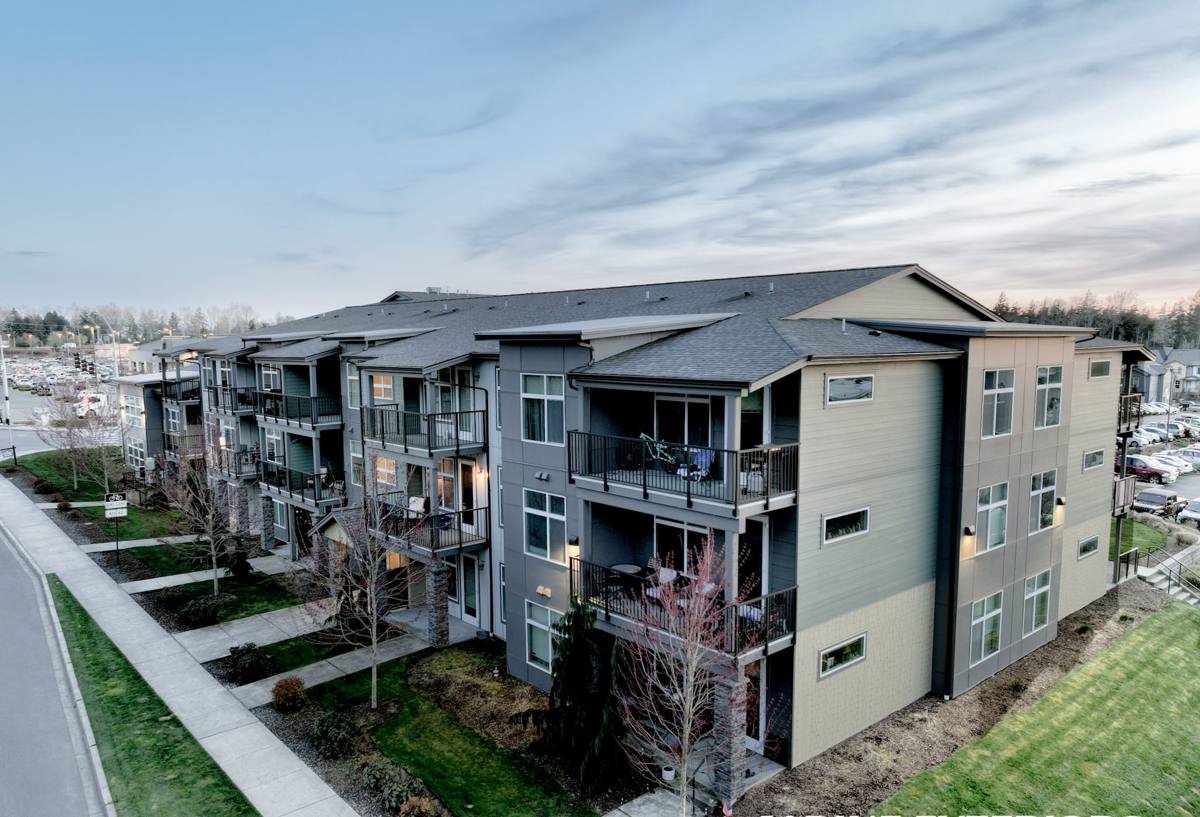
What Fiber Cement Actually Solves Here
Fiber cement is a mix of cement, sand, and cellulose fiber, pressed and cured into a dense, dimensionally stable board. Unlike wood, it doesn't expand and contract enough to open up seams or crack its paint film with every temperature swing. Unlike vinyl, it doesn't soften in warm salt air or go brittle in a cold snap. And because it's non-combustible, it doesn't feed a fire the way wood-based siding can — a real consideration for homes near wooded lots and brush, which describes a lot of the Chuckanut area.
We install James Hardie fiber cement exclusively. We don't carry LP SmartSide, vinyl, Cemplank, Allura, primed spruce, or cedar, and that's a deliberate standard, not an oversight. Each of those alternatives has legitimate uses somewhere, but for the salt air, standing moisture, and moss pressure that Bow homes deal with year-round, we've seen enough of how they perform over time that we don't want our name on the installation. Hardie's fiber cement formulation and factory-applied ColorPlus finish are engineered specifically for the moisture cycling and UV exposure that define homes at this latitude, and the company backs it with a warranty structure that transfers with the home — which matters if you plan to sell in the next decade rather than the next fifty years.
The Moss Problem, Specifically
Moss doesn't just look bad — it holds moisture directly against the siding surface for weeks at a time, which is exactly the condition that breaks down wood fiber and lifts paint film. Fiber cement doesn't feed moss growth the way wood does, and its factory finish resists the staining that moss and algae leave behind on painted wood siding. Moss will still land on any north-facing wall in this climate; the difference is whether the surface underneath degrades while it's there.
What a Correct Installation Involves
Fiber cement performs exactly as well as its installation. This is the part that gets rushed on budget jobs, and it's where most of the "siding failures" people blame on the product actually originate. A correct install on a Bow home includes:
- A drainable weather-resistive barrier behind the siding, not just felt or housewrap stapled flat — water has to have somewhere to go once it gets behind the cladding, and near the water it will get behind the cladding eventually
- Proper rainscreen gap or furring where the wall assembly calls for it, so moisture doesn't sit trapped against the sheathing
- Correct fastener type, spacing, and embedment depth per the Hardie installation manual — this is one of the most commonly violated specs and one of the fastest ways to void the warranty
- Factory-cut and factory-primed edges wherever possible, with any field cuts sealed per spec, since a raw cut edge is the fastest path for moisture into the board
- Correct clearance at grade, decks, and roof lines — fiber cement that sits too close to soil or a roof deck will wick moisture regardless of how well the rest of the job was done
- Properly flashed and caulked penetrations at every window, vent, and fixture, since these are the actual failure points on almost every siding job we've inspected, not the field of the wall itself
Skip any one of these and you can end up with premature paint failure, moisture intrusion, or voided warranty coverage on a product that's otherwise rated to handle this exact climate. This is why we treat installation method as seriously as material choice.
How Our Process Works for a Bow Project
1. On-Site Assessment
We walk the exterior and look at the specific exposures on your home — which walls take the direct weather off the water, where moss and algae are already established, where the current siding is failing first, and what the wall assembly looks like underneath the existing cladding once we open it up.
2. Product and Line Selection
We help you choose the right Hardie product line and profile — lap, shingle, or panel — and the ColorPlus finish that fits the home, with the climate-engineered HZ product matched to our region rather than a generic national spec.
3. Tear-Off and Wall Prep
We remove the old siding, inspect the sheathing for hidden moisture damage, and correct anything we find before a single new board goes up. Covering up rot or soft sheathing is not something we do.
4. Installation to Manufacturer Spec
Weather barrier, flashing, fastening, and clearances are all installed to the Hardie manual, not shortcut for speed. This is also what keeps the manufacturer's warranty intact.
5. Final Walkthrough
We go around the home with you, check every seam, joint, and penetration, and answer questions about care and what to expect from the finish over time.
Comparing the Options Bow Homeowners Actually Consider
| Material | Performance in Salt Air / Driving Rain | Moss & Algae Resistance | Long-Term Maintenance |
|---|---|---|---|
| James Hardie Fiber Cement | Dimensionally stable, factory finish holds up to salt exposure and UV | Resists staining; doesn't feed growth like wood fiber | Occasional wash; repaint cycle measured in decades, not years |
| Cedar / Primed Spruce | Absorbs moisture, prone to cupping and splitting near the water | Wood fiber is a food source for moss and algae | Regular repainting/staining; ongoing rot inspection |
| Vinyl | Can soften, warp, or fade faster under salt-heavy sun exposure | Doesn't feed growth but seams trap moisture and debris | Low upkeep but limited repair options once damaged |
| LP SmartSide / Other Engineered Wood | Better than raw wood but still moisture-sensitive at cut edges and seams | More resistant than cedar, still wood-fiber based | Edge sealing and seam maintenance is critical and easy to neglect |
Cost Factors Specific to a Bow Project
Every estimate depends on the home, but the variables that move the number most for Chuckanut-area homes are the same ones we walk through on-site:
- Square footage and wall complexity — dormers, bump-outs, and multiple gables add cutting and flashing time
- Condition of the sheathing once the old siding comes off — hidden moisture damage is common on older homes near the water and has to be corrected before new siding goes on
- Product line and profile chosen — lap versus shingle versus panel carry different material and labor costs
- Trim and accent work — soffit, fascia, and trim boards are often replaced or upgraded at the same time as the field siding
- Access and site conditions — steep lots, mature landscaping, or limited staging area affect labor time
We give a written estimate after the on-site walk, not a phone-quote guess, because the sheathing condition and wall complexity genuinely change the number.
Why Hiring a Crew That Already Works Bow Matters
A crew that regularly works this stretch of Whatcom County already knows which walls take the worst weather off the water, how aggressively moss establishes on north- and west-facing exposures here, and what wall assemblies are common in homes built in different eras around Chuckanut. That local pattern recognition shortens the assessment, avoids guesswork on flashing details, and means the crew isn't learning this climate on your house. It also means service and warranty support come from a business that's still local and reachable years after the install, not a crew that passed through once.
What to Look for When Vetting a Siding Contractor
- Manufacturer training or certification specifically for the fiber cement product being installed
- A written scope that names the weather-resistive barrier, flashing details, and fastening spec — not just "siding replacement"
- Willingness to open up a section of wall and show you the sheathing condition before finalizing a quote
- A real physical presence in the area, with references from homes in similar coastal exposure
- Clear explanation of what voids the manufacturer warranty and how their install avoids it
If your Bow home's siding is showing moss staining, paint failure, or soft spots after another wet Whatcom County winter, we're happy to take a look and walk you through what correct James Hardie installation would involve for your specific exposure. Request a free, no-pressure estimate using the form below.