 Chuckanut Exterior
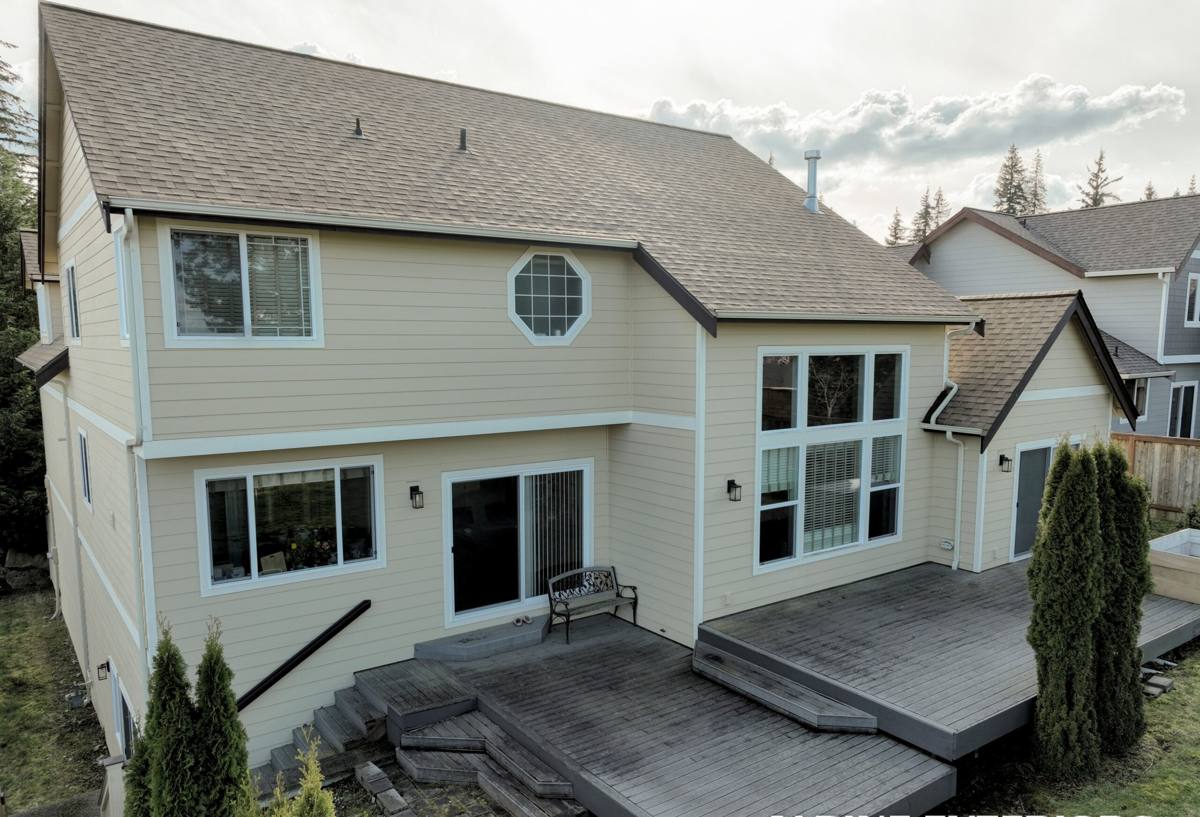
 Deck Building in Sedro-Woolley: Built for the Weather We Actually Get
A deck in Sedro-Woolley lives outside every single day of the year, and this part of Washington doesn't make that easy. Between long stretches of driving rain, damp air moving in off the coast, and a moss season that can stretch from fall through spring, an outdoor structure here is under near-constant moisture pressure. A deck built without that in mind might look fine the first summer and start showing problems — soft spots, black streaks, sponginess underfoot — by the second or third wet season. A deck built for this climate specifically holds up for decades instead.
Chuckanut Exterior Contractor builds decks in Sedro-Woolley the way we'd want one built on our own property: with drainage, ventilation, and material choices that treat rain and moss as the default condition, not the exception.
What Sedro-Woolley's Climate Does to an Outdoor Deck
Every region has its own set of stresses that decks have to survive, and this one is defined by moisture that doesn't let up. Understanding what's actually happening under the surface is what separates a deck that's built to last from one that just looks good in a listing photo.
Constant Moisture Exposure
Driving rain doesn't just fall straight down — wind-driven rain gets pushed sideways and underneath decking boards, into fastener holes, and along the framing where it can sit undetected. Combined with the salt-tinged air common to this part of Whatcom County, any exposed metal fasteners or connectors are at higher risk of corrosion if they weren't rated for the exposure in the first place.
Moss and Algae Growth
A long moss season means any deck surface that stays damp for extended periods becomes a growth surface. Moss isn't just cosmetic — it holds moisture against the wood or composite surface, and on wood decking it can accelerate rot in the boards underneath it. Framing and structural members that don't get airflow underneath are especially vulnerable, since moss and mildew thrive in still, damp, shaded spaces.
Freeze-Thaw and Seasonal Movement
Even in a relatively mild coastal climate, temperatures dip enough in winter that trapped moisture in wood fibers or in ledger connections can freeze and expand. Over repeated cycles, that movement loosens fasteners, opens gaps at the ledger board, and stresses joints that were built tight but not built to flex.
What a Correctly Built Deck Needs to Have
None of this means a deck can't be built well in Sedro-Woolley — it means the build has to account for these conditions from the framing up, not just at the surface. A correct deck build here includes a few non-negotiables.
Ledger Attachment and Flashing
The ledger board — where the deck attaches to the house — is the single most common point of failure on decks in wet climates. It needs proper flashing to direct water away from the house wall, not just a bead of caulk, and structural fasteners rated for exterior and ground-contact-adjacent use. A poorly flashed ledger is how water gets into the house's rim joist, and that's a repair that costs far more than the deck itself.
Drainage and Slope
Decking should be installed with a slight slope away from the house so water sheds off instead of pooling. Board spacing matters too — gaps that are too tight trap debris and moisture; gaps that are too wide are a tripping and safety issue. Getting this balance right is part of why deck spacing isn't just an aesthetic choice.
Ventilation Underneath
Airflow beneath the deck structure lets it dry out between rain events instead of staying damp for weeks. This means correct joist spacing, skirting that doesn't seal the underside completely, and keeping vegetation and debris from building up against the framing.
Fastener and Hardware Selection
Every screw, joist hanger, and structural connector should be rated for exterior, coastal-adjacent exposure — stainless steel or heavy-duty coated hardware, not standard interior-grade fasteners that will corrode and stain the decking around them within a few seasons.
Decking Material Choices for This Climate
There's no single "best" decking material — there's a best fit for how a homeowner wants to use and maintain the deck. Here's how the common options actually perform under Sedro-Woolley conditions.
| Material | Moisture Performance | Maintenance | Typical Lifespan Here |
|---|---|---|---|
| Pressure-treated wood | Good if sealed and maintained; vulnerable if neglected | Annual cleaning and re-sealing recommended | 15–20 years with upkeep |
| Cedar | Naturally rot- and insect-resistant, but still needs sealing | Periodic staining/sealing to prevent graying and moss growth | 15–25 years with upkeep |
| Composite decking | Excellent — doesn't absorb water or rot | Occasional cleaning to remove surface moss/algae | 25–30+ years |
| PVC/capped composite | Best moisture resistance of the common options | Low — mainly rinsing to keep surface clear | 25–30+ years |
Composite and capped composite products cost more upfront but generally make sense for homeowners who want to spend less time maintaining the surface every year. Wood costs less initially but only performs well long-term if someone stays on top of sealing and cleaning — skipping that upkeep is the single biggest reason wood decks fail early in this climate.
Our Process for a Sedro-Woolley Deck Build
We approach every deck project the same structured way, adjusted for the specifics of the site.
- On-site assessment — we look at drainage patterns, sun/shade exposure, existing structure (for rebuilds), and how water moves across the property during rain.
- Design and material selection — sizing, layout, and material discussion based on how the homeowner actually plans to use the space and how much maintenance they want to take on.
- Permitting — decks above a certain height or attached to the structure typically require permits; we handle that process rather than leaving it to the homeowner.
- Framing and ledger work — correct flashing, fastener selection, and structural spacing built in from the start, not treated as an afterthought.
- Decking installation — proper spacing, fastening, and slope for drainage.
- Final walkthrough — we go over the finished deck with the homeowner, including basic care and what to watch for seasonally.
Why a Local Crew Matters for This Kind of Work
Deck building isn't a one-size-fits-all trade — a crew that mostly builds in drier inland climates may not build the same way a crew that works Whatcom County year-round does. Working in Sedro-Woolley regularly means we've seen firsthand which ledger details actually keep water out over time, which fastener choices hold up against the salt-tinged air, and which decking materials handle a long moss season without turning into a slip hazard. That's the kind of judgment that comes from repetition in this specific climate, not from a general playbook.
It also means we're a known, reachable business in the area — not a crew that drove in from out of the region for one job and is hard to track down if something needs a follow-up visit.
Maintaining a Deck Once It's Built
Even a correctly built deck needs some ongoing attention in this climate. A simple seasonal checklist goes a long way toward protecting the investment:
- Sweep debris (leaves, needles, dirt) off the surface regularly, especially in fall
- Rinse or lightly scrub moss and algae buildup before it gets established, particularly in shaded areas
- Check and tighten any visibly loose fasteners once a year
- Inspect the ledger board area for gaps, staining, or soft wood
- Re-seal or re-stain wood decking on the manufacturer's recommended schedule
- Keep gutters and downspouts near the deck clear so water isn't dumping directly onto or under it
- Trim back vegetation that's shading the deck and keeping it damp longer than it should be
Common Problems We See on Existing Decks in This Area
When we're called out to look at an older or problem deck in the Sedro-Woolley area, a handful of issues come up repeatedly.
Soft or Spongy Decking
Usually a sign of moisture that's gotten into the wood fibers, often from inadequate sealing or standing water from poor slope. Left alone, it progresses to rot.
Rusted or Failing Fasteners
Interior-grade or under-rated hardware corroding and staining the surrounding decking — a sign the original build used the wrong materials for this exposure.
Moss Buildup at the Ledger and Shaded Corners
Areas that don't get sun or airflow hold moisture the longest, and it shows up first as moss, then as discoloration, then as structural softness if it's ignored.
Railing and Post Movement
Freeze-thaw cycling and moisture intrusion at post bases can loosen railings over time — a safety issue as much as a cosmetic one.
Get a Straight Answer on Your Deck Project
Whether you're planning a new deck, replacing an aging one, or just want an honest read on whether an existing deck is holding up the way it should, we're happy to take a look. Reach out for a free, no-pressure estimate — we'll walk the site, talk through what makes sense for your home, and give you a straight answer, not a sales pitch.