 Chuckanut Exterior
 Siding That Has to Work in Sedro-Woolley's Climate, Not Just Look Good on Day One
Homes around Sedro-Woolley sit in a stretch of the Pacific Northwest where the weather doesn't take a season off. Salt-tinged marine air drifts in off the Sound and up the valley, driving rain hits siding sideways for months at a stretch, and the shaded, damp stretches of fall through spring turn into a long moss season on anything that holds moisture. That's a tough combination for exterior materials. Wood siding needs to be repainted and caulked on a tight schedule to keep water out. Vinyl can hold up to rain fine but has real limits with impact and heat, and it doesn't solve the moss and mildew problem at all. We install James Hardie fiber cement siding exclusively, and on a page like this it's worth explaining exactly why that choice matters for a Sedro-Woolley home specifically, not just in general terms.
This page is about one service in one area: fiber cement siding installation and replacement for homes in and around Sedro-Woolley. If you're comparing materials, weighing a repaint against a full re-side, or just want to understand what a correct installation looks like before you get quotes, this is written for you.
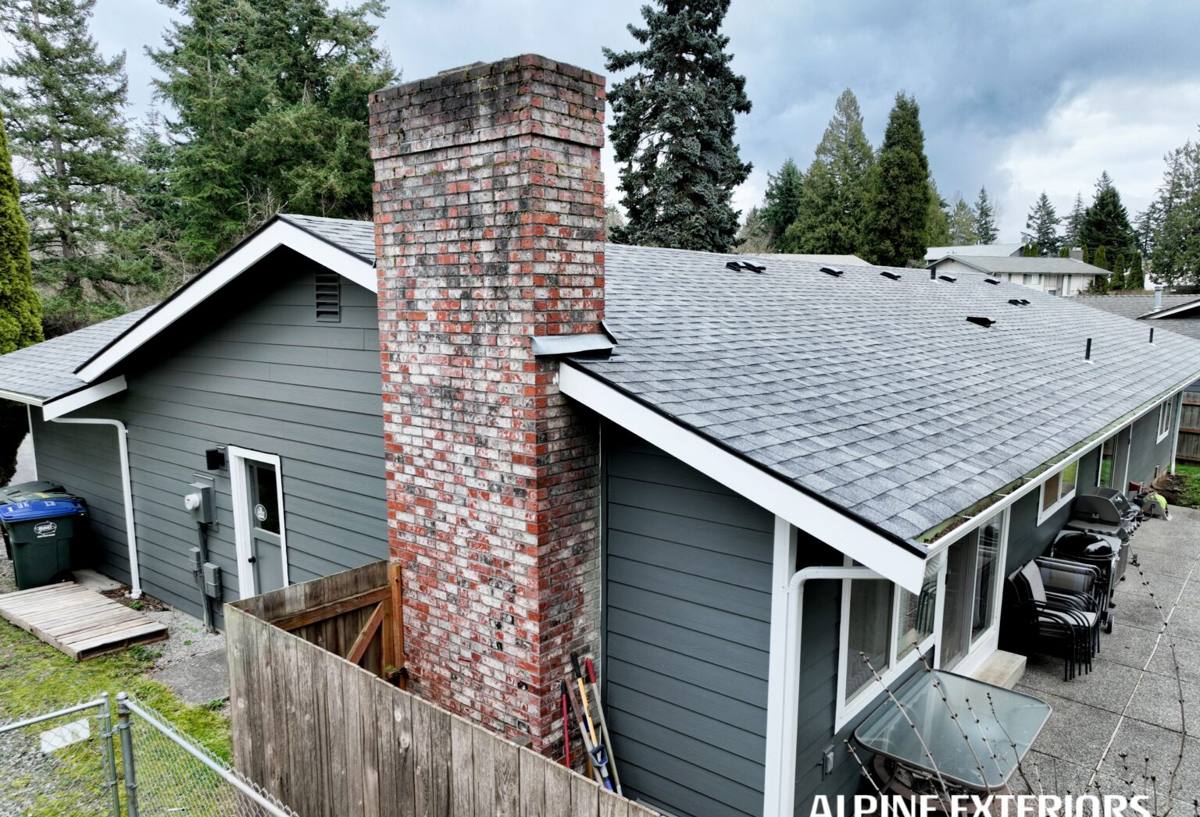
What Sedro-Woolley's Climate Actually Does to Siding
It helps to separate the specific stresses this region puts on a house exterior, because each one attacks siding differently.
Driving rain and wind-driven moisture
Rain here doesn't just fall straight down. Wind pushes it sideways into wall assemblies, which means every seam, joint, and fastener penetration is a potential entry point for water. Siding that isn't installed with the right flashing details, gaps, and clearances will eventually let moisture behind the cladding, even if the material itself is rated for wet climates.
Salt air and corrosion
Proximity to the Sound means airborne salt settles on exterior surfaces and hardware over time. Bare or poorly coated fasteners and trim pieces corrode faster here than they would inland, which is why fastener choice and finish quality aren't small details on a coastal-influenced job.
Moss, algae, and prolonged dampness
Shaded north- and east-facing walls, tree cover, and the sheer number of overcast, damp days each year give moss and algae a long runway to establish themselves on any surface that stays wet. Untreated wood and some composite products are especially prone to this; siding that dries out quickly and resists organic growth has a real advantage in this specific climate.
Temperature swings and material movement
The region doesn't see extreme heat, but siding still expands, contracts, and flexes with seasonal and daily temperature changes. Materials that move a lot, or that were installed without room to move, tend to develop stress cracks and gaps at seams over years of this cycle.
Why We Install Only James Hardie Fiber Cement
We don't install LP SmartSide, vinyl, Cemplank, Allura, or bare cedar or spruce siding. That's a deliberate standard, not a sales pitch, and it's worth being straightforward about why.
- Non-combustible core: Hardie fiber cement is made primarily from cement, sand, and cellulose fiber, which gives it a non-combustible rating that wood-based and vinyl products can't match.
- Moisture behavior: Fiber cement doesn't absorb and swell the way engineered wood products can, and it doesn't trap moisture behind it the way a poorly ventilated vinyl installation sometimes does.
- Factory-applied ColorPlus finish: The baked-on finish resists fading and chipping far better than field-applied paint, and it means you're not on a repaint cycle every few years the way you would be with cedar or primed wood.
- Climate-engineered product lines: Hardie makes region-specific HZ formulations, and for a wet Pacific Northwest climate that engineering isn't marketing fluff, it's a real formulation difference aimed at exactly the conditions Sedro-Woolley sees.
- Warranty structure: Hardie's warranty is transferable and backed by a large, established manufacturer, which matters if you sell the home before the siding's life is up.
None of this means other products are without merit. Vinyl is inexpensive and low-maintenance in mild climates. Engineered wood has a warmer look at a lower price point than fiber cement. Cedar has genuine curb appeal. But when we weigh maintenance burden, moisture performance, fire resistance, and long-term cost against the way this region actually treats exterior materials, fiber cement is what we're willing to put our name behind and warranty our labor on.
What a Correct Fiber Cement Installation Actually Involves
The siding material is only part of the equation. A large share of siding failures we get called to look at trace back to installation shortcuts, not the product itself. A correct job includes:
- Weather-resistive barrier check or replacement: The house wrap or building paper behind the siding has to be intact and properly lapped before a single board goes up.
- Rainscreen or proper drainage gap: Given how much rain this area gets, a drainage plane behind the siding that lets incidental moisture escape and the wall assembly dry is not optional detailing, it's basic performance.
- Correct flashing at every penetration: Windows, doors, vents, and any wall penetration need flashing installed in the right order, not caulk used as a substitute for flashing.
- Manufacturer-specified fastening: Hardie specifies fastener type, spacing, and placement for a reason. Blind-nailing or using the wrong fastener pattern voids warranty coverage and invites problems.
- Proper clearances: Siding needs a minimum gap from grade, roof lines, decks, and other transitions so it isn't sitting in standing water or trapped moisture.
- Caulking and sealant at the right joints only: Sealing every seam solid actually traps moisture in some assemblies; knowing which joints should seal and which need to breathe is part of doing this correctly.
Skipping any one of these doesn't usually cause an obvious problem in year one. It shows up two, five, or ten years later as rot, staining, or siding that's failed in one specific spot, which is often more expensive to diagnose and repair than it would have been to install right the first time.
Our Process for Sedro-Woolley Siding Projects
1. On-site assessment
We look at your current siding, the condition of the wall assembly underneath where accessible, drainage around the foundation, and any trouble spots like north-facing walls or areas with heavy tree cover that are prone to moss and slow drying.
2. Scope and product selection
We walk through Hardie's plank, panel, and shingle options, HZ climate formulation, and ColorPlus color choices, and match them to your home's style and your budget. We're candid about where a full re-side makes sense versus a targeted repair.
3. Written estimate
You get a clear breakdown of materials, labor, and scope before any work starts, including how we're handling the weather barrier, drainage plane, and flashing details specific to your home.
4. Installation
Our crews follow Hardie's published installation specifications, not shortcuts, because that's what keeps the manufacturer warranty valid and the siding performing for its intended lifespan.
5. Final walkthrough
We go over the finished job with you, including any maintenance notes specific to your home's exposure and site conditions.
Comparing Your Siding Options for This Climate
| Material | Moisture Performance Here | Maintenance | Fire Resistance |
|---|---|---|---|
| James Hardie Fiber Cement | Strong; engineered HZ lines for wet climates | Low; factory finish, no regular repainting | Non-combustible |
| Vinyl | Fair; can trap moisture if poorly installed | Low; but can crack in impacts, fades over time | Combustible, can warp near heat |
| Cedar / Primed Wood | Poor without diligent upkeep; prone to moss and rot | High; regular painting, sealing, moss treatment | Combustible |
| Engineered Wood (LP SmartSide type) | Moderate; sensitive to edge moisture and installation quality | Moderate; periodic repainting and edge sealing | Combustible |
Cost Factors Homeowners Should Actually Weigh
Every fiber cement quote should reflect the specifics of your home, but the main variables that move the price are worth understanding before you compare bids.
- Tear-off vs. install over existing sheathing: Removing old siding down to the studs or sheathing costs more up front but lets us properly inspect and address any hidden moisture damage.
- Home size and wall complexity: More corners, gables, and trim details mean more labor and cut waste.
- Product line and profile: Lap siding, panel systems, and shingle-style Hardie products carry different material costs.
- Site access and exposure: Multi-story sections, steep terrain, or heavy landscaping near the walls can add time and equipment needs.
- Hidden repairs found mid-project: Rot or moisture damage discovered once old siding comes off needs to be addressed before new siding goes on, and a straightforward contractor will show you what they found before proceeding.
Be cautious of bids that are dramatically lower than others for the same scope of work; it's frequently a sign that flashing, drainage plane, or fastening details are being cut to save labor time.
Signs Your Sedro-Woolley Home May Need New Siding Soon
A few warning signs are worth acting on before they become bigger repairs:
- Persistent moss or algae staining that comes back quickly after cleaning
- Soft spots, bubbling, or visible warping, especially on wood or engineered wood siding
- Paint that's failing faster than expected on repainted sections
- Visible gaps or separation at seams and corners
- Rising energy bills that may point to a compromised weather barrier behind the siding
Why a Crew That Already Works This Area Makes a Difference
A contractor who regularly works Sedro-Woolley and the surrounding area already understands how the local mix of rain, marine air, and shade affects different sides and sections of a house, and that shapes real decisions on your project, from where extra flashing attention matters to which product line and color finish will hold up best on your specific exposure. That local familiarity, paired with strict adherence to Hardie's installation specifications, is what separates siding that looks good at handoff from siding that's still performing well a decade later.
If you'd like a straightforward look at your home's siding and an honest recommendation, we offer free, no-pressure estimates. Use the form below to get started.