 Chuckanut Exterior
 Board & Batten Siding for Sedro-Woolley Homes
Board and batten has been a Pacific Northwest favorite for generations, and it's easy to see why — the vertical lines, deep shadow reveals, and clean farmhouse-to-modern range make it one of the most versatile looks available for a home exterior. In Sedro-Woolley, where homes sit under tall conifers and take on a steady diet of Whatcom County moisture, board and batten also does something practical: its vertical orientation sheds water differently than horizontal lap siding, and when it's built with the right materials behind it, it holds up to years of driving rain and a long moss season without becoming a maintenance headache.
This page is specifically about board and batten siding installation for homes in and around Sedro-Woolley. We install it one way — using James Hardie fiber cement panel and batten systems — and we want to walk through what that actually involves, what correct installation looks like in this climate, and why hiring a crew that already works this part of Whatcom County makes a real difference in the outcome.
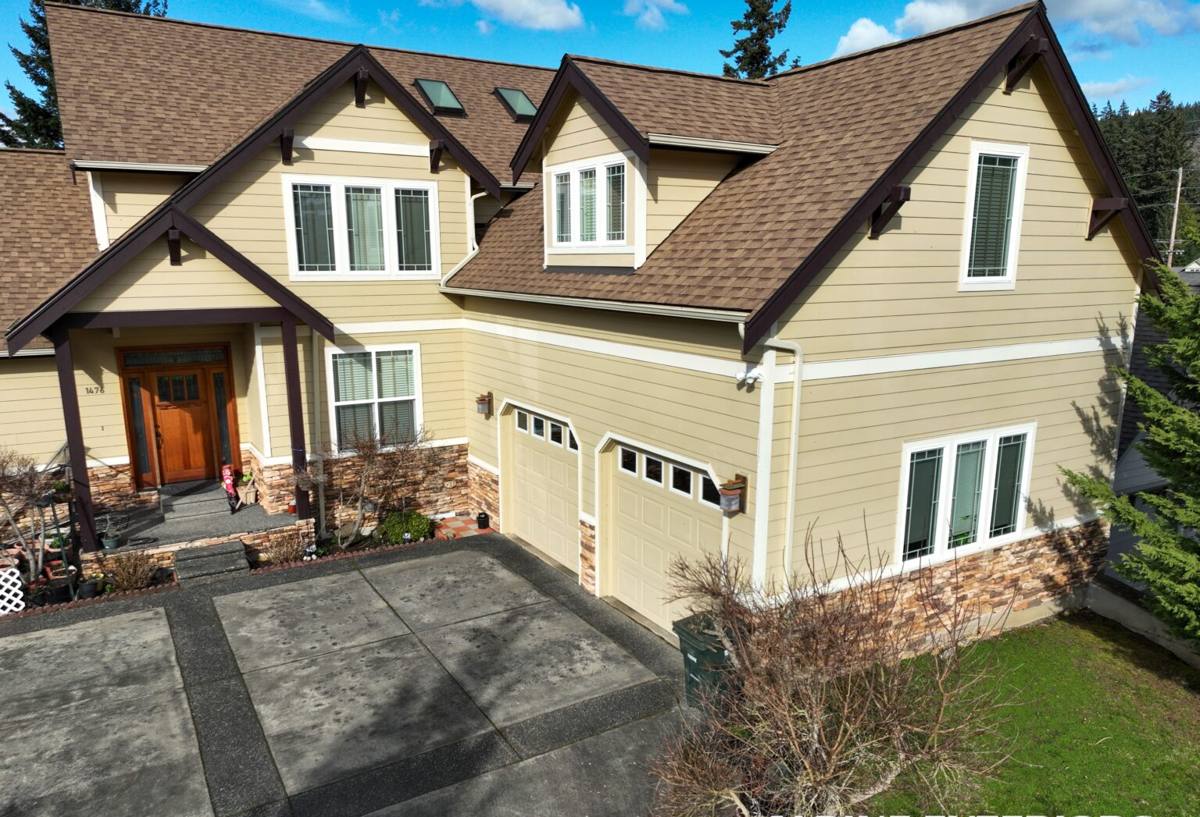
What This Climate Does to Board & Batten Siding
Whatcom County's weather isn't dramatic, but it's relentless. Salt-laden air moving in off Puget Sound and the Salish Sea corridor, months of driving rain, and shade from mature trees combine to create conditions where anything organic — cedar boards, primed wood trim, even some engineered wood products — stays damp far longer than it should. That extended dampness is what feeds moss, mildew, and eventually rot, especially at the joints and seams where board and batten siding is most vulnerable.
Board and batten has more seams than a standard lap profile — every batten strip creates a vertical joint — which means more places for water to find its way behind the cladding if the installation isn't detailed correctly. In a drier climate that might not matter much. In Sedro-Woolley, where a wall can stay wet for days after a storm rolls through, those seams need to be built to actively shed water, not just look good.
Why Moss Season Matters More Here Than People Think
Moss doesn't just sit on the surface — on porous or textured materials it holds moisture against the substrate for extended periods. Over a few seasons, that constant damp exposure is what breaks down wood fiber and paint film. A siding material that doesn't feed moss growth, and a finish that doesn't give it anything to grip, is a much better long-term bet than fighting it every fall with a pressure washer.
Why We Only Install James Hardie for This Profile
Board and batten can be built out of several materials — cedar boards, primed wood, LP SmartSide, vinyl trim systems, or fiber cement. We've made a deliberate call to install James Hardie fiber cement exclusively, and for board and batten specifically, that decision matters even more than it does for standard lap siding.
Fiber cement doesn't absorb water the way wood-based products do, it doesn't provide organic material for moss and mildew to feed on, and it's non-combustible — a genuine consideration given how much wildfire smoke and ember exposure the region has seen in recent summers. James Hardie's HardiePanel vertical siding, paired with engineered fiber cement battens, gives us a board and batten look with a material that's engineered for exactly the wet, marine-influenced climate Sedro-Woolley sits in.
ColorPlus Finish and HZ5 Engineering
Two details matter more than most homeowners realize. First, James Hardie's ColorPlus factory finish is baked on and backwacked before the panels ever reach the job site, which means the finish itself resists the fading and moisture intrusion that field-applied paint on wood battens eventually suffers. Second, Hardie's HZ5 product line is engineered for the Pacific Northwest's specific combination of rain volume and humidity — it's not a one-size-fits-all product shipped in from a warmer, drier climate zone.
What Correct Board & Batten Installation Actually Involves
The visual result of board and batten is simple, but the assembly behind it is where jobs succeed or fail. A correct install includes:
- A fully lapped, continuous weather-resistive barrier (WRB) behind the panel, with every penetration properly flashed before any siding goes up
- Rainscreen furring or a drainable house wrap that lets water that gets behind the panel drain and the wall cavity breathe, rather than trapping moisture against the sheathing
- Battens fastened with corrosion-resistant fasteners at the correct spacing, following Hardie's published fastening schedule rather than "what looks right"
- Proper gaps at the bottom of the wall, around windows and doors, and at inside/outside corners to allow for expansion and drainage
- Caulking only where Hardie's install instructions call for it — over-caulking a board and batten wall can trap moisture just as easily as under-caulking it
- Correct flashing at every horizontal transition — roof lines, window heads, deck ledgers — since these are the spots most likely to leak in a driving rain
Skipping any one of these steps might not show up as a problem in year one. It shows up in year five or six, usually as a soft spot at a bottom corner or staining that won't wash off around a window. That's the failure mode we're most often called out to fix on homes where board and batten was installed without a rainscreen gap or without proper flashing behind the battens.
Comparing Batten Material Options
Homeowners sometimes ask why we don't mix materials — for instance, fiber cement panels with painted wood battens, which costs less up front. Here's how the common options actually compare over time in this climate:
| Batten Material | Moisture Behavior | Maintenance | Expected Service Life |
|---|---|---|---|
| Cedar or primed wood battens | Absorbs water at cut ends and joints; swells and shrinks seasonally | Repainting every 3-6 years; ongoing caulk maintenance | 10-20 years before significant repair |
| Vinyl trim battens | Sheds surface water but doesn't manage wall-cavity moisture; can warp in heat/cold cycling | Low, but limited repair options if damaged | 15-25 years, color fades over time |
| James Hardie fiber cement battens | Dimensionally stable, doesn't swell/shrink with moisture, factory-sealed edges | Occasional wash-down; no repainting needed with ColorPlus finish | 30+ years to manufacturer warranty terms |
The upfront cost of an all-fiber-cement system is higher than a mixed-material approach, but the maintenance savings and moisture performance are exactly why we don't offer the mixed option — we'd rather turn down a lower-cost job than install something we know will need attention again in a few years.
Our Process, Start to Finish
A board and batten replacement or new install on a Sedro-Woolley home generally follows the same sequence:
- On-site assessment — we look at the existing wall assembly, check for hidden moisture damage behind current siding, and confirm the substrate is sound before quoting anything
- Detailed proposal — panel and batten spacing, color selection from the Hardie ColorPlus palette, and a clear scope covering flashing, WRB, and rainscreen details
- Tear-off and prep — removal of old siding, repair of any damaged sheathing found underneath, and installation of a continuous WRB
- Flashing and rainscreen installation — every window, door, and horizontal transition flashed before panels go up
- Panel and batten installation — following James Hardie's published fastening and spacing specifications for our climate zone
- Final walkthrough — checking caulk lines, corners, and trim details with the homeowner before calling the job complete
We don't shortcut the prep steps to get to the visible part of the job faster. The parts nobody sees — the WRB lap, the flashing behind the first batten, the gap at the base of the wall — are the parts that determine whether the siding is still performing well in fifteen years.
Signs Your Current Siding Needs Attention
Whether you have older wood board and batten, vinyl, or another fiber cement product already on your home, watch for these signs that it's time for an inspection:
- Soft or spongy spots when you press on the wall near the bottom courses or around window trim
- Persistent moss or algae growth that returns within weeks of cleaning
- Visible gaps or cupping at the battens where they meet the panel
- Paint that's peeling or bubbling rather than just fading
- Staining below window sills or roof-wall intersections after a storm
- Increased heating bills or drafts near exterior walls, which can point to a compromised weather barrier
Any one of these on its own isn't necessarily an emergency, but they're worth having looked at before the next wet season sets in.
Why Local Experience in Sedro-Woolley Matters
Board and batten performance isn't just about the product — it's about how it's detailed for the specific site conditions. A crew that regularly works homes in Sedro-Woolley and the broader Chuckanut area already understands how the local combination of rainfall, tree cover, and seasonal moss growth affects wall assemblies, and adjusts flashing and drainage details accordingly rather than applying a generic install method built for a drier region. That local pattern recognition — knowing which wall orientations take the worst weather, which roof-wall intersections tend to be trouble spots in this county — comes from doing the work here repeatedly, not from a manual.
Maintenance After Installation
One of the practical benefits of a correctly installed James Hardie board and batten system is how little ongoing maintenance it asks for. A yearly rinse to knock down surface grime, a visual check of caulk lines at penetrations, and prompt attention to any gutter or downspout issues that could dump extra water onto a wall section covers most of what's needed. There's no repainting cycle to plan around, and the ColorPlus finish is engineered to hold its color well beyond what field-applied paint typically manages in this climate.
If you're weighing board and batten siding for a home in Sedro-Woolley or elsewhere in the Chuckanut area, we're happy to walk your property, look at what's there now, and talk through what a correctly built wall assembly would look like for your specific site. Reach out for a free, no-pressure estimate using the form below.