 Chuckanut Exterior
 Roofs in Sedro-Woolley Work Harder Than People Realize
A roof in this part of Whatcom County isn't just shedding the occasional shower. It's dealing with long stretches of driving rain that push water sideways under laps and flashing, a steady drift of salt-laden marine air off the Sound that speeds up corrosion on fasteners and metal flashing, and a moss season that can run most of the year on shaded, north-facing slopes. None of these things ruin a roof overnight. They work slowly, at the seams, the flashing, and the fastener heads, until a small weak point turns into a leak inside the house. That's the pattern we see over and over on Sedro-Woolley homes: a roof that looks fine from the driveway but has two or three areas quietly failing.
Roof repair done right in this climate isn't about slapping a patch of sealant over a stain and calling it done. It's about finding where water is actually getting in, understanding why that spot failed, and fixing it in a way that holds up through the next several wet seasons — not just the next dry week.
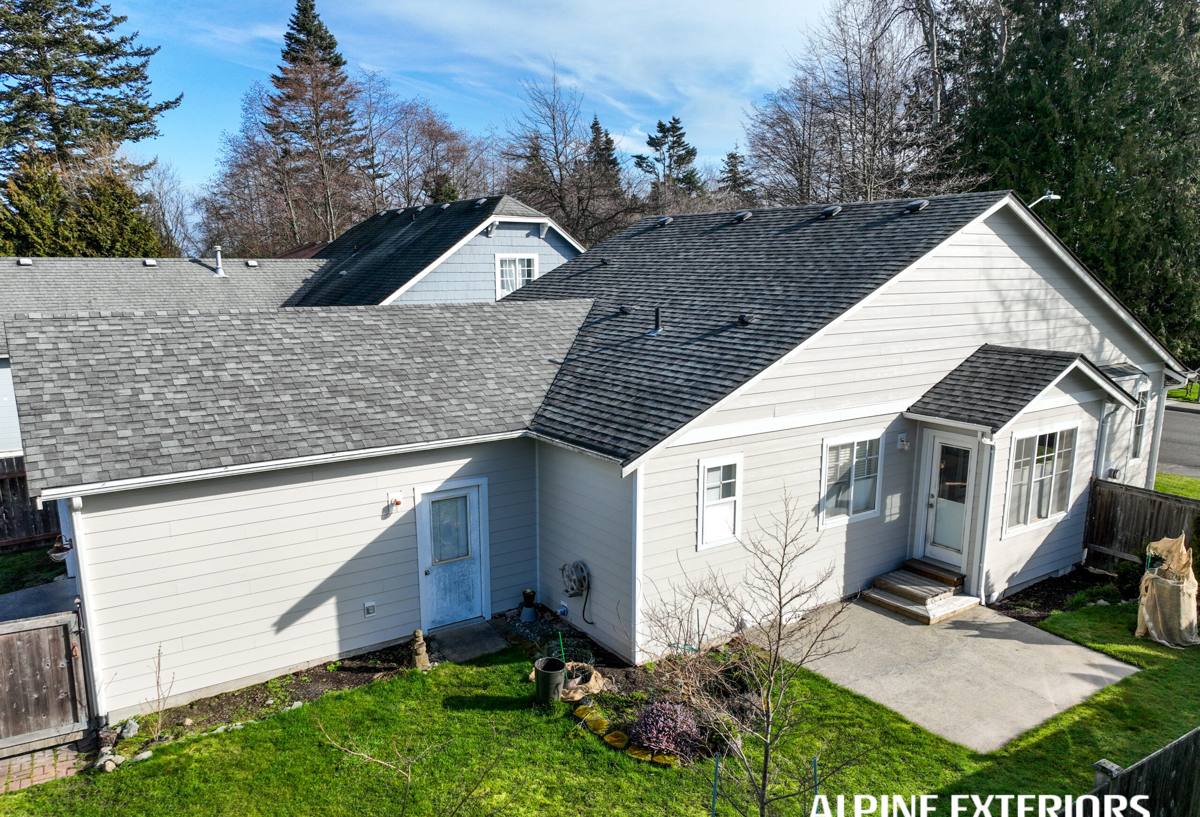
Signs a Sedro-Woolley Roof Needs Repair
Most roof problems announce themselves quietly before they become expensive. Homeowners in this area should watch for:
- Water stains on ceilings or in the attic, especially after a stretch of wind-driven rain
- Granules collecting in gutters or at downspout outlets, a sign asphalt shingles are wearing thin
- Moss ridges building up along shaded slopes or in valleys where debris collects
- Lifted, cracked, or curling shingles, particularly on the roof faces that catch the most weather
- Rusted, loose, or visibly corroded flashing around chimneys, vents, and skylights
- Daylight visible through the roof deck when viewed from inside the attic
- A musty smell in upper rooms or closets, which often means moisture is trapped somewhere it shouldn't be
Any one of these on its own doesn't mean the whole roof is failing. It usually means one section needs attention before it spreads.
What a Correct Roof Repair Actually Involves
Finding the Real Source, Not Just the Symptom
Water almost never shows up inside the house directly below where it entered the roof. It travels along rafters, sheathing, and underlayment before it drips somewhere visible. A repair that starts by patching the ceiling stain instead of tracing the water's actual path is a repair that fails again within a season or two. Proper diagnosis means getting on the roof, checking the attic side from underneath when possible, and following the water back to its actual entry point — usually a flashing detail, a fastener, or a seam that's opened up.
Flashing and Underlayment Come First
In a climate with this much wind-driven rain, flashing does more work than the shingles themselves. Step flashing at walls, counterflashing at chimneys, and the underlayment beneath valleys and around penetrations are usually where a repair actually needs to happen, even when the visible damage is on the shingle field above. Replacing a shingle without correcting the flashing or underlayment underneath it is a cosmetic fix, not a repair.
Matching Materials and Fastening Correctly
Mismatched shingles, incorrect nail placement, or fasteners that aren't rated for coastal exposure all shorten the life of a repair. We match materials to what's already on the roof where possible, use fasteners suited to the salt-air exposure common near the Sound, and fasten according to the manufacturer's pattern rather than however is fastest — a shortcut that shows up as blow-offs in the next windstorm.
Common Roof Repair Issues We See in Sedro-Woolley
| Issue | Typical Cause | What the Fix Involves |
|---|---|---|
| Leak at chimney or wall flashing | Flashing corroded, caulked instead of properly lapped, or sealant dried and cracked | Remove and re-flash with correct step and counterflashing, not just re-caulking |
| Leak in a valley | Debris and moss holding moisture against the valley, worn underlayment | Clear debris, inspect and replace valley underlayment/metal, restore proper water path |
| Curling or missing shingles | Age, wind exposure, or granule loss from years of driving rain | Replace affected shingles, check surrounding fasteners and underlayment condition |
| Soft or stained roof deck | A slow leak that went unnoticed for a season or more | Cut back to sound decking, replace damaged sheathing, then repair the surface layer |
| Rust streaks near vents or fasteners | Salt air accelerating corrosion on metal components | Replace corroded flashing or fasteners with coastal-rated materials |
Our Repair Process, Start to Finish
1. On-Roof and Attic Inspection
We walk the roof and, where access allows, check the attic side too. We're looking for the actual point of failure, not just the visible symptom, and we check the overall condition of the roof so we can tell you honestly whether a repair is the right call or whether you're better served knowing about bigger issues now instead of finding them again next winter.
2. A Written, Specific Scope
Before any work starts, you get a clear explanation of what failed, why, and exactly what we plan to do about it — not a vague line item. If there's a decision to make between a targeted repair and addressing a larger area, we lay out the honest trade-offs so you can decide with real information.
3. The Repair Itself
We fix the actual cause: correcting flashing details, replacing damaged underlayment or decking, and matching shingles or roofing material as closely as the existing roof allows. We don't leave a repair half-finished or rely on sealant to do a flashing detail's job.
4. Cleanup and a Final Walkthrough
We clear debris and old material from the site, and before we consider the job done, we walk you through what was repaired and why, so you understand the work rather than just taking our word for it.
Repair or Replace? How We Help You Decide
Not every roof problem calls for the same answer, and a contractor who only offers one option isn't giving you the full picture. Here's generally how the decision breaks down:
| Factor | Leans Toward Repair | Leans Toward Replacement |
|---|---|---|
| Age of roof | Well within its expected lifespan | Nearing or past its expected service life |
| Extent of damage | Isolated to one or two areas | Spread across multiple slopes or recurring in different spots |
| Decking condition | Sound, with only surface-level issues | Soft, stained, or damaged in multiple areas |
| History of past repairs | First real issue on this roof | Pattern of repeated leaks and patch jobs over the years |
Our goal is to spend your money where it actually solves the problem. A roof with years of good life left usually just needs a correct, targeted repair. A roof that's been patched repeatedly or is genuinely at the end of its service life deserves an honest conversation about replacement instead of another short-term fix.
Moss, Algae, and Ongoing Roof Health
Because moss season runs long in this area, a roof repair is often a good moment to address what's feeding future problems, not just the current leak. Moss holds moisture against shingles and flashing long after the rain stops, which is exactly the kind of slow, sustained wetness that shortens a roof's life and creates the next leak. Clearing moss growth, addressing overhanging branches that keep a slope shaded and damp, and keeping gutters and valleys free of debris all reduce how often you need a repair call in the first place. We're happy to point out these maintenance factors during a repair visit, even on parts of the roof we're not actively working on.
Why Local Experience in Sedro-Woolley Matters
A roof repair crew that already works in and around Sedro-Woolley understands the specific pattern of wear that shows up here: the flashing corrosion tied to salt air drift, the valleys and north slopes that hold moss longest, and the roof details that take the brunt of driving rain in this part of Whatcom County. That familiarity means less time spent guessing and more time spent fixing the actual problem. It also means we're not learning on your roof — we've seen this same combination of climate and roofing conditions on homes near yours, and we bring that experience to every repair we do here.
What to Check Before You Hire Anyone for Roof Repair
- Ask for a specific written scope of work, not a vague verbal estimate
- Confirm they'll inspect the attic side, not just the roof surface, when access allows
- Ask what caused the leak, not just what they plan to patch
- Check that flashing and underlayment issues are addressed, not just covered with sealant
- Make sure materials will be matched appropriately to your existing roof where possible
- Confirm they carry proper insurance and are comfortable answering questions about their process
If you're dealing with a leak, a stain on the ceiling, or just want an honest look at a roof that's been through one too many wet Whatcom County winters, we're glad to come take a look. Our estimates are free and there's no pressure to move forward — just a straight assessment of what's going on and what it would take to fix it right.