 Chuckanut Exterior
 Metal Roofing for Sedro-Woolley Homes
Sedro-Woolley sits in a part of the county where roofs work hard. Long wet stretches through fall and winter, heavy tree cover in a lot of neighborhoods, and the kind of humid air that never fully dries out a north-facing slope all add up over time. Homeowners here tend to come to us after dealing with the same problems on their old roof year after year: moss creeping back no matter how often it's cleaned off, granules washing into the gutters, or a roof that's simply reaching the end of its life faster than it should. Metal roofing is one of the more permanent answers to that cycle, and it's a system we install often enough in this area that we know exactly how it needs to be detailed for local conditions.
This page covers what a metal roof actually needs to hold up around Sedro-Woolley, what a correct installation looks like, and what our process is when you bring us in for an estimate.
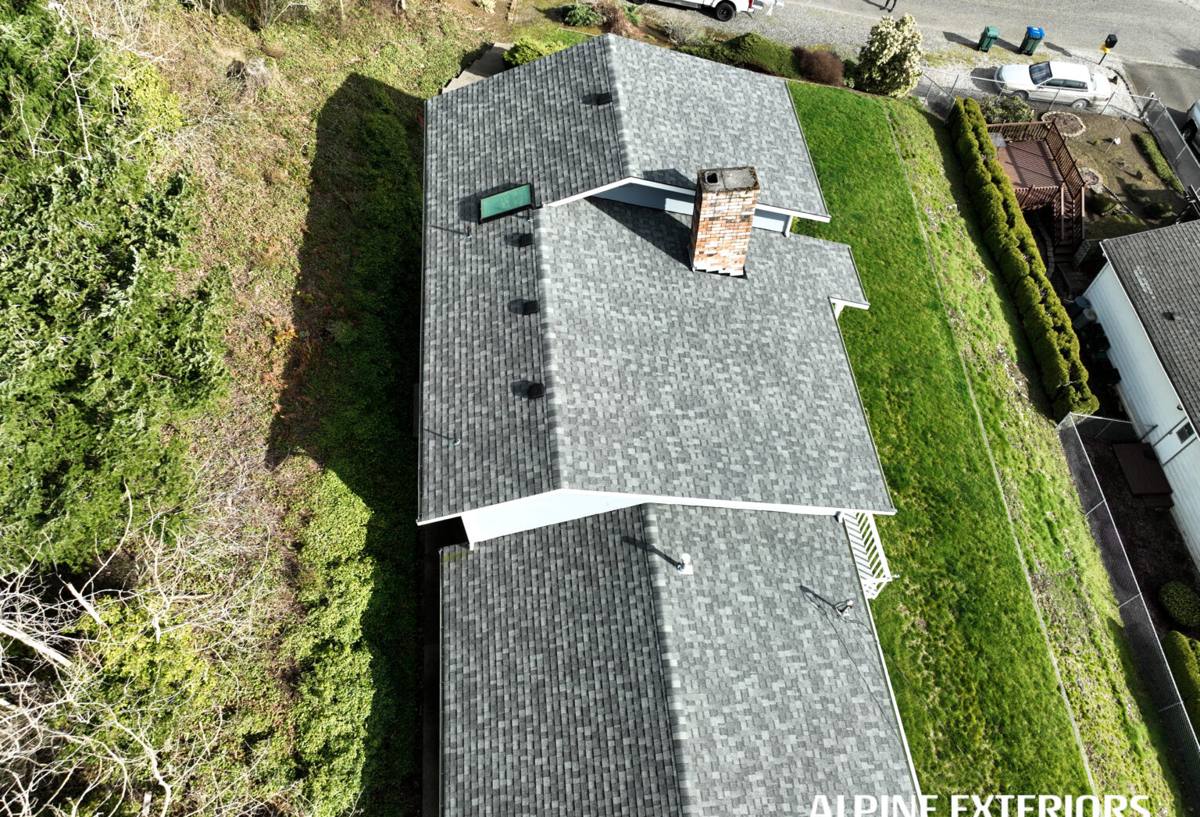
What Local Weather Does to a Roof
A few things define roofing conditions in this part of the county:
- Sustained wet season. Roofs here spend months at a time damp, not just rained on occasionally. That prolonged moisture is what drives moss and moisture-related decking problems more than any single storm.
- Heavy tree cover. Many Sedro-Woolley properties back up to timber or have mature trees close to the roofline, which means more shade, more debris, and slower drying after rain.
- Humidity and limited sun exposure. North- and east-facing slopes in particular can stay damp long after the rest of the roof has dried, which is exactly where moss and algae take hold first.
- Regional exposure. Because our crew also works the coastal stretch near Chuckanut, we pay close attention to fastener and flashing corrosion resistance across every job — the same hardware standards that protect a roof from salt-air exposure closer to the water also protect against the corrosive combination of moisture and organic debris further inland.
None of this is unusual for the region, but it does mean a roofing system needs to be chosen and installed with moisture management as the top priority, not an afterthought.
Why Metal Holds Up Well Here
Metal roofing doesn't solve every problem a house might have, but it addresses the specific issues that wear out roofs in this climate faster than most other materials:
- Nothing for moss to root into. Moss needs a rough, porous surface to establish itself. A smooth painted metal panel gives it far less to grab onto compared to shingle granules or wood shakes, so growth is slower and easier to knock off before it becomes a real problem.
- Water sheds fast. Steep-slope metal panels move water off the roof quickly, which matters during the kind of extended, driving rain this area gets several months a year.
- No granule loss. Asphalt shingles lose surface granules over time, especially under heavy rain exposure, which shortens their UV protection and lifespan. Metal doesn't have that failure mode.
- Long service life. A correctly installed metal roof is a decades-long investment, which matters if you're planning to stay in the home long-term or simply don't want to think about the roof again for a long time.
That said, metal is not the right fit for every house or budget, and we'll tell you honestly if a different approach makes more sense during your estimate.
Metal Roofing Systems We Install
Standing Seam vs. Exposed Fastener
The two systems homeowners in Sedro-Woolley ask about most often are standing seam and exposed-fastener (screw-down) panels. Both are legitimate options, but they behave differently over time, which matters a lot given how much moisture this roof has to deal with.
| Factor | Standing Seam | Exposed Fastener |
|---|---|---|
| Fastening | Concealed clips, no exposed screws | Screws through the panel face |
| Long-term maintenance | Minimal — no gaskets to monitor | Screw gaskets need periodic checking |
| Upfront cost | Higher | More affordable |
| Best fit | Long-term ownership, low-slope sections, high-moisture roofs | Budget-conscious projects, simple roof shapes |
| Typical lifespan | 40–70 years with proper install | 25–40 years, largely dependent on gasket maintenance |
Given how much sustained moisture this area sees, we lean toward recommending standing seam wherever the budget allows, particularly on lower-slope roof sections or valleys where water sits longer. Exposed-fastener panels are still a solid, honest option for the right project — the tradeoff is simply that the screw gaskets are a maintenance item you'll need to stay on top of over the years.
Panel Material and Finish
Most residential metal roofing in this region is steel or aluminum with a factory-applied paint finish. We match panel gauge and finish to the specific roof — a higher-traffic or debris-prone roof under trees benefits from a heavier gauge and a durable finish system, since falling branches and pinecones are a real consideration on wooded lots.
What a Correct Installation Actually Involves
Metal roofing fails prematurely almost exclusively because of installation shortcuts, not because the material itself is weak. In a climate this wet, the details underneath the panels matter as much as the panels themselves.
- Full synthetic underlayment as a secondary moisture barrier, not just felt paper
- Ice-and-water shield style membrane at eaves, valleys, and any low-slope transitions where water can back up
- Properly lapped and sealed flashing at every penetration — chimneys, vents, skylights, wall transitions
- Correct fastener spacing and torque so panels can expand and contract without stress cracking
- Adequate attic and roof ventilation so trapped humidity doesn't condense against the underside of the deck
- Panel layout planned to minimize seams in areas where water flow concentrates, like valleys
Skipping any one of these is usually invisible from the ground and can look fine for a year or two — the problems show up later as leaks, rust streaking at fasteners, or rot in the decking underneath. This is the part of the job that separates a roof that lasts decades from one that needs rework in five years.
Our Process
- On-site inspection. We walk the roof, check the decking condition, look at ventilation, and note anything specific to your property — tree cover, roof pitch, valleys, existing moss or moisture damage.
- Honest recommendation. We'll tell you whether metal is the right call for your roof and budget, walk through panel and system options, and explain the tradeoffs in plain terms — no upselling to a system you don't need.
- Written estimate. A clear scope of work and price, with no vague allowances or surprise add-ons once the job starts.
- Tear-off and deck assessment. Old roofing comes off and the decking gets inspected before anything new goes down — soft or rotted sections get addressed, not covered over.
- Underlayment and flashing. This is the step that actually keeps water out long-term, and we don't rush it.
- Panel installation. Installed to manufacturer spec for fastening, spacing, and expansion allowance.
- Final walk-through. We go over the finished roof with you and make sure everything is clean and correct before we consider the job done.
Cost Factors to Expect
Every roof is different, so we won't quote a number without seeing the property, but these are the main factors that move price up or down on a metal roofing project in this area:
| Factor | Effect on Cost |
|---|---|
| Panel system (exposed fastener vs. standing seam) | Standing seam typically costs more upfront due to labor and concealed-fastener hardware |
| Roof complexity (valleys, dormers, penetrations) | More cuts, flashing, and labor time increase cost |
| Deck condition | Rotted or soft decking found during tear-off adds repair cost not visible before the job starts |
| Existing roof removal | Tear-off of old shingles or shakes adds labor and disposal cost versus a bare deck |
| Roof pitch and access | Steep or hard-to-access roofs take longer and require more safety setup |
| Ventilation upgrades | Adding proper ridge or soffit ventilation where none exists is a worthwhile add, not just an expense |
We'd rather walk you through these variables in person than throw out a broad number that doesn't hold up once we're actually on your roof.
Living with a Metal Roof in This Climate
One of the advantages homeowners notice after switching to metal is how little upkeep it needs compared to what they were doing before. That said, "low maintenance" doesn't mean "no maintenance," especially with this much moisture and tree debris in the mix.
- Clear needles, leaves, and branches out of valleys and off lower slopes a couple times a year, especially after fall leaf drop
- Keep gutters clear so water isn't backing up against eave flashing
- Do a visual check after major windstorms for any lifted panel edges or flashing
- If you have an exposed-fastener system, have the screw gaskets checked periodically — they're the one component that degrades faster than the panels themselves
- Trim back branches that overhang the roof to reduce debris buildup and physical impact damage
Even with minimal upkeep, most homeowners find a well-installed metal roof is far less demanding than the shingle or shake roof it replaced.
Why Hire a Crew That Already Works Sedro-Woolley
Roofing details that work fine in a drier climate don't always hold up here, and a crew that mostly works other regions won't necessarily know that. We work this area regularly, from the coastal edge near Chuckanut inland through Sedro-Woolley, so we're used to detailing roofs for sustained moisture, tree debris, and the moss pressure that comes with heavy shade — not guessing at it from a manual. That's reflected in how we handle underlayment coverage, valley detailing, and ventilation on every job, whether it's a straightforward gable roof or something with more cuts and complexity.
We're also a local presence you can actually reach if a question comes up after the job is done, rather than a crew that did one job in the area and moved on.
If you're weighing metal roofing for a home in Sedro-Woolley, we're happy to come take a look and give you a straight answer on what your roof needs — no pressure, no obligation. Fill out the form below and we'll set up a time to come out.