 Chuckanut Exterior
 Siding Installation Built for the Sedro-Woolley Climate
Homes around Sedro-Woolley take a steady beating from Western Washington weather. It's not one dramatic storm that wears down a house here — it's the accumulation of marine-moist air, long stretches of driving rain, and a moss season that seems to run longer every year. Siding that isn't installed correctly, or wasn't built for this kind of exposure in the first place, starts showing problems well before a homeowner expects to think about replacement. This page covers what siding installation actually needs to get right in this area, what we install and why, and how our process works from first estimate to final walkthrough.
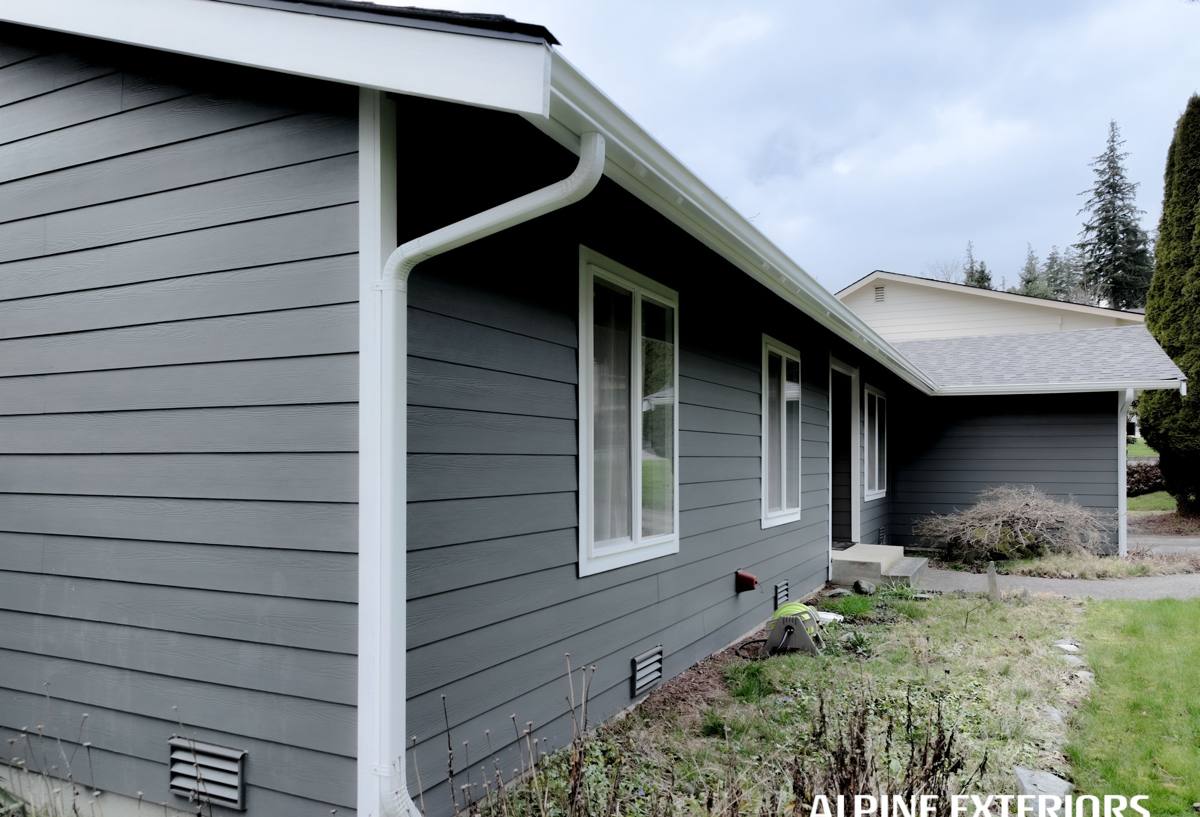
What Salt Air, Rain, and Moss Actually Do to Siding
Every material reacts differently to sustained moisture exposure, and that reaction is the whole story when it comes to siding longevity in this part of the state.
Salt-tinged marine air
Air moving through Western Washington carries a fine load of moisture and salt that settles on exterior surfaces day after day. It doesn't cause dramatic failure overnight, but it accelerates corrosion of fasteners and trim, and it breaks down finishes that weren't engineered to shed it. Over years, that slow chemical wear is what separates siding that still looks sharp at year fifteen from siding that looks tired at year seven.
Driving, wind-blown rain
Rain that falls straight down is manageable for almost any siding product. Rain that's pushed sideways by wind is a different problem — it finds every gap in flashing, every under-lapped seam, and every fastener that backed out a sixteenth of an inch. Most siding failures we see aren't failures of the siding material itself; they're failures of the water management system behind it.
A long moss and mildew season
Shade, humidity, and mild temperatures are ideal growing conditions for moss, algae, and mildew for a large part of the year. Porous or absorbent siding materials give these organisms something to root into. Once moss or mildew gets a foothold on siding, it holds moisture against the surface constantly, which speeds up whatever decay process the material is already prone to.
What a Correct Siding Installation Actually Involves
The siding panel itself is maybe half the story. The other half is everything underneath it, and that's where most long-term problems start.
- Weather-resistive barrier installed and lapped correctly, with no punctures left unsealed
- Flashing at every window, door, roofline, and penetration, integrated with the barrier — not just caulked over the top
- Rainscreen or proper drainage gap so incidental moisture behind the siding can actually get out instead of sitting against the wall sheathing
- Correct fastener type, spacing, and placement per the manufacturer's installation instructions — this is the single most common thing done wrong on job sites we've inspected
- Proper clearances from grade, roofing, and decking so siding isn't sitting in standing water or constant splash-back
- Factory-finished or correctly field-sealed cut edges, since an exposed, unsealed cut edge is where moisture intrusion usually begins
Skip any one of these steps and the siding on the outside can look perfect while the wall assembly behind it is already taking on water. In a climate like this one, that gap between "looks fine" and "is fine" shows up faster than homeowners expect.
Why We Install Only James Hardie Fiber Cement
We made a standing decision to install James Hardie fiber cement siding exclusively, and we don't install vinyl, LP SmartSide, primed wood, cedar, or other fiber cement brands. That's not a marketing position — it's a maintenance and performance call based on what actually holds up under sustained coastal moisture.
Fiber cement is non-combustible, dimensionally stable, and doesn't absorb water the way wood-based products can. James Hardie's ColorPlus factory finish is baked on under controlled conditions rather than field-applied, which gives it more consistent coverage and better resistance to fading and moisture wear than a job-site paint job. Hardie also engineers regional product lines — its HZ5 and HZ10 systems are built around the humidity, rain, and freeze-thaw profile of specific climate zones, which matters in a region where moisture exposure is a year-round condition rather than a seasonal one.
None of this means other products are junk. Vinyl is inexpensive and low-maintenance in the sense that it doesn't need painting; wood has a warmth to it that some homeowners genuinely prefer. But vinyl can warp and fade under UV and temperature swings, its seams and J-channels are a common water entry point, and it's rarely a match for fiber cement's fire and impact resistance. Wood-based products need diligent, ongoing maintenance to keep moisture out, which is a real and recurring cost most homeowners underestimate when they're comparing sticker prices. We'd rather install one product we can stand behind completely than offer several and hope each one gets maintained perfectly for thirty years.
Comparing Siding Materials for This Climate
| Material | Moisture behavior | Maintenance | Fire resistance | Typical lifespan here |
|---|---|---|---|---|
| James Hardie fiber cement | Doesn't absorb and swell; engineered HZ lines for wet climates | Occasional wash; repaint only if desired, not required | Non-combustible | 30+ years with correct install |
| Vinyl | Sheds water but seams and channels are entry points; can warp | Low, but cracks/fades over time | Combustible, can melt/deform | 15-25 years, shorter with UV/impact damage |
| Primed wood / cedar | Absorbs moisture; prone to rot without diligent upkeep | High — recoating and caulking on a regular cycle | Combustible | Highly variable, maintenance-dependent |
| LP SmartSide (engineered wood) | Resin-treated but still wood-based; edge sealing is critical | Moderate; field-cut edges need diligent sealing | Combustible | Varies with installation quality |
Our Installation Process
Every job follows the same sequence, whether it's a full re-side or a repair on a section of wall:
- On-site assessment — we look at existing siding, wall sheathing condition, trim, flashing, and any moisture damage before quoting anything
- Written scope and product selection — plank profile, color, and trim details specified up front, no surprises mid-project
- Tear-off and substrate check — old siding comes off and we inspect sheathing underneath for rot or prior water intrusion before covering it back up
- Weather barrier and flashing installation — done to manufacturer spec, not shortcuts, since this is the layer that actually keeps water out
- Hardie panel installation — correct fastening, spacing, and clearances per James Hardie's published instructions
- Trim, caulking, and touch-up — factory finish matched and sealed at cut edges and joints
- Final walkthrough — we go over the completed work with the homeowner before calling the job done
Signs Your Current Siding Is Already Failing
Homeowners in Sedro-Woolley often call us after noticing one of these — and by the time any of these show up, there's usually more going on behind the wall than what's visible on the surface:
- Persistent moss or dark streaking that comes back within weeks of cleaning
- Soft or spongy spots when you press on the siding, especially near the bottom courses
- Visible warping, buckling, or gaps at panel seams
- Paint that's peeling or bubbling repeatedly in the same spots
- Rising utility bills that don't match any other change in the home
- Interior wall staining or a musty smell near exterior walls
Why a Crew That Already Works Sedro-Woolley Matters
Siding installation isn't just a product decision — it's a local execution decision. A crew that regularly works Sedro-Woolley and the surrounding Whatcom County area already understands how to sequence a job around the region's rain patterns, how to detail flashing for the wind-driven rain events that are normal here, and what wall assemblies typically look like on homes of a certain age in this area. That local repetition matters more than it sounds like it should: it's the difference between a flashing detail that's "technically correct" and one that's been proven to hold up through an actual wet season here.
It also means straightforward permitting and inspection coordination, since local crews already have working relationships with the process rather than learning it on your job.
Warranty and Long-Term Value
James Hardie backs its products with a strong, transferable limited warranty — a meaningful detail if you plan to sell the home down the road, since new owners inherit that coverage rather than starting from zero. Warranty coverage assumes correct installation per manufacturer specifications, which is exactly why the installation details covered above aren't optional extras — they're what keeps the warranty valid and the siding performing the way it's designed to.
If your Sedro-Woolley home is due for new siding, or you're not sure whether what you have is holding up the way it should, we're happy to take a look. Estimates are free, there's no pressure, and you'll get a straight answer about what your home actually needs.