 Chuckanut Exterior
 Deck Replacement Built for Sedro-Woolley's Climate
A deck in this part of Western Washington lives a harder life than most homeowners realize. Even homes well inland from the water still deal with driving rain for much of the year, and once fall hits, a long moss season sets in on any horizontal wood surface that doesn't get regular sun or airflow. Closer to the water around Chuckanut and the Samish Bay side of Whatcom County, salt-laden air adds another layer of wear on fasteners and finishes. Sedro-Woolley sits a bit further inland, but the same driving rain and moss cycle that shapes decks across Skagit and Whatcom County applies here just as much.
That combination — near-constant moisture, low winter sun angles, and organic growth that holds water against the deck surface — is why decks in this area tend to fail earlier than the same materials would in a drier climate. A deck replacement done right for a Sedro-Woolley home isn't just about swapping old boards for new ones. It's about building a structure that sheds water, resists rot at the connection points, and doesn't turn into a slip hazard every October.
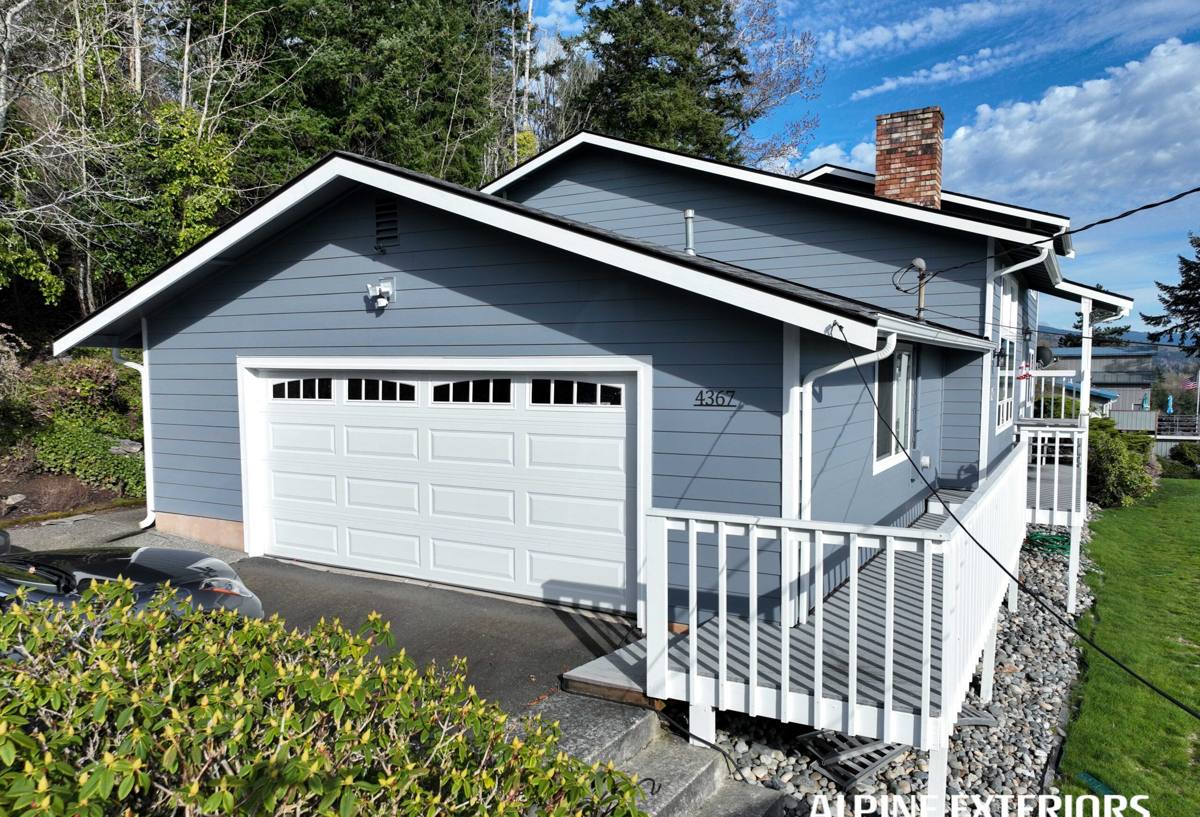
Signs Your Deck Needs Replacing, Not Just Repair
Not every tired-looking deck needs a full replacement. But there's a point where patching boards is throwing money at a structure that's already failing underneath. Some signs point clearly toward replacement rather than repair:
- Soft, spongy, or discolored decking in multiple areas, not just one board
- Rot or soft wood where the deck attaches to the house (the ledger board)
- Persistent moss or algae staining that comes back within weeks of cleaning
- Rust streaking around nail or screw heads, or fasteners backing out on their own
- Wobbly railings, posts that flex, or stairs that feel less solid than they used to
- A deck more than 15-20 years old built with older fastening or flashing standards
- Visible gaps or separation where the deck meets the house siding or foundation
If you're only seeing one or two of these on an otherwise sound structure, targeted repair may still make sense. When several show up at once, especially rot at the ledger or framing, replacement is usually the more honest recommendation — repeatedly patching a failing frame just delays the same conversation a year or two down the road.
What a Correct Deck Replacement Actually Involves
Framing and Ledger Connection
The ledger board — where the deck attaches to your house — is the single most important connection on the entire structure, and it's also the part most exposed to trapped moisture if it's flashed incorrectly. A correct replacement means proper ledger flashing that directs water away from the house band joist rather than letting it wick in behind the siding. In a climate that sees this much rain, a poorly flashed ledger is often the reason a "10-year-old deck" turns out to have rot going back years.
Decking Material and Fastening
Board choice, gap spacing, and fastener type all affect how well a deck handles a wet climate. Tight or inconsistent gapping traps debris and holds moisture against the board edges — exactly the conditions moss needs to take hold. Fasteners matter too: the wrong screw or nail in a damp, sometimes salt-influenced environment corrodes and stains the decking around it within a season or two.
Railings and Structural Hardware
Washington building code has specific requirements for railing height, baluster spacing, and guard strength, and those requirements get enforced at inspection. A replacement is also the right time to upgrade to code-compliant structural hardware — proper joist hangers, hurricane ties, and post bases rated for exterior exposure — rather than reusing whatever fasteners happened to be on hand when the original deck went up.
Choosing the Right Decking Material for This Climate
There's no single "best" decking material for every homeowner — it depends on budget, maintenance tolerance, and how much you want the deck to look like natural wood. Here's an honest comparison for a climate defined by moisture and moss:
| Material | Moisture Behavior | Maintenance | Typical Lifespan |
|---|---|---|---|
| Pressure-treated wood | Absorbs and releases moisture; prone to cupping and checking over time | Annual cleaning and periodic sealing/staining | 10-15 years before major issues |
| Cedar | Naturally rot-resistant but still needs sealing to stay that way | Sealing every 1-2 years, regular cleaning | 15-20 years with upkeep |
| Composite decking | Doesn't absorb water like wood, but surface grip and drainage matter in moss-prone areas | Periodic washing; no staining or sealing required | 25+ years depending on brand and installation |
| PVC decking | Fully moisture-resistant surface; least prone to trapping water in the board itself | Occasional washing | 25-30+ years, product-dependent |
We don't push one material on every homeowner. Real wood has a warmth composite can't fully replicate, and plenty of homeowners are happy to keep up with sealing it. What we do push back on is skipping maintenance planning altogether — a wood deck sold as "low maintenance" in this climate is setting the homeowner up for disappointment. Whatever material you choose, we'll walk you through what upkeep it actually requires here, not the marketing version.
Our Deck Replacement Process
- On-site evaluation. We walk the existing deck, check the ledger and framing condition, and talk through what's driving the replacement.
- Material and design conversation. We go over decking options, railing style, and layout changes if you want them, with straight talk about cost and maintenance for each.
- Permitting. We handle the permit application and coordinate inspections through the appropriate local building department for your address.
- Demolition and disposal. The old deck comes down and old material is hauled off — we don't leave debris piled in the yard.
- Framing and flashing. New ledger flashing, joists, and structural hardware go in to current code, sized correctly for the deck's actual load.
- Decking, railing, and stairs installed. Fastening pattern and board spacing are set with drainage and moss resistance in mind, not just appearance.
- Final walkthrough and inspection. We review the finished deck with you and make sure it passes any required final inspection.
Permits, Code, and Local Considerations
Most deck replacements that involve rebuilding the structure — not just swapping surface boards on an otherwise sound frame — require a building permit, and that means an inspection of the framing and ledger connection before the decking goes down. Depending on where in the Sedro-Woolley area a property sits, that permit may run through the City of Sedro-Woolley or the applicable county building department, and setback rules can vary by lot. We handle that process as part of the job rather than leaving it for the homeowner to sort out, and we build to the code that will actually pass inspection in this area, not a generic national baseline.
Cost Factors in a Sedro-Woolley Deck Replacement
Every deck is different, so we won't quote a number without seeing the site, but the factors that move the price up or down are consistent:
| Factor | Effect on Cost |
|---|---|
| Deck size and shape (multi-level, angles, cutouts) | Larger and more complex footprints cost more in both material and labor |
| Decking material chosen | Pressure-treated wood is the lowest upfront cost; composite and PVC cost more upfront but less in ongoing maintenance |
| Framing and ledger condition | Rot found at the ledger or support posts adds repair scope before rebuilding can start |
| Railing style and material | Cable, glass, or composite railing systems cost more than standard wood balusters |
| Height and stairs | Elevated decks with stairs require more structural framing and code-compliant guard rails |
| Site access | Tight or hard-to-reach yards can add time for material handling and demolition |
Why Hire a Crew That Already Works in Sedro-Woolley
Building a deck that holds up in a dry climate and building one that holds up here are two different jobs, even if the blueprint looks the same on paper. A crew that regularly works around Chuckanut, Sedro-Woolley, and the surrounding Whatcom and Skagit County area already knows which fastening details actually matter locally, what the permitting process looks like for this area, and how much moss and moisture pressure a deck surface needs to be built to handle. That's not something you can fully substitute with a national warranty or a generic installation manual — it comes from doing this work, in this weather, repeatedly.
It also means we're not guessing at how a material will perform two winters from now. We've seen how different decking products, fasteners, and finishes actually hold up through a full wet season here, and we'll tell you honestly if something looks good in a showroom but performs poorly once moss and standing water get involved.
Maintaining Your New Deck Through the Moss Season
A well-built deck still needs some upkeep to get its full lifespan in this climate. A few habits go a long way:
- Sweep leaves and debris off the deck regularly in fall, especially between boards
- Rinse or wash the surface periodically to slow moss and algae buildup before it stains
- Keep gutters and downspouts clear so runoff isn't draining directly onto the deck
- Trim back overhanging branches to let more sun and airflow reach the surface
- Check railings and stair connections once a year for looseness before it becomes a safety issue
None of this requires major effort, but skipping it is exactly how a well-built deck starts looking like a poorly built one within a few years.
If your deck in the Sedro-Woolley area is showing rot, moss buildup, or just isn't safe to stand on anymore, we're happy to take a look and give you a straight, no-pressure estimate. Use the form below to get started.