 Chuckanut Exterior
 Roof Repair for Blanchard Homes
Blanchard sits in that stretch of Whatcom County where the roofs work harder than most people realize. You're close enough to the water to catch salt-laden air off Samish Bay and the Sound, tucked against timber and hillside that keeps things shaded and damp, and squarely in the path of the driving rain that rolls through this corner of the Pacific Northwest most of the year. Add a moss season that can stretch from fall through spring, and you've got a roof that's under more or less constant low-grade stress. We repair roofs in Blanchard and the surrounding Chuckanut area regularly, and the patterns we see here are specific to this ground — not generic wear you'd find on a roof in a drier, more open part of the county.
This page is about roof repair specifically — not full replacement, not general roofing services. If your roof has a leak, damaged flashing, lifted shingles, or moss and moisture problems that haven't yet forced a full tear-off, this is the right service and the right way to think about it.
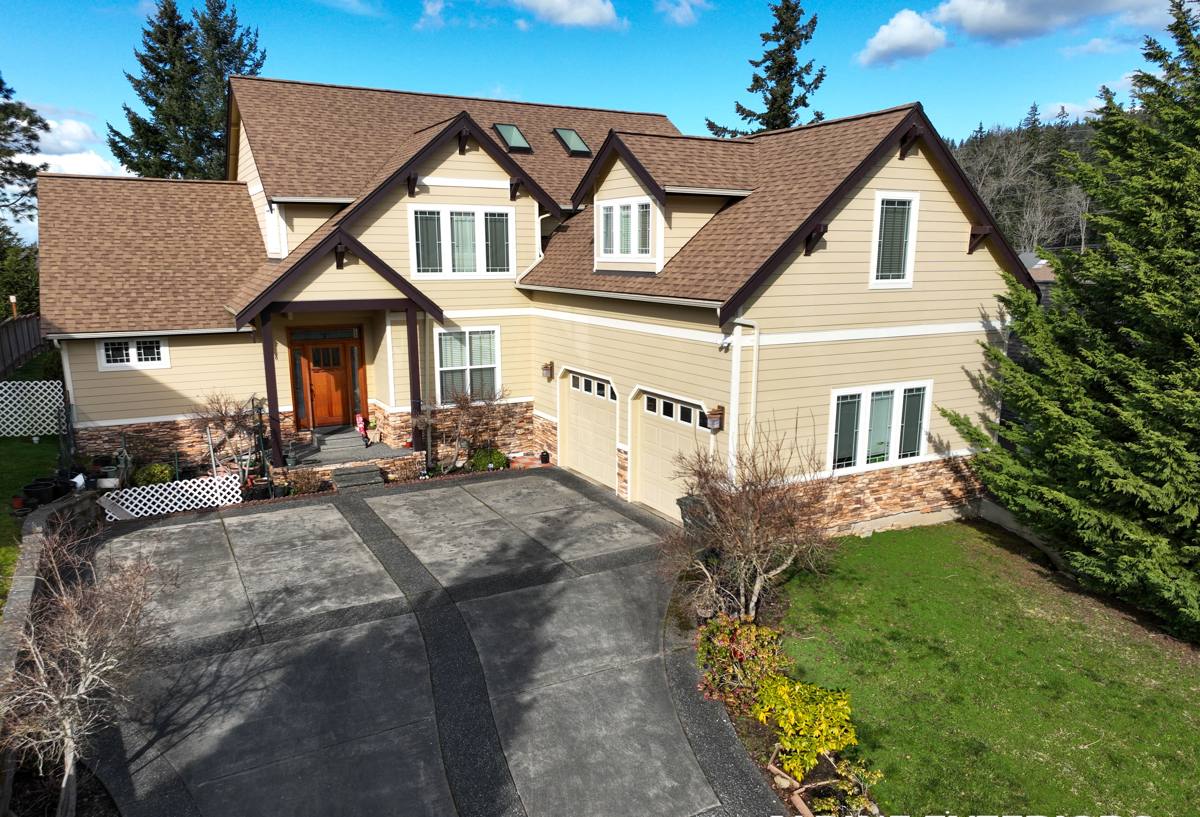
What Blanchard's Climate Does to a Roof
A few things happen to roofs out here that don't happen the same way in drier inland areas:
Salt Air and Metal Fatigue
Homes closer to the water take on airborne salt that accelerates corrosion on exposed metal — flashing, fasteners, gutter hardware, and any exposed roofing nails. Corrosion doesn't announce itself. It shows up years later as a rust-streaked flashing joint or a fastener that's lost its grip, right around the time a leak starts.
Driving Rain and Wind-Driven Water
Straight-down rain is easy for any roof to shed. Driving rain — rain pushed sideways by wind off the water or funneled through the terrain around Chuckanut — is a different problem. It finds its way under shingle laps, around poorly sealed flashing, and into any gap that a calmer rain would never reach. A roof that's "fine" in a light shower can leak in a real Whatcom County wind event.
Moss and Sustained Moisture
The tree cover and shade common around Blanchard properties keep roof surfaces damp longer after every rain. That moisture holds moss spores, and moss doesn't just sit on top of shingles — it works into the granule layer, lifts shingle edges, and holds water against the roof deck. A moss-covered roof is a roof that's staying wet days longer than it should after every storm.
Common Repair Calls We See Locally
| Issue | Typical Cause in This Area | Why It Matters |
|---|---|---|
| Leak at flashing (chimney, vent, skylight) | Corroded or sealant-failed metal from salt air and age | Small leaks here often mean larger, hidden deck damage |
| Lifted or missing shingles | Wind-driven rain and gusts off the water working under edges | Exposed underlayment fails fast once shingles are gone |
| Moss buildup and granule loss | Shaded, damp roof sections that don't dry between rains | Shortens shingle life and can mask deck rot underneath |
| Rusted fasteners or gutter hardware | Salt exposure over years | Loose fasteners lead to lifted materials and water entry |
| Soft or stained decking near a repair area | Long-term slow leak, often unnoticed until interior signs appear | Determines whether it's a patch or a larger structural repair |
What a Correct Repair Actually Involves
A roof repair done right isn't just sealing the spot where water is showing up inside. Water travels — it can enter at one point on the roof and show up on a ceiling several feet away. A proper repair starts with tracing the actual entry point, not just treating the symptom.
Diagnosis First
We look at the roof surface, the flashing details, and — where accessible — the attic or roof deck from underneath. Interior staining tells you there's a problem; it doesn't reliably tell you where the water is getting in.
Address the Cause, Not Just the Symptom
If moss has lifted a section of shingles, the repair has to include moss and debris removal, not just a shingle swap. If flashing has corroded from salt exposure, the fix is new flashing with corrosion-resistant fasteners — not a bead of sealant over rusted metal, which fails again within a season or two out here.
Check the Deck
Any repair area that's been wet for a while gets a look at the roof decking underneath. Soft, delaminated, or stained decking needs to be addressed as part of the repair, or the new roofing material above it won't hold up.
Match the Existing Roof
Repairs should tie into the surrounding roofing material correctly — proper shingle lap, flashing integration, and fastening pattern — so the repaired section performs as part of the whole roof system, not as a patch that creates its own new leak point at the edges.
Our Process for Blanchard Roof Repairs
- Inspection and honest diagnosis. We assess the roof, identify the actual cause, and tell you plainly what we find — including if a repair isn't the right long-term answer.
- Clear scope and estimate. You know what's being repaired, why, and roughly what it involves before any work starts.
- Repair the cause. Flashing, shingles, decking, or moss and debris removal — whatever the diagnosis calls for, addressed properly rather than patched over.
- Check surrounding areas. Since driving rain and moss problems tend to affect more than one spot on a roof, we look at adjacent areas that may be heading toward the same failure.
- Walk-through when done. You get a straightforward explanation of what was repaired and what to watch going forward.
Repair vs. Replacement: An Honest Read
Not every roof problem in Blanchard needs a repair — and not every roof problem needs a full replacement. Part of doing this job honestly is telling you which one you actually need.
- Repair usually makes sense when: the roof is under 15-20 years old, the damage is localized, and the rest of the roofing material is still sound.
- Replacement becomes the better call when: multiple sections show wear, the decking has widespread damage, or repairs are becoming a recurring cost on an aging roof.
- Moss-heavy roofs often fall in between — a cleaning and targeted repair can add real years, but a roof with widespread granule loss under the moss may be closer to the end of its service life than it looks from the ground.
We'll tell you straight which category your roof falls into rather than defaulting to the bigger job.
Cost Factors for a Blanchard Roof Repair
| Factor | Why It Affects Cost |
|---|---|
| Size and number of repair areas | More flashing points or shingle sections mean more labor and material |
| Roof pitch and access | Steeper or harder-to-reach roofs take longer and require more safety setup |
| Deck condition underneath | Rotted or soft decking adds carpentry work beyond surface repair |
| Moss and debris removal needed | Heavier moss buildup takes more time to clear safely without damaging shingles |
| Material match | Matching older or discontinued roofing material can affect sourcing and cost |
Most straightforward flashing or shingle repairs are a modest cost measured in a few hundred dollars; larger jobs involving deck repair or extensive moss remediation run higher. We'll give you an actual number after we've seen the roof — we don't quote sight unseen.
A Simple Homeowner Checklist
Between visits from a roofer, here's what's worth keeping an eye on if you're in Blanchard or nearby Chuckanut:
- Check for moss buildup after the wet season, especially on shaded, north-facing roof sections
- Look at gutters for granule buildup — a sign of shingle wear
- Watch for any ceiling staining after a windy, wet storm, not just steady rain
- Note any rust streaking near flashing, vents, or metal roof hardware
- Have flashing and roof penetrations checked every few years, since these are the most common failure points in this climate
Why a Local Crew Matters for This Kind of Repair
Roof repair in a place like Blanchard isn't the same trade as roof repair somewhere dry and inland. A crew that already works this part of Whatcom County knows what salt air does to fasteners over time, what driving rain exposes that calm weather hides, and how aggressively moss can take hold under the tree cover common to this area. That's not something you pick up from a manual — it's pattern recognition built from working on roofs in these exact conditions, season after season.
It also means faster, more accurate diagnosis. A repair crew unfamiliar with this coastal, tree-shaded environment might chase the wrong cause or under-scope a fix that looks minor on the surface but is being driven by something climate-specific underneath. We've seen enough Blanchard-area roofs to know where to look first.
Get a Straightforward Roof Repair Estimate
If you've got a leak, moss buildup, or damaged flashing on a Blanchard-area roof, we're happy to take a look and tell you honestly what it needs. The estimate is free, there's no pressure, and you'll get a clear explanation of what we find — use the form below to get started.