 Chuckanut Exterior
 When a storm rolls through the Chuckanut area, Blanchard homes take it on the chin in a specific way. The roofs here sit exposed to wind coming off the water, driving rain that doesn't fall straight down so much as get pushed sideways into every seam and joint, and a moss season that can run most of the year on shaded slopes. A roof that looks fine from the driveway can be hiding lifted shingles, a cracked flashing joint, or a soft spot in the decking underneath — problems that don't announce themselves until a ceiling stain shows up weeks later. This page covers what storm damage actually looks like on a Blanchard roof, what a correct repair involves, and how our process works for homeowners in this specific area.
What Blanchard's Climate Does to a Roof
Every roofing material has a service life on paper. What actually determines how long a roof performs in Blanchard is how well it holds up against three things working on it constantly: salt air, wind-driven rain, and moss.
Salt Air and Fastener Corrosion
Salt air off the water doesn't just affect siding and trim — it works on every exposed metal component of a roofing system. Nail heads, flashing, ridge vents, and gutter hardware all corrode faster near the coast than they would further inland. Once a fastener starts to corrode, it loses its grip on the shingle or flashing it's holding down, which is exactly the kind of small failure a storm finds and turns into a bigger one.
Wind-Driven Rain, Not Just Rain
A storm moving through this stretch of Whatcom County rarely drops rain straight down. Wind pushes it sideways and upward under shingle edges, into valleys, and around flashing that was only ever designed to shed water moving downhill. That's why storm damage often shows up first at transitions — where a chimney meets the roof plane, where two roof sections form a valley, where a vent pipe penetrates the decking — rather than out in the open field of the roof.
A Moss Season That Doesn't Really End
Shaded, north-facing roof sections in this area can stay damp for weeks at a stretch, which is exactly what moss needs to take hold. Moss does more than look bad — it holds moisture against the shingle surface, lifts shingle edges as it grows, and creates a mat that channels water sideways instead of letting it run off. A roof already carrying a moss load goes into a storm with less margin for error than a clean one.
What Storm Damage Actually Looks Like
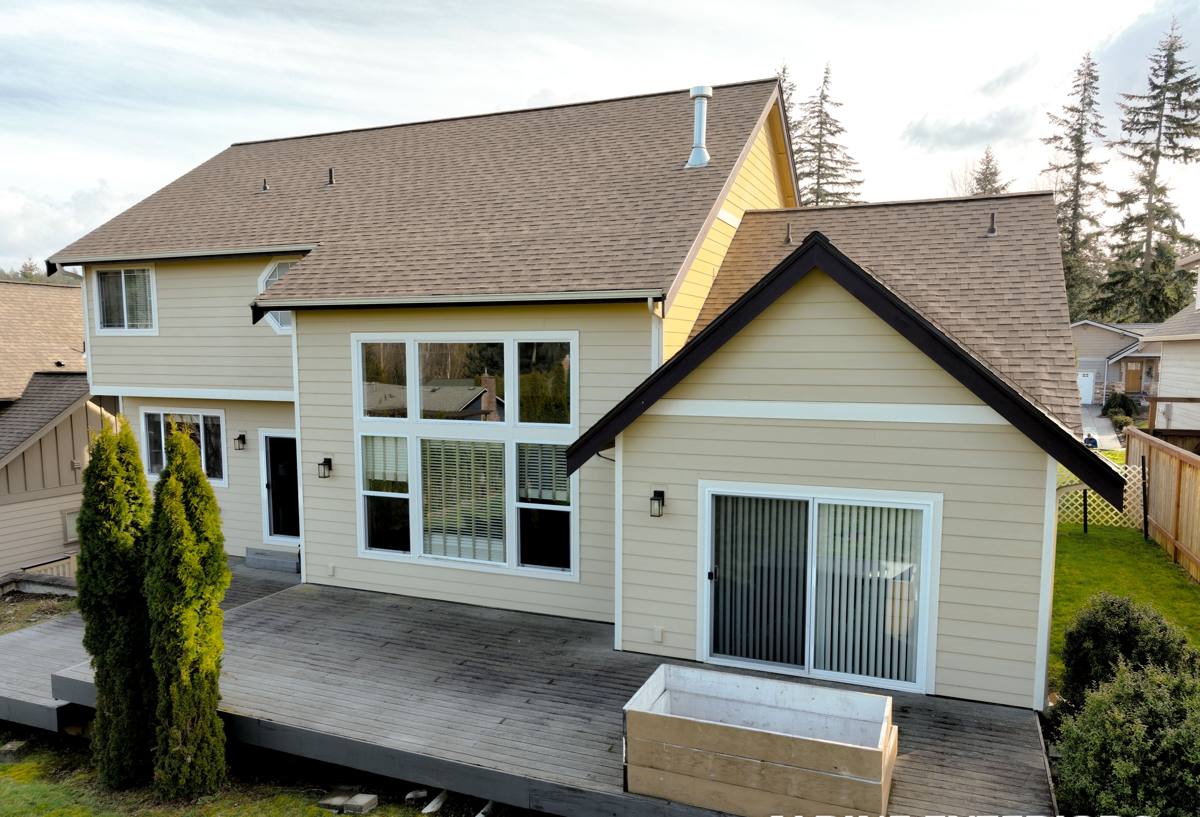
Storm damage isn't always a missing shingle you can spot from the yard. It's worth knowing the range of what we actually find on Blanchard roofs after a wind or rain event:
- Shingles creased, lifted, or torn loose at the tab, even if they're still nailed down
- Granule loss that exposes the asphalt mat underneath, usually visible as bare, shiny patches
- Ridge cap shingles cracked or blown off along the peak, where wind uplift is strongest
- Flashing pulled away from chimneys, skylights, or wall-to-roof intersections
- Valley flashing dented, punctured, or with debris packed into it, redirecting water sideways
- Punctures or gouges from wind-thrown branches or debris
- Saturated or torn underlayment visible where shingles have blown off
- Gutters pulled loose or clogged, sending overflow behind the fascia instead of off the roof
Some of these are obvious from ground level with binoculars. Others — a soft spot in the decking, a slow leak path along a rafter — only show up on a close inspection, sometimes from the attic side.
What a Correct Storm Damage Repair Involves
A Full Inspection, Not Just the Obvious Spot
The shingle a homeowner can see missing from the driveway is rarely the whole story. Wind damage tends to spread — if one shingle tore loose, the ones around it likely took stress too, even if they're still attached. A correct inspection covers the full roof plane, not just the reported problem area, and checks the decking underneath any damaged section for soft spots or water staining before anything gets closed back up. Skipping that step is how a "repair" ends up covering damage that keeps working underneath it.
Matching Materials and Getting Flashing Right
We match shingle profile and color as closely as the market allows — on an older roof, an exact match isn't always possible, and we'll tell you that honestly upfront rather than promise something we can't deliver. What matters more than a perfect color match is the flashing detail underneath it. A shortcut we won't take is caulking over a flashing gap instead of correcting it — caulk is a maintenance item, not a repair, and in this climate it fails within a season or two under repeated wind-driven rain. Our standard is to reset or replace flashing to the correct profile so water sheds the way it's supposed to, with sealant used to finish the detail, not substitute for it.
Our Process for a Blanchard Storm Repair
- Inspection and documentation. We walk the roof and check the attic where accessible, photographing every damage point — not just what's visible from the ground.
- Decking and underlayment check. Anywhere shingles are missing or torn, we check what's underneath before deciding on the scope of repair.
- Written scope of work. You get a clear explanation of what we found, what needs to be repaired, and why — before any work starts.
- The repair itself. Matched materials, correct flashing details, and fastening to the pattern the manufacturer specifies for wind exposure.
- Cleanup. Debris and loose nails cleared from the roof, gutters, and yard, including a magnetic sweep near the work area.
- Walkthrough. We show you what was done and what to keep an eye on going forward.
Insurance Claims After a Storm
If the damage came from a specific storm event, it's often covered under a homeowner's policy, though every policy is different and we're not the ones who make that call. What we can do is document damage honestly and thoroughly — photos, a written description of what we found, and a clear distinction between storm damage and pre-existing wear, since insurers scrutinize that difference closely. If you're filing a claim, contact your insurer promptly after a storm and keep our inspection report on hand to support it. We're not a public adjuster and we won't promise a claim outcome — our job is to give you an honest, well-documented account of the roof's condition.
Repair or Replace? Cost Factors to Weigh
Not every storm-damaged roof needs full replacement, and not every localized repair is the right long-term call either. These are the factors that actually drive that decision:
| Factor | Favors a Localized Repair | Favors Full Replacement |
|---|---|---|
| Extent of damage | Confined to one section or a handful of shingles | Spread across multiple roof planes or the whole field |
| Age of surrounding roofing | Roof is under 10-12 years old, materials still supple | Roof is near or past its expected service life |
| Decking condition | Decking is dry and sound under the damaged area | Soft or stained decking found in multiple spots |
| Moss and granule condition | Minimal moss, granules intact elsewhere on the roof | Heavy moss coverage or widespread granule loss |
| Cost over time | Lower upfront cost, appropriate for isolated damage | Avoids repeated repair costs on an aging roof |
A localized repair on a healthy roof can run from a few hundred dollars for a small section up to a few thousand for more extensive flashing and decking work. A full replacement is a bigger number and depends heavily on roof size, pitch, and material — we'll walk you through actual numbers for your specific roof rather than quote a figure that doesn't apply to your house.
Why a Crew That Already Works Blanchard Matters
After a significant storm, it's common to see unfamiliar trucks going door to door in areas like Blanchard, offering free inspections and pressuring homeowners to sign quickly. We'd rather you know what to watch for than assume every roofer showing up after a storm has your interest in mind. A crew that already works this area understands how wind comes off the water here, what moss load is typical for a shaded roof in this part of Whatcom County, and what flashing details actually hold up against wind-driven rain on this coast — not generic advice pulled from a training manual written for a different climate. We're also still here next season if a repair needs a follow-up look, which is more than can be said for a crew that moved on to the next storm-hit town.
After the Storm: What to Check
If Blanchard just came through a wind or rain event, here's a practical checklist before calling anyone:
- Walk the yard and check gutters for shingle pieces or granules — a sign of wind damage even before you see a gap on the roof
- Check ceilings and walls, especially near chimneys, skylights, and roof valleys, for new staining
- If it's safe to access, check the attic during or right after rain for daylight or damp insulation
- Don't get on the roof yourself — storm-damaged roofing can be unstable and slick, and it's not worth the fall risk
- Take photos from the ground for your own records before any repair work starts
- Call a local, established roofer promptly — small storm damage left open to the weather gets worse fast
- Be cautious of unsolicited door-to-door offers after a storm; ask for a local address and references before agreeing to anything
If your roof took damage in a recent storm, or you just want a second set of eyes before winter weather sets in, we're happy to take a look. Reach out for a free, no-pressure estimate — we'll tell you honestly what we find and what it actually needs.