 Chuckanut Exterior
 Window Installation in Blanchard: A Different Kind of Job
Blanchard sits close to the water along the Chuckanut corridor, and that location shapes everything about how a window should be installed here. Homes in this area take on salt-laden air off the bay, driving rain that comes in sideways during winter storms, and a moss season that stretches longer than it does just a few miles inland. A window job that would hold up fine in a dry, sheltered town further east won't necessarily hold up here. Material choice, flashing detail, and sealant work all need to account for what this specific stretch of Whatcom County throws at a house year-round.
We don't treat window installation as a one-size-fits-all product swap. It's a weatherproofing job first and a window job second — get the water management wrong and the best window on the market will still fail early.
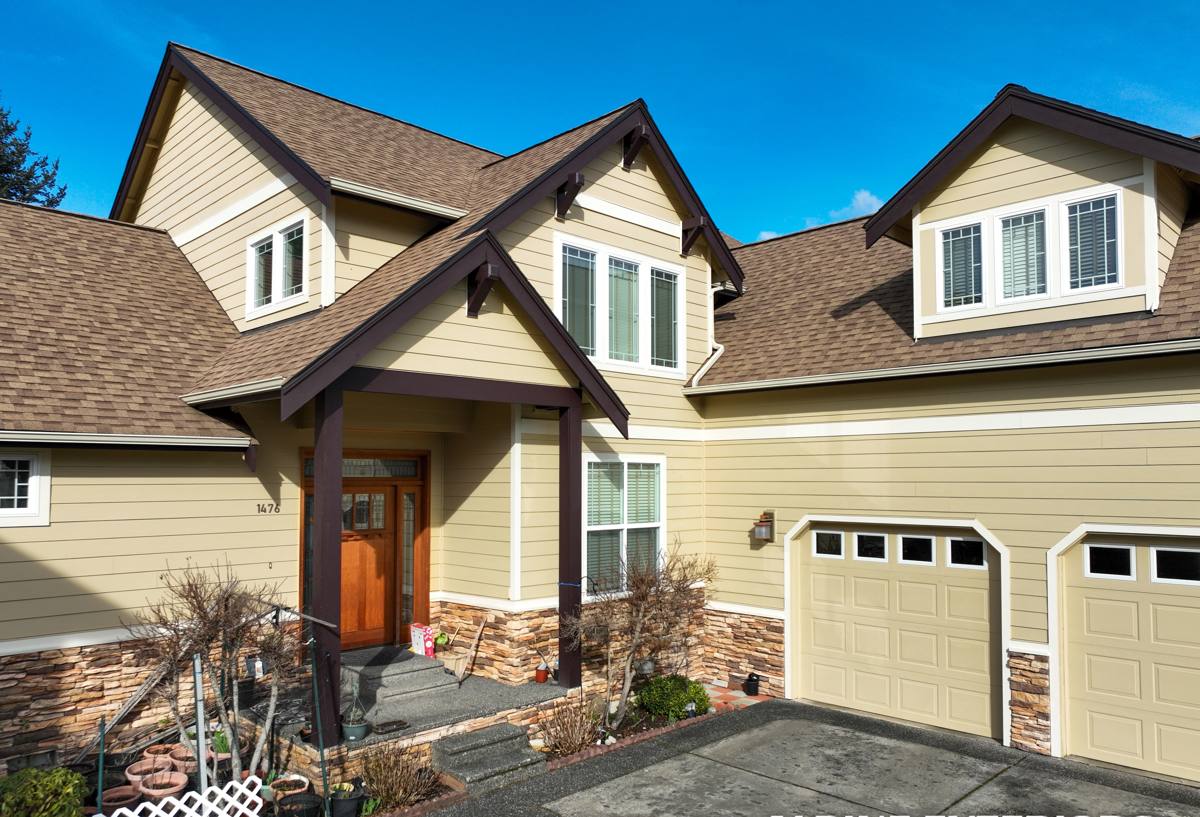
What Salt Air, Driving Rain, and Moss Season Do to a Window Over Time
Salt Air and Corrosion
Airborne salt accelerates corrosion on hardware, screens, and unprotected metal components. Cheap hinges, rollers, and locks that would last decades in an inland home can start pitting and sticking within a few years this close to the water. It's not usually the glass or the frame that fails first — it's the small moving parts that get gritty, stiff, or corroded shut.
Driving Rain and Water Intrusion
Wind-driven rain doesn't just fall on a window, it pushes against it, testing every seam, joint, and flashing detail around the opening. If a window was installed without proper sill pan flashing or with sealant as the only line of defense, water eventually finds its way behind the trim and into the wall cavity. That kind of intrusion is slow and often invisible until the damage is already done.
Moss Season and Trapped Moisture
Shaded, damp conditions here support moss and lichen growth on sills, exterior trim, and anywhere water sits instead of draining. Moss holds moisture against wood far longer than open air would, which speeds up rot at exactly the spots — sills, bottom corners, exterior casing — where a window is most vulnerable to begin with.
Choosing the Right Window Material for This Climate
Every window frame material has tradeoffs. In a coastal, high-moisture area like Blanchard, corrosion resistance and moisture tolerance matter more than they would in a drier inland setting.
| Material | Corrosion / Salt Air | Moisture Tolerance | Maintenance | Typical Lifespan |
|---|---|---|---|---|
| Vinyl | Excellent — won't corrode | Good, no rot risk | Low | 20-30+ years |
| Fiberglass | Excellent | Very good, dimensionally stable | Low | 30+ years |
| Aluminum | Fair — hardware and fasteners can corrode over time | Good, but poor insulator and can condense | Moderate | 20-30 years |
| Wood (unclad) | Poor — bare wood is exposed to moisture and salt | Requires diligent upkeep to avoid rot | High — regular painting/sealing | Varies widely with maintenance |
| Wood-clad (vinyl/aluminum exterior) | Good on exterior face | Good if cladding and seals stay intact | Moderate | 20-30 years |
Our default recommendation for most Blanchard homes is vinyl or fiberglass, simply because neither one gives salt air or moisture a foothold. We're not against wood or wood-clad windows on principle — some homeowners want that interior look and are willing to keep up with the maintenance it requires — but we're honest that it's a bigger long-term commitment in this climate, and we'll say so before you buy rather than after.
What a Correct Window Installation Actually Involves
The window itself is only part of the job. The installation detail around it is what determines whether that window stays watertight for the next twenty years or starts leaking in three. A correct installation in this climate includes:
- Removing the old window and inspecting the surrounding framing and sheathing for hidden rot or moisture damage before anything new goes in
- Installing sill pan flashing so any water that does get past the window has a way to drain back out, not pool inside the wall
- Integrating new flashing tape with the existing house wrap in the correct shingle-lap order, so water is always directed outward and down
- Shimming and squaring the window properly so sashes operate smoothly and seals compress evenly
- Insulating the gap between the window frame and rough opening without overpacking, which can bow the frame
- Sealing the exterior with the right sealant for the surface and exposure — driving rain areas need this done correctly, not just caulked over
- Finishing interior and exterior trim so there are no gaps for drafts or pests
Skip any one of these steps and the window can look fine for a season or two while a problem builds behind the wall. This is where a lot of window jobs go wrong — not because the product was bad, but because the flashing and sealing detail wasn't right for the conditions.
Our Window Installation Process
- Assessment. We look at your current windows, note any signs of water intrusion, rot, or hardware failure, and talk through what's actually needed versus what can wait.
- Material and product selection. We walk through frame material, glass package, and style options suited to this climate and your budget, without pushing a product line that doesn't fit your home.
- Preparation and removal. Old windows come out carefully, and we inspect the opening for any hidden moisture or structural issues before proceeding.
- Installation. Flashing, shimming, insulation, and sealing are done in the correct order, following the details above — not shortcuts.
- Cleanup and trim work. Interior and exterior trim is finished, and the site is left clean.
- Walkthrough. We check operation on every window with you before we consider the job done, and go over care and warranty coverage.
Signs a Blanchard Home Needs New Windows
Not every window problem means a full replacement, but these are the signs worth having a professional look at:
- Fogging or moisture trapped between panes of double-pane glass — a sign the seal has failed
- Noticeable drafts around the frame even when the window is fully closed and locked
- Soft, discolored, or crumbling wood at the sill or bottom corners
- Windows that are hard to open, close, or lock, or that have stuck or corroded hardware
- Visible moss, lichen, or dark staining building up on sills or exterior trim
- Condensation forming on the interior glass or frame regularly during colder months
- A noticeable jump in heating costs without another clear explanation
Cost Factors for Window Installation in the Blanchard Area
Window installation costs vary based on several factors specific to the job, not just the price of the window itself.
| Factor | How It Affects Cost |
|---|---|
| Full-frame vs. insert replacement | Full-frame replacement (removing down to the rough opening) costs more but is often necessary where rot or flashing problems exist |
| Frame material | Fiberglass typically costs more upfront than vinyl; both save on long-term maintenance compared to unclad wood |
| Number of windows | Per-window cost usually drops as the total count on a project goes up |
| Glass package | Upgraded glass for extra energy efficiency or sound dampening adds cost but can be worth it on exposed, weather-facing walls |
| Hidden repairs | Rot or water damage found during removal adds cost, but it's cheaper to fix now than to seal a window over an existing problem |
| Access and site conditions | Second-story windows, tight access, or extensive trim/siding work around the opening can add labor time |
We give straightforward, itemized estimates so you know what you're paying for and why — including flagging any hidden repair work before it becomes a surprise mid-project.
Why a Crew That Already Works in Blanchard Matters
A contractor who works this stretch of coastline regularly already knows what to look for: where moisture tends to collect on homes built close to the water, how far moss and lichen typically get before they start causing real damage, and which flashing details actually hold up against driving rain instead of just looking right on installation day. That familiarity shows up in fewer callbacks and fewer surprises.
It also matters for response time. If a storm damages a window or a seal fails unexpectedly, a crew already working in and around Blanchard and the wider Chuckanut area can get to you faster than one dispatching from farther away. And when it comes to warranty follow-up, you're not waiting on a company that only shows up in your neighborhood once a year.
Get a Free, No-Pressure Estimate
If your windows are showing their age, letting in drafts, or just weren't installed with this coastline in mind, we're happy to take a look and give you an honest read on what's needed. Use the form below to request a free estimate — no pressure, no obligation, just straight answers about your windows and what it would take to get them right.