 Chuckanut Exterior
 Storm Damage Roof Repair Built for Sehome's Climate
Homes in the Sehome area take a different kind of beating than roofs further inland. The combination of salt-laden air moving in off the water, driving rain that comes in sideways during winter storms, and a moss season that can stretch nine months out of the year means a roof here ages differently than the same roof would in a drier, calmer climate. When a storm does real damage — torn shingles, lifted flashing, a punctured section from a falling branch — the repair needs to account for all of that, not just patch the visible hole.
This page covers what storm damage roof repair actually involves for a Sehome home: what the climate does to roofing materials over time, what a correct repair looks like versus a rushed one, and why it matters to hire a crew that already knows how roofs in this specific part of Whatcom County behave.
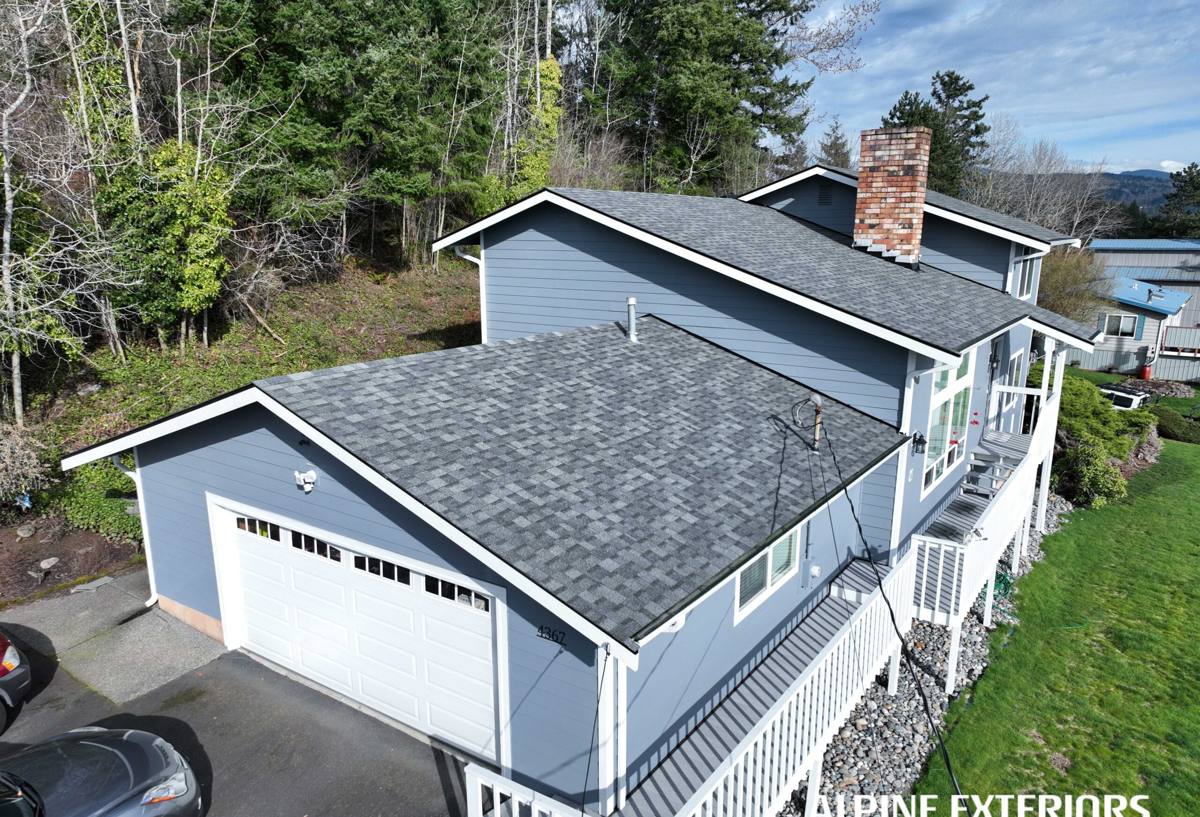
What Whatcom County Storms Actually Do to a Roof
Storm damage isn't always dramatic. Sometimes it's a single tree limb through a roof plane after a windstorm. More often, it's cumulative — wind-driven rain finds a weak seam, a few shingles get lifted and never quite seal back down, and moisture starts working its way into the roof deck over weeks or months before anyone notices a stain on the ceiling.
Wind and Driving Rain
Storms coming off the water tend to push rain horizontally rather than straight down. That matters because most roofing systems are designed to shed water moving downward — they're far less forgiving of water being forced sideways or upward under a shingle edge. Wind gusts during these storms can also lift shingle tabs just enough to break the seal strip without visibly tearing the shingle, which is why some storm damage isn't obvious from the ground.
Salt Air
Proximity to Bellingham Bay and the Salish Sea means airborne salt settles on roofing surfaces and accelerates corrosion on anything metal — flashing, fasteners, gutter hangers, vent caps. A fastener that would last decades inland can start showing rust streaks and losing holding strength years sooner near the water. That's a direct factor in how storm-damaged flashing and fasteners should be repaired, not just patched.
Moss and Prolonged Moisture
Whatcom County's damp, shaded conditions give moss a long growing season on north-facing and tree-covered roof slopes. Moss holds moisture directly against the shingle surface, which softens the mat over time and makes that section of roof more vulnerable when a storm hits. A roof with an existing moss problem is more likely to sustain real damage from the same storm that a clean, well-maintained roof shrugs off.
Signs Your Sehome Roof Has Storm Damage
Some damage is obvious. A lot of it isn't, especially from ground level. After any significant windstorm, it's worth checking for the following:
- Shingles that look curled, cracked, or are missing granules (often shows up as dark patches or bald spots)
- Shingles or tabs lying in the yard or gutters after a storm
- Lifted or visibly bent flashing around chimneys, skylights, or roof valleys
- Dented or dislodged gutters and downspouts
- New water stains on ceilings or upper interior walls
- Daylight visible through the roof deck from inside the attic
- Debris, branches, or a fallen limb resting on the roof
- Soft or spongy spots when walking the roof (a sign moisture has already reached the decking)
Any one of these is a reason to get a proper inspection, not a reason to assume the worst or the least. Roofs are deceptive — a small entry point can cause disproportionate interior damage if it's left through another wet season.
What a Correct Storm Damage Repair Involves
A rushed storm repair often stops at the visible symptom: a tarp over the hole, a few replacement shingles nailed down, done. That approach misses two things that matter a lot in this climate — what's happening underneath the surface, and whether the surrounding roof is compromised enough that the same storm-prone area will fail again next winter.
Inspect Before Repairing
A correct repair starts with a full inspection of the affected roof plane, not just the damaged spot. That means checking the roof deck for soft spots, confirming the underlayment hasn't already let moisture through, and checking whether nearby shingles were also compromised by the same wind event even if they haven't failed yet.
Match the Repair to the Roofing System
Repairs need to integrate with the existing roofing system — correct shingle type, correct nailing pattern, correct flashing detail — rather than a generic patch. A mismatched repair is often where the next leak starts, especially once salt air and moss have had a chance to work on it.
Address the Cause, Not Just the Hole
If a tree limb caused the damage, that's a one-time event. But if the damage happened because flashing was already corroded from years of salt exposure, or because moss had softened the shingle mat in that area, the repair should address that underlying condition. Otherwise the same section is likely to fail again in the next storm.
Our Storm Damage Repair Process
We keep the process straightforward, and we explain what we find at every step before doing any work.
- Initial inspection. We assess the full roof plane, not just the obvious damage, including a look in the attic where accessible.
- Written scope and estimate. You get a clear explanation of what's damaged, what needs to be repaired, and an honest cost range before any work starts.
- Temporary protection if needed. If there's an active leak or an open section, we can weatherproof it to stop further water intrusion while the full repair is scheduled.
- Repair. Matching materials, correct flashing details, and attention to how the repaired section ties into the surrounding roof.
- Final check. We walk the repair with you and confirm the area is sealed and draining correctly.
We're straightforward about scope. If a repair is genuinely the right call, we say so. If the roof has enough age or damage that a repair would just be a short-term fix, we'll tell you that too rather than let you spend money on something that won't hold up through another Whatcom County winter.
Repair or Replace: What Actually Decides It
Not every storm-damaged roof needs to be replaced, and not every roof is worth repeatedly repairing either. A few factors tend to drive that decision more than anything else.
| Factor | Leans Toward Repair | Leans Toward Replacement |
|---|---|---|
| Roof age | Under roughly 12-15 years | Near or past expected material lifespan |
| Extent of damage | Isolated to one section or plane | Spread across multiple roof planes |
| Deck condition | Solid, no soft spots found | Soft decking or signs of prolonged moisture |
| Moss/algae history | Minimal or well-maintained | Heavy, longstanding moss with mat degradation |
| Prior repair history | First or second repair | Repeated repairs to the same areas |
These are general guidelines, not a formula — the actual condition of your specific roof is what determines the honest recommendation, and that only comes from a real inspection.
Insurance Claims and Storm Damage
Most storm damage claims move faster and go smoother when there's clear documentation of what happened and what it will take to fix it. We can provide photos, a written damage assessment, and a repair scope that you can hand directly to your insurance adjuster. We're not a public adjuster and we don't negotiate your claim for you, but we make sure the roofing details in your claim are accurate and complete, which matters more than people expect when a claim gets reviewed.
Materials That Hold Up Near the Water
Given the salt air and moisture exposure common around Sehome, material choice matters more here than it does in drier parts of the state. A few things we factor into repair and replacement recommendations:
- Corrosion-resistant fasteners and flashing rather than standard-grade metal, given how quickly salt air can start pitting untreated metal
- Algae-resistant shingle products in areas with heavy tree cover or persistent shade, to slow moss and moss-related degradation
- Proper attic and roof ventilation, since trapped moisture from condensation compounds the effects of exterior moisture from rain and humidity
- Ice-and-water shield or equivalent underlayment at valleys and eaves, where wind-driven rain is most likely to find a weak point
We don't push a specific brand as a cure-all. Every product has trade-offs in cost, maintenance, and appearance, and the right choice depends on your roof's exposure, slope, and how much shade it sits under.
Why Hire a Crew That Already Works in Sehome
A contractor who works this specific part of Whatcom County regularly has already seen how local storms behave, which roof orientations tend to take the worst of the wind-driven rain, and which materials actually hold up against the salt air and moss pressure year after year. That's not something you get from a generic national roofing checklist — it comes from doing the work here, on roofs like yours, through multiple storm seasons.
It also means faster response after a storm. When a windstorm moves through the region, local roofers are the ones who can get eyes on your roof quickly, rather than a crew that has to travel in from out of the area once demand spikes.
Get a Free, No-Pressure Estimate
If your Sehome home has visible storm damage, or you just want a roof checked after a rough windstorm, we're happy to take a look and give you an honest assessment. There's no pressure and no obligation — just a clear picture of what's going on with your roof and what it would take to fix it right. Use the form below to request your free estimate.