 Chuckanut Exterior
 Sehome Roofs Take a Different Kind of Beating
If you own a home in the Sehome area, you already know the roof over your head deals with more than the average shingle was designed for. Whatcom County sits right up against the Salish Sea, which means salt-laden air moves through the neighborhood year-round, driving rain comes in sideways off the water during winter storms, and the long stretch of gray, wet months between fall and spring never really lets a roof dry out completely. That combination — salt exposure, wind-driven moisture, and near-constant humidity — is exactly the environment where asphalt shingle roofing either performs well for its full service life or fails early, and the difference almost always comes down to how it was installed, not just what brand of shingle went on.
We work on roofs in this exact climate every week, and we've built our process around what actually holds up in Chuckanut and the surrounding Whatcom County neighborhoods, not around a generic install that might be fine in a drier part of the state.
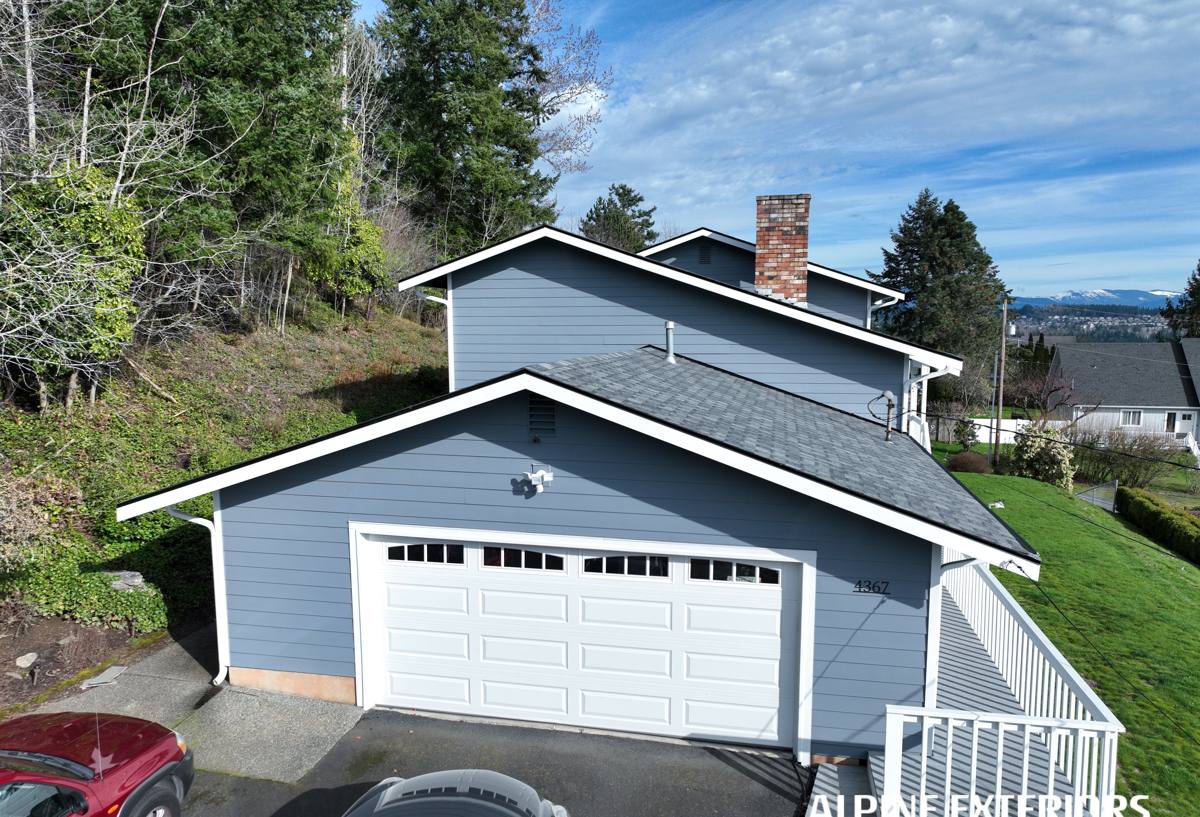
What "Correct" Actually Means for a Coastal Roof
Asphalt shingles are a mature, well-understood product — the material itself isn't the variable. What separates a roof that lasts from one that leaks in year six is almost always the details underneath and around the shingles. In a salt-air, high-rain environment like Sehome's, those details matter more, not less.
Underlayment and Water Barriers
A synthetic underlayment across the whole deck is the baseline, but the areas that actually determine whether you get a leak are the eaves, valleys, and any roof-to-wall transitions. We install self-adhered ice-and-water membrane at these vulnerable points, sized to the local rain and any freeze exposure, so wind-driven rain that gets past the shingle surface still has a sealed barrier underneath it.
Flashing
Salt air accelerates corrosion on lower-grade metal flashing. We use flashing rated for coastal exposure at chimneys, skylights, sidewalls, and any roof penetrations, and we replace it rather than reuse old flashing during a full re-roof — reused flashing is one of the most common causes of "mystery" leaks that show up two or three winters after a new roof goes on.
Ventilation
A roof that can't breathe traps moisture in the attic, which shortens shingle life from underneath and feeds the exact conditions that grow moss and algae on top. We balance intake and exhaust ventilation as part of every project — it's not an upsell, it's part of doing the job correctly in a wet climate.
Fastening and Wind Rating
Storms off the water bring real wind. We fasten to the shingle manufacturer's high-wind specification (correct nail count and placement, not the minimum) and choose a shingle line rated for the wind speeds this area actually sees, so the roof isn't shedding tabs after the first big blow.
Moss, Algae, and the Long Wet Season
Ask anyone who's lived in Whatcom County for more than a couple of winters: moss isn't a maybe here, it's a schedule. North-facing slopes, shaded roof sections under mature trees, and anywhere water sits a little longer than it should are where moss and algae staining take hold first.
A few things make a real difference:
- Algae-resistant (AR) shingles, which use copper or zinc granules to slow the black streaking common in wet coastal climates
- Zinc or copper strips installed near the ridge, which release trace metal ions with every rain and suppress new moss growth over the strip's coverage area
- Keeping overhanging branches trimmed back so roof sections get more sun and airflow
- Gentle, low-pressure cleaning rather than power-washing, which can strip granules and shorten shingle life faster than the moss itself would
Moss that's allowed to mat up and hold moisture against the shingle surface will shorten a roof's life regardless of how good the shingle brand is. Addressing it early — with the right materials at install time and light maintenance afterward — is far cheaper than dealing with the deck damage that comes from ignoring it for years.
Choosing the Right Shingle for This Climate
Not every asphalt shingle line is a good fit for salt air and heavy moss pressure. Here's how the common tiers compare for a Sehome-area home:
| Shingle Type | Typical Lifespan | Wind Rating | Algae Resistance | Best Fit |
|---|---|---|---|---|
| 3-tab (economy) | 15–20 years | Lower | Often none | Budget-driven projects, low-exposure roofs |
| Architectural / laminate | 25–30 years | Good to high | Usually included (AR) | Most homes in this climate — our standard recommendation |
| Premium / designer | 30+ years | High | Included (AR) | Steep or highly visible roofs, homeowners wanting a heavier profile |
For most Sehome homes, an architectural shingle with algae resistance and a solid wind rating hits the right balance of cost, appearance, and durability against the moisture and moss this area sees every year. We'll walk through the real trade-offs for your specific roof rather than defaulting to the most expensive option.
Our Process, Start to Finish
- On-site inspection — we walk the roof and attic, check the deck for soft spots or existing moisture damage, and look at ventilation and flashing conditions
- Honest scope and estimate — repair vs. full replacement, with the reasoning explained, not just a number
- Tear-off and deck check — old material removed, deck inspected board by board and repaired where needed before anything new goes down
- Underlayment and ice-and-water membrane — installed to the standard described above, not the bare minimum
- Flashing replacement — new, coastal-rated flashing at all penetrations and transitions
- Shingle installation — fastened to manufacturer high-wind spec, ventilation balanced
- Final walkthrough — we review the finished roof with you and go over any maintenance recommendations specific to your property
Repair vs. Replace: How We Help You Decide
Not every roof problem means a full replacement, and we'd rather tell you that upfront than sell a job you don't need yet. A few missing or damaged shingles, a flashing leak, or isolated moss damage can often be repaired if the rest of the roof and deck are sound. We look at the age of the roofing, the condition of the deck underneath, how much of the surface is affected, and whether the underlying ventilation and flashing are still doing their job. If a repair will hold for several more years, we'll say so. If the roof is past the point where patching makes financial sense, we'll explain exactly why.
Why a Crew That Already Works Sehome Matters
Roofing crews that work all over Western Washington see a wide range of conditions and sometimes default to a generic spec. Working this specific area regularly means we already know which roof orientations in Sehome tend to hold moss longest, how much salt exposure a given slope and tree cover translate to, and what wind exposure looks like on an exposed roof plane versus one tucked behind other structures. That local pattern recognition shows up in small decisions — where we add extra ice-and-water coverage, which flashing grade we spec, how we balance ventilation — that a one-size-fits-all install misses. It also means we're a known, findable crew if a warranty question or storm-related issue comes up years down the road, not a company that was only in the area for one job.
Maintenance That Actually Extends Roof Life Here
A correctly installed roof still needs a little seasonal attention in this climate. This is the short list we give homeowners:
- Clear gutters and downspouts before the fall rains start, so water isn't backing up under the eaves
- Trim back tree limbs that shade roof sections or drop debris onto the surface
- Have moss or algae buildup addressed early with gentle methods, not power-washing
- Check the attic once a year for signs of moisture, staining, or musty odor
- After any major windstorm, do a visual check (or have us check) for lifted or missing shingles
- Keep an eye on flashing around chimneys and skylights, since that's where most slow leaks start
None of this requires climbing on the roof yourself — most of it can be checked from the ground or handled during a routine inspection.
Get a Straight Answer About Your Roof
If you're dealing with moss buildup, a leak, storm damage, or you're just trying to figure out how much life is left in your current roof, we're happy to take a look and give you an honest assessment — no pressure, no hard sell. Use the form below to request a free estimate and we'll get back to you to schedule a time to come out.