 Chuckanut Exterior
 Why Decks in Sehome Wear Out Faster Than People Expect
A deck in Sehome doesn't age the same way a deck does in a drier inland climate. This part of Whatcom County sits close enough to the water that homes regularly deal with salt-laden air, and that salt does real work on metal fasteners, flashing, and hardware over the years — corroding nail heads, weakening joist hangers, and staining wood long before the boards themselves give out. Add in driving rain that comes sideways during fall and winter storms, and you get moisture pushed into places a deck was never designed to handle: under flashing, into end grain, behind ledger boards.
Then there's shade. Many lots in and around Sehome have mature trees overhead, which is part of what makes the neighborhood pleasant to live in, but it also means decks stay damp long after a storm has passed. That combination of moisture and shade is exactly what moss and algae need, and in this climate the growing season for both can stretch from early fall through late spring. A deck that looks fine in July can be a slick, spongy problem by January.
None of this means a deck can't last. It means a deck built or replaced for this specific climate needs different choices — in fasteners, in flashing detail, in material — than one built somewhere drier. That's the whole point of this page: what a Sehome deck actually needs, not generic advice that ignores where you live.
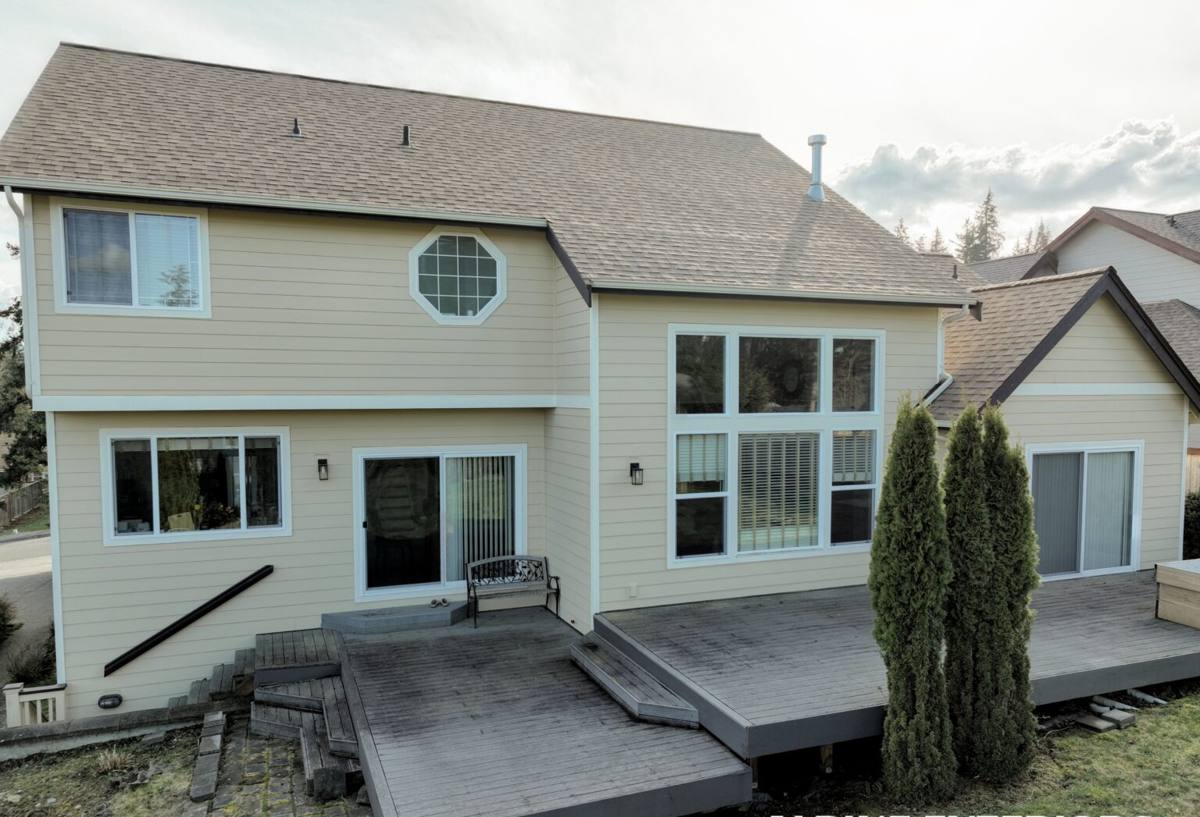
Signs Your Deck Has Reached the End of Its Service Life
Homeowners often ask for a repair when what they actually need is a replacement. Here's a practical way to tell the difference. If you're only dealing with one or two of these, repair may still make sense. If you're seeing several at once, you're likely looking at a structure that's failing as a system, not in isolated spots.
- Decking boards that feel soft, spongy, or give slightly underfoot, especially near the house or at stair landings
- Rust streaks bleeding down from fastener heads or joist hangers
- The ledger board (where the deck attaches to the house) showing dark staining, separation, or soft wood
- Railings or posts that flex or wobble when you lean on them
- Moss or algae that returns within a few weeks of cleaning, no matter how well you scrub it
- Visible rot or crumbling wood at the base of posts where they meet footings
- Persistent cupping, splintering, or graying that doesn't respond to sealing or staining anymore
If several of these sound familiar, it's worth having someone look at the framing underneath, not just the surface boards. Surface repairs on top of failing framing are a short-term fix at best.
What a Correct Deck Replacement Actually Involves
It Starts Underneath, Not on Top
A proper deck replacement isn't just pulling old boards and screwing down new ones. The framing, footings, and ledger connection matter more than the decking surface, because they determine whether the new deck lasts one winter or twenty. Part of the job is tearing back enough to actually inspect joists, beams, footings, and the ledger-to-house connection before deciding what gets reused and what gets rebuilt.
Fasteners and Hardware Matter More Here
Given the salt air common to this part of Whatcom County, standard galvanized fasteners and connectors corrode faster than they would inland. Stainless steel or heavy-duty coated fasteners cost more upfront but avoid the streaking, weakening, and premature failure that plain galvanized hardware runs into within a few seasons near the water.
Flashing Is Where Most Deck Failures Actually Start
Water intrusion at the ledger board is one of the most common — and most serious — deck problems we see. Correct ledger flashing, properly integrated with the house's existing water barrier, is what keeps rain from working its way behind the siding and into the rim joist. This is an easy detail to shortcut and a very expensive one to fix later, since it can mean repairing structural framing and siding, not just the deck.
Spacing and Drainage Underneath
Joist spacing needs to match whatever decking material you choose — composite and PVC products often have different span requirements than solid wood. Airflow underneath the deck also matters more here than in a dry climate; a deck built tight to the ground with no ventilation traps moisture and speeds up rot and moss growth.
Choosing a Decking Material for This Climate
There's no single "best" decking material — there's a best material for your budget, your maintenance appetite, and how much shade and moisture your specific lot deals with. Here's an honest comparison of the main options we install, based on how they perform in a wet, mossy, marine climate like this one.
| Material | Upfront Cost | Moisture & Moss Resistance | Maintenance | Typical Lifespan Here |
|---|---|---|---|---|
| Pressure-treated wood | Lowest | Fair — needs sealing to perform well | Annual cleaning, periodic sealing/staining | 10–15 years |
| Cedar | Moderate | Good natural resistance, but surface needs upkeep | Regular cleaning and refinishing | 12–18 years |
| Capped composite | Higher | Very good — resists moisture absorption | Occasional washing, no sealing/staining | 25–30 years |
| PVC | Highest | Excellent — essentially non-porous | Occasional washing only | 25–30+ years |
Solid wood costs less to install but asks more of you every year — cleaning, sealing, and watching for the early signs of rot described above. Capped composite and PVC cost more upfront but largely remove moss and moisture absorption from the equation, which is a meaningful advantage in a climate where organic growth is a near-constant pressure on wood surfaces. We'll walk through the real trade-offs for your specific deck and budget rather than pushing one product as universally "better."
Our Deck Replacement Process, Start to Finish
- On-site assessment. We look at the existing deck's framing, footings, ledger connection, and any drainage issues before quoting anything.
- Written scope and quote. You get a clear breakdown of what's being torn off, what's being rebuilt, and what materials are proposed — no vague line items.
- Permitting, if required. We handle the paperwork and inspections tied to your specific project and jurisdiction.
- Tear-off and disposal. Old decking, railings, and any compromised framing are removed and hauled away.
- Framing and structural work. Joists, beams, footings, and ledger flashing are repaired or rebuilt to current standards, not just patched.
- Decking, railing, and stair installation. Installed to the manufacturer's specifications for your chosen material, with fastener and spacing choices suited to this climate.
- Final cleanup and walk-through. We go over the finished deck with you and answer any care or maintenance questions before we leave.
Permits and Local Requirements
Whether a deck replacement requires a building permit generally depends on factors like the deck's height above grade, whether it's structurally attached to the house, and its size — and the specific requirements can vary by jurisdiction within Whatcom County. Rather than guess, we confirm what applies to your project with the local building department before work starts, and we handle the permit application and any required inspections as part of the job. If your existing deck was built without a permit, replacement is often a good opportunity to bring it up to current code, which can matter for insurance and resale down the road.
Why It Matters to Hire a Crew That Already Works in Sehome
A contractor who's worked on decks throughout Sehome and the broader Chuckanut area has already seen how homes here are sited relative to shade, wind exposure, and drainage patterns typical of the neighborhood. That familiarity shows up in practical ways: knowing which framing details tend to fail first on homes of a certain age, having working relationships with local suppliers so material isn't a scheduling bottleneck, and understanding realistic timelines given how much of the year here involves wet weather.
It also means fewer surprises. A crew that's replaced decks in this specific climate isn't learning on your project that standard fasteners corrode faster near the water, or that a deck built without ventilation underneath will grow moss within a season. Those are lessons better learned somewhere else, not on your house.
Maintaining Your New Deck Through Moss Season
A well-built deck still needs some upkeep to get its full lifespan out of it, especially through the wetter months. A few habits go a long way:
- Sweep leaves and debris off regularly — trapped organic material is what feeds moss and algae growth
- Make sure gutters and downspouts direct water away from the deck rather than onto it
- Trim back overhanging vegetation where possible to improve airflow and sun exposure
- Wash composite or PVC decking with plain water and a soft brush a couple of times a year
- Reseal or restain wood decking on the schedule the product calls for — don't wait until it's visibly gray and dry
- Check railings, stairs, and visible fasteners once a year for early signs of loosening or corrosion
None of this is complicated, but skipping it is exactly how a well-built deck ends up back on a "signs you need to replace it" list ten years early.
Ready for a Straight Answer About Your Deck?
If your deck is showing some of the wear signs above, or you're just trying to plan ahead, we're glad to take a look and give you an honest read on repair versus replacement — no pressure, no upsell. Fill out the form below to request a free estimate for your Sehome home.