 Chuckanut Exterior
 Roof Repair in Fairhaven: What the Climate Actually Demands
Homes near Fairhaven sit close enough to the water that salt-laden air is part of daily life, and that changes what a roof repair needs to accomplish. It isn't just about stopping a leak. It's about stopping a leak in a way that survives driving rain off the water, a moss season that can run most of the year under Whatcom County's tree cover, and metal fasteners and flashing that corrode faster here than they would twenty miles inland. A repair that ignores those three factors tends to fail again within a year or two, which is why so many "quick fix" patches in this area don't hold.
We work on roofs in and around Chuckanut regularly, and Fairhaven's mix of older homes, mature trees, and coastal exposure means we see the same failure patterns often enough to know what to check first. That's the difference between a repair that lasts and one that buys you a single dry winter.
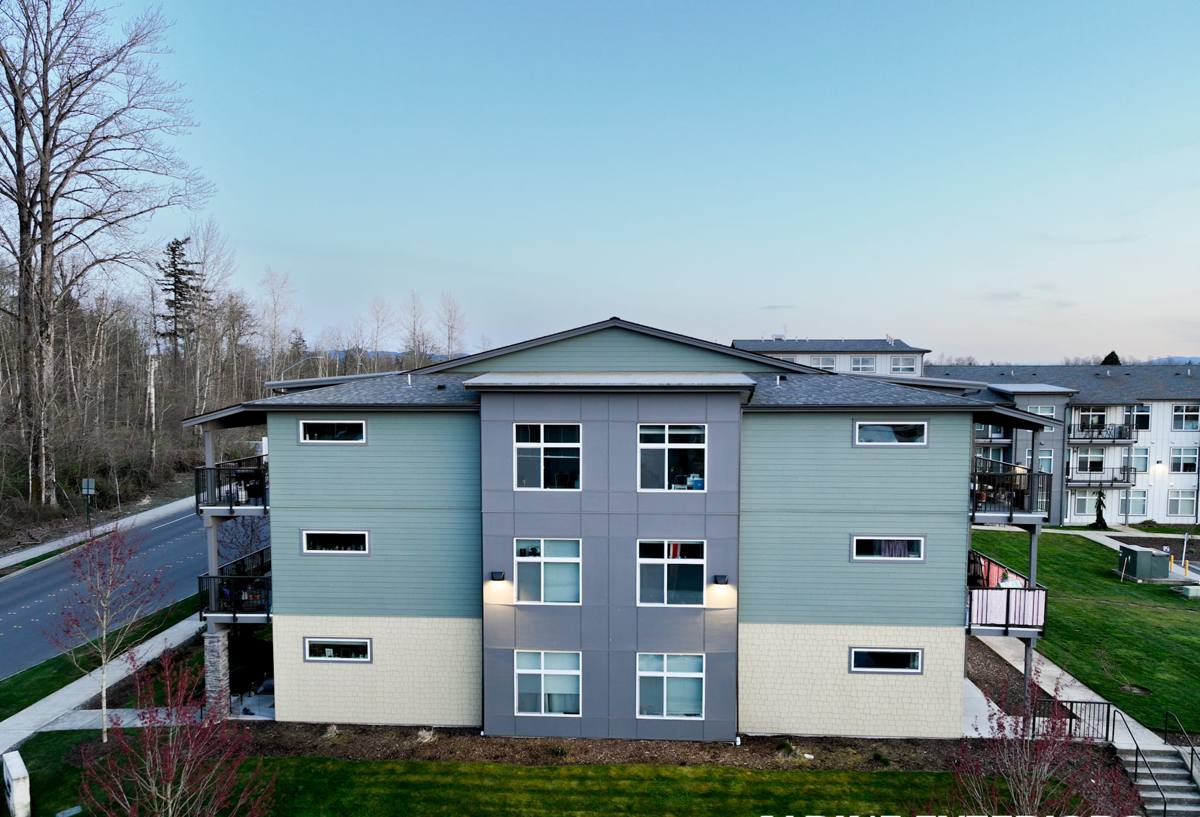
Common Roof Problems We See in Fairhaven Homes
Wind-Driven Rain at Vulnerable Points
Rain that falls straight down rarely causes leaks on a roof in decent condition. Rain that's being pushed sideways by wind off the water is a different story — it finds its way under shingle tabs, around chimney flashing, and through valleys that have opened up even slightly. Most of the emergency calls we get after a coastal storm trace back to one of these pressure points, not a large, obvious hole in the roof.
Moss and Trapped Moisture
Moss doesn't just look bad. It holds water against the roofing material long after the rain stops, which accelerates granule loss on asphalt shingles and rot in the wood underneath. In shaded, tree-covered lots — common around Fairhaven — moss can establish itself within a couple of seasons if it isn't managed, and once it's thick enough to hold a sponge's worth of water, it's doing active damage every day it's left alone.
Corroded Fasteners and Flashing
Salt air is hard on exposed metal. Nail heads, flashing seams, and vent boots that would last decades in a dry inland climate can start corroding noticeably sooner near the coast. A pinhole in corroded flashing is a small thing to fix, but it's an easy thing to miss if the roofer doing the repair isn't specifically looking for it.
What a Correct Roof Repair Actually Involves
A repair done right isn't just replacing the shingles or panels that look damaged. It's a short diagnostic process, even for something that seems obvious:
- Find the actual entry point. Water often travels along the roof deck before it shows up as a stain inside, so the visible damage and the actual leak source can be several feet apart.
- Check the decking underneath. If plywood or sheathing has softened from prolonged moisture, patching over it just hides a structural problem.
- Match the repair to the surrounding material. New shingles, panels, or flashing need to tie into the existing roofing correctly — overlapped the right direction, sealed at the right laps — or the repair becomes its own future leak point.
- Address the cause, not just the symptom. If moss caused the failure, the repair should include moss removal and a plan to slow regrowth. If corrosion caused it, the replacement flashing should be a material that resists the same corrosion.
Skipping any of these steps is how a $300 patch turns into a $3,000 repair a year later.
Moss, Algae, and Salt Air: The Long-Term Enemy
Moss and algae growth is a maintenance issue as much as a repair issue. Once we're on a roof fixing an active leak, it makes sense to deal with the growth causing or contributing to it, rather than leaving it to keep working against the repair. That typically means:
- Careful mechanical removal of moss rather than aggressive scraping that can lift granules or crack aging shingles
- Clearing debris from valleys and gutter lines where organic material collects and holds moisture
- Trimming back overhanging branches where it's practical, since shade and leaf litter are what let moss take hold in the first place
- Using zinc or copper control strips where appropriate, which help slow regrowth on shaded slopes
None of this is a one-time fix. Whatcom County's damp, moss-friendly climate means roofs near Chuckanut and Fairhaven benefit from a yearly check, even in years when nothing seems obviously wrong.
Repair vs. Replacement: How We Help You Decide
Not every roof problem calls for a full replacement, and not every leak should be treated as "just a patch." We look at the roof as a whole before recommending either direction.
| Factor | Repair Usually Makes Sense | Replacement Usually Makes Sense |
|---|---|---|
| Roof age | Under roughly 15 years, or well-maintained | Near or past its expected lifespan |
| Extent of damage | Isolated to one section, flashing, or penetration | Multiple areas failing or widespread granule loss |
| Decking condition | Solid, dry sheathing under the damaged area | Soft, rotted, or repeatedly wet decking |
| Moss/algae extent | Present but manageable with cleaning | Long-term growth has degraded material broadly |
| Leak history | First occurrence or clearly isolated cause | Recurring leaks in different spots over time |
We'll always tell you honestly which category your roof falls into. Recommending a full replacement when a solid repair would do isn't good business, and neither is patching a roof that's genuinely at the end of its service life.
Roofing Materials We Work With for Repairs
Fairhaven has a mix of roof types, and the right repair approach depends on what's already up there.
| Material | How It Handles Moss/Moisture | Salt Air Considerations | Typical Repair Approach |
|---|---|---|---|
| Asphalt shingle | Prone to moss on shaded slopes; granule loss over time | Fasteners and flashing are the weak point | Section replacement, flashing renewal |
| Metal (standing seam/panel) | Sheds moss well due to slick surface | Seams and fasteners need corrosion-resistant hardware | Seam resealing, fastener replacement, panel swap |
| Cedar shake | More moisture-absorbent; needs active moss control | Holds up well if properly maintained | Shake replacement, ventilation checks |
| Flat/low-slope membrane | Ponding water is the bigger risk than moss | UV and salt exposure age membrane seams | Seam and patch repair, drainage correction |
Whatever the material, our standard is the same: repairs should be nearly invisible in fit and finish, and built to handle another decade of this climate — not just the next storm.
Our Roof Repair Process
We keep the process straightforward because homeowners dealing with a leak don't need extra complexity added on top of it.
- Inspection and diagnosis. We get on the roof (and in the attic, if accessible) to trace the leak to its actual source, not just where the stain shows up.
- Honest assessment. We explain what we found, why it happened, and whether a repair or replacement is the right call — with reasoning, not pressure.
- Written scope and estimate. You'll know what's being done and what it covers before any work starts.
- The repair itself. Matching materials, correct flashing details, moss and debris removal where relevant, and attention to how the repair ties into the surrounding roof.
- Cleanup and check. We clear debris and old materials from the property and confirm the repair area is sealed and sound before we consider the job done.
Checklist: Signs You Need a Roof Repair Now
Some roof problems can wait for a scheduled inspection. Others shouldn't. If you're seeing any of the following, it's worth having someone look sooner rather than later:
- Water stains on ceilings or upper interior walls, especially after a windy rainstorm
- Visible moss buildup thick enough to hold water, particularly on shaded or north-facing slopes
- Shingles that are curling, cracked, or missing granules in patches
- Rusty streaks running down from metal flashing, vents, or fasteners
- Sagging in any part of the roofline, which can indicate decking or structural moisture damage
- Daylight visible through the roof deck from inside the attic
- Gutters consistently full of granules, which signals accelerating shingle wear
Why Hire a Crew That Already Works in Fairhaven
Roof repair isn't a one-size-fits-all trade. A crew that mostly works dry, inland roofs may not think to check flashing for coastal corrosion, or may underestimate how fast moss regrows under heavy tree cover. Working regularly in and around Chuckanut and Whatcom County means we're not guessing at how this climate treats a roof — we're accounting for it in every repair, from the fasteners we choose to how we handle moss during the same visit.
Local availability matters too. When driving rain finds a weak point in your roof, waiting weeks for a crew to make time in their schedule isn't practical. Being based in the area means a faster response and a better understanding of what your specific neighborhood's roofs tend to run into.
Get an Honest Look at Your Roof
If you're dealing with a leak, moss buildup, or just want a second opinion on a repair someone else quoted, we're happy to take a look. The estimate is free, there's no pressure to sign anything on the spot, and you'll get a straight answer about whether your roof needs a repair, a replacement, or nothing at all right now. Use the form below to get started.