 Chuckanut Exterior
 Roofing Built for the Alger Stretch of the Chuckanut Corridor
Homes along the Chuckanut corridor near Alger sit in a strange in-between climate. You're close enough to open water that salt-laden air reaches the roofline year-round, close enough to the hills and tree cover that shade keeps roof decks damp long after a storm passes, and far enough from the city that a roof problem doesn't always get noticed until it's already inside the attic. Asphalt shingle roofing can handle all of that, but only when it's specified and installed with this specific mix of conditions in mind. A shingle system that works fine in a dry inland subdivision can underperform here within a decade.
This page is about one service, in one area: asphalt shingle roof installation, repair, and replacement for homes in and around Alger. We're not going to give you a generic rundown of shingle types you could find on any roofing site. We're going to walk through what this climate actually does to a roof, what a correct installation looks like in response, and how we handle the job from first inspection to final cleanup.
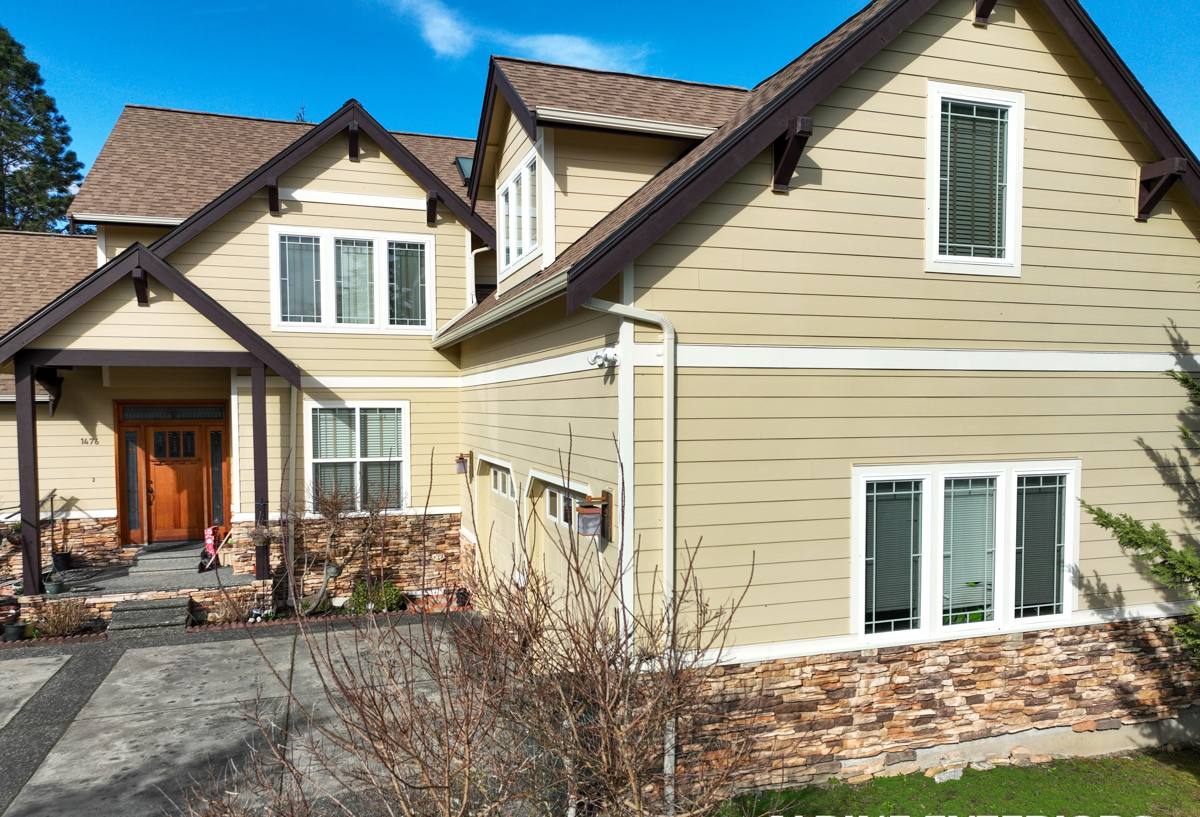
What Salt Air, Driving Rain, and Moss Actually Do to a Roof Here
Salt Air and Wind Exposure
Salt-laden air moving off the water doesn't just affect metal fasteners and flashing — it accelerates the breakdown of the granules that protect asphalt shingles from UV light. Once granule loss starts, the asphalt underneath ages faster, and you start seeing brittleness and cracking years before a shingle's rated life would suggest. Homes with more open exposure to wind coming off the water also take more physical wind-lift stress on ridge caps and shingle tabs, which is why sealant strip performance and nailing pattern matter more here than in a sheltered inland lot.
Driving Rain
Rain that comes in at an angle, pushed by wind off the water, behaves differently than a straight vertical downpour. It gets driven up under shingle tabs and around flashing details that would stay dry in calmer weather. This is why underlayment choice and flashing detail work carry more weight in this area than shingle brand alone — the shingle is the first layer of defense, not the only one.
Moss and Shade
Chuckanut-area lots tend to have mature tree cover, and tree cover means shaded, slow-drying roof planes — usually the north- and west-facing slopes. Moss doesn't need much: shade, moisture, and organic debris in valleys and against the shingle's granule surface are enough to get it started. Once moss takes hold, it lifts shingle edges as it grows, holds moisture directly against the shingle mat, and works its way toward the fasteners and deck underneath. In this area, moss season isn't a two-month event — it's close to year-round, with the heaviest growth through the wet months.
Choosing a Shingle System That Fits This Climate
Not every asphalt shingle product is built the same way, and the differences matter more in a wet, shaded, salt-exposed environment than they would somewhere dry. We spec shingles based on how they'll actually perform here, not just on price per square.
| Shingle Factor | Why It Matters in Alger |
|---|---|
| Algae-resistant granules (copper-infused) | Slows the growth of moss and algae on shaded, slow-drying roof planes — standard granules stain and green up faster here |
| Sealant strip quality | Determines how well tabs resist wind-driven rain and gusts off open water |
| Shingle weight/thickness class | Heavier laminated shingles hold up better to repeated wet-dry cycling than lightweight 3-tab product |
| Warranty structure | Coastal/high-wind warranty tiers usually require specific nailing patterns — worth confirming before installation, not after |
| Color and granule reflectivity | Darker colors show moss and staining faster on shaded slopes; this is an appearance trade-off, not a performance one |
We're not going to tell you one brand is bad and another is good — every major manufacturer makes a serviceable shingle. What we won't do is install a lightweight, minimally-rated shingle on a shaded, exposed roof plane and call it a day, because we know what that roof looks like in eight years versus what a properly specified one looks like.
What a Correct Installation Actually Involves
The shingle is the visible part of the system, but it's only one layer. On a roof exposed to driving rain and long moss seasons, the layers underneath and around it do a lot of the real work.
- Deck inspection and repair — any soft, delaminated, or moisture-damaged sheathing gets replaced before anything new goes down, not covered up
- Ice-and-water shield at vulnerable points — eaves, valleys, and roof-to-wall transitions, where wind-driven rain is most likely to find a way in
- Synthetic underlayment across the full deck — a consistent, breathable moisture barrier under the shingle field
- Correct flashing at every penetration — chimneys, vents, skylights, and wall transitions, formed and lapped so water sheds outward, not sideways
- Balanced attic ventilation — intake at the eaves and exhaust at the ridge, so the deck can dry between wet spells instead of staying damp
- Manufacturer-specified nailing pattern — nail count and placement affect both wind performance and warranty validity
- Clean valley and drip edge detailing — the areas most exposed to water concentration and the first place a rushed job shows
Ventilation deserves a second mention on its own, because it's the piece most often skipped or under-built on older Chuckanut-area homes. A shaded roof that can't dry out between storms stays damp longer, and that dampness is exactly what moss and premature granule loss feed on. Balanced intake and exhaust ventilation doesn't just protect the shingles — it protects the deck underneath them and helps regulate attic temperature and moisture through the winter.
Repair or Replace? How We Actually Decide
Not every roofing problem in this area means a full replacement, and we don't push one when it isn't needed. The decision usually comes down to age, the extent of moisture intrusion, and whether the underlying deck and flashing are still sound.
| Sign | Usually Points To |
|---|---|
| Isolated moss on one shaded slope, shingles otherwise intact | Moss treatment and removal, spot repair if any tabs are lifted |
| Granule loss concentrated near valleys or flashing | Targeted flashing repair or underlayment patch |
| Widespread granule loss and brittle shingles across the roof | The shingle field is aging out — replacement is the honest recommendation |
| Soft spots, staining, or sagging on the interior ceiling | Active leak — needs inspection before any cosmetic decision is made |
| Multiple past patch repairs in different areas | Usually a sign the roof is past the point where repairs make financial sense |
If a repair genuinely solves the problem, that's what we'll recommend. If the roof is old enough or damaged enough that repair is just delaying the inevitable, we'll say so plainly and explain why, rather than stringing out patch jobs on a roof that needs to come off.
Our Process, Start to Finish
Every job on an Alger-area roof follows the same sequence, whether it's a full replacement or a focused repair:
- On-site inspection — we get on the roof (not just a look from the ground) and check the deck, flashing, ventilation, and shingle condition directly
- Honest scope and written estimate — what needs to happen, what it costs, and why, with repair and replacement options laid out if both are reasonable
- Material selection — matched to the roof's actual exposure (sun, shade, wind, water), not a one-size-fits-all default
- Protection of the property — landscaping, siding, and gutters protected before tear-off or repair work starts
- Tear-off and deck inspection (for replacements) — old material removed, deck checked and repaired before anything new goes down
- Installation — underlayment, flashing, ventilation, and shingles installed to manufacturer spec
- Cleanup and magnetic nail sweep — job site left clean, including a check for stray fasteners in the yard and driveway
- Final walkthrough — we go over the finished work with you before calling the job done
Moss Control and Long-Term Maintenance
A correctly installed roof still benefits from upkeep in a climate like this. Moss and algae-resistant shingles slow growth, but they don't eliminate it entirely, especially on the shaded slopes common on wooded Chuckanut-area lots. Periodic gentle moss removal — not pressure washing, which strips granules and shortens shingle life — combined with clear gutters and valleys, keeps water moving off the roof the way it's supposed to. Overhanging branches that keep a roof plane in shade longer than necessary are worth trimming back where practical; less standing shade means faster drying and less moss pressure overall.
We're straightforward about this with every homeowner: no shingle roof in this climate is maintenance-free. The goal of a correct installation is to minimize the maintenance burden and make the maintenance that is needed simple and infrequent, not to promise a roof you never have to think about.
Why It Matters That We Already Work This Area
A roofing crew that mainly works drier, more sheltered parts of Whatcom County will spec a roof differently than one that's used to the Chuckanut corridor's mix of salt air, shade, and driving rain. Knowing which slopes on a given lot are going to hold moss, which flashing details tend to be undersized on older homes out this way, and how much ventilation a shaded roof actually needs isn't something you get from a manufacturer's install manual — it comes from working roofs in this specific environment repeatedly. That local familiarity shows up in fewer callbacks and a roof that's built for the conditions it's actually going to face, not generic conditions.
Get a Straightforward Estimate
If your roof near Alger is showing moss, granule loss, or you're just not sure whether it needs repair or replacement, we're happy to take a look and give you a straight answer. Use the form below to request a free, no-pressure estimate.