 Chuckanut Exterior
 Deck Replacement Built for Alger's Conditions, Not a Generic Climate
A deck in Alger doesn't fail the same way a deck in a dry inland town fails. Out here, the combination of salt-laden air, long stretches of driving rain, and a moss season that can run half the year works on wood, fasteners, and framing in ways that catch a lot of homeowners off guard. A deck that looks fine from the top can be quietly rotting from underneath, and a deck that "just needs new boards" often needs a lot more once you get past the surface.
When we replace a deck in Alger or anywhere along the broader Chuckanut service area, we're not just swapping old boards for new ones. We're building a structure that's meant to shed water fast, resist the slow creep of moss and algae, and hold up hardware that won't corrode away in a few winters. That's a different job than a standard deck replacement, and it should be treated that way from the first inspection.
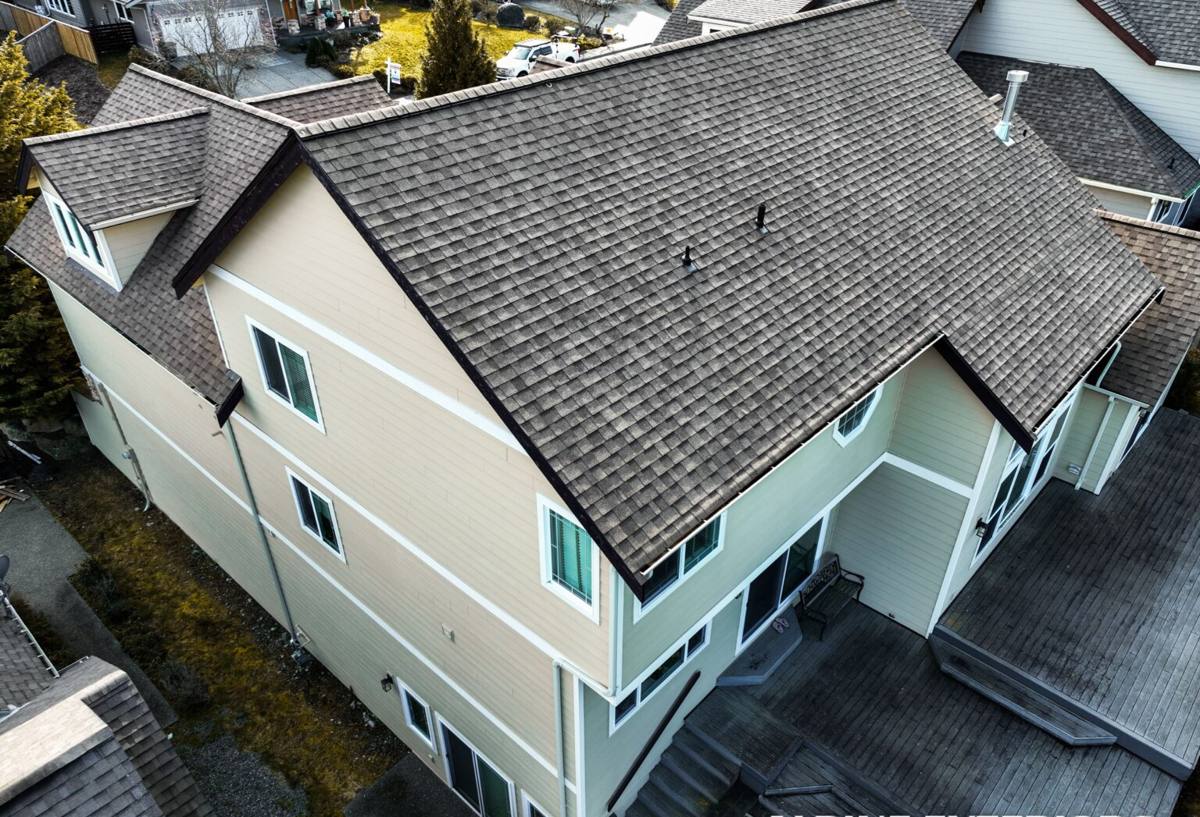
Why Salt Air, Rain, and Moss Change the Job
Salt Air and Metal Fatigue
Homes near the water in this part of Whatcom County get a steady dose of salt-carrying air, and that air is hard on anything metal. Standard galvanized fasteners can start showing rust bleed and pitting years before a homeowner expects it, especially at joist hangers, post bases, and railing brackets where moisture sits longest. Once a fastener weakens, it's not just a cosmetic issue — it's a structural one.
Driving Rain and Water Path
Rain here doesn't fall straight down very often. Wind-driven rain gets pushed sideways into ledger boards, under railing posts, and into any gap where flashing or sealant has failed. A deck that doesn't shed that water correctly ends up with trapped moisture in exactly the places you can't see — behind ledger boards, inside post bases, under decking where boards sit too tight together.
The Long Moss Season
Shaded, tree-covered lots — common around Alger — hold moisture longer and give moss and algae a long runway to establish. Moss doesn't just sit on the surface; it holds water against the wood underneath it, which accelerates rot and makes decking surfaces slick and dangerous well before the boards look obviously bad.
Signs Your Alger Deck Needs Replacement, Not Just Repair
Repair makes sense when the problem is isolated. Replacement makes sense when the problems are systemic — spread across the framing, not just a board or two. Here's what tells us which situation we're looking at:
- Soft, spongy, or springy decking in multiple areas, not just one board
- Rust staining or visible corrosion at joist hangers, post bases, or railing brackets
- Gaps that have widened or closed unevenly across the deck surface
- Persistent moss or algae that returns within weeks of cleaning
- Wobble at the railing posts or stairs when you put weight on them
- Visible daylight or gapping where the ledger board meets the house
- A musty smell coming from underneath the deck
- Any structural member you can probe with a screwdriver and feel it sink in
If most of what you're seeing lives on the surface — a few cupped boards, faded finish, minor moss — repair or refinishing may be the honest answer. If the problems show up in more than one system (framing, fasteners, and surface), replacement is usually the more cost-effective path, because a repair on a failing structure just delays the real cost.
What a Correct Deck Replacement Actually Involves
A deck replacement done right isn't just decking. It's several systems working together, and skipping any one of them is where problems start again in a few years.
Tear-Out and Inspection
We remove the old decking and railing first, then inspect the framing, ledger board, and post footings before deciding anything else. This is the step that tells us whether the old frame can be reused or whether rot has gone far enough that the frame needs to come out too.
Ledger Board and Flashing
The ledger board — where the deck attaches to the house — is the single most common failure point we find in this climate. Correct flashing here directs water away from the house rather than behind the ledger, where it causes rot in both the deck framing and the house's own wall structure.
Footings and Posts
Footings need to sit below frost depth and bear on solid ground, not on soil that's been saturated and softened over years of poor drainage. Posts need proper post bases that keep the wood off standing water rather than sitting directly on concrete.
Framing and Joist Protection
We use joist tape or an equivalent moisture barrier on top of the framing before decking goes down. It's a small material cost that keeps rain from sitting directly on bare framing lumber every time it rains — which, in this area, is often.
Decking and Railing
Only once the structure underneath is solid does the visible part of the job — decking, railing, stairs — get installed. This is also where material choice matters most for long-term moss and moisture resistance, which we cover next.
Choosing Decking Material for This Climate
There's no single "best" decking material — there's a best material for your budget, your sun exposure, and how much maintenance you're willing to do. In a shaded, damp, salt-air environment like Alger, some trade-offs matter more than they would elsewhere.
| Material | Moss/Moisture Resistance | Maintenance | Typical Lifespan |
|---|---|---|---|
| Pressure-treated wood | Moderate — needs sealing to hold up | Annual cleaning and re-sealing | 10-15 years |
| Cedar | Good natural resistance, but surface still hosts moss in shade | Periodic cleaning, occasional finish | 15-20 years |
| Capped composite | Strong — cap layer resists moisture absorption | Occasional washing, no sealing | 25-30 years |
| PVC decking | Very strong — non-porous surface, minimal moss anchoring | Occasional washing | 25-30+ years |
Wood costs less upfront but asks for the most upkeep in exactly the conditions Alger deals with — shade, dampness, and salt air. Composite and PVC cost more initially but resist moss anchoring far better because they don't have the porous surface that moss and algae need to take hold. We'll walk through the honest cost-versus-upkeep math for your specific lot and sun exposure rather than pushing one material as universally "right."
Hardware and Fasteners: The Detail That Gets Skipped
In a lot of deck failures we inspect, the decking looks fine and the framing is the problem — usually because standard fasteners and hangers weren't rated for a salt-air environment. We use stainless steel or high-corrosion-rated hardware at connection points that see the most moisture and salt exposure — ledger connections, post bases, and hanger brackets — rather than standard galvanized hardware that can start corroding within a handful of years here. It costs a bit more upfront. It's a lot cheaper than replacing a deck twice.
Our Deck Replacement Process
- On-site inspection of the existing deck, framing, footings, and ledger connection
- Honest assessment of repair versus replacement, with reasoning explained plainly
- Material and layout discussion based on your sun exposure, tree cover, and budget
- Permit filing where required (see below)
- Tear-out, framing inspection, and any needed footing or post work
- Flashing, joist protection, and structural assembly
- Decking, railing, and stair installation
- Final walkthrough covering maintenance expectations for the material chosen
Permits and Code Considerations
Most deck replacements that involve structural changes — new footings, railing height changes, or stairs — require a permit through the local jurisdiction. Railing height, guard spacing, and stair rise/run are code items inspectors check, and they're also the items that matter most for everyday safety, not just paperwork. We handle the permit process as part of the job so you're not left tracking down inspections yourself.
What Affects Deck Replacement Cost
Deck replacement costs vary widely based on size, material, and how much structural work is needed underneath — there's no honest flat number without seeing the site. That said, these are the factors that move the price the most:
| Factor | Why It Matters |
|---|---|
| Deck size and layout complexity | Multiple levels, angles, or built-in features add labor and material |
| Decking material chosen | Composite and PVC cost more per square foot than wood upfront |
| Condition of footings and framing | Rotted footings or posts mean rebuilding the structure, not just the surface |
| Railing style and code requirements | Custom railing or code-driven changes add cost beyond basic pickets |
| Site access | Sloped, wooded, or hard-to-reach lots take longer to work and haul debris from |
We give a firm, written estimate after the on-site inspection — not a phone-quote guess — because the framing condition and site access change the number more than anything else.
Why a Local Chuckanut-Area Crew Matters for This Job
A crew that works the Alger and Chuckanut area regularly has already seen what salt air does to fasteners after five winters, what moss does to a shaded north-facing deck, and which framing details hold up to driving rain versus which ones fail first. That's not something you get from a general contractor passing through — it's pattern recognition built from doing this work, on this kind of ground, repeatedly. It shows up in small decisions: where we add extra flashing, which hardware we won't use, how we space boards for airflow. Those choices are what separate a deck that lasts fifteen years from one that lasts thirty.
If you're seeing soft spots, rust staining, stubborn moss, or just a deck that's getting old enough to worry about, we're happy to take a look and give you a straight answer — repair, replace, or hold off — with no pressure either way. Fill out the form below for a free estimate on your Alger deck replacement.