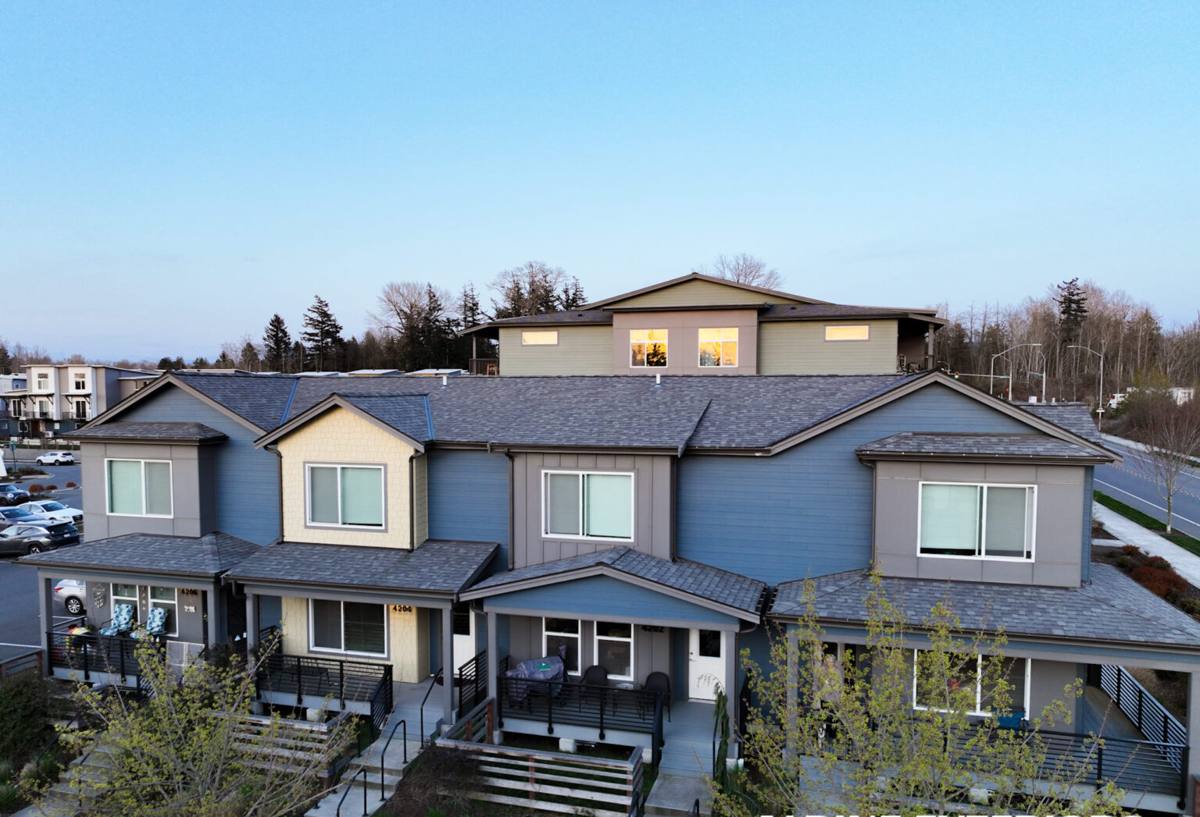
 Chuckanut Exterior
 Why Windows Wear Out Faster Around Alger
Homes in the Alger area sit close to the water and tree cover that define this stretch of the Chuckanut corridor, and that setting is hard on windows in ways that inland houses never deal with. Salt-laden air off the bay works into aluminum hardware and steel fasteners, corroding balances and locks years before a homeowner expects it. Driving rain off Puget Sound doesn't fall straight down here — wind pushes it sideways into siding and window assemblies, which means any weak point in the flashing or sealant becomes a leak path instead of a non-issue.
Then there's moss season, which in this part of Washington runs long. Shade from surrounding conifers keeps north- and west-facing walls damp for weeks at a stretch, and moss doesn't just grow on roofs — it colonizes window sills, trim, and the gaps around old frames where organic debris collects. That constant moisture load is why we see rot at the bottom corners of wood-frame windows here more often than almost anywhere else we work.
None of this means Alger homes need exotic solutions. It means the replacement has to be sized to the actual conditions — correct flashing details, materials that don't corrode or absorb water, and an install crew that treats moisture management as the main event, not an afterthought.
Signs a Window Is Past Replacing
Some windows can be repaired — a failed balance, a cracked pane, worn weatherstripping. Others have reached the point where repair is just delaying a bigger repair bill. Here's what tells us which category a window is in:
- Fogging or a visible haze between panes on double-glazed units — the seal has failed and the gas fill is gone
- Soft or spongy wood at the sill or lower frame corners when pressed with a thumb
- Visible daylight or a draft at the frame edge even with the window latched shut
- Paint that keeps bubbling or peeling on the interior sill no matter how often it's repainted
- Difficulty opening, closing, or locking the window, especially after damp weather
- Moss or dark staining building up in the frame corners or weep holes year after year
If a window shows two or more of these, replacement is almost always the more honest recommendation than another repair.
What a Correct Replacement Actually Involves
It Starts Before the New Window Arrives
The old window's removal is where most of the risk lives. We check the condition of the rough opening, the sheathing behind it, and the framing for rot or soft spots — problems that are invisible until the old unit comes out. On a house exposed to the wind and rain this corridor gets, finding hidden moisture damage at this stage isn't unusual, and it needs to be fixed before anything new goes in, not covered over.
Flashing and Water Management
A window is only as good as the flashing around it. That means a sill pan to catch and direct any water that gets past the window itself, self-adhered flashing tape integrated with the house wrap in the correct shingle-lap order (so water sheds outward, not into the wall), and a drainage path so any moisture that does get in has somewhere to go besides your framing. This detail work matters more here than in drier parts of the state, because wind-driven rain will find any shortcut in the flashing sequence.
Setting, Sealing, and Insulating
The new window gets shimmed level and plumb, fastened per the manufacturer's schedule, and insulated around the frame with low-expansion foam or backer rod — never packed tight with standard spray foam, which can bow vinyl frames and cause operating problems later. Exterior sealant goes on last, in the right locations only, so the assembly can still drain if water ever gets behind the trim.
Interior and Exterior Finish
Trim, sill extensions, and paint or caulking are matched to the existing house finish so the new window looks original to the home, not bolted on. Cleanup includes removing all packaging and old window materials — you shouldn't be left dealing with a mess to get the benefit of new glass.
Choosing a Window for This Microclimate
Frame material matters more here than in a lot of the country, because the frame is what's absorbing the salt air and standing water exposure over decades, not just the glass.
| Frame Material | How It Handles Salt Air & Rain | Maintenance | Trade-offs |
|---|---|---|---|
| Vinyl | Won't corrode or rot; handles moisture well | Low — occasional cleaning | Limited color options; can't be repainted |
| Fiberglass | Excellent — very stable in wet, salty conditions | Low | Higher upfront cost |
| Wood-clad | Good if cladding is intact; vulnerable where cladding is breached or sill flashing fails | Moderate — watch cladding seams and sills | Best interior look; more sensitive to installation quality |
| Bare aluminum | Poor — corrodes and pits in salt air over time | High | We don't recommend it for this area as a primary frame material |
We're not tied to one brand or material — the right call depends on your home's exposure, your budget, and how the existing openings are framed. What we won't do is install a product we know is a poor match for a house that takes this much wind-driven rain and salt exposure, because a bad frame choice shows up as a callback in a few years, not a saved job today.
Our Process, Start to Finish
- On-site assessment — we look at every window being considered, not just the ones you've flagged, and check the framing and siding around each opening
- Written estimate — clear pricing by window, with material options explained in plain terms
- Scheduling — we work around your household, and around weather windows when driving rain is in the forecast
- Removal and inspection — old windows come out, framing is checked and repaired if needed before anything new goes in
- Install — sill pan, flashing, window set, insulation, and sealant, done in that order
- Finish work — trim and paint or caulk matched to the house
- Walkthrough — we operate every window with you before we consider the job done
What Drives the Cost
Every home is different, but these are the main factors that move a window replacement estimate up or down:
| Factor | Why It Matters |
|---|---|
| Number and size of openings | More or larger windows means more material and labor |
| Frame material | Fiberglass and higher-end vinyl cost more than entry-level vinyl |
| Condition of the rough opening | Hidden rot or framing damage adds repair time before the window can go in |
| Access | Second-story or hard-to-reach windows take longer and may need staging |
| Trim and finish work | Matching existing trim profiles or repainting adds finish-carpentry time |
We give honest, itemized numbers up front rather than a flat per-window price that hides what you're actually paying for.
Why a Crew That Already Works This Area Matters
A contractor who works the Alger stretch of the Chuckanut corridor regularly already knows what to check for before the tarp comes off — where moss tends to build up on this style of siding, which framing details show up in houses of this age, and how much margin to build in for weather delays during the wetter months. That's not a substitute for doing the work correctly on any given house, but it does mean fewer surprises and fewer return trips.
Local also means we're not driving hours to get back to you if something needs a second look after the install. That matters more with windows than with almost any other exterior work, because problems from a bad seal or flashing detail sometimes don't show up until the first real storm tests them.
After the Install: What to Watch For
- Operate each window through a full open-close-lock cycle once a season, especially before and after moss season
- Keep weep holes at the bottom of the frame clear of moss, pollen, and debris so water can drain
- Wipe down sills after wind-driven rain events rather than letting standing water sit
- Have caulking and exterior sealant checked every couple of years — it's the first thing to wear from constant damp-dry cycling
- Watch for condensation between panes, which signals a seal failure covered under most manufacturer warranties
A well-installed window in this climate should need very little attention beyond basic upkeep. If something feels off — sticking, drafts, staining — it's worth a look before it becomes a bigger repair.
Get a Straight Answer on Your Windows
If you're weighing repair against replacement, or just want an honest read on how your current windows are holding up against the salt air and rain this area gets, we're glad to come take a look. The estimate is free, there's no pressure attached to it, and you'll get a clear answer about what your home actually needs — use the form below to get started.